


Choosing where to stay in the Maldives is less about star ratings and more about picking the right atoll for your style and budget. The archipelago stretches over 800 kilometers, and each group of islands has its own mix of transfer types, house reefs, local islands and resort personalities. Understanding those differences before you book can save hundreds of dollars and set the tone for your entire trip, whether you want a quick speedboat hop to a mid range resort, a whale shark focused seaplane escape or a remote splurge in the deep south.
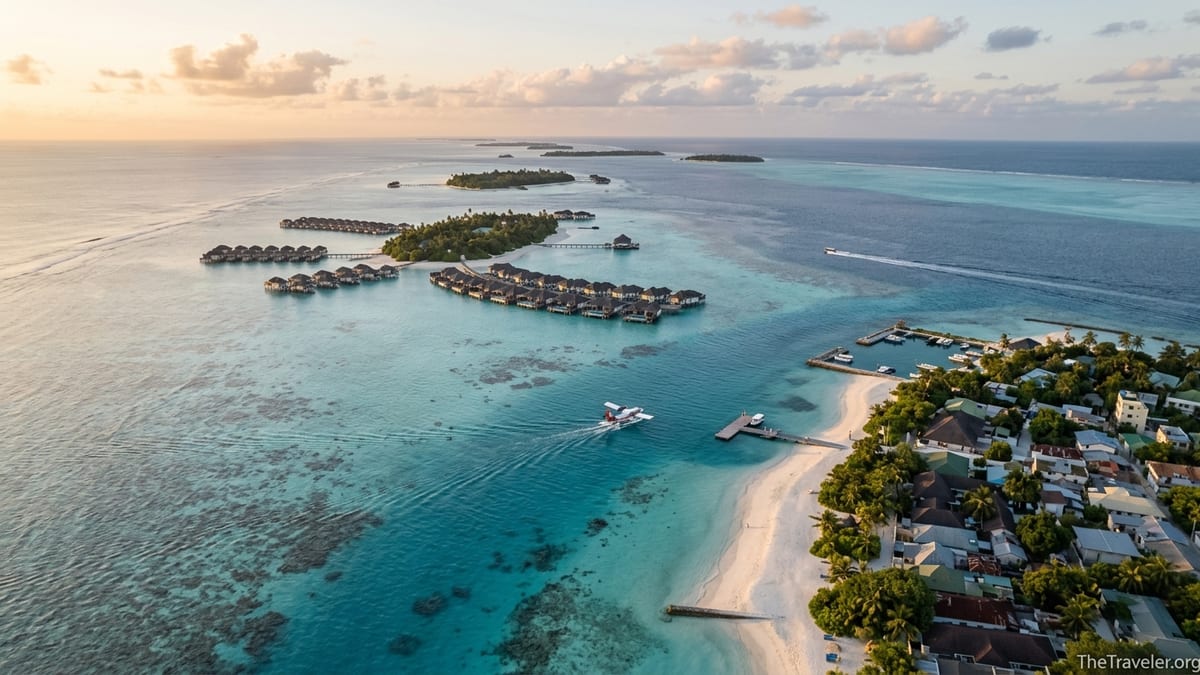
How Atolls Shape Your Maldives Experience
Most visitors fly into Velana International Airport near Malé, then continue by speedboat, seaplane or domestic flight to their chosen atoll. That second leg is what quietly determines both your budget and your day one experience. Resorts in North and South Malé Atoll are often 20 to 60 minutes away by shared speedboat, so you can land in the afternoon and still be in the water before sunset. In contrast, reaching a far northern or deep southern atoll might involve a 40 to 60 minute domestic flight plus a short boat ride, which usually adds cost and time but also buys you emptier horizons.
Seaplane transfers, used for many central atolls like Ari, Baa, Lhaviyani, Dhaalu and parts of Raa and Noonu, are a highlight for many travelers but also a major line item in the budget. Specialist Maldives agencies and resort booking engines commonly quote return seaplane transfers in the region of several hundred US dollars per adult, with child discounts and seasonal variations. Speedboats are usually cheaper and charge per person, while domestic flights work more like regular airline tickets, which can be good value on promotion but add up quickly for a family of four.
Beyond transfers, atolls differ in how busy the lagoon feels, how strong the house reef is and how easy it is to add a local island stay. North Malé and parts of South Malé have more boat traffic and visible neighbors, but a huge concentration of resorts at every budget level. Baa Atoll layers high end resorts inside a UNESCO Biosphere Reserve with manta ray hotspots, while South Ari is where boats go out almost daily to look for whale sharks. Further north and south, atolls like Raa, Dhaalu and Gaafu Alifu trade long travel times for a sense of remoteness and more untouched reefs.
Local island guesthouses add a third option between classic resort islands and city hotels in Malé. Islands such as Maafushi, Thulusdhoo and Dhiffushi in the Malé atolls, Dharavandhoo in Baa or Ukulhas and Dhigurah in Ari offer simple rooms, bikini beaches and excursions to the same reefs that resorts use, usually at a fraction of resort villa prices. Regulations still require modest dress away from tourist beaches and no alcohol on local islands, so the feel is very different to an all inclusive resort bar, but the tradeoff is authentic village life and lower costs.
North & South Malé Atolls: Fast Access and Maximum Choice
North and South Malé Atoll, officially part of Kaafu Atoll, form the most developed region of the Maldives, with dozens of resorts and popular local islands within an hour of the international airport. Resorts such as Taj Exotica Resort & Spa in South Malé or Grand Park Kodhipparu and OBLU XPERIENCE Ailafushi in North Malé typically use shared speedboats that run throughout the day. Travel time from the airport can be as short as 15 to 45 minutes, which is ideal if you land in the evening or only have four or five nights to spare.
This high connectivity brings variety. In North Malé you find ultra luxury icons like One & Only Reethi Rah alongside mid range all inclusives such as OBLU Select Sangeli and smaller, classic islands like Thulhagiri. South Malé mixes relaxed three star dive focused resorts like Biyadhoo Island Resort and Embudu Village with contemporary four and five star properties including Holiday Inn Resort Kandooma and Hard Rock Hotel Maldives at the integrated Crossroads complex. Biyadhoo is often highlighted by divers for its strong house reef, while Hard Rock and its neighboring island appeal more to families who want multiple restaurants, a marina and entertainment.
Local island stays are particularly easy to arrange in these atolls. Maafushi in South Malé, roughly 30 minutes by public speedboat from the airport, has grown into one of the most visited local islands with dozens of guesthouses, a designated bikini beach, day trip operators and offshore floating bars anchored outside the local boundary. Thulusdhoo in North Malé is a surf focused island with guesthouses catering to wave riders heading for nearby breaks, while Dhiffushi offers quieter beaches and simple hotels. For travelers who want to split time between a guesthouse and a resort, combining Maafushi or Thulusdhoo with a nearby speedboat accessible resort can keep transfer costs low.
On the downside, close proximity to the capital means more visible infrastructure and traffic. You may see supply boats, local ferries and neighboring islands on the horizon, and some resort lagoons can feel busier than those in the outer atolls. If your top priorities are total seclusion and unbroken ocean views, it may be worth paying for a seaplane to a more remote atoll. If you need short travel times, flexible arrival and departure and a wide choice of price points, the Malé atolls are hard to beat.
Ari & Nearby Central Atolls: Whale Sharks and Classic House Reefs
Ari Atoll, often split into North Ari and South Ari in hotel descriptions, is one of the most famous regions in the Maldives for diving and snorkeling. Many islands here are reached by seaplane in roughly 25 to 35 minutes from Malé, though a small number near the atoll edges may use domestic flights combined with speedboats. North Ari resorts such as Sandies Bathala or Gangehi Island Resort are known for strong house reefs where you can often see reef sharks, turtles and schooling fish just off the beach, which suits confident snorkelers who want to step straight into deep water.
South Ari is widely recognized as a hotspot for whale sharks, with resorts and local islands near the protected marine area offering regular boat trips year round. Well known resort names here include LUX South Ari Atoll and Conrad Maldives Rangali Island, both of which market access to whale shark excursions alongside overwater villas and upscale dining. On a more modest budget, local islands like Dhigurah and Maamigili host guesthouses that send the same style of snorkel boats into the channel, often at lower excursion prices than a five star resort while still using registered guides.
Room rates in Ari cover everything from simple three star islands to flagship luxury retreats, but travelers should factor in seaplane transfers as part of the total bill. A family of four flying return by seaplane will usually spend a four figure amount in US dollars before even setting foot on the resort. For some, the aerial views of turquoise lagoons and sandbanks make this worthwhile and are part of the dream trip. For others, especially those planning a short stay, a speedboat based Malé atoll resort or a domestic flight to a closer atoll might stretch the budget further.
If you want a mix of strong house reefs, a chance at big marine life and the classic postcard look of water villas lined along a jetty, Ari is a strong all round choice. It works well for couples and keen divers, and also suits families staying at larger full service resorts with kids clubs and multiple restaurants. Just pay close attention to individual island maps, as some Ari resorts have deeper, reef drop off style lagoons while others focus on broader shallow sandbanks that are easier for non swimmers.
Baa, Lhaviyani & Raa: Biosphere Reefs and Emerging Values
Northwest of Malé, Baa Atoll holds a cluster of celebrated luxury resorts inside a UNESCO Biosphere Reserve. Properties such as Soneva Fushi, Amilla Maldives and Finolhu Baa Atoll emphasize sustainability, organic dining and barefoot luxury alongside high nightly rates. The atoll is also known for Hanifaru Bay, a marine protected area where manta rays congregate during certain months, which draws snorkelers and divers on organized trips from both resorts and nearby local islands. Access from Malé is generally by seaplane or a short domestic flight plus speedboat, depending on the resort.
Lhaviyani Atoll, just north of Baa, offers a slightly more relaxed price spread while still delivering excellent snorkeling and long sandbanks. Resorts like Hurawalhi, Innahura and Fushifaru tend to lean into clear channels and rich reefs, marketing themselves to divers and romantic travelers who want a quieter setting than North Malé without pushing the budget into ultra luxury levels. Many of these properties are seaplane access, so the same transfer cost considerations apply as in Ari.
Raa Atoll has been positioning itself as a rising star for value, with a mix of new high end openings and more moderately priced all inclusive islands. Resorts such as Heritance Aarah, Furaveri Island Resort & Spa and Ifuru Island Maldives illustrate the range here, from premium all inclusive with multiple a la carte restaurants to simpler full board stays that keep costs predictable. Seaplane is the primary transfer method for most Raa resorts, though some combinations with domestic flights exist for further north islands.
Local island tourism in these atolls is growing but still lighter than around Malé. Dharavandhoo in Baa, which has its own domestic airport, hosts a cluster of guesthouses that cater to divers coming for mantas and reef life, often pairing several days of diving with day excursions to the biosphere core area when conditions are right. In Raa and Lhaviyani, guesthouses are more scattered, which appeals to travelers seeking quieter village stays and is best suited to independent planners comfortable with less developed tourism infrastructure.
Dhaalu, Laamu & the Central South: Design Resorts and Quiet Lagoons
The central southern atolls, including Dhaalu, Meemu, Thaa and Laamu, feel noticeably more remote than the Malé region but are still fairly accessible. Laamu Atoll is served by a domestic airport linked to the flagship resort Six Senses Laamu, which combines sustainability focused luxury with surfing and diving. Dhaalu Atoll hosts several well known resorts including Niyama Private Islands, Kandima Maldives, Angsana Velavaru, Vilu Reef and The St. Regis Maldives Vommuli. Many of these islands market modern design, large lagoon pools and a stronger focus on activities such as watersports, beach clubs and wellness programs.
Transfers to these atolls usually involve a domestic flight of around 30 to 45 minutes from Malé to an atoll airport such as Kudahuvadhoo, followed by a 10 to 30 minute speedboat to the resort. In some seasons, selected properties may offer direct seaplanes instead. Pricing can be comparable to or slightly below classic seaplane only islands further north, but with the extra benefit of fewer overflying aircraft and a stronger sense of being away from the capital region.
From a budget and style perspective, these atolls appeal to travelers who want a contemporary resort with good facilities rather than a tiny castaway island. Kandima, for example, is often highlighted as a mid to upper mid range property with a long island layout, multiple pools and restaurants and a social beach club feel that suits groups of friends and families with older children. St. Regis Maldives Vommuli, at the higher end, focuses on personalized butler service, striking architecture and private pool villas that work well for honeymooners and special occasions.
Local islands in the central south remain relatively low key, though guesthouses in atolls such as Meemu and Thaa are gradually adding options for budget divers and surfers willing to travel a bit farther. Public ferry services and regional speedboats are improving, but schedules can be limited, so these areas are best tackled by experienced independent travelers or those who are content to stay put on a single resort island for their whole stay.
Far North & Deep South: Remoteness, Reefs and Niche Interests
For travelers who prioritize empty sandbanks, advanced diving or surfing and a sense of being far from crowds, the outermost atolls can be compelling. In the far north, atolls like Haa Alif and Shaviyani host a small number of resorts including JA Manafaru and JW Marriott Maldives Resort & Spa. These islands are typically reached by a domestic flight of close to an hour plus a short speedboat and combine high end villas with strong reef access and fewer neighboring properties.
In the deep south, Gaafu Alifu and Gaafu Dhaalu span a wide lagoon with just a handful of resorts, such as The Halcyon Private Isles Maldives and Ayada Maldives. These atolls are known among divers for clear water, channels with pelagic life and pockets of world class surf breaks, particularly around Gaafu Alifu and parts of Laamu. Transfers usually run via domestic flights to regional airports followed by resort boats, which makes them more expensive and time consuming to reach than central atolls but rewards guests with quieter beaches and a more off grid atmosphere.
Even further south, Addu Atoll and the single island of Fuvahmulah offer a different twist again. Addu has causeways linking several local islands and hosts hotels such as Equator Village and South Palm Resort, making it feel more like a small coastal town than an isolated resort. Fuvahmulah is highly regarded among divers for shark encounters and has a small cluster of guesthouses plus at least one resort style property. These destinations appeal less to first timers chasing the classic overwater villa photo and more to repeat visitors and dedicated divers who want a specific type of underwater experience.
The key tradeoff in these remote atolls is between cost and crowd levels. Room rates at some southern and far northern resorts can be competitive compared with headline Malé or Baa properties, but once you add domestic flight tickets for each traveler, overall trip costs return to premium territory. In return, you are likely to see fewer boats on the horizon, share dive sites with fewer groups and experience a more traditional pace of island life on accompanying local island visits.
Local Islands vs Private Resorts: Budget, Culture and Rules
Deciding between an inhabited local island and a private resort is central to planning both your budget and your experience of Maldivian culture. On a private resort island, the entire island functions as a hotel, with international style dining, alcohol served in bars and restaurants and a dress code that is relaxed by international beach standards. Nightly rates are higher because you are paying for seclusion, infrastructure and often a higher staff to guest ratio. Villas with private pools, especially over water, command a noticeable premium per night but give you genuine at home privacy for swimming and sunbathing.
Local island guesthouses and small hotels can cost a fraction of a resort stay, sometimes starting from modest two or three figure nightly rates in US dollars depending on season, island and room type. Popular examples include Maafushi and Dhiffushi in South Malé, Thulusdhoo in North Malé, Ukulhas and Dhigurah in Ari, Fulidhoo in Vaavu and Dharavandhoo in Baa. These islands provide bikini beaches that are clearly marked for tourists, but elsewhere modest dress is expected in line with local norms, and alcohol is not served on shore. Some islands have offshore floating bars accessible by shuttle boat where legal regulations allow alcohol service away from the inhabited island.
For many travelers, a split stay provides the best of both worlds, for example three nights on a Malé atoll local island followed by four nights at a speedboat accessible resort. This keeps transfer costs contained while allowing you to experience local cafes and shops before retreating to a villa with direct lagoon access and more privacy. When comparing options, consider the cost of daily excursions on a local island, as most activities such as snorkeling trips, dolphin cruises and sandbank visits are sold separately, while resorts may bundle some experiences into all inclusive or full board packages.
Whichever style you choose, reading recent reviews and checking aerial photos of the island layout can help you understand how close villas sit to one another, whether the house reef is reachable from shore and how much natural shade or vegetation exists. In guesthouses, check whether rooms face the street or the sea and how long it takes to walk to the bikini beach. In resorts, note which villa categories have private pools and which side of the island they sit on, as prevailing winds and sunset views can significantly change the feel of your stay.
Matching Atolls to Budget and Trip Style
When comparing atolls, the most useful way to think is in terms of total trip cost rather than just room rates. Speedboat based Malé atoll stays usually keep transfer costs to the lowest tier, which can free up budget for a nicer room or an extra night. Seaplane based atolls such as Ari, Baa, Lhaviyani and much of Raa add a memorable flight but also a significant fixed cost per person. Domestic flight based atolls in the far north and deep south can cost similar amounts overall while providing even more remoteness.
For travelers aiming at the best possible value without losing the resort experience, atolls like Raa, Meemu and parts of Dhaalu have been increasingly recommended by specialist agencies as sweet spots. They offer solid four star and entry level five star resorts with good reefs and modern facilities, often underpricing headline names in North Malé or Baa while still offering either seaplane or domestic flight access. Pair these with shoulder season travel and flexible dates and you may find private pool villas and overwater suites at rates that compare favorably with high season beach bungalows closer to Malé.
If your priority is classic postcards and easy logistics for a first visit, North or South Malé, North or South Ari and Baa are practical starting points. Couples often gravitate toward adult oriented or romantic leaning resorts like Baros in North Malé, Hurawalhi in Lhaviyani or Conrad in South Ari, while families may prefer islands with kids clubs and multiple dining options such as Kandima, LUX South Ari, Hard Rock Hotel Maldives or larger North Malé all inclusives. Divers and snorkelers with a strong focus on marine life can shortlist North Ari, South Ari, Baa, Lhaviyani and the southern atolls, where channels and protected areas concentrate wildlife.
Finally, remember that a Maldives trip can be tailored down as well as up. A week on a well chosen local island with a strong guesthouse, reliable dive center and good bikini beach can offer daily encounters with reefs, turtles and sometimes mantas or whale sharks at a fraction of five star resort costs. Conversely, a short stay of three or four nights at a very high end resort may be more realistic once you factor in transfers than trying to stretch a week at the same property. The atoll and transfer mix you choose is what ultimately shapes those tradeoffs.
FAQ
Q1. Which atoll is best for a first time visit to the Maldives?
For most first time visitors, North or South Malé Atoll works well because resorts and local islands are reachable by speedboat in under an hour, keeping transfers simple and relatively affordable while still delivering the archetypal white sand and turquoise water experience.
Q2. How much should I budget for seaplane transfers in the Maldives?
Exact prices vary by resort and season, but return seaplane transfers often add several hundred US dollars per adult, with lower child rates, so a family can easily spend a four figure amount before accommodation.
Q3. Are local island guesthouses safe and suitable for couples or solo travelers?
Guesthouses on established local islands such as Maafushi, Thulusdhoo, Ukulhas, Dhigurah and Fulidhoo are widely used by couples and solo travelers, with tourism oriented services, designated bikini beaches and licensed excursion operators that follow national safety guidelines.
Q4. Which atoll should I choose if I want to see whale sharks?
South Ari Atoll is the most consistently recommended area for whale shark encounters, with both resorts and local island guesthouses running regular boat trips to the nearby marine protected zones where sightings are relatively frequent year round.
Q5. What is the difference between a resort island and a local island stay?
A resort island operates as a private hotel where alcohol is served, dress codes are relaxed and facilities are geared entirely toward visitors, while a local island is an inhabited community with guesthouses, modest dress expectations outside bikini beaches and no alcohol on shore.
Q6. Which atolls have the best house reefs for snorkeling from the beach?
North Ari, parts of South Ari, Lhaviyani, sections of Baa and some islands in South Malé and the southern atolls are especially known for strong house reefs where you can snorkel directly from the shore into deeper coral rich water.
Q7. Are the far northern and deep southern atolls worth the extra travel time?
If you value quieter beaches, fewer neighboring islands and often richer reefs or advanced diving, atolls like Haa Alif, Shaviyani, Gaafu Alifu and Gaafu Dhaalu can justify the longer domestic flight and higher overall transfer bill.
Q8. Can I split my stay between a local island and a resort in one trip?
Yes, many travelers combine three or four nights on a local island such as Maafushi or Dhigurah with a few nights at a nearby resort, especially in the Malé or Ari atolls where both segments can be linked by shared speedboat or short seaplane hops.
Q9. Which atolls are best if I want a modern, social resort with lots of activities?
For contemporary design and a wide activity program, consider larger islands in Dhaalu, Laamu and Raa, or socially oriented properties in North and South Malé, where beach clubs, multiple pools and organized events are part of the appeal.
Q10. When is it worth paying extra for a private pool villa?
A private pool is most worthwhile if you value privacy for swimming and sunbathing, are traveling on a special occasion such as a honeymoon or prefer to spend long stretches in your villa rather than at the main resort pool or beach.