


Not every Maldives holiday needs a long seaplane ride. If you are planning a short escape, arriving late at night or simply want to minimise transfer time and cost, focusing on the atolls around Malé can make your trip easier and often cheaper without sacrificing the classic overwater-villa experience. This guide looks at North Malé, South Malé and a few neighbouring atolls that are reachable by speedboat, comparing transfer logistics, resort styles, beaches and reefs so you can choose the area that makes the most sense for your stay.
Why Stay Near Malé for Short or Late-Arrival Trips
For many travellers, the biggest surprise in the Maldives is that reaching your resort can take almost as long as the international flight. Seaplanes only operate in daylight hours and domestic flights add extra legs and waiting time. If you are visiting for only three to five nights, or if your international flight lands in the evening, staying within the Malé region, known administratively as Kaafu Atoll, can dramatically simplify your journey.
North and South Malé Atolls, plus a handful of nearby atolls like Vaavu and parts of Ari, are served primarily by speedboat transfers from Velana International Airport. In practice, this means you walk out of arrivals, meet your resort representative and are often on the island within 20 to 45 minutes. Many resorts in these atolls operate transfers into the late evening or on a 24-hour basis, which is particularly valuable if you land after dark and want to avoid a night in an airport hotel.
Speedboat transfers also tend to be more budget-friendly than seaplanes or domestic flights. While prices vary by resort and season, many properties in North and South Malé charge a per-person round-trip speedboat fee that, while not cheap, is still typically lower than the cost of a seaplane to more remote atolls. For couples or families, the savings can easily run into several hundred dollars compared with flying farther afield.
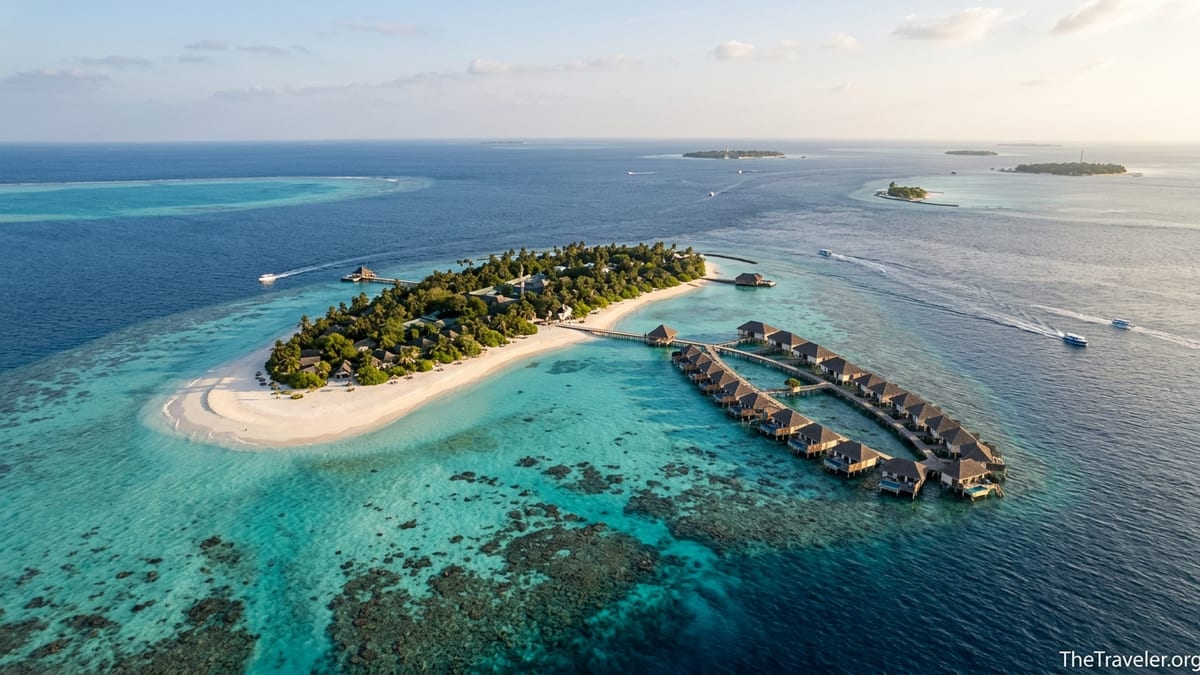
Finally, staying near Malé does not automatically mean compromising on scenery or marine life. These central atolls are home to classic sandbank views, turquoise lagoons and reputable dive and snorkel sites. The trade-off is usually a little more boat traffic and, on some islands, distant views of other resorts or the airport, but for short or practical trips, the benefits of convenience often outweigh these drawbacks.
North Malé Atoll: Classic Resorts and Fastest Transfers
North Malé Atoll is the original heartland of Maldivian tourism and remains one of the most convenient options for short stays. Many islands here sit within 15 to 30 minutes by speedboat of Velana International Airport, making them ideal if you want to be in your villa before your jet lag even sets in. This atoll has a wide range of properties, from established luxury brands to more modest all-inclusive options and a growing number of well-developed local islands.
Four Seasons Resort Maldives at Kuda Huraa is a good example of a high-end North Malé property that works well for short or late-arrival trips. Guests are typically escorted from the airport to the resort’s speedboat and arrive at the island in around 25 minutes. Once there, families find kids’ clubs and surf schools, while couples have adult-focused quiet areas and refined dining. Similarly, Sheraton Maldives Full Moon Resort & Spa offers a relatively short transfer, family-friendly facilities and a mix of beach and overwater villas suited to guests who want a branded resort experience without adding a seaplane leg.
The atoll is also known for strong surfing and accessible dive sites, which can make it attractive for active travellers with limited time. Surf breaks such as Sultans and Honky’s, near Thulusdhoo and neighbouring islands, are served by several surf-focused guesthouses and higher-end resorts that run daily surf boats. Dive operators in North Malé commonly visit Banana Reef, one of the country’s earliest discovered dive sites, and the Maldives Victory wreck near Hulhulé, offering both beginners and certified divers memorable sites within easy reach of the capital.
On the downside, the atoll’s popularity and proximity to Malé mean you may see more boat traffic and, from some islands, the lights of the capital or industrial facilities on the horizon. If you want that feeling of complete remoteness, North Malé may feel a little busier than more distant atolls. However, for travellers on a three- or four-night break or those catching a late-night arrival, the ability to reach the resort quickly and still enjoy an attractive lagoon makes North Malé one of the most practical choices.
South Malé Atoll: Upscale Islands and Easy-going Transfers
Separated from North Malé by the Vaadhoo Kandu channel, South Malé Atoll offers a slightly more spread-out, tropical feel while still being firmly in speedboat territory. Transfer times usually range from about 20 to 45 minutes depending on the exact island. This atoll has a concentration of well-known premium and luxury resorts, many of which appeal to couples, honeymooners and families looking for polished service without a seaplane transfer.
Resorts such as Anantara Dhigu Maldives Resort, Anantara Veli Maldives Resort and Naladhu Private Island occupy neighbouring islands here, connected by shared lagoons and boat shuttles. From Velana, the speedboat ride is typically around 30 to 35 minutes. Once on Dhigufinolhu or Veligandu Huraa, guests can choose between family-friendly beach villas with direct lagoon access and adults-only overwater suites, with shared access to a larger collection of restaurants and activities than you will find on many single-island resorts.
Other notable options in South Malé include COMO Cocoa Island, a small, design-led island known for its dhoni-shaped overwater suites and wellness focus, and OZEN RESERVE Bolifushi, which combines an ultra-luxury all-inclusive concept with a transfer of roughly 20 minutes by luxury boat. Crossroads Maldives, closer to the airport, hosts SAii Lagoon Maldives, Curio Collection by Hilton, and Hard Rock Hotel Maldives, with a transfer time of about 15 to 20 minutes, positioning them as some of the quickest full-resort escapes available.
The atoll also has mid-range choices such as Adaaran Club Rannalhi and more classic resorts like Velassaru Maldives, often within 20 to 40 minutes by speedboat. Many of these islands offer accessible house reefs suitable for casual snorkellers, plus easy boat trips to popular dive sites and surf breaks such as Kandooma Right and Guraidhoo Kandu. For travellers balancing convenience with a desire for quality beaches and reefs, South Malé hits a sweet spot, especially if you are staying four to six nights and do not want to sacrifice comfort to avoid a seaplane.
Local Islands Near Malé: Budget-Friendly Bases With Short Hops
Not every traveller to the Maldives is aiming for an all-inclusive private resort. For those looking for a more affordable or culturally grounded stay, local islands in North and South Malé Atolls have developed a range of guesthouses and small hotels, most reachable by shared speedboat in under an hour. These islands generally operate under Maldivian local laws, including modest dress codes in village areas and designated bikini beaches, but they deliver strong value and quick access.
Maafushi, in South Malé Atoll, has become one of the most popular local islands for budget-conscious visitors. Speedboats from the airport and Malé usually take around 35 to 45 minutes, and pre-booked shared transfers are common. The island offers multiple guesthouses and small hotels, simple eateries, excursion desks selling day trips to nearby sandbanks and resorts, and a designated tourist beach where swimwear is allowed. For a short stay, Maafushi can work as a base to sample snorkeling trips, fishing excursions and even day passes to nearby resorts, often at a fraction of full-resort package prices.
In North Malé, islands such as Huraa, Himmafushi and Thulusdhoo have also attracted travellers looking for surfing, diving or simply a cheaper way to experience the Maldives. Thulusdhoo, for example, is closely associated with the Cokes surf break, while Himmafushi has easy boat access to waves like Jailbreaks. Speedboat transfers to these islands typically sit in the 20 to 40 minute range from the airport, making them realistic options even if your time in the country is limited.
Local islands are best suited to travellers willing to trade resort-style privacy and alcohol availability for lower costs and a more everyday Maldivian environment. Speeds and schedules for local ferries can be limited, especially on Fridays and public holidays, so most short-stay visitors rely on shared or private speedboats arranged through their accommodation. If you have a very late arrival, confirm in advance that your guesthouse can organise a boat at night or be prepared to spend your first night near the airport and travel on the following morning.
Beyond Kaafu: Nearby Atolls Still Reachable by Speedboat
While North and South Malé are the core choices for the shortest transfers, there are a few nearby atolls that some travellers consider when they want a slightly quieter setting while still avoiding seaplanes. Parts of Ari Atoll and Vaavu Atoll can be reached by speedboat, though journey times are usually longer than within the Malé atolls and may approach 1.5 to 2 hours depending on sea conditions and exact location.
Resorts in North Ari and South Ari Atolls are often better known for whale shark and manta encounters, and many use seaplane transfers as standard. However, a handful of properties and local islands can be reached by scheduled or private speedboat from Malé. Travellers who do this typically accept a longer initial journey in exchange for richer diving and snorkeling, but for very short stays of three or four nights, the extra transfer time can cut noticeably into your island hours.
Vaavu Atoll, to the southeast, comprises relatively few islands and is known among divers for clear channels and frequent shark sightings. Some guesthouses and resorts there arrange speedboat transfers in the 60 to 90 minute range. For example, travellers staying on Felidhoo or Thinadhoo may take a direct speedboat from Malé rather than a seaplane. This can be attractive if you want a quieter environment and strong marine life without paying seaplane prices, but it is less convenient if you land late at night, as many of these services operate in daytime or early evening only.
As a simple rule of thumb, if your primary concern is minimising transfer time and you have no more than five nights, it is usually wiser to keep to North or South Malé. If you have a week or more and are comfortable with a one- to two-hour boat ride, expanding your search to nearby atolls can open up more options while still avoiding domestic flights.
Speedboat vs Seaplane vs Domestic Flight for Short Stays
When your trip is short, the transfer type becomes nearly as important as the resort itself. Speedboats serve the Malé region and a cluster of nearby atolls. Seaplanes handle most mid-range distances, and domestic flights plus speedboats link the far south and north. Each option has implications for late arrivals, cost and how much usable time you get at the resort.
Speedboats are the most straightforward for late-night landings or early departures. Because they can operate after dark, many North and South Malé resorts can collect guests even from flights arriving close to midnight, subject to weather and guest numbers. The cost is usually a fixed per-person fee arranged by the resort and charged to your room account. For example, a mid-range resort might charge an approximate round-trip fee per adult that, while significant, is still markedly lower than a typical seaplane charge to an outer atoll.
Seaplanes, which serve popular areas like Baa, Noonu or Ari, generally only fly during daylight hours. If your flight arrives after mid-afternoon, you may be required to spend the night near the airport and continue on the next day. The scenic value of seaplane flights is high, but for a four-night trip it can be frustrating to lose most of a day at each end. Domestic flights, used for distant southern atolls such as Laamu or Gaafu, can run into the evening but still involve extra waiting and an additional speedboat transfer from the regional airport to the resort.
For commercial planning, this means that corporate retreats, incentive groups and travellers on fixed vacation windows often gravitate toward North and South Malé. Meeting planners appreciate the predictability of speedboat schedules and the reduced risk that a delayed international flight will trigger an unplanned overnight. Couples planning honeymoons or anniversary trips within tight annual leave allowances also frequently prioritise a speedboat resort so that their first evening can be spent on the beach rather than in an airport hotel.
Beaches, Reefs and Vibes: How the Accessible Atolls Compare
Within the cluster of accessible atolls near Malé, the quality of beaches and reefs can vary island by island, but there are some broad patterns that can help narrow your search. North Malé’s long history of tourism means many islands have well-established beaches with soft sand and sheltered lagoons. However, some shorelines have seen erosion over time, occasionally leading to the use of breakwaters or sandbags. If uninterrupted natural beaches are a priority, it is worth studying recent photos or asking the resort directly about current beach conditions on different sides of the island.
South Malé often feels slightly less developed and more spaced out, with several islands framed by wide, shallow lagoons ideal for paddling and kayaking. Resorts like Anantara Dhigu and Velassaru highlight broad sandbanks that change with the tides, creating postcard-style views within easy walking distance of the villas. House reefs in this atoll tend to be a short swim or quick boat ride away; keen snorkellers and divers may look specifically for properties that promote a swimmable reef drop-off from the beach to avoid relying entirely on excursions.
Local islands such as Maafushi or Thulusdhoo typically have designated bikini beaches with clear, shallow water, but these zones are often more compact and may feel busier than private-resort beaches, especially in high season. On the plus side, local guesthouses frequently offer day trips to nearby uninhabited sandbanks or resort islands, which can give you a taste of more secluded beaches without staying on a high-end property.
In terms of atmosphere, North Malé tends to feel energetic and varied, with everything from surf camps and liveaboards to polished luxury resorts in relatively close proximity. South Malé leans a little more toward honeymooners, wellness travellers and families in self-contained resorts. Nearby atolls reachable by longer speedboat rides, such as Vaavu, often deliver a quieter, more remote impression, at the cost of longer transfers and fewer flight-friendly timings for arrivals and departures.
Choosing the Right Atoll for Your Itinerary
When deciding where to stay near Malé, start with your arrival and departure times and the length of your trip. If you land in the Maldives after 8 pm and are staying fewer than five nights, a speedboat-accessible resort in North or South Malé is usually the most pragmatic option. You can be on the island the same night, wake up to the ocean the next morning and still feel your transfer time was reasonable relative to your stay.
For travellers with a slightly longer stay, perhaps six to eight nights, you might weigh the convenience of a short transfer against the appeal of more remote-feeling atolls. In that case, one approach is to split your stay between a speedboat-accessible resort and a seaplane or domestic-flight resort, accepting one longer transfer in the middle of the trip while still ensuring your final night is back within speedboat range for an easier departure.
Budget is another key factor. If your priority is maximising nights in an overwater villa while controlling overall cost, consider a good-value resort in South Malé or a quality guesthouse on a local island such as Maafushi or Thulusdhoo. You may be able to allocate savings from cheaper transfers and accommodation toward experiences like diving, spa treatments or private dinners on a sandbank.
Finally, think about what you want to do with your limited time. Surfers might choose North Malé or specific local islands close to famous breaks. New divers or families may favour resorts with calm lagoons and on-site dive centres that run beginner-friendly courses without long boat rides. Honeymooners focused on privacy and spa time may lean toward smaller, design-driven islands like COMO Cocoa Island or a private-villa-centric resort in South Malé. In each case, the accessible atolls around Malé offer enough variety that you can usually find a property matching your style without committing to a long transfer.
FAQ
Q1. Is North or South Malé Atoll better for a short first-time trip?
Both work well, but North Malé is slightly quicker overall and has a very wide range of resorts and local islands, while South Malé skews a bit more upscale and romantic with similarly short transfers. For a three- or four-night first visit, choosing either based on your preferred resort rather than the atoll name usually makes more sense.
Q2. Can I reach my resort the same night if my international flight lands late?
If your resort is in North or South Malé and uses speedboat transfers, it is often possible, as many operate into the late evening and some run 24 hours. Always confirm with the property in advance, because bad weather or minimum passenger requirements can affect nighttime transfers.
Q3. Are speedboat transfers cheaper than seaplanes in the Maldives?
In general, yes. Speedboat transfers from Malé to nearby atolls usually cost noticeably less per person than seaplane flights to outer atolls, especially for families. Exact pricing depends on the resort and season, so ask for current transfer fees when comparing properties.
Q4. Will staying near Malé ruin the “remote island” feeling?
Not necessarily. Some islands in North and South Malé have views of the capital or passing boats, but many still feel very tranquil once you are inside the resort. If complete seclusion is vital, ask for current photos and, if possible, choose an island with fewer neighbouring properties in sight.
Q5. Which local islands near Malé are best for budget travellers?
Maafushi in South Malé and Thulusdhoo, Huraa and Himmafushi in North Malé are popular choices, with guesthouses, simple restaurants and easy access by speedboat. They suit travellers comfortable with local customs who are happy to use bikini beaches and day excursions instead of private-resort facilities.
Q6. How long are typical speedboat transfers in the Malé region?
For most North and South Malé resorts and nearby local islands, transfer times fall between about 15 and 45 minutes. More distant atolls reachable by speedboat, such as parts of Vaavu or Ari, can take 60 to 120 minutes, which is still reasonable on longer trips but less ideal for very short stays.
Q7. Is the sea usually calm on speedboat transfers?
Conditions vary by season and weather. In the dry northeast monsoon months, seas are often fairly calm, while the wetter southwest monsoon can bring choppier conditions. If you are prone to motion sickness, sit near the back of the boat, keep your eyes on the horizon and consider bringing medication recommended by your doctor.
Q8. Are house reefs near Malé good for snorkeling?
Many resorts in North and South Malé have decent to good house reefs or run quick boat trips to nearby reef walls. Coral bleaching events have affected the Maldives over the years, but guests still regularly report seeing turtles, reef sharks and colourful fish within a short swim of the beach.
Q9. Is it worth taking a seaplane if I only have four nights?
For most people, a four-night stay is better spent at a speedboat-accessible resort to minimise time in transit and avoid potential overnight stopovers due to seaplane schedules. A seaplane can be memorable, but it makes more sense when you have at least a week to balance out the extra logistics.
Q10. How far in advance should I book transfers for resorts near Malé?
When you book your resort, you usually provide your flight details and the property arranges the speedboat automatically. For peak season or if you are staying on a local island using a shared speedboat, it is wise to confirm your transfer at least a couple of weeks before arrival to secure a seat and avoid last-minute changes.