


For parents, the idea of the Maldives can be as intimidating as it is enticing. Picture-perfect overwater villas sit above deep water, transfers involve seaplanes, and many islands are designed for honeymooners rather than toddlers. Yet with careful planning, the Maldives can be an exceptionally easy and rewarding destination for families, especially if you focus on the right atolls: those with short transfers, calm lagoons, proper kids’ clubs, family villas and straightforward access to medical care.
How Atolls Shape a Family Holiday in the Maldives
When you travel with children, the atoll you choose matters almost as much as the resort. Atolls closer to the international airport near Malé typically offer short, direct speedboat transfers rather than seaplanes or domestic flights. That can mean you are on the beach within 20 to 45 minutes of landing, instead of managing tired children through another check-in and a 30 to 40 minute seaplane ride. Kaafu Atoll, which includes North and South Malé Atolls around the capital, is the busiest tourism region in the country and has the highest concentration of resorts reachable by speedboat.
Beyond transfers, each atoll has a slightly different character in terms of lagoon depth, currents and nearby inhabited islands. Families with non-swimmers and toddlers usually do best on islands that sit in wide, shallow lagoons with long tide windows and limited boat traffic close to shore. Many family-focused resorts in North and South Malé Atolls, as well as a handful in Baa, Lhaviyani, Dhaalu and Ari Atolls, actively promote their “waist-deep” or “kid-friendly” lagoons in front of the main beach and pool area.
Access to medical care is another key consideration. Resorts closest to Malé can tap into clinics and hospitals on nearby islands, including the main medical facilities in the capital and on the adjacent island of Hulhumalé, which has a sizeable hospital and is linked to the airport by road. Farther-flung atolls often have basic island clinics and rely on speedboat or seaplane evacuations to Malé for anything serious. For most healthy families this is a low risk, but if you are traveling with infants, pregnancy or chronic conditions, the central atolls can offer extra reassurance.
Finally, atoll choice correlates with the style of resort and available activities. Closer atolls around Malé are more developed and offer plenty of mid-range and premium family resorts with structured kids’ clubs, splash parks and multi-bedroom villas. Outer atolls such as Baa, Raa and Dhaalu lean more towards upscale and luxury properties, many of which combine rich marine life with polished children’s programming and large family villas.
North Malé Atoll: The Easiest Option With Young Children
For families who want the simplest logistics, North Malé Atoll is hard to beat. Located around Velana International Airport, it is packed with resort islands typically reached by a 10 to 45 minute shared speedboat. For example, Bandos Maldives, long popular with families, is about 15 minutes from the airport by boat and offers a shallow house lagoon, a kids’ club and interconnecting rooms at relatively affordable rates compared with many luxury islands. Parents with jet-lagged toddlers often appreciate being able to check in by late morning on the day they land, rather than waiting for seaplane schedules to line up.
North Malé is also home to newer, design-led family resorts such as Joy Island, which sits roughly 40 minutes from the airport by speedboat. The island combines broad sandy beaches with a lagoon that remains shallow for a good distance from shore, plus a daytime kids’ club, Kiddie Cove, and family-focused beach and overwater suites. Other options like Grand Park Kodhipparu, reachable in around 20 minutes by speedboat, offer kids’ clubs, infinity pools and a mix of beach and overwater villas, though parents of very small children might prefer beach units with gated gardens for added peace of mind.
Because these resorts sit close to the capital region, they are among the best served in terms of backup services. Should you need more than on-island first aid, clinics and hospitals in Malé and Hulhumalé are within feasible speedboat reach, something that can be reassuring if you are traveling with asthma, allergies or a history of ear infections. At the same time, the inner-lagoon locations of many properties shield the main family beaches from stronger open-ocean swells, resulting in generally calm conditions under typical weather.
There are trade-offs. The atoll is busier, so you will see more boat traffic in the distance, and marine life immediately off some beaches may not be as pristine as at remote atolls. For many parents, though, the combination of short transfer, family infrastructure, kids’ clubs and easier medical access makes North Malé Atoll the first choice, particularly with children under five.
South Malé and Ari Atolls: Short Transfers With More Space
Just south of the capital region, South Malé Atoll offers similarly short transfers with a slightly more spread-out feel. Resorts such as Anantara Dhigu are reached in about 30 minutes by speedboat, putting you far enough from the airport to feel “away,” but close enough to avoid another flight. Anantara Dhigu is a classic example of a family-oriented South Malé property, with a kids’ club, surf and water sports center, and beach villas set on a broad, shallow lagoon. Here, younger children can spend hours padding around in knee-deep water near shore, while older siblings try paddleboards or kayaks.
South Malé also includes a cluster of islands where one brand operates several connected resorts. Parents often split time between a family-focused island and an adults-leaning sister property, swapping childcare through the kids’ club. This can work well for multi-generational groups: grandparents enjoy the quieter spa island while parents and children base themselves on the livelier family island with easy shuttles between them.
Further west, Ari Atoll (administratively split into Alif Alif and Alif Dhaalu) balances relatively manageable transfers with a more open-ocean feel and excellent marine life. Many resorts are accessed by seaplane, which can be magical for school-aged children but more demanding with infants. A typical seaplane hop runs 20 to 30 minutes after a short waiting period at the dedicated seaplane terminal near the main airport. Family-minded resorts such as Lily Beach in South Ari highlight their shallow lagoon and Turtle Kids Club, alongside interconnecting beach villas designed for parents who want separate sleeping spaces from young children while staying in one unit.
For families, Ari Atoll’s main attractions are its wide lagoons, good visibility for snorkelling and proximity to whale shark and manta ray excursions in season. However, the need for seaplane transfers and greater distance from major hospitals make it a better choice for families with slightly older, generally healthy children, rather than for a baby’s first long-haul trip.
Baa, Lhaviyani and Dhaalu: Outer Atolls With Strong Kids’ Clubs
If you are comfortable with a seaplane transfer and want a more remote, castaway experience, several outer atolls stand out for family travel. Baa Atoll, a UNESCO Biosphere Reserve, has a concentration of high-end resorts with polished kids’ programming. Islands such as Soneva Fushi, Anantara Kihavah and Amilla Maldives are known for expansive villas with multiple bedrooms, private pools and generous gardens, many of which are explicitly marketed as family villas. Their beaches usually slope gently into lagoons that stay reasonably calm in typical conditions, allowing children to wade and build sandcastles without strong waves.
Baa’s resorts tend to run sophisticated kids’ clubs with daily schedules, covering everything from marine biology workshops and cooking classes to treasure hunts and local craft sessions. For example, some properties operate kids’ zones that span indoor playrooms, shaded outdoor playgrounds and splash areas, often welcoming children from around 4 to 12 years old with supervised activities. Teenagers typically get separate spaces and activity programs geared towards watersports and adventure.
Lhaviyani and Dhaalu Atolls also have a growing list of family-friendly resorts reached mainly by seaplane. In Lhaviyani, islands such as Kuredu and Atmosphere Kanifushi are known for long sandy beaches and shallow lagoons bordering sections of house reef, giving confident swimmers and teens easy snorkelling access while younger children stay on the sandy flats. Many villas in these atolls include semi-open bathrooms and larger outdoor areas, so parents often choose units with enclosed gardens or request pool fences where available for toddler safety.
These outer atolls feel quieter and more natural than the central cluster around Malé, with darker skies at night and less boat traffic. On the other hand, medical care beyond on-site first aid may require a seaplane or longer speedboat journey back to Malé. If you or your child has specific health needs, it is worth speaking with both the resort and your doctor in advance to understand evacuation procedures and times, then deciding whether that trade-off feels comfortable.
Calm Lagoons, Shallow Beaches and Overwater Villas With Kids
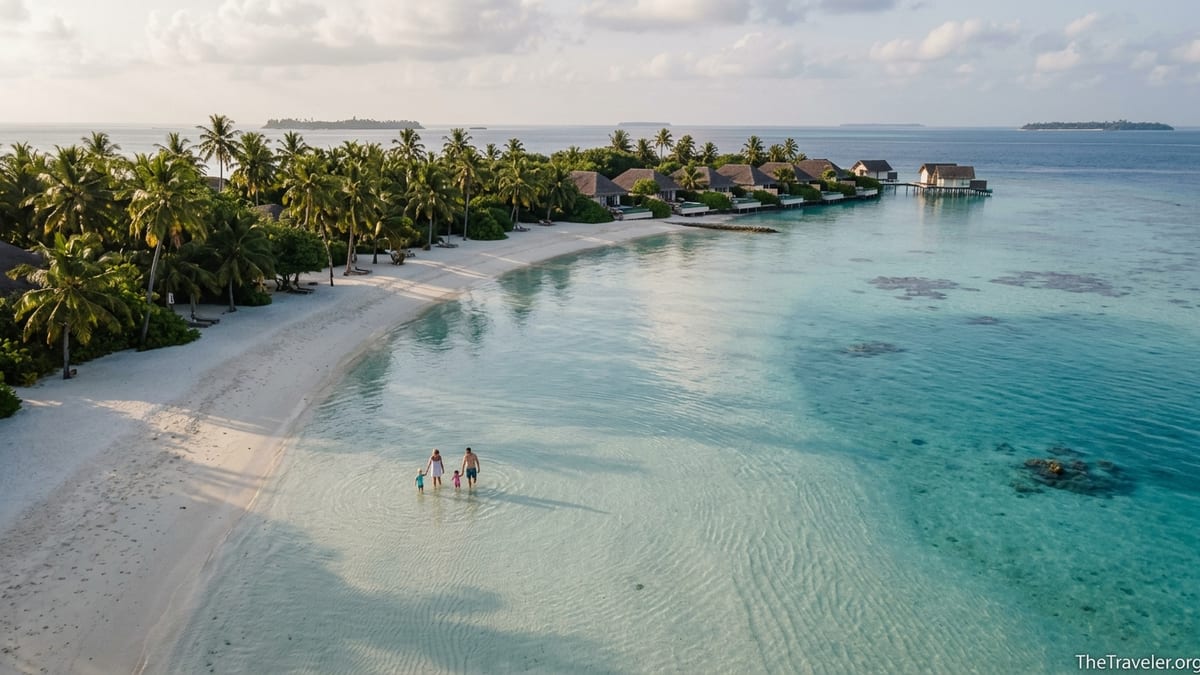
Parents often imagine the Maldives as a collection of overwater villas perched above deep blue water. While that image is iconic, families with young children will usually be more comfortable prioritising beach villas on islands with generous shallow lagoons. A lagoon suitable for toddlers typically means clear, sandy-bottom water, very gradual depth changes and limited currents around the main swimming areas. Properties that highlight “waist-deep” water in front of the main beach bar and pool are usually signalling this kind of child-friendly environment.
In practical terms, you might see this on the ground at a resort such as Joy Island in North Malé, where sunrise-side beaches give way to long sweeps of pale sand and turquoise water that stays shallow for many metres from shore. Parents can sit under a palm or umbrella while small children splash at the edge, using flotation vests or armbands. Resorts often keep non-motorised watersports such as kayaks and stand-up paddleboards slightly further from the main paddling zone to minimise collisions.
Overwater villas, even when they include child-safety gates and railings, generally open directly over deeper water and are often built around a drop-off into the atoll lagoon. For babies, toddlers and non-swimmers, a beach villa with a fenced or naturally enclosed garden is almost always more relaxing. Families who do want an overwater experience often split their stay between a few nights in a beach unit and a couple of nights overwater once they have assessed how safe and confident their children are in the environment.
Whichever atoll you choose, it is worth studying the island map before booking. Look for wide beaches on the calmer, lagoon-facing side rather than the ocean-facing edge of the atoll, particularly for travel during the shoulder seasons when winds and currents can shift. Many booking sites and resort brochures now show clear diagrams of prevailing winds and lagoon depths, and a quick email to the resort asking which side is best for toddlers can help you secure the right villa zone well before arrival.
Kids’ Clubs, Family Villas and Everyday Practicalities
A strong kids’ club transforms a Maldives trip from beautiful but tiring to genuinely restful. Most family-focused resorts in the central atolls now operate free daily kids’ clubs for children from about 3 or 4 years old up to around 11 or 12. Programmes range from simple arts and crafts to elaborate pirate days, Maldivian culture sessions and supervised snorkelling for older children. North and South Malé properties, along with key family resorts in Baa, Lhaviyani, Ari and Dhaalu, tend to lead the way here, with purpose-built clubhouses, shaded outdoor play areas and splash pads.
Age limits and opening hours matter. Some clubs run all day from roughly 9 a.m. to 6 p.m., while others close for a few hours at midday or require a parent to stay on-site with under-4s. Babysitting is usually available at an extra hourly cost, and can be a valuable option if you want one quiet dinner or a longer snorkelling trip. It is worth checking whether babysitting can be pre-booked in peak seasons and whether sitters are resort employees or outsourced providers.
Family villas vary considerably by atoll and price point, but most family-oriented properties offer either interconnecting standard rooms, dedicated family suites or two-bedroom beach villas. In North Malé, for example, some resorts combine two adjacent beach villas with a shared foyer or terrace, while in outer atolls like Baa and Dhaalu, you are more likely to find purpose-designed two-bedroom villas with large indoor lounges and private pools. When travelling with young children, features such as blackout curtains, shaded verandas, outdoor showers tucked away from the main sun and the possibility of a pool fence can all help everyone sleep and relax better.
Day-to-day practicalities, from buffet options to on-site shops, also influence how family-friendly a resort feels. Many islands now stock basic nappies, baby food, swim nappies and sun protection in their boutiques, but prices can be high and stock limited, so it makes sense to bring your preferred brands. Buffet restaurants in family resorts typically offer familiar items such as pasta, grilled chicken, rice and simple vegetables alongside Maldivian dishes, and many kitchens can purée softer items for babies if asked. At breakfast, expect a mix of continental and Asian options, plus fruits that can be peeled and cut for smaller children.
Medical Access, Safety and Choosing the Right Atoll by Age
While serious incidents in Maldivian resorts are relatively rare, parents understandably weigh medical access when comparing atolls. Resorts everywhere maintain at least a basic clinic or first-aid room staffed by a doctor or nurse, and can handle common issues such as minor cuts, fevers, ear infections and stomach upsets. For anything more complex, the plan usually involves transfer to a better-equipped clinic or hospital, most often in Malé or Hulhumalé. Atolls closest to the capital, such as North and South Malé, have the advantage of shorter, simpler emergency transfers compared with remote atolls where seaplane availability and weather can introduce delays.
Many families therefore take a phased approach to the Maldives as their children grow. With infants and toddlers up to about three years old, central atolls like North Malé and South Malé, or speedboat-accessible islands in nearby Ari, often make the most sense. These minimise travel time after a long-haul flight, provide quick access to urban medical facilities and offer plenty of shallow lagoon space coupled with kids’ clubs for older siblings. Once children are a little older, stronger swimmers and more robust travellers, outer atolls such as Baa, Lhaviyani, Dhaalu and parts of Raa or Noonu can become appealing for their richer snorkelling and more secluded feel.
No matter which atoll you pick, routine safety measures go a long way. Many repeat visitors recommend packing long-sleeve UV swim rash guards, good hats that can be worn in the water, and reef-safe sunscreen to minimise sunburn risk. Simple reef shoes can protect against hot sand and occasional coral fragments underfoot. Inflatable armbands or vests are helpful but should never replace active supervision, especially near overwater walkways and jetties where the lagoon can be deep from the first step.
Insurance is another practical consideration. A comprehensive travel policy that clearly covers seaplane and boat evacuations, water sports and medical treatment in the Maldives can provide valuable peace of mind. Before travelling, consider discussing your plans with your child’s paediatrician, particularly if anyone has asthma, severe allergies or a history of ear problems that could be aggravated by long flights, humidity or frequent swimming.
The Takeaway
The Maldives can be a remarkably low-stress destination for families as long as you match your children’s ages and temperaments to the right atoll and style of resort. For first-time visitors with babies or toddlers, the speedboat-accessible islands of North and South Malé Atolls provide the most straightforward logistics, with short transfers, wide shallow lagoons, solid kids’ clubs and comparatively easy backup access to medical facilities. Families with older, confident swimmers who crave quieter beaches and richer house reefs may find their perfect match in outer atolls such as Baa, Lhaviyani or Dhaalu, where large family villas and imaginative kids’ programmes sit alongside world-class snorkelling.
Instead of starting with a particular resort brand, begin by narrowing down atolls based on transfer type, lagoon conditions, kids’ club availability and your family’s health needs. From there, compare specific islands for villa layouts, beach orientation and everyday details like food and opening hours. With that groundwork in place, the Maldives shifts from “dreamy but daunting” to a destination where parents can relax, children can explore safely and the whole family can share the same turquoise-lagoon postcard moments.
FAQ
Q1. Which Maldives atolls are best for families with toddlers?
For toddlers, the easiest choices are North Malé and South Malé Atolls, where many resorts sit on shallow lagoons and are reached by short speedboat transfers from the main airport.
Q2. Are seaplane transfers in the Maldives suitable for young children?
Seaplanes are generally safe and exciting for school-aged kids, but the noise, heat and waiting times can be tiring for babies and toddlers, so some parents prefer speedboat-only atolls at first.
Q3. Which atolls offer the shortest transfers from Malé airport?
North Malé and South Malé Atolls have the shortest transfers, often 10 to 45 minutes by speedboat, with no additional flights once you land at the international airport.
Q4. Where can we find the calmest, most child-friendly lagoons?
Many family resorts in North and South Malé, as well as parts of Ari, Baa, Lhaviyani and Dhaalu Atolls, are built on broad, shallow lagoons specifically promoted as safe for children.
Q5. Is it safe to book an overwater villa with small children?
Overwater villas can be risky for non-swimmers because they open directly over deep water. Most families with small children choose beach villas and only consider overwater units when kids are older and water confident.
Q6. Which atolls have the best kids’ clubs and family villas?
Family-focused resorts with strong kids’ clubs and multi-bedroom villas are common in North and South Malé Atolls, and at well-known properties in Baa, Lhaviyani, Ari and Dhaalu Atolls.
Q7. How good is medical access on the more remote atolls?
Remote atolls usually have on-island first aid and rely on boat or seaplane transfers to clinics and hospitals near Malé for serious issues, so response times can be longer than in central atolls.
Q8. Which atolls are best if my children love snorkelling?
For keen snorkellers, Baa, Ari, Lhaviyani, Raa and Dhaalu Atolls stand out, with many resorts offering easy access to house reefs plus child-friendly lagoon areas for less confident swimmers.
Q9. Are there budget-friendly family resorts close to Malé?
Yes, several mid-range resorts in North Malé Atoll offer relatively more affordable rates, short speedboat transfers, kids’ clubs and shallow lagoons compared with ultra-luxury islands farther away.
Q10. How should I choose an atoll for a first Maldives trip with kids?
Start by deciding whether you want to avoid seaplanes, then look for atolls with short transfers, calm lagoon beaches, proper kids’ clubs and clear information about medical access that matches your family’s needs.