


Choosing between Ari Atoll and Baa Atoll is one of the most common dilemmas for travelers planning a trip to the Maldives. Both regions offer blue lagoons, coral-ringed islands and polished resorts, yet the experience on the water, under it and on the sand can be very different. This guide looks at how the two atolls really compare in 2026, from whale sharks versus manta rays to transfer costs, resort styles and which travelers each area suits best.
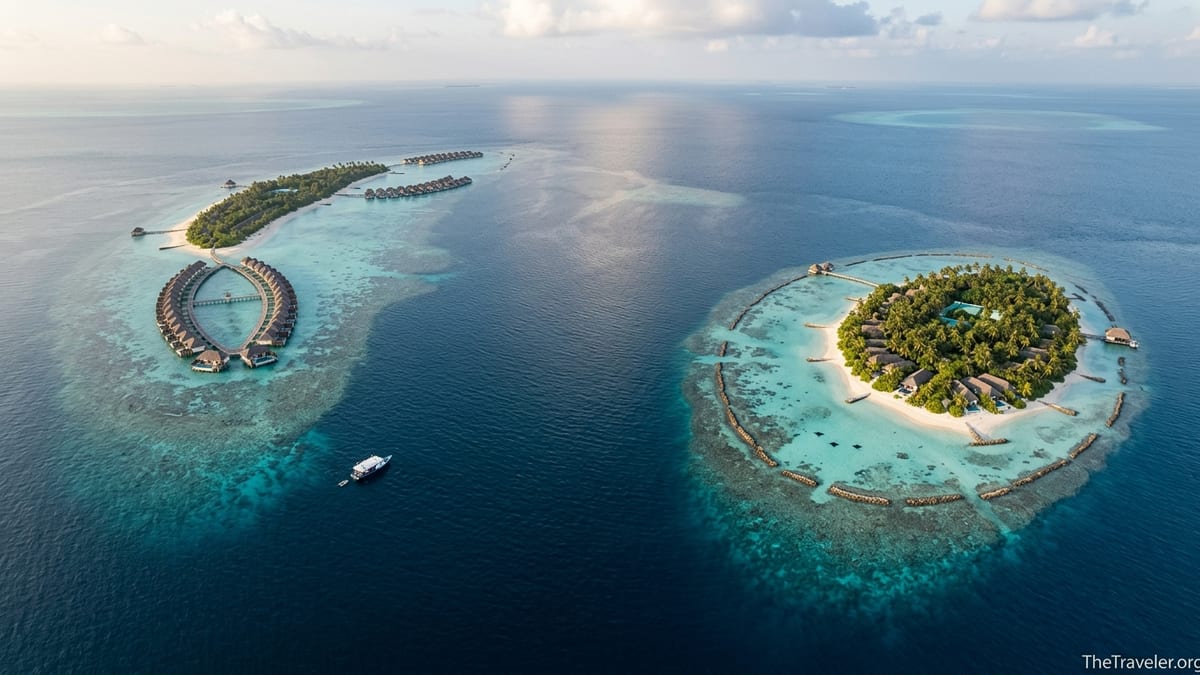
Big Picture: How Ari Atoll and Baa Atoll Differ
Ari Atoll, often split into North Ari and South Ari, sits to the west of the capital Malé and has long been one of the most developed tourism areas in the Maldives. It is known for reliable whale shark encounters in South Ari, strong diving and a wide range of resorts and guesthouses, from relatively affordable all inclusive options to polished luxury brands. Many islands here feel intimate and low-key, with excellent access to nearby channels and thilas for diving.
Baa Atoll lies a little farther northwest and has a very different calling card. It is home to the UNESCO Biosphere Reserve that includes Hanifaru Bay, one of the planet’s best-known seasonal manta ray aggregation sites, along with occasional whale sharks. The protected status of much of Baa means healthy reefs in many areas and strong conservation focus, and the atoll has attracted a cluster of upper upscale and luxury properties, from design-led beach clubs to ultra-private villas with serious price tags.
In simple terms, Ari Atoll is often the better choice if you dream of swimming with whale sharks and want lots of resort choice at different budgets. Baa Atoll tends to win if you are set on peak manta ray action in season and are happy to pay a premium for stylish, often design-driven resorts inside a biosphere reserve. The right answer depends less on which atoll is objectively “better” and more on your marine wish list, travel dates and budget.
Seasonality is also different. Whale sharks in South Ari are considered present year round, although conditions vary. Manta rays in Baa Atoll concentrate strongly around Hanifaru Bay in a defined southwest monsoon window, typically sometime between June and October, with peaks often reported around August and September. Travelers visiting outside those months should not expect the dramatic “snowstorm of mantas” images they may have seen, although Baa still offers excellent reefs and occasional mantas elsewhere.
Whale Sharks vs Manta Rays: Signature Wildlife
The most important commercial difference between Ari and Baa is which iconic megafauna you are more likely to encounter. South Ari Marine Protected Area, commonly referred to as SAMPA, covers a strip of reef and open water between the islands of Rangali, Dhigurah and Maamigili. Conservation assessments describe it as a globally significant aggregation area for whale sharks, and whale sharks are considered year-round residents of this broader area of Alif Dhaalu Atoll. In practice, many operators on islands like Dhigurah, Maafushivaru, LUX South Ari and Conrad Maldives Rangali organize regular whale shark excursions, sometimes spotting animals only minutes from the resort by dhoni.
Encounters in South Ari are often snorkel-based. A typical day might see your boat patrol the edge of the reef until a spotter sees a dark shadow or fin at the surface, followed by a controlled entry to swim alongside the animal at a respectful distance. On busy days, especially in peak seasons, there can be several boats in the vicinity of the same shark, so travelers seeking a quieter feel may prefer shoulder seasons or weekdays. Visibility can be variable, but repeat travelers often remark that South Ari offers some of the most consistent whale shark access in the country.
By contrast, Baa Atoll’s star is the manta ray. Hanifaru Bay, inside the Baa Atoll UNESCO Biosphere Reserve, is a shallow lagoon that in certain southwest monsoon conditions funnels plankton into a small area. On the right days in season, this can attract dozens of reef mantas and occasionally a whale shark to feed in tight spirals, barrel rolling through the water column. The bay is a marine protected area with strict rules: visitor and boat numbers are capped, stays inside the bay are time limited, and only snorkeling is allowed, with regulations against touching or chasing animals. Rangers patrol in high season and operators report that these measures have helped protect both mantas and visitor experience.
Outside Hanifaru itself, manta rays can also be seen at cleaning stations and outer reefs across Baa, often visited by resorts such as Anantara Kihavah, Amilla, Milaidhoo and Finolhu on guided snorkel or dive trips. However, huge feeding aggregations are very much tied to plankton patterns and season. If your trip is in January or March, you should treat manta encounters as a bonus rather than a guarantee, whereas a September visit gives you a much better chance of a classic Hanifaru experience, weather permitting.
Diving and Snorkeling: Reefs, House Reefs and Conditions
Both Ari and Baa offer excellent diving, but their character is slightly different. Ari Atoll is famous for its thilas, or submerged pinnacles, and channels with strong currents that draw in pelagic life. Dive boats from South Ari resorts often visit outer-reef sites where gray reef sharks, tuna and occasional hammerheads pass by, while central thilas support dense soft corals and schools of fusiliers and snappers. For snorkelers and casual divers, many Ari resorts are chosen specifically for their house reefs, as you can enter from the beach or jetty and quickly reach drop-offs with turtles, reef sharks and rays.
Examples include W Maldives in North Ari, where the reef rings the island and is praised by repeat guests for everyday turtle and reef shark encounters directly from shore. In South Ari, resorts like Lily Beach and Vilamendhoo are frequently mentioned for strong house reefs that are accessible for confident swimmers, with rich coral slopes only a short swim from the beach. Several budget and mid-range guesthouse islands in South Ari, such as Dhigurah, also give independent travelers access to decent snorkeling from shore combined with affordable boat trips to whale shark and manta sites.
Baa Atoll’s reef story is more varied. Parts of the atoll, particularly within and near the biosphere reserve, still hold notably vibrant coral and fish life. Resorts such as Anantara Kihavah and The Westin Maldives Miriandhoo highlight their house-reef snorkeling as a key selling point, with regular sightings of turtles, reef sharks and, in season, mantas gliding by the drop-off. Family resorts like Amilla and more boutique properties like Milaidhoo are also regularly recommended by experienced snorkelers for clear water and easy reef access.
However, not every corner of Baa has a dramatic house reef right off the beach; some islands sit in broad lagoons, prioritising wide sandbanks and calm shallows over steep coral walls. If daily snorkeling from your villa is critical, you should choose specific islands in either atoll known for this rather than relying on the atoll name alone. For newer snorkelers and families with small children, Baa’s gentle lagoons can be more forgiving, while experienced free-divers and photographers may find Ari’s mix of channels and thilas more exciting.
Resort Style, Atmosphere and Who Each Atoll Suits
The overall feel of resorts in Ari and Baa reflects who each atoll tends to attract. Ari Atoll generally offers more range, from simple guesthouses on local islands like Dhigurah or Maamigili through solid mid-range all inclusive resorts and up to five-star properties. For example, LUX South Ari combines stylish villas with a sociable atmosphere and strong focus on marine excursions, while resorts like Constance Moofushi and Lily Beach offer popular premium all inclusive packages that simplify budgeting for families and couples.
Many Ari islands maintain a relaxed, barefoot atmosphere, with an emphasis on snorkeling, diving and laid-back bars rather than elaborate facilities. Couples on honeymoons or anniversaries often gravitate to intimate islands in North Ari, like W Maldives or Kandolhu, where the vibe is romantic and the house reef is a daily highlight. Families are certainly present in Ari, especially during European school holidays, but the broader spread of price points means you do not have to pay ultra-luxury rates to access good reefs and whale shark trips.
Baa Atoll, by contrast, has a pronounced tilt towards design-led, high-touch resorts. Properties such as Anantara Kihavah, Amilla, Milaidhoo and Seaside Finolhu position themselves around personalised service, striking architecture and an emphasis on wellness, gastronomy and curated experiences. Some focus strongly on families, with elaborately designed kids’ clubs, teen hangouts and wellness activities, while others lean adult-oriented or at least quieter in feel even if children are allowed.
This does not mean Baa is only for couples, but the typical guest profile skews to travelers comfortable with higher nightly rates. If you want extensive dining choice, overwater fine-dining restaurants, underwater wine cellars or observatories, Baa’s top properties deliver that in a concentrated area. If, on the other hand, your priority is to maximise time in the water at a more moderate all in cost, an Ari resort with a good house reef and simple but comfortable villas may feel better value.
Transfers, Travel Time and Practical Logistics
Both Ari and Baa are considered mid-distance atolls from Malé, close enough for relatively short flights but usually beyond regular shared speedboat range for resorts. Most visitors reach both atolls by seaplane from Malé’s dedicated seaplane terminal, operated by airlines such as Trans Maldivian Airways. Typical flight times to South Ari and Baa are in the region of 25 to 35 minutes, depending on the specific island and any intermediate stops.
As of 2026, many travel-planning resources put seaplane round-trip costs to mid-range atolls like South Ari and Baa at around 300 to 500 US dollars per adult, sometimes higher at top luxury properties. Some example rate sheets from resorts in North Ari and Baa quote round-trip seaplane transfers for adults in the low to mid 400 dollar range, with discounted rates for children. These fees are paid to the resort and added to your overall bill rather than booked independently, which can be a surprise for travelers used to arranging their own domestic transport.
For budget-conscious travelers, Ari can sometimes be reached in more flexible ways than Baa. South Ari’s Maamigili has a domestic airport, and certain guesthouse stays or lower-cost resorts may package domestic flights plus speedboat, which can in some cases be slightly cheaper than seaplanes, especially for families. There are also public ferries and slow boats connecting local islands in Ari with Malé, though these are best suited to independent travelers with time to spare rather than those on five-night resort stays.
Baa Atoll is more consistently tied to seaplane transfers for resort guests, although those staying on inhabited islands can sometimes combine domestic flights to nearby airports with local ferries or speedboats. For most visitors booking a package at a resort like Anantara Kihavah, Amilla or Finolhu, the practical reality is a shared seaplane transfer bundled into the reservation, departing in daylight hours only. Travelers arriving late in the afternoon may need an overnight in Malé before their onward flight, which is important when comparing total trip cost and time between different atolls.
Accommodation Prices and Value for Money
Room rates fluctuate heavily with season, occupancy and promotional offers, but some general patterns hold when comparing Ari and Baa. Ari Atoll, especially South Ari, offers more options under the 600 to 800 US dollar per night mark for two people in high season, particularly at all inclusive resorts or locally run guesthouses. For instance, mid-range resorts in South Ari often advertise lead-in beach villas in shoulder season that start roughly in the high hundreds of dollars per night, with food and drinks included, which many couples find manageable for a five to seven night stay.
Baa Atoll’s standout luxury properties frequently command higher entry-level rates. Overwater villas at celebrated resorts such as Anantara Kihavah or Milaidhoo can often run into four figures per night in popular months, even before adding taxes and transfers. That said, Baa does include a few more moderately priced options and seasonal discounts can narrow the gap. Some family-oriented resorts offer meal plan promotions, kids-stay-free deals or reduced seaplane rates to soften the overall price.
From a value perspective, Ari often comes out ahead for travelers whose main priority is marine life encounters and snorkeling rather than design features and brand prestige. An experienced diver might choose a solid but not ultra-luxurious resort in South Ari with an excellent dive center and house reef, investing savings into extra dive packages or private whale shark trips. In Baa, the premium many travelers pay covers not only location near Hanifaru but also expansive villa sizes, high staff-to-guest ratios and more elaborate facilities.
The key is to price your holiday door to door. Two similar-looking room rates can lead to very different totals once you add seaplane transfers for a family of four, service charges and local taxes, and any required meal plans. In rough terms, a family of four paying around 350 dollars per person for a seaplane will spend about 1,400 dollars just getting to and from the resort, regardless of whether they choose Ari or Baa, so this should be part of the comparison.
Couples vs Families: Which Atoll Works Best?
Both Ari and Baa can work for couples and families, but the emphasis differs. Ari Atoll is particularly strong for couples who prioritise good snorkeling and diving at a broad range of price points, as well as for small families comfortable in a more independent setup. Many South Ari resorts offer simple kids’ clubs and family villas, but their core identity often still centers on diving and a relaxed bar scene, which appeals to active couples and older children.
For honeymooners and romantic getaways, intimate islands in North Ari like Kandolhu or W Maldives pair strong reefs with boutique scale. These islands offer a sense of seclusion, with fewer rooms and a focus on adult-friendly experiences such as private sandbank dinners, sunset cruises and wine tastings. Families are generally welcome but the ambiance tilts toward couples, which some guests find ideal for a special occasion.
Baa Atoll has several stand-out family resorts with extensive kids’ facilities and programming. Amilla and Finolhu, for example, are known for creative kids’ clubs and teen spaces, while more tranquil properties like Here Baa Atoll and The Westin Maldives Miriandhoo highlight spa, wellness and family-focused activities such as guided reef snorkeling with marine biologists. Parents who want structured activities for different age groups, from toddlers to teens, and who are happy on a slightly larger island with more facilities, often find Baa particularly convenient.
Couples who value design aesthetics, gourmet dining and curated experiences, alongside access to manta excursions in season, may also lean to Baa. A stay at a high-end Baa resort can feel more like a self-contained retreat, with everything from underwater restaurants to observatories on-site. If your ideal day is a yoga class, spa treatment, leisurely lunch and a sunset snorkel with mantas in season, Baa checks many boxes, provided your budget aligns.
Which Atoll Should You Choose?
If your primary goal is to swim with whale sharks and you want the highest possible chance of success, Ari Atoll, specifically South Ari, is typically the stronger choice. Islands around SAMPA, such as Dhigurah and Maamigili and nearby resort islands, offer frequent, relatively short trips to known whale shark hotspots, with the added benefit of strong general diving and solid house reefs at many properties. Ari also makes sense if you want flexibility on budget, perhaps combining a few nights at a higher-end resort with time at a guesthouse to stretch your stay.
If, instead, your dream is to float among dozens of manta rays in a shallow bay and your travel dates fall in the southwest monsoon window, Baa Atoll is hard to beat. Staying at a resort that runs regular trips to Hanifaru Bay in season can give you access to tightly managed but unforgettable encounters, while the biosphere reserve status helps protect the surrounding coral reefs and fish life. High nightly rates are offset for some travelers by the quality of villas, service and on-island experiences.
Travelers visiting in shoulder or dry season months like January to April and less fixated on specific megafauna should think more about reef quality, resort style and price than the Ari versus Baa label alone. A strong house reef in either atoll, a reputable dive center and the right meal plan can matter more day to day than whether your island is technically in a whale shark or manta hotspot. Always confirm with your chosen resort or guesthouse what marine experiences are realistic during your exact dates rather than relying on general atoll reputation.
For many first-time visitors, a practical rule of thumb is this: choose Ari Atoll if you want year-round whale shark potential, a focus on diving and more budget flexibility; choose Baa Atoll if you are traveling in manta season, value design-led luxury and are happy to pay more for access to the biosphere reserve and Hanifaru Bay. Either way, you are likely to spend most of your days barefoot, surrounded by clear water and coral gardens.
FAQ
Q1. Is Ari Atoll or Baa Atoll better for first-time visitors to the Maldives?
Ari Atoll often works better for first-timers who prioritise value and whale shark encounters, thanks to its strong mix of mid-range and high-end resorts and reliable marine excursions. Baa Atoll is ideal for travelers ready to spend more for luxury and who plan to visit during manta season.
Q2. When is the best time to visit Baa Atoll for manta rays at Hanifaru Bay?
The main manta season at Hanifaru Bay usually falls sometime between June and October, with many operators reporting peaks around August and September, though exact timing varies year by year depending on monsoon winds and plankton.
Q3. Are whale sharks guaranteed in South Ari Atoll?
No wildlife encounter is guaranteed, but South Ari Marine Protected Area is one of the most reliable places in the Maldives for whale sharks year round. Boats from nearby islands patrol known hotspots and typically enjoy regular sightings in suitable conditions.
Q4. Which atoll is cheaper overall, Ari or Baa?
On average, Ari Atoll tends to offer more mid-range and budget-friendly choices, including guesthouses and all inclusive resorts. Baa Atoll skews more to upper upscale and luxury properties, though promotions and a few lower-priced options can narrow the gap.
Q5. Do I have to take a seaplane to reach Ari or Baa Atoll?
Most resorts in both Ari and Baa are reached by shared seaplane from Malé, with typical flight times around 25 to 35 minutes. In South Ari, some guesthouses and a few resorts also use domestic flights and speedboats, which can occasionally be slightly cheaper.
Q6. Which atoll has better house-reef snorkeling directly from the beach?
Both atolls have standout house reefs, but individual islands matter more than the atoll name. Ari is famous for several excellent house reefs, while selected Baa resorts also offer vibrant drop-offs. Always check recent guest feedback and resort descriptions for your specific island.
Q7. Is Baa Atoll suitable for families with young children?
Yes. Many Baa resorts cater strongly to families, with extensive kids’ clubs, shaded pools, child-friendly menus and gentle lagoons. Parents should focus on islands that highlight family facilities and shallow, calm water rather than only reef depth.
Q8. Can I combine Ari and Baa Atoll in one trip?
It is possible but can be expensive and logistically complex, as you will usually need to route via Malé and pay separate seaplane transfers for each resort. Most travelers on week-long stays find it more practical to choose one atoll and explore it thoroughly.
Q9. Which atoll is better for serious divers?
Serious divers often lean toward Ari Atoll for its concentration of thilas, channels and year-round pelagic life, including whale sharks and reef sharks. Baa still offers excellent diving, especially near the biosphere reserve, but its main draw is seasonal manta snorkeling at Hanifaru Bay.
Q10. If I am not visiting in manta season, is Baa Atoll still worth it?
Yes, provided you value its luxury resorts, healthy reefs in many areas and quiet lagoons. Outside manta season you should treat manta encounters as a pleasant bonus rather than the main reason to visit, and focus on snorkeling, diving and relaxation instead.