


The Maldives is more than a collection of pretty islands. It is a long necklace of 26 coral atolls that dictate everything about your trip: how you arrive, what you spend, which marine life you see, and even how much privacy you enjoy. For first-time visitors, understanding these atolls is the key to choosing the right island, avoiding transfer surprises, and matching your dream of the Maldives with the reality on the ground and in the water.
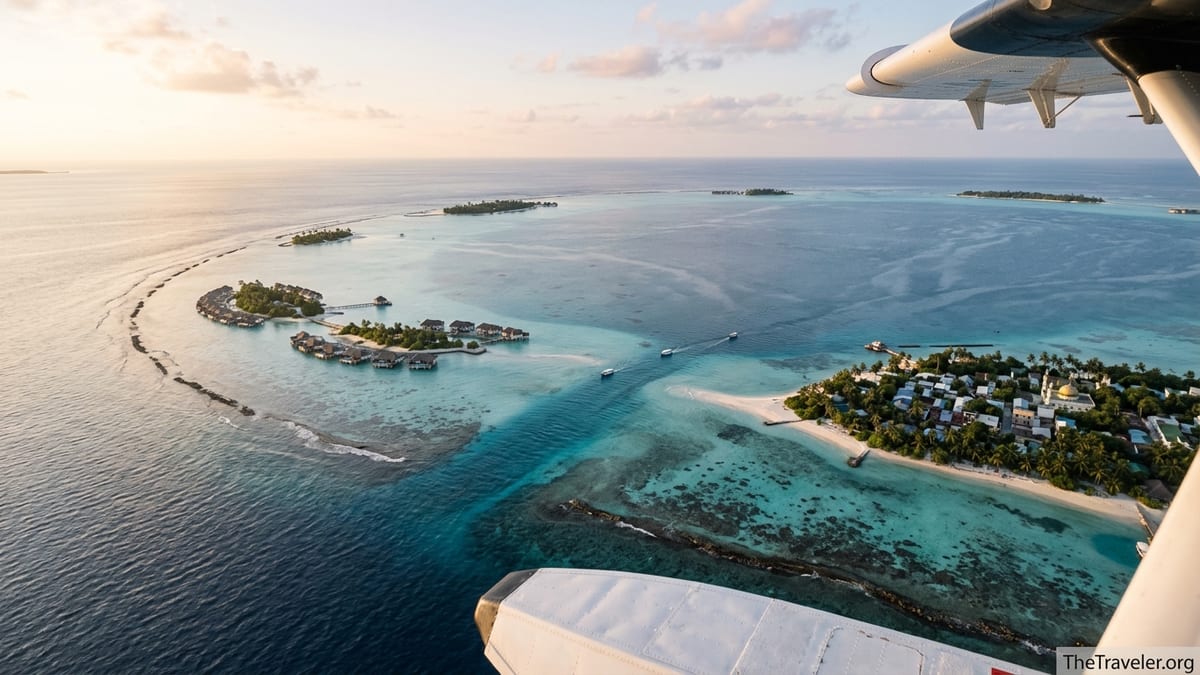
How the Maldives Is Divided: Atolls in Plain Language
On a map, the Maldives stretches like a broken ribbon across the Indian Ocean, running roughly 500 miles north to south. Geographically, it is made up of 26 natural atolls, each a ring of coral reef and islands built on the rim of an ancient volcano. Administratively, the government groups these into atoll names you will see when booking, such as North Malé Atoll, Baa Atoll or South Ari Atoll. Understanding those names helps you decode resort locations and transfer logistics before you commit to a nonrefundable stay.
The capital, Malé, and the main international gateway, Velana International Airport, sit in North Malé Atoll in the central part of the country. Most first-time visitors arrive here and then fan out by speedboat, domestic flight or seaplane to their chosen island. Atolls close to Malé, such as North Malé and South Malé, are more densely developed and easier to reach. Others, like Baa, Ari, Dhaalu or the deep south atolls near Fuvahmulah, feel more remote and often require a seaplane or a domestic flight plus speedboat.
Travelers commonly hear about a handful of atolls rather than all 26. Baa Atoll, for example, is a UNESCO Biosphere Reserve famed for manta rays and whale sharks at Hanifaru Bay. Ari Atoll, usually split into North Ari and South Ari in resort marketing, is known for reliable whale shark sightings around its marine protected area. Nearby local islands such as Dhigurah and Maamigili have grown into popular bases for budget-conscious snorkelers chasing the same giants. These regional specialities are one reason it pays to choose an atoll first, then a resort or local island within it.
Farther away atolls like Raa, Lhaviyani, Dhaalu or Gaafu Alifu often offer larger natural lagoons, less boat traffic and a feeling of open horizon. Reaching them typically means a domestic flight or seaplane hop of 30 to 60 minutes after you land in Malé. A traveler staying at a resort in Dhaalu Atoll, for instance, might take a 40 to 60 minute seaplane transfer directly from the seaplane terminal, compared with a 20 to 45 minute speedboat ride to many islands in South Malé Atoll.
Major Tourism Atolls and What They Are Known For
For a first visit, focusing on the main tourism atolls simplifies planning. North Malé Atoll is the classic starter choice because it is closest to the airport and offers a spectrum of properties, from relatively affordable options to high-end brands. Many islands here are reached by shared speedboat in 15 to 45 minutes, which keeps transfer costs lower and lets U.S. and European travelers on overnight flights be in the water before lunch on arrival day.
South Malé Atoll, separated from the north by a deep channel, is another highly developed area. It hosts well-known resorts and several famous local islands like Maafushi and Gulhi that have transformed into budget tourism hubs with dozens of guesthouses. First-time visitors who want both resort-style day trips and cheaper stays often use Maafushi as their base, hopping out to nearby sandbanks and snorkeling reefs on shared excursions while paying a fraction of resort nightly rates.
Baa Atoll sits northwest of Malé and stands out for its protected status as a UNESCO Biosphere Reserve and for Hanifaru Bay, a shallow lagoon where manta rays gather in their dozens, sometimes hundreds, between roughly June and November. Resorts such as Four Seasons Resort Maldives at Landaa Giraavaru and Milaidhoo, and local islands like Dharavandhoo, position themselves around access to this natural spectacle. Trips here are typically via seaplane or a short domestic flight to Dharavandhoo followed by speedboat.
Ari Atoll, split into North Ari and South Ari, is one of the most popular choices for divers and marine-life enthusiasts. The South Ari Marine Protected Area, extending near islands like Dhigurah and Rangali, is well known for year-round whale shark encounters, especially around shallow outer reefs where snorkel boats from both resorts and local islands go out daily when weather allows. Resorts such as Lux South Ari Atoll and Conrad Maldives Rangali Island market this directly, while guesthouses on Dhigurah, Maamigili and Dhangethi offer far cheaper access to the same whale shark cruises.
More emerging for first-timers, but increasingly popular, are atolls like Lhaviyani and Raa in the north and Dhaalu in the central-south. Lhaviyani Atoll has become known for high-end all-inclusive resorts and channels where reef sharks and eagle rays are frequent. Raa hosts ultra-luxury properties such as The Ritz-Carlton Maldives and more midrange options, plus long sandbanks and wide lagoons. Dhaalu offers a similar mix, with resorts like Angsana Velavaru and Niyama Private Islands set near productive dive channels and good chances to see turtles and reef sharks, with fewer boats around than in the Malé atolls.
Resorts vs Local Islands: Two Very Different Maldives
One of the most important choices for a first-time visitor is between staying on a private resort island or on a local inhabited island with guesthouses. A resort island is typically leased to a single hotel operator under the Maldives one-island-one-resort model. Everything on the island, from the restaurant to the dive center, is run by the resort. Alcohol is freely served, bikinis are worn across beaches and overwater villas, and most guests rarely leave except for excursions. This is the picture most people have when they imagine the Maldives.
Local islands, by contrast, are home to Maldivian communities, schools and mosques. Tourism has grown steadily on these islands, especially in atolls near Malé and in parts of Ari. Islands such as Maafushi and Thulusdhoo near the capital, or Ukulhas and Rasdhoo in Ari region, now feature dozens of small hotels and guesthouses, simple cafés, and local tour operators offering snorkeling and diving. Local islands are significantly cheaper, but they follow Maldivian laws on dress and alcohol. Bikinis are limited to specific designated beaches, and alcohol is not served on the island itself, though some operators run day trips to offshore “floating bars” or resort islands for visitors who want a drink.
Price differences between the two models can be dramatic. A couple booking a four-star resort with half board might pay several hundred dollars per night plus 15 to 25 percent in taxes and service charges, and mandatory transfers. The same couple in a comfortable guesthouse on a local island might pay a fraction of that, perhaps under 150 dollars per night including breakfast in some areas, then join shared excursions to house reefs and sandbanks. Many first-time visitors who want the classic overwater villa feel compromise by spending three or four nights on a local island followed by two or three nights at a resort, or vice versa.
The experience also differs in how controlled your environment feels. On resorts, everything is curated: lighting, landscaping, menu design and even the soundtrack at sunset. On a local island, you might hear the call to prayer from the mosque, children playing football at dusk and fishing boats heading out at sunrise. For some travelers this local life is part of the appeal, while others prefer the polished, international anonymity of a resort. Both are valid choices; the right one depends on your budget, expectations around alcohol and swimwear, and how much you value immersion in daily Maldivian life.
Marine Life by Atoll: Where to Find What You Dream Of
The atoll you choose heavily shapes the marine life you are likely to encounter. Reef fish, turtles and small reef sharks are common across most atolls, but certain areas stand out for specific species. Baa Atoll is world famous for manta rays and occasional whale sharks at Hanifaru Bay, a funnel-shaped lagoon that becomes a natural plankton trap between roughly June and November. Entry numbers are controlled and the experience is restricted to snorkeling, with rules such as no flash photography and time limits in the water.
South Ari Atoll is considered one of the most reliable places on the planet to see whale sharks in shallow water. The South Ari Marine Protected Area, running roughly between Rangali Island and Dhigurah, attracts young whale sharks year-round, with peaks often observed in the dry season months. Snorkel boats frequently depart from resorts like Lux South Ari Atoll or local islands such as Dhigurah and Maamigili, cruising along the outer reef until a whale shark is spotted at the surface. Guests then slip into the water with guides, usually sharing the encounter with several other boats.
For mantas outside Baa’s short season, many divers and snorkelers look to atolls with cleaning stations and channels that mantas visit more regularly. North Malé Atoll has famous dive sites such as Lankan Manta Point, where mantas are seen in season at shallow cleaning stations. Other central atolls like Ari and Raa also have reliable manta cleaning spots. If your dream is simply to swim over coral reefs with turtles and reef sharks, most atolls deliver. House reefs at islands in Lhaviyani, Dhaalu or Gaafu Alifu often offer high coral diversity and easy turtle encounters directly from shore.
Divers seeking more adventurous encounters sometimes look to the deep south, around Fuvahmulah and nearby atolls, which are better known for pelagic species such as tiger sharks and threshers. These areas are less typical for a first-time, family-focused Maldives holiday, as they usually involve domestic flights, liveaboard boats or dive-centric lodges, but they illustrate an important point: the Maldives is not one uniform lagoon. It is a chain of distinct marine neighborhoods, and choosing the right one is essential if wildlife is a priority for your trip.
Getting There: Seaplanes, Speedboats and Domestic Flights
Atoll choice and transfer logistics are tightly linked. Islands close to Malé, especially in North and South Malé Atoll, are most often accessed by shared speedboat. Typical transfer times range from around 15 minutes to about 45 minutes depending on the island and sea conditions. Shared speedboat transfers are generally the least expensive, with many resorts and local islands advertising round-trip prices that start around the low hundreds of dollars per person for adults, and discounted rates for children.
Resorts in more distant atolls often rely on seaplanes or domestic flights paired with speedboats. Seaplane transfers are scenic and feel like an experience in themselves, but they add significantly to the trip cost. Industry figures and resort examples suggest typical round-trip seaplane fees for adults can fall in a band of roughly 400 to 800 US dollars per person, depending on distance and resort policy. For instance, a resort in the outer atolls may publish a seaplane supplement in this range, while some ultra-luxury properties price even higher. Occasionally, mid to high-end resorts run promotions that bundle seaplane transfers into the room rate, which can offer very good value if you watch for it.
Domestic flights operate like short regional hops using small aircraft from Malé to regional airports, followed by a speedboat ride to the island. Total costs for these combinations are often somewhere between speedboats and seaplanes, though exact pricing varies widely. Travelers heading to the far south, for example, might catch a domestic flight of an hour or so, then transfer by speedboat. These journeys can easily add several hours to your arrival day, and domestic schedules are less frequent than speedboats, so planning your international flight times to align is important.
One critical detail many first-timers discover late is that almost all resort transfer fees are mandatory and arranged directly by the resort, not independently. You do not typically book your own seaplane ticket. Instead, you provide your international flight details and the resort books you onto a shared seaplane or domestic connection. Seaplanes operate only in daylight hours, so if your flight lands late in the evening you may need an overnight stay in Malé or nearby Hulhumalé before transferring the next morning. Baggage allowances on seaplanes are usually around 20 kilograms of checked luggage plus 5 kilograms of hand luggage per person, with extra charged per kilogram, so packing light pays off.
Accommodation Styles and What To Expect in Each Atoll
Across the Maldives, accommodation falls broadly into three types: classic beach villas on the sand, overwater villas on stilts above the lagoon, and simpler hotel-style rooms or guesthouses on local islands. In tourism-heavy atolls like North Malé and South Malé, you will find all three within short transfer distances of the airport. A first-time visitor wanting a postcard-style overwater villa stay can easily find entry-level overwater categories at mid-range resorts in these atolls, though views may include other islands or boat traffic due to the density of development.
In Baa and Ari atolls, overwater villas often sit above deeper, clearer lagoons with fewer nearby islands, which creates that endless-horizon feel many visitors want. High-end properties such as Milaidhoo or some boutique resorts in Baa focus strongly on privacy, with fewer villas and more space between them. On the local islands around these atolls, accommodations are usually low-rise guesthouses with simple but comfortable rooms, some with rooftop terraces and plunge pools rather than private ocean access. You might walk five minutes from your door to a designated bikini beach rather than step directly into the lagoon from your deck.
Farther-flung atolls like Raa, Lhaviyani and Dhaalu host a mix of luxury all-inclusive resorts and more affordable options. Because land is more plentiful and demand is slightly less concentrated, resorts here sometimes offer larger standard villas and more generous all-inclusive plans than their counterparts closer to Malé. A family might find that a resort in Lhaviyani offers a two-bedroom beach villa and all meals for a price comparable to a smaller room and breakfast-only plan at a name-brand property in North Malé, even once transfers are factored in.
On local islands, the feel varies by atoll and island size. Maafushi in South Malé Atoll has grown into a busy tourism hub with several streets of guesthouses, cafés, dive shops and souvenir boutiques. Thulusdhoo, known for good surf, has a more laid-back village vibe with a handful of beachfront guesthouses and sandy side streets. In Ari, islands like Ukulhas and Dhigurah combine compact guesthouse districts with easy beach access and daily whale shark or manta excursions. For a first-time visitor, choosing a local island in an atoll known for the marine life you want to see helps ensure your lower nightly rate still delivers big experiences in the water.
How First-Time Visitors Should Choose an Atoll
The best way to choose an atoll for your first Maldives trip is to work backward from your priorities, then overlay budget and transfer realities. If your dream is simply white sand and turquoise water after a long-haul flight, with minimal travel on arrival day, the Malé atolls are the simplest choice. A resort or local island within 20 to 45 minutes by speedboat lets you land in the morning and sip a welcome drink before lunch, and it cuts transfer costs versus seaplanes.
If your focus is iconic wildlife such as whale sharks or manta rays and you are willing to invest more time and money for transfers, Baa or Ari may be the smartest first choice. A traveler visiting in July or August who wants to swim with manta rays in large groups might anchor their search around Baa Atoll and Hanifaru Bay, choosing between resorts or local islands that can reach the bay by speedboat. Another traveler visiting between roughly December and April who dreams of whale sharks could instead concentrate on South Ari Atoll, comparing options on Dhigurah, Maamigili or nearby resort islands that run regular whale shark cruises.
Budget and travel style are the next filters. Couples on a tighter budget might lean toward a local island in Ari or a popular budget hub like Maafushi or Thulusdhoo, then add a single splurge night at an overwater villa in a nearby resort. Families with children who value kids’ clubs, multiple restaurants and all-inclusive plans may find better value in larger resorts in Lhaviyani, Raa or Dhaalu, where space and competition encourage generous inclusions. Honeymooners looking for maximum privacy and adult-focused atmospheres may gravitate toward smaller boutique resorts in Baa, Ari or the outer atolls, accepted in exchange for higher transfer costs.
Season and weather also matter. The Maldives has two main monsoon patterns, broadly dividing the year into a drier season from about December to April and a wetter, more changeable period from May to November. Neither season is consistently bad, but sea states, wind direction and plankton concentrations shift by month and by atoll. If your dates are fixed in the shoulder season months, choosing an atoll based on what is typically happening in the water at that time can tilt odds in your favor. For example, a May or June trip with a manta focus might push you toward Baa, while a February visit could make almost any atoll with strong house reefs a good choice.
The Takeaway
For a first-time visitor, the Maldives can feel like a blur of turquoise photos and resort names. Viewing it instead as a chain of specific atolls, each with its own access, pricing and marine personality, brings clarity. North and South Malé offer convenience and lower transfer costs, Ari and Baa deliver headline marine life at a price in time and money, and outer atolls trade longer journeys for space and seclusion.
Deciding between a resort island and a local island is just as important. Resorts bundle privacy, alcohol and polished service into a single tidy package. Local islands stretch your budget further and open a window into Maldivian life, at the cost of some freedom with alcohol and swimwear. Neither choice is wrong, but each fits a different traveler.
If you begin your planning by asking three questions – what marine experiences matter most to me, how long am I willing to travel after landing in Malé, and what level of privacy and polish do I want – the right atoll often reveals itself. From there, fine-tuning whether you sleep over water or on the sand, on a resort or a local island, becomes the enjoyable part rather than an overwhelming puzzle.
FAQ
Q1. Which atoll is best for a first-time visitor to the Maldives?
There is no single best atoll, but North and South Malé are ideal for short stays because they are closest to the international airport and reached by relatively cheap, fast speedboats. If you have more time and budget, Ari or Baa add stronger chances of manta rays and whale sharks.
Q2. How much should I budget for transfers between Malé and my island?
As a rough guide, shared speedboat transfers for resorts and local islands near Malé often run in the low hundreds of dollars per adult round-trip, while seaplane transfers to more distant atolls commonly fall somewhere in the 400 to 800 US dollar range per adult. Domestic flights plus speedboats tend to sit between those two, but each resort or operator sets its own exact price.
Q3. Are seaplane transfers worth the extra cost?
Many visitors consider the aerial view of the atolls from a seaplane to be a highlight of the trip, and the time savings versus long boat rides can be significant. However, for shorter trips or tighter budgets, choosing an island reachable by speedboat can free up money for a better room category, an extra excursion or an additional night.
Q4. Can I drink alcohol on all islands in the Maldives?
Alcohol is freely served on resort islands and liveaboard boats, but on local inhabited islands it is not available in shops, cafés or guesthouses. Some local-island operators arrange day trips to nearby resort islands or special floating bars anchored offshore where alcohol can be consumed, but you cannot assume it will be available where you sleep unless you are staying at a resort.
Q5. What is the difference between North Malé and South Malé Atoll?
Both are close to the airport and popular with first-time visitors. North Malé has many long-established resorts and some famous surf breaks, while South Malé mixes private islands with busy local-island hubs like Maafushi. Transfer times and prices are broadly similar, but South Malé offers more budget guesthouses and a livelier local scene.
Q6. Which atoll should I choose if I want to see whale sharks?
South Ari Atoll is widely regarded as the most reliable area in the Maldives for shallow-water whale shark encounters, thanks to a designated marine protected zone along its outer reef. Baa Atoll and some southern atolls also see whale sharks, but if your top priority is maximizing chances, focusing on South Ari is usually the most strategic first choice.
Q7. Is it realistic to combine a local island and a resort in one trip?
Yes, many first-time visitors split their stay, for example two or three nights on a local island followed by two or three nights at a resort. The easiest version is to choose both in the same broad area, such as a local island and resort within the Malé atolls, or both in Ari, so transfer routes stay simple and costs do not multiply.
Q8. Do all atolls have good snorkeling directly from the beach?
Most atolls offer at least some islands with strong house reefs close to shore, but it varies by island more than by atoll. In some lagoons you may need a boat to reach the drop-off, while on other islands the reef begins a short swim from the sand. When comparing properties, look for recent guest reviews and descriptions that mention house-reef access and typical marine life.
Q9. How many nights should I plan for my first Maldives visit?
For long-haul travelers, five to seven nights is a comfortable minimum, especially if you are taking a seaplane or domestic flight after you land. Shorter stays can feel rushed once you factor in jet lag and transfer times. If you stay within the Malé atolls and arrive on an early flight, a three or four-night trip can still be worthwhile, but you will have less margin for weather or schedule changes.
Q10. Is the Maldives suitable for independent, budget-minded travelers?
It is increasingly friendly to independent travelers, especially those willing to stay on local islands with guesthouses, use public ferries where available, and join shared excursions. Costs will almost always be higher than many mainland beach destinations, but by choosing a local island in an atoll like Ari or South Malé and avoiding seaplanes, budget-minded visitors can still experience clear water, reefs and island life without resort-level prices.