


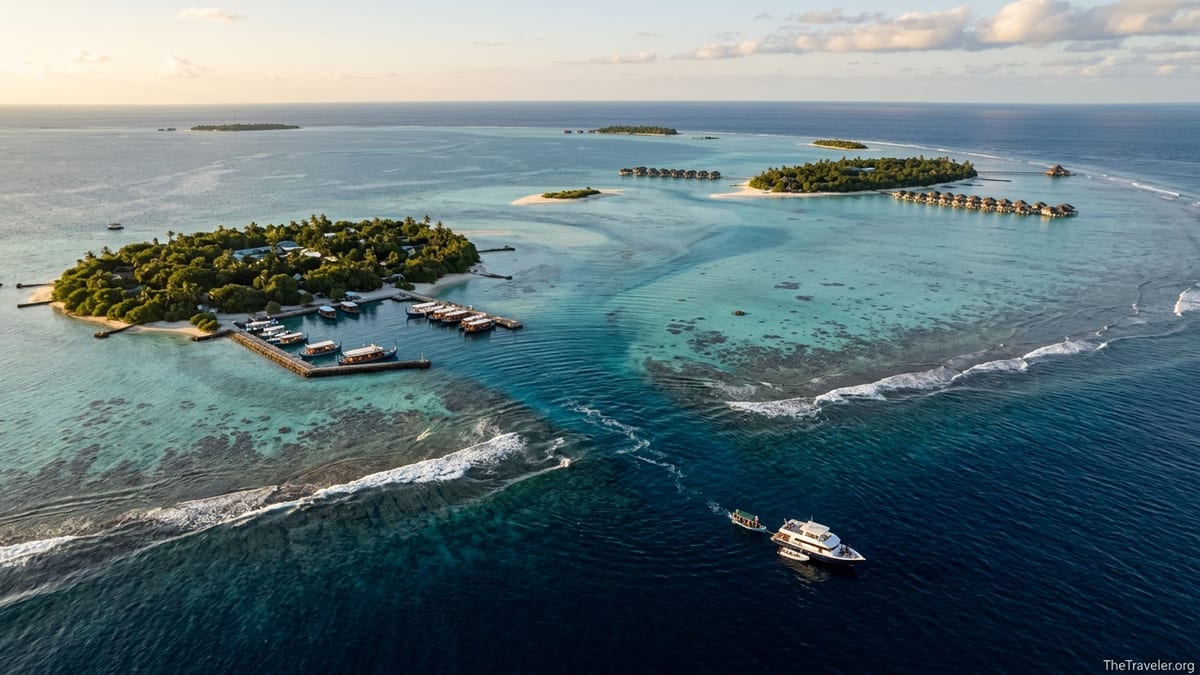
The Maldives has more than two dozen atolls, hundreds of resorts and local islands, and thousands of dive sites. Yet for most divers, the real decision comes down to a handful of headline regions: Ari, Vaavu, North and South Malé, Baa, the central-southern atolls such as Laamu, and the far-southern Fuvahmulah and Addu. Each offers a different mix of channel drift dives, shark encounters, manta aggregations, wrecks, and the choice between resort-based and liveaboard diving. This guide compares the key atolls that matter most when you are actually booking a trip and putting down a deposit.
How the Maldives Dive Regions Compare Overall
Choosing the “best” atoll is less about a single perfect place and more about matching conditions and marine life to your priorities. A first-time visitor on an open water certification with 20 dives will likely be happiest in Ari or around the Malé Atolls, where there are plenty of sheltered reefs and thilas along with famous whale shark and manta dives. More experienced divers who enjoy currents and hook-in action often gravitate to Vaavu and the southern atolls, where broad ocean channels funnel pelagics. Dedicated shark lovers and photographers now talk almost obsessively about Fuvahmulah’s tiger sharks and the deep south’s hammerheads, while macro fans can still find critters like ghost pipefish and leaf scorpionfish along protected reefs across the country.
Logistics also matter. Most resort and liveaboard departures start from Malé, so central atolls like North and South Malé, Ari and Vaavu are relatively simple to reach with short speedboat transfers or a direct overnight liveaboard itinerary. Baa, Laamu, Fuvahmulah and Addu usually involve a domestic flight from Malé on top of your international ticket, which adds cost but opens up less crowded sites and seasonal highlights like Hanifaru Bay mantas or the British Loyalty wreck. Budget-conscious divers often combine a local-island guesthouse stay in Ari or South Malé with a week on a central-route liveaboard, while honeymooners and families tend to prefer upscale resort islands where a 5-star spa sits a few steps from the dive center.
Pricing varies widely. A mid-range liveaboard on a classic “Best of Maldives” route that covers North/South Malé, Ari and Vaavu typically runs in the range of about 1,800 to 2,800 US dollars per person for a week, excluding flights and gear rental. A resort-based stay can be cheaper for light divers who only want a handful of dives, or significantly more expensive at luxury brands like Six Senses Laamu or Four Seasons Landaa Giraavaru in Baa Atoll, where nightly villa rates can rival the price of an entire week on a basic liveaboard. Understanding what each atoll offers in practical terms helps you avoid paying premium prices for the wrong kind of diving.
Ari Atoll: Whale Sharks, Mantas and Easy All-Round Diving
If you ask Maldivian dive professionals where to send a mixed-experience group for a first visit, Ari Atoll is often their answer. South Ari, in particular, is known for year-round whale shark encounters along the Maamigili to Dhigurah island corridor, where local dive centers and liveaboards regularly spot sharks cruising or feeding near the surface. Operators based on islands like Dhigurah, Maamigili and Dhangethi run daily trips to this stretch, and many central-route liveaboards plan at least one or two days here specifically to maximize whale shark chances. You are not guaranteed a sighting, but in practice many divers see at least one during a week-long itinerary when conditions cooperate.
Ari also delivers classic Maldivian thila diving. Mid-channel pinnacles such as Maaya Thila, Fish Head and Five Rocks are frequently included on liveaboard schedules and resort day boats, with steep walls, overhangs and strong-ish but manageable currents that bring in schools of fusiliers, trevallies, white tip reef sharks and turtles. For newer divers staying on a local island like Omadhoo or Ukulhas, house reef dives and sheltered thilas provide relaxed introductions to Maldivian drift techniques before you tackle deeper pinnacles or channels. North Ari adds variety with sites like Rasdhoo’s hammerhead point, typically dived at dawn by advanced groups hoping for silhouettes of schooling hammerheads in the blue during the dry season months.
Accommodation choices in Ari cover almost every price point. There are polished all-inclusive resorts such as Vilamendhoo, Lux South Ari and Constance Moofushi that bundle three dives a day into weekly dive packages. You can also find budget guesthouses on islands like Dhigurah and Thoddoo, where two-tank dives run noticeably cheaper than resort operations, incidentals cost less, and you still have easy access to whale shark and manta sites. This range, combined with relatively forgiving dive conditions, is why Ari remains the default recommendation for couples where one partner is a keen diver and the other values beaches, pools and spa time just as highly.
Vaavu Atoll: Channels, Currents and Bucket-List Night Dives
Vaavu, often referred to by the traditional name Felidhoo Atoll, is where many experienced Maldivian guides go on their days off. The appeal is simple: wide ocean channels, powerful currents and dense shark action. Fotteyo Kandu, frequently mentioned in regional dive guides, is a headline site with a corner that lights up when the current pumps out of the atoll. Hook in along the outer edge and you can watch grey reef sharks, eagle rays and schooling trevallies hang in the flow while soft corals and sea fans whip in the surge. Other well-known channels such as Miyaru Kandu and Devana Kandu offer similar themes: midwater hangs with sharks and rays, followed by drifts along richly encrusted walls.
One of the country’s most talked-about experiences is the Alimatha Jetty night dive on Vaavu’s eastern edge. In shallow water, often less than 10 to 15 meters, dozens of nurse sharks and stingrays gather under the pier lights, accustomed to the presence of divers. A handful of liveaboards include this dive on their “Best of Maldives” routes, and several guesthouses on nearby local islands now market it as a must-do even for relatively new divers with good buoyancy control. It is intense, close-quarters big-animal diving, so operators generally brief very clearly about behavior, hand placement and camera etiquette.
Because Vaavu is smaller and less resort-developed than Ari or Baa, most visitors experience it from a liveaboard. Central itineraries typically combine one or two days in Vaavu with time in South Malé and Ari, using Malé’s international airport as the turnaround port. A few guesthouses on islands like Keyodhoo and Thinadhoo now run daily two-tank channel trips, which can be good value if you are comfortable with currents but do not want to commit to a boat-based week. Vaavu is not ideal for absolute beginners, yet for confident intermediate and advanced divers who enjoy negative entries and reef hooks, it often ends up being the highlight of a central Maldives trip.
North & South Malé Atolls: Convenient, Varied and Ideal Before or After a Liveaboard
North and South Malé Atolls are the practical heart of Maldivian tourism. Velana International Airport sits in North Malé, and many resort islands and local-island guesthouses lie within a one-hour speedboat ride. For divers, this means you can be underwater the same afternoon you land, which makes the Malé Atolls perfect for short trips, warm-up dives before a liveaboard, or an easy add-on at the end of a longer itinerary. The diving here blends outer-reef channels, inner lagoon thilas and accessible house reefs, with plenty of options in the 10 to 25 meter range.
North Malé has long-established dive sites such as Banana Reef and HP Reef, with dramatic drop-offs, overhangs and colorful soft corals. In channel areas you can expect grey reef sharks, jacks and sometimes mantas at cleaning stations, although numbers vary with seasonal currents. South Malé tends to feel a little quieter and slightly more current-exposed, which is why a number of “sharks and channels” liveaboard itineraries include it along with Vaavu and South Ari. Local islands like Maafushi and Guraidhoo have become popular with value-focused divers, offering guesthouse rooms, in-house dive centers, and day trips to a circuit of nearby channels and pinnacles at lower prices than most resort boats.
For those who prioritize comfort and amenities, the Malé Atolls have some of the highest concentration of high-end resorts anywhere in the country, from international brands with on-site decompression chambers to boutique private-island properties aimed at couples. Many run well-organized dive centers with multilingual instructors and full sets of rental gear. If you are planning a trip with mixed divers and non-divers or with children who are just starting their training, a resort in North or South Malé can strike a good balance: easy logistics, solid reef diving, and plenty of non-diving distractions within a short hop of the airport.
Baa Atoll: Hanifaru Mantas and Upscale Resort Diving
Baa Atoll is internationally known for one reason: seasonal manta aggregations at Hanifaru Bay, a UNESCO Biosphere Reserve famous for mass feeding events where dozens or even hundreds of reef mantas circle tightly in plankton-rich water during the southwest monsoon. Operators in Baa report that the main season tends to run from roughly June to November, with peaks often associated with certain moon phases when tides intensify plankton flows into the bay. Regulations restrict access to guided snorkeling only, with strict time limits and maximum group sizes, and diving is not allowed inside the bay itself. Even so, getting into the water with such numbers of mantas in shallow, protected conditions is one of the most impressive wildlife experiences available in the Maldives.
Away from Hanifaru, Baa Atoll has a ring of outer-reef cleaning stations and thilas where mantas visit throughout the season, allowing actual scuba encounters at sites chosen day by day according to current and plankton conditions. Coral cover can be excellent on some outer walls, and there is the usual mix of turtles, schools of fusiliers and occasional grey reef sharks. Because of its biosphere designation and relatively low density of local islands, Baa has developed a reputation for high-end, environmentally focused resort diving. Properties such as Four Seasons Landaa Giraavaru and Soneva Fushi invest heavily in marine biology teams and research collaborations, which means guests often have the chance to join manta ID projects or attend evening talks in addition to regular dive trips.
Baa is less convenient and more expensive than central atolls. Reaching most resorts requires a seaplane flight from Malé, and nightly rates at the better-known properties can be several hundred US dollars or more even in shoulder season. There are a few more affordable guesthouses on islands like Dharavandhoo, which sits close to Hanifaru’s marine protected area and has its own small domestic airport. For serious manta enthusiasts or underwater photographers who can schedule travel within the June to October window, Baa is arguably the strongest choice in the Maldives. For budget-conscious divers traveling outside that period, other atolls may offer better overall value.
Laamu and the Central-Southern Atolls: Strong Channels without the Crowds
South of the main tourism belt, a chain of atolls including Meemu, Thaa and Laamu bridge the gap between the central and far-southern Maldives. These atolls see fewer visitors and fewer boats than Malé, Ari or Baa, which is exactly what many experienced divers appreciate about them. Channel names like Fushi Kandu in Laamu or Vanhuravalhi Kandu in Meemu are not yet as famous as Fotteyo, but they share the same essential ingredients: wide ocean pass, strong tidal current and the chance to watch schools of grey reef sharks, eagle rays and dogtooth tuna holding position in the blue. On days with incoming current, divers often drop on the outside edge, hook in, and simply watch the show.
Access to these atolls is a little more involved. Most visitors arrive via domestic flight to an airport such as Kadhdhoo in Laamu or Kaadedhdhoo further south, sometimes connecting directly onward to a liveaboard that has repositioned for a “central-south” season. Some itineraries sail one way between Malé and Laamu or Gaafu over 10 nights, hitting a mix of central channels and more remote reefs on the way. Because there are far fewer resorts, choice of land-based accommodation is limited. Laamu is home to one of the country’s better-known eco-luxury properties, Six Senses Laamu, which offers a full-service dive center, house reef and access to multiple channels by speedboat. Outside this kind of upscale outpost, local-island guesthouses with smaller, more intimate dive operations are the norm.
For divers who already know they enjoy currents, the central-southern chain offers a sweet spot between the busy central atolls and the highly specialized deep-south shark trips. Water temperatures and visibility are broadly similar to the rest of the Maldives but can be slightly cooler and clearer during the northeast monsoon, which accentuates pelagic action. You are unlikely to see the whale shark and manta densities of South Ari or Baa, but shark numbers in the better channels can feel higher, and being one of only a couple of boats on a site has its own appeal.
Fuvahmulah & Addu: Deep-South Sharks and Historic Wrecks
The far-southern Maldives are a different world from the resort-studded central atolls. Fuvahmulah is a single large island sitting isolated in the open Indian Ocean, rather than a ring-shaped atoll, which means deep water drops away close to shore and pelagic species visit cleaning and feeding areas within a short boat ride. In the past decade it has become globally famous for tiger shark diving at sites like Tiger Zoo or Tiger Harbour, where specialist operators conduct strictly managed, often baited dives with resident sharks that show up with impressive reliability. Advanced-level dive skills, comfort around large predators and adherence to local codes of conduct are essential here, and many guests come specifically for the adrenaline of being in the water with multiple tiger sharks on a single dive.
Fuvahmulah also offers encounters with threshers, oceanic mantas and, at certain times of year, whale sharks and large schools of tuna. Because it sits closer to the equator than most Maldivian atolls, seasonal patterns are slightly different, and many operators describe late southern summer and early autumn as particularly productive for big-animal encounters. Accommodation on the island consists mainly of dive-focused guesthouses and small hotels, with packages that typically bundle several days of tiger shark diving, additional reef or pelagic sites, airport transfers and half board. Prices can be surprisingly reasonable compared to luxury resort stays, although you need to factor in the cost and time of the domestic flight from Malé.
Addu Atoll, to the south of Fuvahmulah, has a more conventional ring shape and a history as a British naval base during the Second World War. Its most famous dive is the British Loyalty wreck, a large oil tanker that sits roughly in the 30 meter range and is often described as one of the best wrecks in the Maldives, covered in soft corals and home to batfish, groupers and schooling fusiliers. Nearby sites such as Turtle Point deliver exactly what the name suggests, with frequent hawksbill and green turtle sightings on gentle reef slopes. Several channels around Addu also attract manta rays to cleaning stations, and the atoll has gained a quiet reputation for year-round mantas that are less seasonally constrained than in Baa.
Most divers reach Addu via domestic flight to Gan, which also hosts a handful of resorts and guesthouses that work with local dive centers. Some deep-south liveaboards run special seasons that combine Gaafu, Fuvahmulah and Addu on long itineraries, often 10 nights or more, marketed specifically as “southern sharks” trips. These routes typically demand advanced certification, at least 50 logged dives and strong comfort in current and blue water. For guests willing to make the effort, the payoff can be some of the most exciting big-animal diving in the Indian Ocean, far from the dayboat crowds of central atolls.
Liveaboards vs Dive Resorts: Which Works Best in Each Atoll
One of the biggest decisions for any Maldives dive holiday is whether to base yourself on a resort or guesthouse island or to join a liveaboard. In central regions such as Ari, Vaavu and the Malé Atolls, a week-long liveaboard allows you to sample multiple atolls in one trip, waking up each morning at a different channel or thila without worrying about speedboat transfers. This is why many operators use names like “Best of Maldives” for routes that loop from Malé through North and South Malé, Ari and Vaavu, occasionally detouring to Rasdhoo or Meemu when conditions and schedules allow. For divers primarily interested in maximizing bottom time and variety, this format is hard to beat.
Resort or guesthouse stays, on the other hand, suit travelers who want flexibility, privacy and a broader set of activities. In Ari or Baa, a couple might spend three mornings diving whale shark or manta sites, then use the rest of their week for snorkeling, spa sessions and sandbank picnics. Parents with teenagers might pick a resort in North Malé with an on-site PADI center so the kids can complete junior certifications while adults do deeper channel dives. Budget divers can base on local islands like Maafushi or Dhigurah, where they pay per dive and mix in off-days to keep costs under control. This style of travel is usually less intense than a liveaboard but more adaptable if not everyone in the group is a committed diver.
In the deep south, liveaboards and dive lodges blur together. There are no large international resorts in Fuvahmulah, and only a handful in Addu, so most visitors book multi-day dive packages that include accommodation, meals and a fixed schedule of dives, not unlike a stationary liveaboard. Deep-south itineraries that attempt to cover Gaafu, Fuvahmulah and Addu in one trip are almost always liveaboard-based, given the distances involved and the need to be mobile when weather shifts. If your primary interest is tiger sharks, booking a land-based package in Fuvahmulah with a reputable operator may offer more focused, repeatable encounters than seeing the island briefly as part of a long southbound cruise.
The Takeaway
The Maldives is not a single homogeneous dive destination but a network of very different regions connected by flights and channels. Ari Atoll offers forgiving conditions, whale sharks and mantas, and a wide spectrum of price points, making it ideal for first-timers and mixed-experience groups. Vaavu and the Malé Atolls deliver classic channel diving, convenient access from the international airport, and the kind of sharky drifts and night dives that many divers imagine when they book a Maldives trip. Baa Atoll is a seasonal pilgrimage for manta fans willing to pay resort-level prices in exchange for world-class aggregations and polished operations.
Further south, Laamu and neighboring atolls reward divers comfortable with currents who want big-fish channels without the density of boats found in the central region. At the far end of the chain, Fuvahmulah and Addu cater to specialists: shark enthusiasts seeking tiger, thresher and oceanic manta encounters, plus wreck and manta divers drawn to Addu’s mix of WWII history and rich reefs. Your certification level, current tolerance, travel dates and appetite for long domestic flights should all shape your choice of atoll and whether you sleep on a boat or an island. With realistic expectations and the right match between destination and experience, the Maldives can offer some of the most memorable diving of your life.
FAQ
Q1. Which Maldives atoll is best for a first-time visitor who dives?
For most first-time visitors who are relatively new divers, Ari Atoll or the Malé Atolls work best. They offer a mix of easy reef dives, famous sites like Maaya Thila or Banana Reef, and straightforward logistics from Malé, along with plenty of non-diving comforts.
Q2. Where are the best chances to see whale sharks in the Maldives?
South Ari Atoll is the most reliable region for year-round whale shark encounters, especially along the Maamigili to Dhigurah corridor. Some southern atolls like Gaafu and Fuvahmulah also see whale sharks, but sightings there tend to be more seasonal and less predictable.
Q3. Which atolls are best if I want strong currents and sharky channels?
If you enjoy current and hook-in diving, Vaavu, South Malé, Meemu, Laamu and the deeper southern atolls are strong choices. Their wide channels concentrate grey reef sharks, eagle rays and trevallies, although conditions can be demanding and better suited to advanced divers.
Q4. Is Baa Atoll worth the extra cost for mantas?
Baa is worth the premium if you can travel between roughly June and October and are specifically targeting manta aggregations at Hanifaru Bay and surrounding cleaning stations. Outside that window, central atolls like Ari and North Malé can deliver good manta encounters with simpler and often cheaper logistics.
Q5. Do I need a liveaboard to experience the best Maldives diving?
You do not strictly need a liveaboard, but a week-long cruise is the most efficient way to combine Ari, Vaavu and the Malé Atolls in one trip. If you prefer more flexibility, resort and guesthouse stays in places like Ari, Baa or North Malé can still provide excellent diving through day boats and house reefs.
Q6. How advanced should I be to dive Fuvahmulah’s tiger shark sites?
Most operators in Fuvahmulah require advanced certification, good buoyancy, and a solid comfort level underwater before taking guests on tiger shark dives. These are typically deep, open-water dives with large, potentially unpredictable animals, so prior experience in currents and with big sharks is strongly recommended.
Q7. What is special about Addu Atoll compared with other regions?
Addu combines several attractions not often found together elsewhere in the Maldives: the British Loyalty wreck at around 30 meters, year-round manta cleaning stations, healthy reefs that historically suffered less from bleaching, and a quieter, less commercial atmosphere than central resort zones.
Q8. When is the best time of year to dive the Maldives overall?
The Maldives can be dived year-round, but conditions and highlights shift with the monsoon seasons. Roughly December to April usually brings calmer seas and clearer water on eastern atoll sides, while May to November favors manta and plankton-rich encounters in places like Baa and some western reefs. Your target species should guide your timing.
Q9. Are there good options for budget divers in the Maldives?
Yes. Local islands such as Maafushi, Thoddoo, Dhigurah or Keyodhoo offer guesthouses and locally run dive centers with prices well below most resort operations. You may sacrifice some luxury and convenience, but you still access many of the same reefs and channels as nearby high-end properties.
Q10. Should non-divers or beginners avoid the southern atolls?
Non-divers and brand-new divers usually get more from central atolls like Ari or North Malé, where there are easy house reefs, calm lagoons and more alternative activities. The deep-south atolls focus heavily on advanced shark and channel diving, with fewer shallow, sheltered options and fewer non-diving attractions, so they are better suited to committed, experienced divers.