


The northern Maldives is where the postcard fantasy of overwater villas meets quieter atolls, manta-filled channels and sleepy fishing islands that now host small guesthouses. Choosing where to stay here is less about finding a single “best” island and more about matching a specific atoll and style of stay to your budget, interests and tolerance for transfers. This guide compares the main northern atolls, resort islands and a handful of reliable local bases so you can decide where to sleep for luxury, snorkeling, diving, families, honeymoons, privacy and convenience.
How the northern Maldives is laid out
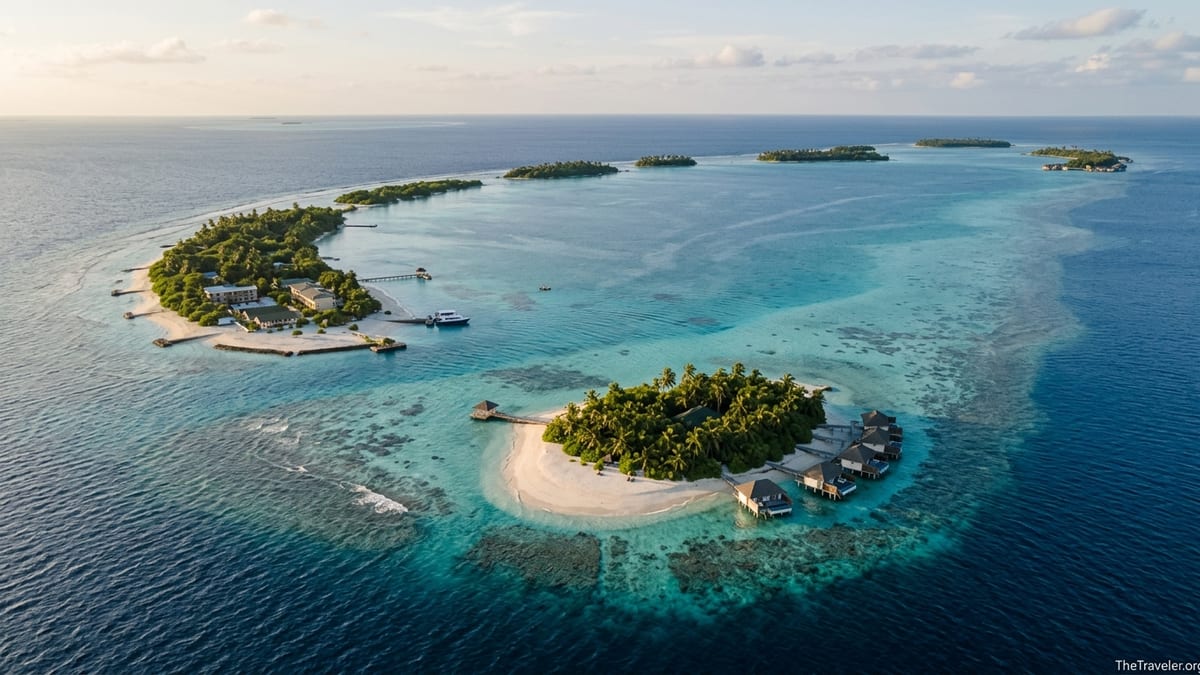
When people talk about the northern Maldives, they usually mean the arc of atolls that stretch from Baa, north of the capital Malé, up through Raa, Noonu, Shaviyani and the twin Haa atolls near the Indian border. Within these atolls you will find two very different types of places to stay: self-contained resort islands, often hosting a single high-end property, and inhabited local islands where Maldivians live and where small guesthouses and boutique hotels have been allowed to open since 2009.
For most travellers arriving at Velana International Airport near Malé, the immediate practical question is transfer time. Closer northern atolls like Baa and Raa can be reached in around 30 to 40 minutes by seaplane, or via a short domestic flight and speedboat. Far northern atolls such as Haa Alif and Haa Dhaalu usually require a scheduled domestic flight of about 45 to 75 minutes, typically to Dharavandhoo, Maafaru or Hanimaadhoo, followed by a speedboat arranged by your hotel. The more remote you go, the quieter the experience, but the more of your budget is absorbed by transfers.
The good news is that almost every atoll in the north has clear water, sandbars and coral reefs. The differences are in how built up an atoll feels, what kind of marine life you are most likely to see, and how much choice you want between ultra-private resorts and more social local-island stays.
Baa Atoll: Mantas, marine life and mid to high-end resorts
Baa Atoll, northwest of Malé, is arguably the star of the northern Maldives thanks to its UNESCO Biosphere Reserve status and seasonal manta ray gatherings at Hanifaru Bay. Between roughly June and October, especially in August and September, plankton blooms draw dozens of mantas and sometimes whale sharks to this protected bay, and resorts and guesthouses within speedboat reach market guided snorkeling trips. If close-up encounters with big filter-feeders are on your wish list, this is the logical atoll to target.
Accommodation in Baa skews from polished five-star to serious luxury. Resorts such as Soneva Fushi and The Nautilus Maldives sit on private islands with large villas, high-end dining and extensive kids’ clubs, but they come with nightly rates that can easily run from the high hundreds to several thousand US dollars depending on season and villa category. Seaplane transfers are typically priced per person and can add a substantial amount to your overall budget, especially for families of four or more, so it is worth asking for transfer-inclusive packages when you book.
For travellers interested in Baa’s marine life without committing to ultra-luxury rates, there are a handful of local islands and smaller resorts connected by domestic flights to Dharavandhoo Airport. On these islands, simple but comfortable guesthouses can start from roughly the 60 to 120 dollar range per night for a double room, often including breakfast. You sacrifice all-inclusive cocktails and showpiece restaurants, but you gain easy access to house reefs, boat trips to Hanifaru during the manta season and a more grounded view of Maldivian daily life.
Baa works particularly well for couples and families who want active days in the water and are willing to pay more for marine experiences than for butler service. If your goal is primarily beach time rather than wildlife, some of the northern atolls without UNESCO status can offer softer prices for a similar visual wow factor.
Raa and Noonu: High comfort resorts and good all-rounder atolls
Immediately north of Baa lie Raa and Noonu Atolls, both of which have become strongholds for modern resort development. The appeal here is a balance of relatively easy access, broad choice of properties and consistently good snorkeling and diving. Guests typically reach these atolls via a seaplane from Malé or by domestic flight to a northern airport such as Maafaru, then a short speedboat to the resort.
Raa Atoll offers a mix of high-end all-inclusive resorts and more mid-range options by Maldivian standards. Many islands here have broad lagoons that are ideal for overwater villas and family-friendly beaches. Resorts may market themselves with house reefs suitable for beginners, on-site dive centers and included activities like kayaks, paddleboards and evening entertainment. For example, a family of four might find all-inclusive packages in the lower to mid hundreds of dollars per person per night in shoulder seasons, significantly less than the top-tier properties in Baa or Haa Alif, yet still with plenty of comfort.
Noonu Atoll, meanwhile, is known in industry circles for hosting several branded luxury properties that focus on privacy and service. Villas often come with private pools, generous spacing between units and robust dining programs. While headline nightly rates can feel similar to or higher than Baa’s marquee names, the feel of Noonu can be quieter, with fewer day-trippers and a more “hideaway” atmosphere. For honeymooners who want a deep sense of seclusion without flying all the way to the far north, Noonu is a strong candidate.
Snorkeling and diving in both atolls are generally good, although exact reef health varies by island. It is worth asking any resort how far you must travel by boat for their best dive sites and whether their house reef is reachable directly from the beach or via a jetty ladder. For serious divers, a resort with a short boat ride to channels and walls is more valuable than one with a pretty but shallow lagoon.
Haa Alif & Haa Dhaalu: The far-north escape
Haa Alif and Haa Dhaalu, collectively known as the far north, appeal to travellers who want to feel that they have gone to the quiet edge of the Maldives. These atolls are closer to India’s south than to Malé and are accessed by scheduled domestic flights, most often to Hanimaadhoo Airport in Haa Dhaalu. Flight times commonly sit around an hour, and from the airport private speedboats fan out to a small cluster of upscale resorts and a growing number of guesthouses on inhabited islands.
On the resort side, the far-north cluster around Haa Alif is known for high privacy and generous space. Islands such as the one hosting Hideaway Beach Resort give guests deep vegetation, long natural beaches and relatively few villas spread over a large footprint. Some properties here market themselves heavily on wellness or seclusion, with multi-day spa programs, wellness consultants and restaurants designed around slow, lingering meals rather than big buffets. Nightly rates are usually comparable to top-tier resorts in Baa and Noonu, but the tone is often more retreat-like and less social.
The far north is also emerging as a destination for local-island stays. Around Hanimaadhoo and nearby islands, small hotels and guesthouses serve domestic travellers and budget-conscious visitors who are comfortable dealing with an extra domestic flight. Here, room rates can often start around the 50 to 100 dollar level, and many stays include breakfast and airport pick-up. You can expect modest, often family-run properties, access to long village beaches, simple cafes serving fish curries and snacks, and excursion desks arranging snorkeling and sandbank trips.
This area is particularly appealing for travellers who prioritize quiet, a sense of frontier and value for time in the water over nightlife or chain-hotel familiarity. The trade-off is fewer dining options, less polished service and the need to be comfortable with potential schedule changes on domestic flights, especially in wet season months.
Local-island bases vs resort islands: what really changes
Choosing between a resort island and a local island in the northern Maldives is less about scenery and more about rules, atmosphere and how your money is spent. Resort islands sit on their own sandbank or small island, usually leased to a single operator. Alcohol is permitted and widely available, bikinis are the norm on all beaches, and everything from meals to diving is handled on-site. On these islands, a typical buffet dinner might cost the rough equivalent of 60 to 100 US dollars per person if not included, and cocktails can be priced at big-city international levels.
Local islands are inhabited by Maldivians, and tourism is layered on top of everyday life. Guesthouses and small hotels usually line a portion of the beach, while the interior supports schools, mosques, shops and homes. Local dress codes apply away from the designated “bikini beach” sections, and alcohol is not served in local cafes or guesthouses. Meals in small restaurants can be considerably cheaper than in resorts, with a simple fresh fish curry and sides for two often coming in under 20 to 30 dollars. Regulations and social norms mean the vibe is more low-key and less party-oriented.
The trade-off is convenience and polish. On a resort, you can step out of your villa, snorkel, dine and visit the spa without thinking about transport or schedules. On a local island, you might walk or cycle to a dive shop, schedule excursions around shared boat departures and occasionally deal with weather-related disruptions to inter-island ferries or speedboats. Rooms may be simpler, and service more informal, but many travellers appreciate the cultural interaction and cost savings.
For a northern Maldives trip, many people choose a mix: for example, three or four nights at a mid-range or luxury resort in Baa, Raa or Noonu for the iconic overwater-villa experience, followed by several nights on a local island in the same or a nearby atoll. This way you experience both sides of Maldivian hospitality without paying top-tier prices for your entire stay.
Best northern local-island bases for budgets and independent travel
While many of the most talked-about local islands sit in central atolls, several in the broader northern region work well as bases if you are comfortable with speedboats and, occasionally, domestic flights. These islands tend to offer a compact strip of guesthouses, a marked bikini beach, at least one dive center and easy access to day trips.
Hanimaadhoo in Haa Dhaalu stands out as a strategic gateway to the far north. The island has its own airport, a long shoreline and a slowly growing scene of small hotels and guesthouses that attract both domestic visitors and international travellers looking for quieter, more affordable stays. You can expect simple but decent rooms, long walks on the beach, birdwatching in the interior and boat trips to nearby sandbanks and reefs. It is not yet as focused on foreign tourists as some central islands, which can be a plus if you want a more low-key vibe.
Further south, islands like Rasdhoo and Ukulhas in the northern Ari region are often recommended by experienced independent travellers for a first local-island stay, thanks to their established guesthouse scenes, bikini beaches and reliable snorkeling and diving excursions. While geographically they sit slightly south of the very northern arc, many itineraries that focus on “north of Malé” include them as stepping stones between the capital and the more remote atolls. Typical guesthouse rates here can start from around 60 to 80 dollars per night for a double room, with dive trips and whale shark or manta excursions priced per trip rather than per night.
If you are short on time and want a local island that does not require a domestic flight, islands in North Malé Atoll such as Thulusdhoo and Dhiffushi are reachable by speedboat in roughly 30 to 90 minutes from the airport, depending on schedules and sea conditions. These islands combine surf breaks, accessible snorkeling, cafe culture and a surf-town or beach-village atmosphere. They sit south of the core northern atolls but are often used as budget-friendly add-ons before flying north to a resort in Baa, Raa or Noonu.
Matching atolls and islands to travel styles
For honeymooners and privacy seekers, the northern atolls shine. Noonu and Haa Alif are strong contenders if you dream of large villas on deep-green islands with relatively few neighbours. A couple wanting maximum seclusion might invest in an overwater pool villa on a private island in Noonu, accepting higher nightly rates in exchange for direct lagoon access, in-villa dining and the ability to spend days without seeing more than a handful of other guests. For a wellness-focused honeymoon, a retreat-style resort in Haa Alif or Baa with structured spa and wellness programs may be more appealing than a lively all-inclusive.
Families usually benefit from resorts with kids’ clubs, varied dining and medical facilities, which are common in Baa, Raa and Noonu. A family with young children might prefer a beach villa with a short, sandy entry into shallow water rather than an overwater bungalow, and many northern resorts now configure two-bedroom beach suites that allow parents and children to share a space without sacrificing privacy. All-inclusive or full-board meal plans can bring predictability to costs, especially when teenagers are involved.
Divers and snorkel-focused travellers should weigh atoll geography and boat access as much as room size. Baa’s proximity to Hanifaru Bay, Raa’s outer-reef channels and selected sites in the far north all appeal to underwater photographers and macro enthusiasts. If your budget is tighter, a guesthouse on a local island with a reputable dive shop can give you multiple boat dives per day and night dives for less than the cost of staying at a luxury resort that offers the same sites. Ask potential operators about maximum group sizes and whether they run regular trips to manta or shark cleaning stations in the relevant season.
For budget-conscious travellers, the most economical approach is usually to build an itinerary around one or two local islands and perhaps one or two nights at a more modest resort that offers promotional rates in the low season. Domestic flights to the far north have a fixed cost, so if you choose to fly to Hanimaadhoo or another northern airport, try to stay long enough to spread that cost over several days rather than bouncing around quickly.
Transfer logistics and seasonality in the north
Transfer logistics are easy to underestimate when planning where to stay in the northern Maldives. Many resorts and local islands rely on a combination of domestic flights and speedboats with fixed schedules. For example, a typical arrival day might involve landing in Malé in the late morning, connecting to an afternoon domestic flight to Dharavandhoo or Hanimaadhoo, then taking a 20 to 60 minute speedboat arranged by your resort or guesthouse. If your international flight arrives late, you might need to spend your first night near the airport and continue north the following morning.
Costs also add up. Seaplane transfers are priced per person and, for some northern atolls, can rival a night’s accommodation in the mid-range. Domestic flights are often slightly cheaper but still significant when multiplied by two or four travellers. Shared speedboats from Malé to closer local islands operate on fixed timetables and are usually the most economical way to travel, while private speedboat charters for direct transfers can be comparatively expensive, especially over longer distances.
Seasonality influences both price and experience. The northern Maldives follows the same broad monsoon patterns as the rest of the country, with a drier northeast monsoon roughly from December to April and a wetter southwest phase from May to November. Resort rates tend to peak around Christmas, New Year and the northern hemisphere winter. In the shoulder months of May, June, September and October, you might see more clouds and occasional squalls but also lower rates, fewer guests and, in some areas like Baa, some of the most exciting manta activity.
Regardless of season, it is wise to build some flexibility into your arrival and departure days, especially if your plan involves a domestic flight to the far north. Weather or operational issues can occasionally delay flights or boats. Travel insurance and a buffer night near Malé or at your resort before an international departure can reduce stress.
The Takeaway
Choosing where to stay in the northern Maldives comes down to aligning three things: how much you want to spend, how important privacy and services are to you, and how far you are willing to travel after landing in Malé. Baa, Raa and Noonu provide a wide spread of resort experiences with strong snorkeling and diving, while the Haa atolls in the far north reward those willing to fly a bit farther with extra quiet and a sense of distance from the busier central atolls.
Local islands such as Hanimaadhoo and the better-developed northern Ari and North Malé bases offer simple guesthouses and the chance to stretch your budget, at the cost of some convenience and luxury. For many visitors, the sweet spot is a combination: a few nights at a resort island for the overwater-villa dream, followed by several nights on a local island for more contact with everyday Maldivian life and gentler daily expenses.
Whichever combination you choose, focus first on the atoll that best matches your priorities, then narrow down to specific islands and properties with realistic transfer times from your international flight. That way, your time in the northern Maldives can be spent where it matters most: on the sand, in the water and under the broad, empty sky.
FAQ
Q1. Is the northern Maldives more expensive than the central atolls?
The northern Maldives is not automatically more expensive, but many of its best-known islands are home to high-end resorts, and transfers by seaplane or domestic flight can add noticeably to your budget. You can still travel affordably by choosing local-island guesthouses and public or shared speedboat transfers, especially in atolls that are closer to Malé.
Q2. Which northern atoll is best for manta rays and whale sharks?
Baa Atoll is the most reliable northern choice for manta encounters thanks to Hanifaru Bay, where seasonal plankton blooms between roughly June and October can attract large numbers of mantas and occasional whale sharks. Some neighbouring atolls also offer manta and shark sites, but Baa has the most established infrastructure focused on these experiences.
Q3. Are local islands in the north suitable for a honeymoon?
Yes, if you value quiet beaches, lower costs and a more local atmosphere over luxury amenities. Guesthouses on islands near key northern atolls can offer private rooms, simple romantic touches like beach dinners and good snorkeling. However, you will not have alcohol service on the island, and service is more informal than in resorts, so some couples prefer to combine a local island with a few nights at a resort.
Q4. How long should I stay in the northern Maldives?
For a trip focused on the north, a week is a comfortable minimum, allowing for transfer days and at least five full days split between one or two islands. If you are including a domestic flight to the far north, 9 to 12 days lets you spread transfer costs and enjoy time on both a resort island and a local island without rushing.
Q5. Can I drink alcohol on northern local islands?
No, alcohol is not served in guesthouses or local cafes on inhabited islands anywhere in the Maldives, including the north. If you want to drink, you will need to visit a resort island or a specially licensed offshore vessel. Many travellers who enjoy a drink simply plan a few resort nights within a longer local-island itinerary.
Q6. What is the easiest northern atoll to reach from Malé?
Baa and Raa are among the easiest northern atolls to reach because of their relatively short seaplane flights and domestic connections via closer airports. For local-island stays without additional flights, islands in North Malé Atoll reached by speedboat are simplest, though they technically sit just south of the core northern atoll arc.
Q7. Is it safe to swim and snorkel off local-island beaches?
In most cases, yes, but conditions vary by island and season. Many local islands designate a bikini beach area where tourists can swim freely, and some have house reefs you can reach from shore. Always ask your guesthouse about currents, seasonal changes and recommended entry points, and consider using fins and a surface marker buoy if you are snorkeling farther out.
Q8. What should I wear on northern local islands?
On local islands, modest dress is expected away from the bikini beach. That typically means shoulders and knees covered in villages and when visiting shops or cafes. Lightweight trousers, knee-length shorts and loose tops work well in the heat. Swimwear is fine within clearly marked tourist beach areas and, of course, at resort islands where standard beach attire is accepted.
Q9. When is the best time of year to visit the northern Maldives?
The dry season, roughly from December to April, usually offers the calmest seas and sunniest days, though it is also the most expensive time. Shoulder months around May, June, September and October can bring a mix of sunshine and showers, lower prices and, in places like Baa Atoll, excellent manta encounters linked to plankton blooms.
Q10. How far in advance should I book northern Maldives accommodation?
For popular resorts in Baa, Raa, Noonu and the far north during peak months, it is wise to book several months in advance, especially if you want specific villa types or family rooms. Guesthouses on local islands can sometimes be booked closer to arrival, but you should still plan ahead during major holiday periods and coordinate transfers early so that domestic flights and speedboats line up with your international flights.