


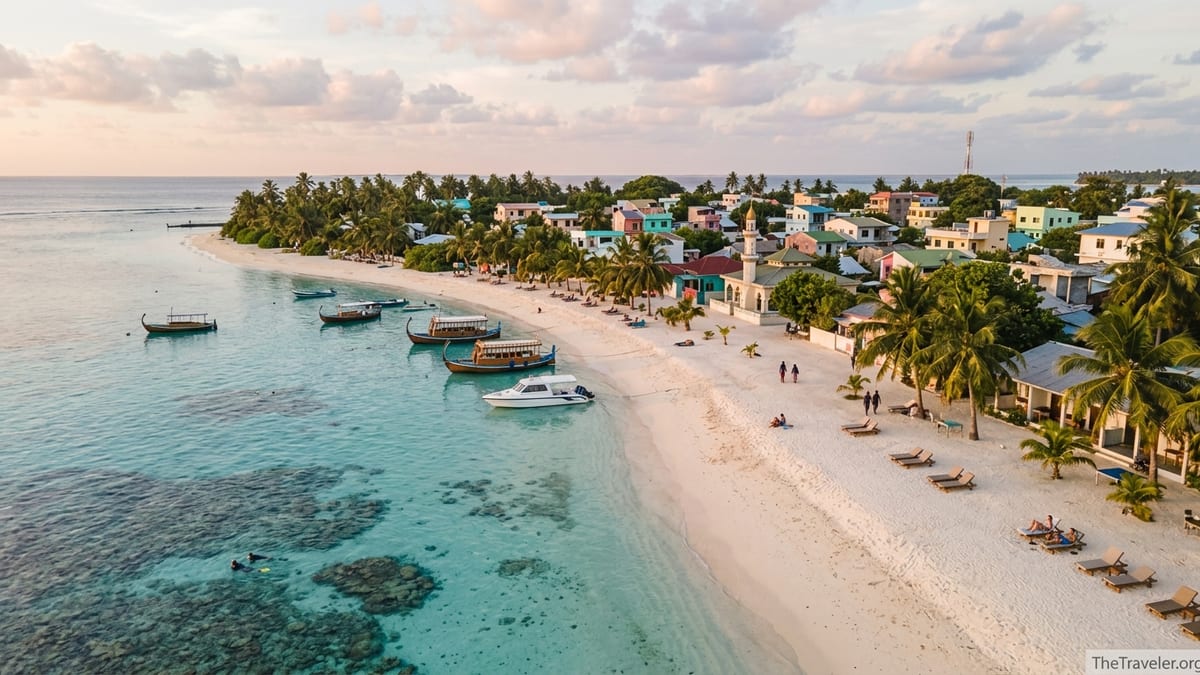
The northern Maldives are quietly reshaping what a Maldivian holiday can look like. Instead of five-star overwater villas and all-inclusive cocktails, travelers are checking into family-run guesthouses, snorkeling straight from local beaches, and eating spicy fish curries at harborfront cafés. For visitors who want the turquoise water without the luxury price tag, the inhabited islands of the northern atolls offer some of the best value and most authentic experiences in the country.
Why Choose the Northern Local Islands Instead of a Resort
North of the crowded resort belt near Malé, the inhabited islands of Kaafu, Alif Alif, Baa, Raa, Noonu, Haa Alif and Haa Dhaalu atolls offer a slower, more grounded version of the Maldives. Here, guesthouses and small hotels sit on the same sandy streets as schools and mosques, and travelers share ferries and cafés with local families. Prices for comfortable double rooms in 2025 typically start around 60 to 90 US dollars per night including breakfast in places like Dhiffushi, Thulusdhoo or Ukulhas, compared with several hundred dollars per night for entry-level resort rooms in the same region.
The northern islands also appeal to visitors who want more independence. On local islands you can choose whether to book excursions or simply swim from the public beach, eat in different restaurants each night, and use public ferries or shared speedboats instead of resort transfers. This flexibility makes it easier to keep to a daily budget under about 150 to 200 US dollars for two people, including meals and at least one or two organized activities, especially if you avoid peak festive periods.
Another advantage is cultural immersion. In northern community hubs such as Hanimaadhoo, Rasdhoo or Thulusdhoo, it is normal to hear the afternoon call to prayer from several mosques, watch evening football matches on sandy pitches, or join families strolling the waterfront after the heat of the day. You still get postcard-perfect lagoons, but the daily rhythm feels rooted rather than curated.
Getting There and Getting Around the Northern Atolls
Most international flights still land in Malé, but it is easier than ever to push onward into the northern atolls. For islands in Kaafu and Alif Alif atolls such as Dhiffushi, Huraa, Thulusdhoo, Rasdhoo and Ukulhas, the usual route is by speedboat from Malé. Shared boats run several times per day to popular islands, with one-way prices often between 25 and 60 US dollars per person depending on distance and schedule. Travel times are usually 30 to 90 minutes, which makes these islands practical for shorter trips of four or five nights.
Further north, Hanimaadhoo in Haa Dhaalu Atoll serves as a key domestic aviation hub with a long-established runway and regular flights from Malé. From Hanimaadhoo, travelers can continue by local boat to smaller islands in Haa Alif and Haa Dhaalu, or stay on Hanimaadhoo itself and explore its beaches and mangroves. Domestic flight prices fluctuate, but many visitors find return fares in the region of 150 to 250 US dollars when booked in advance through a guesthouse or local agent.
Once on the islands, getting around is straightforward. Most local islands are small enough to walk across in 10 to 20 minutes, and bicycles are available to rent in places like Thulusdhoo, Dhiffushi and Ukulhas for a modest daily fee. Inter-island travel is possible by public ferries, which are very affordable but follow limited schedules, or by arranging private speedboats for day trips or one-way transfers when time matters more than budget.
Guesthouses and Small Hotels: What to Expect on Different Islands
The northern local islands host a fast-growing collection of guesthouses and boutique hotels. On easy-to-reach islands like Dhiffushi and Thulusdhoo in Kaafu Atoll, and Rasdhoo and Ukulhas in Alif Alif Atoll, you can now choose from dozens of properties, from simple rooms with shared terraces to beachfront mini-hotels with plunge pools and on-site restaurants. Nightly rates in high season often hover around 80 to 140 US dollars for mid-range guesthouses, with occasional promotion deals dipping below this for longer stays or shoulder-season dates.
Dhiffushi, reachable in under an hour from Malé by speedboat, has become one of the most developed options among the northern local islands, with more than twenty guesthouses and a compact lagoon beach where many properties line the sand. It suits travelers who like choice: you might stay at a guesthouse that offers full-board packages with daily snorkeling and sandbank trips, or opt for a room-only stay and dine at different cafés such as small barbecue spots or juice bars near the harbor.
Ukulhas and Rasdhoo, in North Ari (Alif Alif) Atoll, offer a more low-key atmosphere with strong reputations for house reef snorkeling and marine life. Guesthouses here often include beach loungers and umbrellas on the designated bikini beaches, free snorkel gear rental, and easy access to excursion desks organizing manta ray trips, turtle snorkels and diving. On quieter islands further north like Hanimaadhoo, the guesthouse scene is newer and less dense, which means fewer dining options but also fewer crowds, plus the convenience of staying right next to the domestic airport.
Beach Experiences and House Reefs: Comparing Island Atmospheres
Beach quality and access to a healthy house reef are two of the big factors that separate one northern island from another. Dhiffushi has a broad, sandy lagoon on its western side that feels lively, with paddleboards, kayaks and beach cafés creating a social, almost resort-like atmosphere. The water is shallow and calm, ideal for novice swimmers and families, although serious snorkelers will rely more on boat trips to nearby reefs.
Ukulhas, a compact island fringed by long stretches of white sand, is known among independent travelers for having one of the better house reefs accessible from shore. Travelers frequently report seeing reef sharks, turtles and dense schools of reef fish just a short swim from the main bikini beach, especially when the visibility is good and currents are mild. Rasdhoo offers a mix of small beaches and access to deeper channels; while its sand areas are narrower, its position near famous channels such as Rasdhoo Madivaru makes it a strong choice for divers and confident snorkelers.
Further north, Hanimaadhoo’s beaches feel more spread out and untamed. Parts of the shoreline are backed by palm groves and a significant mangrove wetland, creating a sense of wilderness unusual for such an accessible island. Swimming here can feel more solitary than on the busier Kaafu islands, especially outside local holidays, which can appeal to travelers looking for space rather than atmosphere. However, the house reef is not as clearly defined as on some smaller coral islands, so boat trips to surrounding reefs are usually the highlight.
Snorkeling, Diving and Sandbank Trips in the Northern Atolls
The northern local islands are particularly attractive to travelers who want reliable access to good snorkeling and diving without resort prices. Around Ukulhas and Rasdhoo in Alif Alif Atoll, many guesthouses operate daily snorkeling excursions to nearby reefs and seasonal manta ray cleaning stations. In practice, this might mean paying around 40 to 70 US dollars per person for a half-day trip that includes gear, a guide, and stops at two or three sites, with a chance to see turtles, rays and healthy coral gardens.
Divers staying on Rasdhoo often book packages with local dive centers that include several boat dives to sites in the atoll channels. These waters are known for pelagic encounters, drift dives and schooling fish. For non-divers, a classic experience across the northern islands is a sandbank or picnic island trip. From Dhiffushi, Thulusdhoo or Ukulhas, boat operators can take you to uninhabited sandbars or small nearby islands for swimming, beach games and barbecues, usually priced as half- or full-day excursions with lunch and drinks.
In the far north, islands accessed via Hanimaadhoo provide a different flavor of marine exploration. The reefs here receive fewer day-trip boats than those near Malé, and while detailed site descriptions are still emerging as tourism grows, early visitors often comment on the sense of discovery and the likelihood of having snorkel spots almost to themselves. Because distances between islands can be larger, excursion prices may sit slightly above those in the central atolls, but travelers often feel the added remoteness justifies the cost.
Cultural Experiences, Local Food and Island Etiquette
Staying on a northern local island means adapting your beach holiday to fit a conservative Muslim community, but many travelers find these cultural adjustments add depth rather than restriction. Each island typically has at least one mosque, and you will hear the call to prayer several times a day. Outside the designated bikini beach areas, visitors of all genders are expected to dress modestly, covering shoulders and thighs, particularly when walking through residential streets or visiting public spaces like harbors and shops.
Food is another highlight. On Dhiffushi and Thulusdhoo, small cafés serve variations of mas huni, the classic Maldivian breakfast of tuna, coconut and chili served with flatbread, for just a few dollars, alongside short eats such as fish samosas and bondibai sweets in the late afternoon. On Ukulhas and Rasdhoo, guesthouses often offer set dinners featuring grilled reef fish, coconut curry, rice and salads, sometimes on the beach under simple string lights. North in Hanimaadhoo, where there are fewer dedicated tourist restaurants, eating in local cafés can be particularly authentic, with menu boards in Dhivehi and staff recommending whatever fresh fish has arrived from the morning’s catch.
Respectful behavior goes a long way. Alcohol is not available in local cafés or guesthouses, though some islands have offshore boats licensed to serve drinks to visitors shuttled out by dinghy. During Ramadan, many restaurants adjust hours and it can be considerate to avoid eating or drinking in public during daylight. Photography is generally welcome on beaches and harbors, but asking before photographing individuals, particularly women and children, is good practice.
Costs, Value and Choosing the Right Island for Your Budget
For travelers watching their expenses, the northern local islands can be significantly better value than resort islands, as long as expectations are aligned. A realistic daily budget for a couple on islands such as Dhiffushi, Thulusdhoo, Rasdhoo or Ukulhas might be around 150 to 220 US dollars in 2025, including a comfortable guesthouse room, three meals, and a shared excursion on several days. Staying on more remote islands reached via Hanimaadhoo or other domestic airports may cost slightly more once internal flights and occasional private transfers are factored in, but nightly accommodation rates themselves often remain competitive.
Because the guesthouse market is competitive on well-known islands, properties frequently run promotions for longer stays, such as discounts for a week or more, or packages that include airport transfers and a couple of excursions. A guesthouse on Dhiffushi, for instance, might offer a seven-night package with half-board meals and two snorkeling trips at a per-night rate similar to booking room-only elsewhere. On islands with fewer guesthouses, such as Hanimaadhoo, you may pay a steadier rate with fewer seasonal fluctuations but will likely have less choice in style and facilities.
When comparing islands, think about how you plan to spend your days. If you want an active, sociable scene with multiple cafés, souvenir shops and easy access from Malé, Dhiffushi or Thulusdhoo make sense. If your priority is off-the-beach snorkeling and a slightly quieter environment, Ukulhas or Rasdhoo might be better. For travelers seeking a taste of the far north and willing to take a domestic flight, Hanimaadhoo and its neighboring islands offer a mix of gentler tourism, birdlife and wide, less-developed beaches that can feel far removed from the central atoll buzz.
The Takeaway
The northern local islands of the Maldives provide an increasingly compelling alternative to classic resort holidays. From the lively lagoon of Dhiffushi and the surf and street cafés of Thulusdhoo to the house reefs of Ukulhas and Rasdhoo and the wide-open shores of Hanimaadhoo, each island offers its own balance of comfort, culture and cost. Travelers willing to trade private pool villas for guesthouse hospitality are rewarded with lower prices, deeper local connections, and the freedom to shape each day as they choose.
As domestic airports like Hanimaadhoo connect more of the north and guesthouse owners refine their offerings, this part of the Maldives is likely to feature more prominently on independent travelers’ maps. For now, though, it still feels like a quieter chapter of the archipelago story, where you can sip sweet black tea at a harbor café, wade into clear shallows at sunset, and remember that the Maldives is not just a luxury destination but also a string of everyday island communities ready to welcome curious guests.
FAQ
Q1. Are the northern Maldives local islands suitable for a first-time visitor? Yes, islands like Dhiffushi, Thulusdhoo, Ukulhas and Rasdhoo are well set up for first-timers, with frequent speedboats, English-speaking guesthouse staff and a good choice of cafés and excursions.
Q2. How much should I budget per day on a northern local island? A couple can often manage on about 150 to 220 US dollars per day, including a mid-range guesthouse, meals in local cafés and occasional shared boat trips, excluding international flights.
Q3. Can I wear a bikini on northern local islands? Yes, but only on designated bikini beaches or sandbanks used for tourist excursions. In village streets and public areas, visitors should dress modestly, covering shoulders and thighs.
Q4. Is alcohol available on northern inhabited islands? No, alcohol is not sold in local guesthouses or cafés. Some islands have offshore boats licensed to serve drinks, which guesthouses can arrange access to, usually for an additional fee.
Q5. Which northern island is best for snorkeling straight from the beach? Ukulhas and parts of Rasdhoo are known for strong house reefs accessible from shore, while Dhiffushi and Thulusdhoo offer calmer lagoons but rely more on boat trips for top snorkeling.
Q6. How do I reach Hanimaadhoo and the far northern islands? You typically fly from Malé to Hanimaadhoo on a domestic airline, then continue by local ferry or speedboat to neighboring islands, or stay on Hanimaadhoo itself near the airport.
Q7. Are the guesthouses on northern islands family-friendly? Many guesthouses welcome families and can provide extra beds or interconnected rooms, and islands such as Dhiffushi and Hanimaadhoo have shallow beaches and calm lagoons suitable for children.
Q8. Do I need to book excursions in advance? For common activities like snorkeling trips, sandbank visits and dolphin cruises, it is usually fine to book upon arrival through your guesthouse, unless you are traveling during peak festive periods.
Q9. What is the best time of year to visit the northern local islands? Conditions are typically driest and sunniest from about December to April, though shoulder months outside this period can bring lower prices and fewer visitors along with a chance of showers.
Q10. Is it possible to combine several northern islands in one trip? Yes, many travelers pair two or three islands, such as Dhiffushi with Ukulhas and Rasdhoo, or Hanimaadhoo with a nearby smaller island, using local ferries or speedboat transfers arranged through guesthouses.