


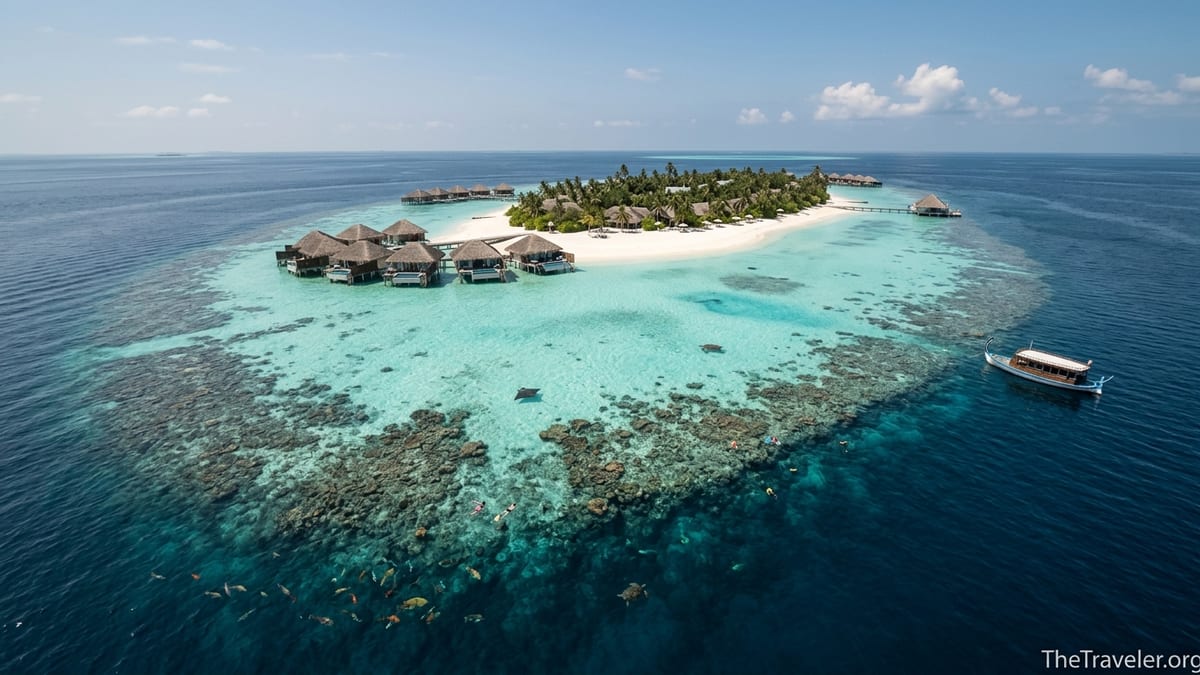
The northern atolls of the Maldives are a dream for travelers who put snorkeling at the center of their trip. Compared with the busy central atolls, the north still feels wilder, with healthier coral in many pockets, regular turtle and reef shark encounters and, in places, reliably huge manta aggregations. This guide compares the main northern atolls for house reefs, mantas, turtles, reef fish, shore access and boat trips, and highlights specific resorts where snorkeling is a major reason to stay.
How the Northern Atolls Compare for Snorkeling
When people talk about “northern Maldives” for snorkeling, they usually mean Baa, Raa, Lhaviyani, Noonu and Shaviyani Atolls. All are reachable by seaplane from Malé, take between 25 and 45 minutes to reach, and offer the archetypal Maldivian mix of small private islands, shallow lagoons and reef drop-offs. The differences are in how good the house reefs are, how often mantas visit and how easy it is to snorkel straight from shore.
Baa Atoll stands out for manta encounters at Hanifaru Bay and for having several resorts where you can step into the water from the beach or villa and be on the reef within minutes. Raa and Noonu offer a more off‑the‑beaten‑path feel with very good reef fish life and frequent turtle and shark sightings on outer reef boat trips, plus improving house reefs at newer resorts. Lhaviyani is widely praised by divers and snorkelers for consistent turtle encounters and strong house reefs, with multiple resorts known almost entirely for their snorkeling.
Shaviyani is less developed but increasingly recognized for big pelagic life, including mantas and grey reef sharks around its channels, accessed mainly by boat. For travelers choosing a single “snorkel resort,” Baa and Lhaviyani are usually the most reliable choices if you want excellent daily snorkeling without relying entirely on excursions, while Raa, Noonu and Shaviyani suit those willing to mix house‑reef dips with longer boat trips.
Baa Atoll: Mantas, Biosphere Reefs and Serious House‑Reef Snorkeling
Baa Atoll is the headline act in the northern Maldives for many snorkelers because of Hanifaru Bay, a UNESCO Marine Protected Area where plankton blooms can draw dozens of reef manta rays and the occasional whale shark between roughly June and October, with peaks that often fall from July to early September. Access is tightly controlled, numbers in the water are capped and visits are limited to short timed sessions, but during a strong plankton event it can still feel like an underwater manta ballet swirling just meters from the surface.
For house reefs, Anantara Kihavah and Dusit Thani are frequently cited as standouts, with drop‑offs close to the beach, good hard‑coral coverage in many sections and regular sightings of turtles, reef sharks and schooling fusiliers in clear water. At both resorts you can usually enter from the beach in front of your villa, fin out to the reef edge in a few minutes and drift with the current back to your starting point, making multiple short sessions easy even in the heat of the day. Guests often report seeing turtles on their very first snorkel at these properties.
More moderately priced but still strongly snorkel‑oriented options in Baa include Reethi Beach Resort and Royal Island Resort, where the reef encircles most of the island and can be accessed from simple shore entry points marked by buoys. Visibility and coral quality can vary by side of the island and season, but for many travelers these classic Maldivian resorts offer some of the best value if being able to snorkel independently from the beach several times a day is more important than ultra‑luxury villas.
If mantas are a priority, look for resorts that combine good house‑reef access with organized Hanifaru trips during the southwest monsoon. Four Seasons Landaa Giraavaru, Amilla Maldives and Vakkaru regularly run guided boat excursions to known manta cleaning and feeding spots in addition to Hanifaru itself, often led by marine biologists. This means you might spend one day drifting over coral gardens on the house reef and the next snorkeling above a cleaning station where mantas hover just meters away while cleaner wrasses attend to them.
Raa & Noonu: Emerging Reefs, Turtles and Quiet Boat Trips
Raa and Noonu Atolls lie just north of Baa and feel more remote, with fewer resorts and wider gaps of open ocean between islands. That spacing creates channels and outer reef edges where currents bring in nutrients and pelagic life, so snorkelers willing to get on a boat can be rewarded with big schools of fusiliers, jackfish, reef sharks and, in season, mantas gliding in the blue. These excursions tend to be quieter than Baa’s marquee sites, with fewer boats competing for the same spot on a given day.
In Raa, resorts such as InterContinental Maldives Maamunagau and Emerald Maldives organize regular snorkeling safaris that might combine sheltered coral gardens and more exposed channel edges in a single outing. Guests often see several turtles, multiple shark species and dense clouds of reef fish on a single half‑day trip. The house reefs at some Raa resorts are younger and less continuous than Baa’s best, but they are improving as coral recovery continues, and it is common to find patches of very healthy branching and table coral just a short swim from shore.
Noonu is home to ultra‑luxury names such as Soneva Jani and Cheval Blanc Randheli, where the lagoons are famously expansive and shallow. These broad sand‑bottomed lagoons are idyllic for beginners, children and nervous swimmers who want to practice in waist‑ to chest‑deep water with small fish and rays, but they are not classic drop‑off house reefs. Instead, serious snorkelers tend to book boat trips with the resort dive centers to nearby reefs and channels where the top of the reef comes to within a few meters of the surface, creating colorful walls alive with soft coral, anthias and turtles.
Travelers focused primarily on house‑reef snorkeling will usually get better value in Baa or Lhaviyani, but Raa and Noonu are excellent if you enjoy a mix of lagoon relaxation, occasional shallow practice swims and more adventurous guided excursions where staff handle currents, entry points and boat pickups for you.
Shaviyani & Lhaviyani: Big Fish, Turtles and Classic House Reefs
Shaviyani Atoll lies further north and has fewer resorts, which means less boat traffic and a stronger sense of isolation. It is known among divers for big manta and grey reef shark populations on certain channel and outer reef sites, with snorkelers sometimes joining in when conditions allow. Boat trips from resorts here often focus on “adventure snorkeling” rather than easy house‑reef laps, dropping you near a reef shoulder where current washes over soft‑coral gardens and turtles cruise the slope, then picking you up further down‑current after a controlled drift.
Lhaviyani, by contrast, is better known in the consumer travel world because it combines healthy reefs, large turtle populations and several mid‑range to upscale resorts where snorkeling is woven into daily life. Divers have long favored the atoll for its high biodiversity, which translates well to snorkeling when the top of the reef rises close to the surface. Guests at established resorts here frequently report seeing multiple turtles, eagle rays and hunting trevallies in a single shore‑entry snorkel, especially along the drop‑offs that ring the islands.
Several Lhaviyani resorts, from more affordable options to polished five‑star properties, sit directly on strong house reefs, which means you can access good snorkeling in almost any tide by walking into the water from a marked entry channel. Repeat visitors often choose this atoll specifically because they can leave their villa, snorkel for 30 to 40 minutes before breakfast, and be back on their deck without ever setting foot on a boat. For many travelers this ease of access counts for as much as the species list itself.
If you are deciding between Baa and Lhaviyani for a snorkel‑centric trip, Baa offers the unique bonus of Hanifaru Bay and more formal marine‑biology programs, while Lhaviyani can be a better fit if you want reliably strong house‑reef snorkeling at a slightly lower average price point and are less concerned about chasing peak manta seasons.
House Reefs vs Boat Trips: What Matters for Your Style
The biggest practical choice for snorkelers in the northern Maldives is whether to prioritize a top‑tier house reef right off the island or to focus on resorts that run frequent, high‑quality boat excursions to surrounding reefs and channels. A great house reef means freedom: you can go out early or late, snorkel for 15 minutes or an hour, and adapt to the weather without having to book or cancel an excursion. This is ideal for photographers, families with kids who tire quickly, and anyone who wants daily immersion without a fixed schedule.
Resorts with standout house reefs in the northern region include several in Baa Atoll such as Anantara Kihavah, Dusit Thani and Reethi Beach, as well as a cluster of properties in Lhaviyani that are known among repeat visitors but marketed less aggressively than the ultra‑luxury names. These islands typically have clear entry channels, floating rest points and marked “snorkel routes” that help you stay over the most interesting sections of reef while following the prevailing current.
On the other hand, boat‑based snorkeling opens up a much wider range of sites, from cleaning stations used by mantas to dramatic outer reef walls and channels where big fish cruise. In Raa, Noonu and Shaviyani in particular, many of the most impressive sites are easiest to access by boat, and resorts often schedule two or three group snorkeling trips each day in high season, plus private charters for guests who want a more flexible plan. These excursions usually last 2 to 3 hours, including transfers, and might visit two different spots with a surface interval on the boat between them.
For many visitors the ideal itinerary is a resort that offers both: a strong, easy house reef for spontaneous sessions plus a dive center that runs regular, well‑guided snorkel trips. Before booking, ask how many snorkeling excursions typically operate per week in your travel month, whether they are included in any packages and what skill level they are designed for. Resorts where snorkeling is central to the experience will usually have clear answers and recent trip reports full of turtles, sharks and mantas.
Beginners, Shore Access and Safety Considerations
First‑time snorkelers and less confident swimmers often worry that the Maldives is only for strong ocean swimmers, but the northern atolls offer plenty of gentle lagoons and easy shore entries. Many Baa and Lhaviyani resorts have waist‑deep sandy areas protected by natural reef or low breakwaters where you can practice breathing through a snorkel while watching small damselfish, butterflyfish and juvenile reef sharks in calm water. Once comfortable, you can follow marked channels out toward the reef, where the bottom drops away into deeper blue.
For beginners, important questions to ask before you book include how far the reef edge is from the beach, whether there are any strong currents near the main entry points and whether the resort offers small‑group “intro to snorkeling” sessions with guides. Resorts that genuinely cater to snorkelers will often include complimentary orientation snorkels, lend flotation aids and emphasize environmental briefings so guests learn not to stand on coral or chase turtles.
Even experienced snorkelers should factor in currents and boat traffic. Many house reefs are inside channels where tidal flow can be surprisingly strong at certain times. Good resorts will provide daily guidance on which side of the island is safest to snorkel, given the day’s wind and tide, and may restrict access to some jetty areas when supply boats are scheduled. Using a brightly colored snorkel or surface marker can also help you stay visible to staff keeping an eye on swimmers from shore.
Travel insurance that covers snorkeling in open water is worth considering, as is packing a well‑fitting mask, snorkel and fins instead of relying on rental gear. While most dive centers provide equipment, bringing your own reduces the risk of poorly sealing masks or uncomfortable fins cutting into your feet, which can quickly spoil otherwise perfect conditions.
Where Snorkeling Is a Major Reason to Stay
In the northern Maldives there are clear clusters of resorts where snorkeling is not just an add‑on but a primary selling point. In Baa Atoll, Anantara Kihavah and Dusit Thani promote their encircling reefs and proximity to Hanifaru Bay as core reasons to visit, while mid‑market classics like Reethi Beach and Royal Island attract repeat guests who come back year after year largely for the convenience and quality of their house‑reef snorkeling.
Higher‑end properties such as Four Seasons Landaa Giraavaru and Amilla Maldives also lean heavily into marine life, pairing good on‑site reefs with resident marine biologists, coral‑restoration programs and regular educational talks. Guests here may start the day with a reef‑edge snorkel, join a late‑morning turtle or manta excursion and then attend an evening presentation on reef ecology or manta identification, turning a holiday into a relaxed marine‑life immersion.
In Lhaviyani, several resorts position themselves very clearly as snorkeler favorites, even if they do not always feature in glossy magazine lists. These islands often have simpler villas and more casual dining compared with the most famous luxury brands, but they compensate with arguably better day‑to‑day snorkeling. Regular visitors talk about seeing the same individual turtles or friendly reef sharks on multiple trips, and it is common for guests to organize their days entirely around tide charts and preferred snorkel routes.
Raa, Noonu and Shaviyani tend to feature snorkeling more in the context of curated experiences rather than all‑day independent access. Stays at these atolls may include scheduled “big animal” snorkels in channels, sunset reef trips that look for feeding mantas or private speedboat outings that combine snorkeling with dolphin watching and sandbank visits. For travelers who enjoy the social aspect of guided excursions and do not mind timing their water time around boat schedules, this can be a rewarding way to explore a broader slice of the atoll.
The Takeaway
If your priority is to snorkel every day with minimal planning, Baa and Lhaviyani Atolls are usually the strongest bets in the northern Maldives, thanks to established house reefs that start just offshore and a long track record of catering to snorkel‑centric guests. Baa brings the added drama of Hanifaru Bay and research‑driven marine programs, while Lhaviyani often delivers excellent turtle and reef‑fish encounters at slightly lower nightly rates.
Travelers willing to trade some house‑reef convenience for quieter boat trips and a sense of remoteness will find a lot to like in Raa, Noonu and Shaviyani. Here, the biggest moments often happen on guided excursions to channels, outer reefs and cleaning stations where mantas, sharks and large schools of fish cruise by in clear blue water. Choosing these atolls works best if you enjoy structured outings and do not mind planning your day around departure times.
Whichever atoll you choose, the key is to match your comfort level and expectations with the resort’s realities: ask how close the reef is, how often snorkel trips run, what typical sightings look like in your travel month and whether guides are available for beginners. When house reefs, manta seasons and your own skills line up, the northern Maldives can deliver some of the most memorable snorkeling on the planet, from gentle lagoon floats to unforgettable mornings finning quietly beside a dozen mantas.
FAQ
Q1. Which northern Maldives atoll is best overall for snorkeling?
The most consistently recommended choice is Baa Atoll, thanks to its combination of strong house reefs at several resorts and seasonal manta aggregations at sites such as Hanifaru Bay.
Q2. When is the best time to see mantas while snorkeling in the northern atolls?
Manta encounters are most reliable from roughly June to October in Baa and some nearby atolls, with many resorts reporting peak surface activity between July and early September, although exact timing varies by year.
Q3. Are the house reefs in the northern atolls suitable for beginners?
Yes, many Baa and Lhaviyani resorts have sheltered lagoons and marked channels where beginners can practice in shallow water before venturing to the reef edge, often with guided orientation snorkels available.
Q4. Do I need to join boat trips to see turtles and reef sharks?
You can see turtles and small reef sharks directly from house reefs at several resorts in Baa and Lhaviyani, but boat trips in Raa, Noonu and Shaviyani often increase your chances of encountering larger numbers and a wider variety of species.
Q5. How important is choosing a resort with a good house reef?
If you want the freedom to snorkel multiple times a day without fixed schedules, a strong house reef is crucial. If you are happy focusing on a few longer, guided excursions, you can prioritize resorts that emphasize boat‑based snorkeling instead.
Q6. Are the northern atolls more expensive than central Maldives areas?
Prices vary widely, but Baa and Noonu host several ultra‑luxury resorts that can be costly. Lhaviyani and some Baa classics often offer better value for travelers who prioritize snorkeling over high‑design villas and extensive fine dining.
Q7. What kind of marine life can I expect to see from shore?
On a typical northern Maldives house‑reef snorkel you might see reef fish, parrotfish, butterflyfish, angelfish, turtles, small reef sharks, rays and occasionally schooling jackfish or tunas cruising the drop‑off.
Q8. Is it safe to snorkel near reef sharks in the Maldives?
Reef sharks in the Maldives are generally shy and non‑aggressive, and snorkelers see them frequently. Resorts typically brief guests on safe behavior, such as not chasing or attempting to touch wildlife.
Q9. Should I bring my own snorkel gear or rent at the resort?
Bringing your own well‑fitting mask, snorkel and fins is ideal, especially if snorkeling is a major reason for your trip. Most resorts rent equipment, but fit and availability can vary.
Q10. Are northern Maldives snorkeling spots affected by coral bleaching?
Yes, like much of the Maldives, northern reefs have experienced bleaching events, and some sections remain damaged. However, many areas now show encouraging coral recovery, and fish life, turtles and mantas remain abundant across several atolls.