


The northern Maldives are where classic overwater-villa luxury collides with manta-filled channels, uncrowded reefs and islands that still feel genuinely Maldivian. While most first-time visitors focus on the central atolls near Malé, experienced travelers and divers increasingly look north for quieter lagoons, richer marine life and a wider spread of resort styles, from playful all inclusive mega-resorts to barefoot castaway hideaways. Choosing the right atoll makes a bigger difference here than the brand name on your villa key. This guide compares Baa, Raa, Noonu, Lhaviyani, Shaviyani, Haa Dhaalu and Haa Alif so you can match the right northern atoll to your budget, travel style and wish list.
How the Northern Maldives Differ From the Rest of the Country
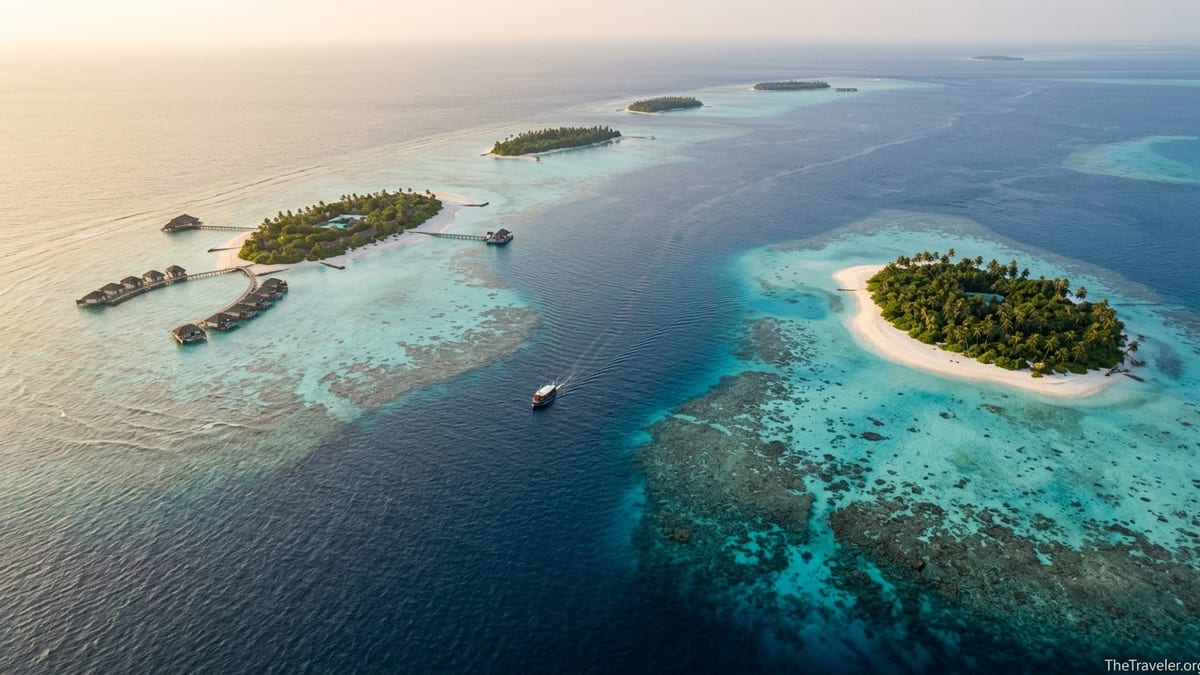
In the northern half of the Maldives, distances between atolls are greater, resort density is lower and local islands remain an everyday part of the seascape. Compared with the busy central atolls around Malé, you see fewer speedboats buzzing between sandbanks and more working fishing dhonis and remote sand cays where you might be the only visitor. For travelers, that often translates into quieter resorts, darker night skies and a stronger sense of being “out in the ocean” rather than in a heavily developed holiday zone.
Getting to the northern atolls usually involves either a seaplane transfer from Malé or a domestic flight followed by a speedboat hop. For example, Baa and Raa atolls are typically reached by 35 to 45 minute seaplane flights, while the far northern atolls of Haa Dhaalu and Haa Alif are more commonly accessed via domestic flights to Hanimaadhoo or Hoarafushi and then a 15 to 60 minute speedboat connection, depending on the resort. These extra legs add cost but also help keep visitor numbers naturally lower than in the central atolls.
Conditions under the surface are equally distinct. Northern channels are famous among divers for strong currents that attract schooling jacks, grey reef sharks and seasonal manta congregations. At the same time, large swathes of reef still show healthy coral recovery after past bleaching events, especially around less developed islands. For experienced divers and keen snorkelers who want a combination of big animal encounters and colourful reef life, the north can be more rewarding than the more heavily trafficked southern routes.
Finally, northern atolls are where you are more likely to combine resort luxury with local-culture day trips. Several guesthouses now operate on inhabited islands in Haa Dhaalu and Haa Alif, while many resorts in Baa, Raa and Lhaviyani organize visits to nearby fishing villages and community projects. If you want to balance overwater cocktails with glimpses of how Maldivians live away from tourist islands, the north is the logical place to look.
Baa Atoll: Biosphere Reserve, Manta Rays and High-End Luxury
Baa Atoll is the best known of the northern atolls, largely thanks to its designation as a UNESCO Biosphere Reserve in 2011, recognizing the richness of its reefs and marine life, including manta rays, turtles and reef sharks. At the heart of this reputation is Hanifaru Bay, a shallow reef bay where, between roughly June and November, plankton blooms can attract large aggregations of reef manta rays and occasional whale sharks for frenzied feeding sessions. Access is tightly regulated to protect the site, and resorts coordinate short, timed snorkel trips with local rangers during the season.
On land, Baa is heavily skewed to the luxury end of the spectrum. Resorts such as Four Seasons Landaa Giraavaru, Soneva Fushi and Amilla Maldives Resort & Residences blend high-spend villas with strong marine biology and conservation programs, including coral restoration projects and manta research partnerships. Nightly rates at the peak of manta season routinely sit in the upper bracket for the country, although mid-range options like Reethi Beach and Royal Island provide more accessible price points while still offering excursions to Hanifaru Bay through local operators.
Baa is particularly strong for couples and honeymooners who want privacy and top-tier service combined with memorable wildlife experiences. Many villas here have private pools, outdoor bathrooms and direct lagoon access, and you will find polished dining programs with serious wine lists. Families are also well catered for at larger properties that offer kids’ clubs and multi-bedroom villas, but the overall atmosphere is more refined than rambunctious. If your main goals are manta encounters, marine research experiences and upscale barefoot luxury, Baa belongs at the top of your list.
Where Baa is weaker is for travelers seeking a strong sense of Maldivian village life right on the doorstep. There are inhabited islands within the atoll, and some resorts arrange short cultural visits, but the primary focus is resort-based living and time on or under the water. Budget-conscious travelers may also find that the cost of staying close enough to Hanifaru Bay for frequent trips can stretch a limited budget, especially during the key manta months.
Raa Atoll: Quiet Reefs, Emerging All Inclusives and Balanced Value
Raa Atoll lies just north of Baa and has developed later, which means a bit more space between resorts and a generally quieter feel. It has quietly become one of the best all-round choices in the north for travelers who want good reefs, strong all inclusive options and a range of resort personalities without the ultra-premium price tag of Baa’s most famous names. Seaplane transfers from Malé typically run around 45 minutes, and several resorts share similar flight paths, which can keep logistics reasonably straightforward.
Diving in Raa centres on channel and outer reef sites that see fewer boats than better known areas. Dive centres at properties such as Emerald Faarufushi Resort & Spa and other Raa islands highlight “untouched” dive sites in north Raa, with healthy hard coral gardens, reef sharks and occasional manta rays during the southwest monsoon period. Snorkelers benefit from a number of resorts with convenient house reefs just off the beach, often accessible directly from the water villa jetties.
On land, Raa offers a mix of mid-scale and premium all inclusive resorts like Dhigali Maldives, Emerald Maldives Resort & Spa and Cora Cora Maldives. These properties typically bundle à la carte dining, selected excursions, non-motorized watersports and sometimes even introductory dives into the nightly rate. For families, this means fewer surprise extras at check-out, plus kids’ clubs and multi-pool layouts that are designed for longer stays. Couples still have access to romantic villas and adult-oriented spaces, but overall the atmosphere is more relaxed than in some of the most exclusive Baa or Noonu addresses.
Raa’s main drawback is that it does not yet have a single, headline-grabbing natural attraction like Hanifaru Bay. For some travelers this is a benefit, as dive boats and sandbank trips remain less crowded. However, if your dream Maldives trip is built around a specific wildlife spectacle, you may end up using Raa as a launchpad for more general reef diving and castaway picnics rather than chasing one iconic site.
Noonu Atoll: Statement Luxury, Big Resorts and Playful Experiences
Noonu Atoll, slightly east of Raa, has become a showcase for high-concept luxury resorts. This is where you find design-led properties such as Joali Maldives, known for its art installations woven into the island landscape, and all inclusive giants such as Siyam World with its water parks, multiple restaurants and party-friendly programming. Many of these resorts market themselves aggressively to families with older children and groups of friends who want more than quiet sunbathing.
Underwater, Noonu offers a mix of channels and sheltered lagoons with reliable turtle sightings, reef sharks and schooling fish. Some resorts have invested in signature dive attractions, including an artificial reef created from a former Maldivian tuna freighter that was scuttled as a wreck site in Noonu, providing both a habitat for marine life and a distinctive underwater experience for guests who enjoy wreck diving. Visibility is often excellent during the northeast monsoon season, and many dive centres run programs tailored to both beginners and advanced divers.
For non-divers, Noonu shines in its breadth of things to do. Siyam World, for instance, promotes itself as a “playground” resort, with slides from overwater villas, large pool complexes, floating water parks and resort-organised events throughout the week. Joali, by contrast, leans into curated art tours, spa rituals and sophisticated culinary experiences, appealing strongly to couples and style-conscious travelers. In both cases, you get the sense of a self-contained world where you could easily spend a week without feeling short of variety.
The trade-off is that Noonu does not feel as remote as the far northern atolls, and the biggest properties here can be lively rather than tranquil. If you dream of hearing nothing but waves and palm leaves at night, or you want a strong local-island connection, this might not be your first choice. But if you are choosing between atolls largely on the basis of resort hardware and on-island experiences, Noonu belongs high on the shortlist, especially for multi-generational families and small groups.
Lhaviyani & Shaviyani: Channel Diving, Wrecks and Good Value for Enthusiasts
Lhaviyani Atoll, a short seaplane hop north of Malé, straddles the border between the central and northern Maldives but is best thought of as a northern gateway, particularly for divers. It is home to well known sites such as Kuredu Express, a fast drift dive where currents funnel grey reef sharks and schooling fish, and The Shipyard, a rare double-wreck site where two vessels lie upright and teeming with marine life. Recent dive overviews of the atoll list more than 50 named sites, including manta cleaning stations like Fushifaru Thila in the atoll’s northern channels.
Resorts in Lhaviyani range from long-established names like Kuredu Island Resort, with its busy dive centre and golf course, to more intimate islands with a focus on house-reef snorkelling and lagoon villas. Many packages here are competitively priced compared to the very northern atolls, in part because the shorter seaplane flight keeps transfer costs down. For travelers primarily interested in reliable shark and current diving without needing a liveaboard, Lhaviyani offers one of the strongest cost-to-experience ratios in the country.
Shaviyani Atoll, a bit farther north, remains less developed and quieter but is starting to appear on divers’ radar. A handful of resorts operate here, often emphasising wide natural lagoons and house-reef exploration over built-up facilities. For experienced divers, Shaviyani’s outer reefs and channels can offer the same kind of exhilarating conditions seen in Lhaviyani but with very few other boats in sight, particularly outside peak holiday periods.
Both atolls suit couples and dedicated dive travelers who are comfortable with a more “water-focused” holiday where the highlight of the day is often the morning dive or an afternoon drift snorkel. Families will find kids’ clubs and pool areas at the larger properties, but the overall social life is more subdued than in Noonu’s biggest resorts. If nightlife and shopping matter less to you than healthy reefs, schooling fish and the chance of hammering currents, focusing your atoll search on Lhaviyani and Shaviyani is a sensible move.
Haa Dhaalu & Haa Alif: Frontier Feel and Remote-Island Experiences
Haa Dhaalu and Haa Alif sit at the very top of the Maldives archipelago and feel markedly more remote than the central atolls. Reaching them usually involves a domestic flight of around 45 to 60 minutes to airports such as Hanimaadhoo or Hoarafushi, followed by a speedboat ride over largely empty blue water. Once you arrive, you quickly see why repeat visitors often describe these atolls as the “Maldives of 20 years ago” in terms of space, star-filled skies and low boat traffic.
Resort development here has been deliberately limited, creating a handful of standout properties separated by long distances. In Haa Dhaalu, veteran hideaways share the region with newer ultra high end projects that focus on privacy, personalised service and long-stay guests. Some recent openings position themselves as “secret” or “private island” experiences, offering only a few dozen villas and butler service designed for travelers who value seclusion over easy access.
In Haa Alif, the picture is similar. There are only a few significant resort islands, including remote luxury retreats that market themselves on long natural beaches, generous villa plots and a feeling of being very far from crowds. These properties emphasise private pools, curated wellness programs, extended spa menus and boat trips where you are unlikely to see another resort on the horizon. Nightly rates can be on the higher side, reflecting both the operating costs and the scarcity of alternatives in the immediate area.
Both atolls are also where you can most easily combine resort stays with local-island culture. Small guesthouses operate on inhabited islands such as Vashafaru and Hanimaadhoo, and some resorts arrange day visits to nearby villages for mosque visits, home-cooked Maldivian lunches or handicraft demonstrations. Divers and snorkelers benefit from healthy reefs that have seen limited pressure, along with pelagic encounters in less frequented channels. The main compromise is logistics: weather disruptions can occasionally affect domestic flight schedules more than short seaplane hops, so you should allow more buffer time when planning international connections.
Matching Each Atoll to Different Traveler Types
Thinking in terms of traveler profiles can simplify the choice between these northern atolls. For wildlife-focused snorkelers and divers, Baa is the clear candidate if you are travelling between roughly June and November and want the best chance of manta encounters in and around Hanifaru Bay. Lhaviyani is a strong choice for sharky current dives and wrecks, while Raa and Shaviyani appeal to those who prioritise quieter reefs and fewer boats over one specific signature site.
For couples and honeymooners chasing high design, privacy and curated experiences, Noonu and Baa lead the pack. Joali in Noonu, Four Seasons Landaa Giraavaru in Baa and the ultra-secluded retreats in Haa Dhaalu and Haa Alif all cater to guests who are happy to spend more for distinctive villas, standout spas and fine dining. If your budget is generous but not unlimited, Raa offers several polished all inclusive properties where the total trip cost, including food and activities, can be easier to predict.
Families with younger children tend to do best in larger, activity-rich resorts. Siyam World in Noonu, Kuredu in Lhaviyani and various Raa atoll all inclusives stand out for kids’ clubs, shallow lagoons, multiple restaurants and casual atmospheres where noise around the pool is not an issue. Baa’s highest-end properties are also family friendly but are often better suited to older children who can appreciate marine biology talks, sailing lessons and more formal dining.
Finally, if your priority is a sense of frontier travel, with genuine remoteness and the option of mixing a few guesthouse nights with a resort stay, Haa Dhaalu and Haa Alif are the strongest candidates. You sacrifice some convenience and choice of flight times, but you gain a feeling of space that is increasingly rare in the central atolls. For long-haul travelers who can commit to ten days or more, splitting a trip between a domestic-flight northern atoll and a seaplane-access atoll like Baa or Raa can offer the best of both worlds.
The Takeaway
Choosing the “best” place to visit in the northern Maldives is less about absolute rankings and more about matching what each atoll does well to what matters most for your trip. Baa is the flagship for manta encounters and conservation-led luxury. Raa balances good reefs with value-oriented all inclusive resorts. Noonu caters to travelers who want statement villas and lively, experience-rich islands. Lhaviyani and Shaviyani deliver strong diving and snorkelling at competitive overall costs, while Haa Dhaalu and Haa Alif keep the flame of genuine remoteness alive at the very top of the country.
For many visitors, the right answer is to focus on one atoll per trip and do it well, rather than trying to hop between multiple regions in a week. Once you factor in seaplane or domestic flight connections, depth of experience in one well-chosen atoll often beats breadth. Whether you picture yourself floating above manta rays, drifting past a shipwreck, cycling along a palm-fringed sand road or sharing sweet black tea with islanders on a shaded jetty, the northern Maldives have a corner that fits. The key is deciding which version of paradise you want to wake up to when you slide open your villa doors in the morning.
FAQ
Q1. Which northern Maldives atoll is best for manta ray encounters?
Baa Atoll is the strongest choice, especially from roughly June to November when plankton blooms attract reef manta rays to Hanifaru Bay and nearby cleaning stations. Resorts and local guesthouses in Baa coordinate guided snorkel trips during the season, subject to weather and daily wildlife activity.
Q2. If I mainly want good diving without ultra-luxury prices, which atoll should I pick?
Lhaviyani is especially attractive for divers thanks to sites like Kuredu Express and The Shipyard, along with manta spots such as Fushifaru Thila. Raa and Shaviyani also offer healthy reefs and fewer boats at generally moderate resort price points, especially if you choose mid-range or all inclusive properties.
Q3. Are the far northern atolls like Haa Dhaalu and Haa Alif suitable for a first trip to the Maldives?
They can be excellent for a first visit if you value remoteness and do not mind an extra domestic flight and boat transfer. You will experience quieter islands, darker skies and often more contact with local culture. However, if you are nervous about logistics or travelling with very young children, you might find Baa, Raa or Lhaviyani slightly easier as an introduction.
Q4. Which atoll is best for families with active children and teenagers?
Noonu is a standout thanks to large, activity-focused resorts with water parks, multiple pools and varied dining, which suit families and multigenerational groups. Lhaviyani’s larger islands and several Raa atoll all inclusives also offer kids’ clubs, safe lagoons and casual atmospheres that work well for mixed-age families.
Q5. How do transfer costs compare between these northern atolls?
Generally, seaplane-access atolls such as Baa, Raa, Noonu and Lhaviyani involve a single 30 to 50 minute seaplane flight from Malé priced per person, which can be a significant but predictable cost. Haa Dhaalu and Haa Alif usually require a domestic flight plus a speedboat, which sometimes reduces per-person pricing but adds extra legs and can complicate tight international connections.
Q6. Can I combine a resort stay with a local guesthouse in the northern atolls?
Yes. Baa, Raa, Haa Dhaalu and Haa Alif all have inhabited islands with small guesthouses that welcome independent travelers. A common pattern is to spend several nights in a guesthouse for a closer look at Maldivian daily life, then transfer to a resort island for the overwater-villa experience, arranging transfers through your hosts.
Q7. Which atoll offers the strongest sense of Maldivian culture alongside resort comfort?
Haa Dhaalu and Haa Alif stand out because resort clusters sit relatively close to inhabited islands where fishing and traditional livelihoods remain important. Several properties here organize village visits, mosque tours and home-cooked lunches. Baa and Raa also offer cultural excursions, but the feel is generally more resort-centric.
Q8. Are the northern atolls affected differently by monsoon seasons?
Broadly, the Maldives share the same monsoon pattern, but effects vary locally. In the northern atolls, the southwest monsoon months tend to coincide with stronger plankton flows that attract mantas in Baa and can enhance current diving in channels across Lhaviyani, Raa and Shaviyani. The northeast monsoon often brings calmer seas and clearer water in many areas, suiting general snorkelling and family trips.
Q9. Is it worth visiting the northern atolls if I am not a diver or snorkeller?
Yes, provided you enjoy quiet beaches, spa time and boat-based excursions. Noonu and Baa in particular offer strong spa programs, dining experiences and above-water activities such as stand-up paddleboarding, sunset cruises and sandbank picnics. The far north atolls appeal to non-divers who value space and seclusion, even if they only occasionally snorkel from the shore.
Q10. How far in advance should I book resorts in the northern Maldives?
For peak holiday dates such as late December, New Year and key school breaks, booking six to twelve months ahead is prudent, especially for in-demand resorts in Baa and Noonu. For shoulder seasons and less famous properties in Raa, Lhaviyani, Shaviyani, Haa Dhaalu and Haa Alif, you may find good availability closer to travel, but early booking still helps secure preferred villa types and flight times.