


The northern half of the Maldives has quietly become one of the most interesting parts of the country for travelers who want overwater villas, serious house reefs and a mix of ultra-luxury and solid-value island resorts. While the spotlight often falls on the central atolls near Malé, the northern atolls offer clearer lagoons, healthier coral in many pockets and a wider spread between high-end design hotels and down-to-earth all-inclusive islands. This guide compares the strongest resort areas across Baa, Raa, Noonu, Lhaviyani and the far northern atolls to help you choose the right island for your style and budget.
How the Northern Atolls Differ: A Snapshot
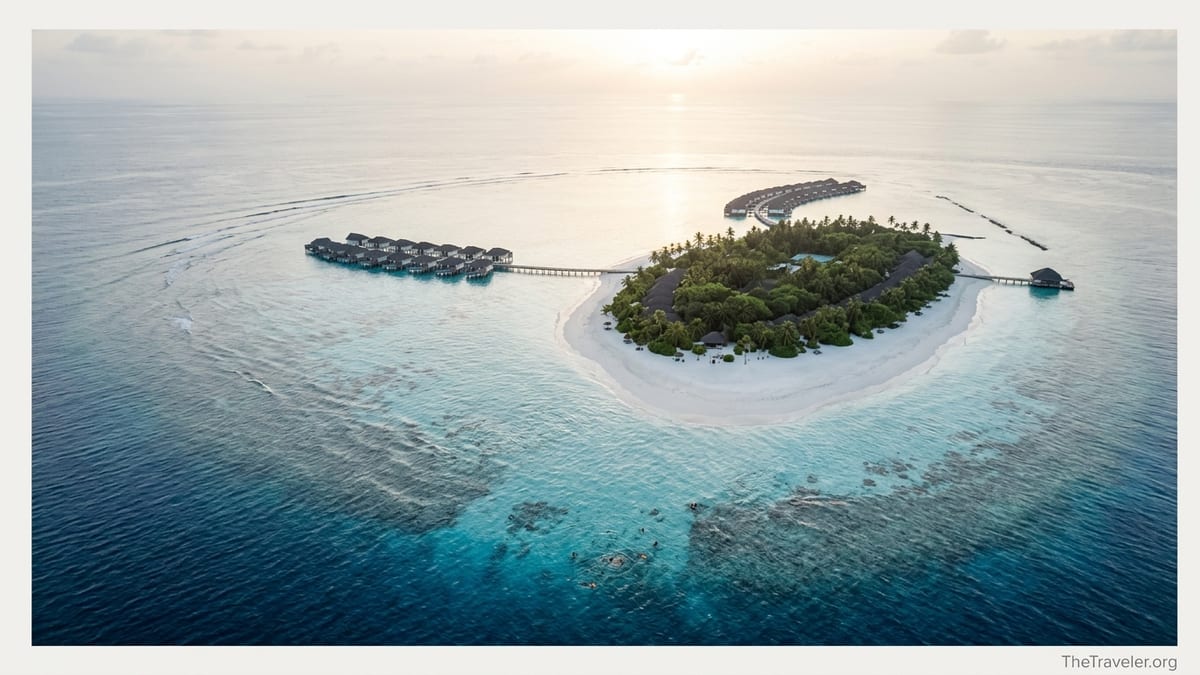
When you zoom out on the map, the northern Maldives looks like a maze of turquoise dots. In practice, each atoll has a distinct character. Baa is the best known internationally thanks to its UNESCO Biosphere Reserve status and the manta gatherings of Hanifaru Bay. It combines super-luxury private islands like Soneva Fushi and Anantara Kihavah with mid-range options that still benefit from rich marine life and decent house reefs. Transfer here is usually by 30 to 40 minute seaplane from Malé, which adds cost but also the classic lagoon views on arrival.
Noonu and Raa, slightly farther north, are the new luxury frontier. Noonu hosts some of the most exclusive overwater villas in the country at Soneva Jani and Velaa Private Island, along with more accessible five-star options such as Sun Siyam Iru Fushi and Noku Maldives. Raa balances design-led resorts like Joali Maldives and Joali Being with more mainstream properties where packages can be more affordable than in Baa for comparable villa quality.
Lhaviyani, closer to Malé than Baa, is known for broad sandbanks, long lagoons and a cluster of mid-range to upper-mid-range resorts. Places such as Atmosphere Kanifushi, Cocoon Maldives and Kuredu are popular with couples and families who want large all-inclusive packages, multiple restaurants and long beaches more than a drop-off house reef. Farther north again, atolls like Haa Dhaalu and Haa Alifu see fewer visitors and have fewer resorts, but can offer a remote feel and, in some cases, very good snorkelling and diving for those willing to travel.
For most travelers comparing the northern atolls, the main trade-offs are transfer time and cost versus reef quality, villa style and meal plans. The deeper into the north you go, the more likely you are to find low-density luxury islands and healthy coral pockets, but you will almost always be paying for a longer seaplane flight versus a speedboat ride to a central atoll resort.
Baa Atoll: Biosphere Luxury, Mantas and Strong House Reefs
Baa Atoll is the headline act of the northern Maldives largely because of Hanifaru Bay, where from around June to October plankton-rich currents attract manta rays and, occasionally, whale sharks. Several high-end resorts position themselves as ideal bases for manta trips, including Anantara Kihavah Maldives Villas, Four Seasons Resort Maldives at Landaa Giraavaru and Amilla Maldives. These islands mix private pool villas, sophisticated dining and spa programs with relatively easy access to mantas by speedboat excursions during the season.
For travelers whose priority is snorkelling straight from the villa or beach, Anantara Kihavah is repeatedly singled out for having one of the strongest house reefs in the atoll, especially along its outer edge. Many overwater pool villas sit just a short swim from drop-offs where guests report seeing turtles, reef sharks and large schools of fish in clear water. Rates here are typically in the top tier for the Maldives, with entry-level overwater villas often starting around the high hundreds to low thousands of US dollars per night in shoulder season, excluding taxes and transfers, and climbing significantly in peak holiday periods.
At a similar luxury level but with a slightly different vibe, Four Seasons Landaa Giraavaru focuses heavily on marine conservation and wellness. Its house reef is accessible from designated entry points and is known for good coral growth and frequent turtle sightings. Guests who choose beach villas here often like being able to walk from powdery sand straight into snorkellable water, while those in overwater villas still have ladder access to the lagoon. This is a resort where travellers might come for a week-long wellness program or family stay that mixes manta trips, kids club activities and sailing.
If you want to tap into Baa’s marine life without paying the very top prices, look at more moderately priced resorts in the atoll such as Royal Island Resort & Spa or Reethi Beach Resort. Overwater villas at these islands are simpler in design and closer together, but they still typically offer direct lagoon access, and their house reefs can be surprisingly rewarding. In many months you can find promotional packages where a week including half board and seaplane transfers works out to noticeably less than the five-star icons, making Baa one of the best-value ways to experience a UNESCO Biosphere Reserve setting.
Raa Atoll: Design Islands and Balanced Value
Raa Atoll has emerged over the past decade as a serious rival to Baa for travelers who care about architecture, interiors and wellness as much as they do about the sea. Joali Maldives is one of the best-known examples. Its overwater villas are large, art-filled and come with private pools; many enjoy panoramic views onto a deep-blue channel rather than a shallow lagoon, so you get a sense of being out in open ocean. Joali is unapologetically premium in price, particularly in peak season, but if you are celebrating a honeymoon or milestone birthday and want next-level design and butler service, it is one of the most compelling northern options.
Its sister property Joali Being, also in Raa, is focused on wellness. Overwater wellbeing villas come with sleek lines, pale wood and large decks oriented towards sunrise or sunset depending on category. Many visitors choose a structured wellness program including nutrition consultations, movement classes and spa rituals, then punctuate their stay with reef trips and sandbank picnics. While nightly rates can feel high on paper, value-conscious guests sometimes justify the spend by comparing it to a separate spa retreat plus beach holiday; here the two are combined in one island.
For a more mainstream luxury feel and wider family appeal, resorts such as Kudafushi and Adaaran Select Meedhupparu sit in Raa with a mix of beach and water villas. Many packages here are sold on a full-board or all-inclusive basis. Overwater categories tend to be more compact and more simply furnished than at Joali, but they still offer the quintessential Maldivian experience of waking above the lagoon, with steps leading directly into the sea. House reef quality varies island by island; some have a proper drop-off reachable with a five to ten minute swim, while others are better suited to lagoon wading and boat trips to outer reefs.
Raa’s key strength is that it offers a continuum from ultra-luxury to upper-mid-range in a single atoll. This makes it attractive for split stays: you might spend three nights at a higher-end design island, then move by speedboat or short seaplane hop to a more budget-friendly resort for the remainder of your trip. That kind of combination is harder to arrange in more isolated atolls where there are fewer properties and connections.
Noonu Atoll: Overwater Icons and Big-Lagoon Luxury
Noonu Atoll is home to some of the most photographed overwater resorts in the world, with broad blue lagoons and villa jetties stretching into the horizon. Soneva Jani, often cited in overwater villa rankings, is perhaps the most famous. It is set within a private 5.6 kilometre lagoon and offers enormous one to four bedroom water villas with slides, outdoor decks and rooftop terraces. Many villas have direct views into deep aquamarine water rather than over a shallow sandbank, creating the sense that you are floating at sea. Prices reflect its status; even in lower-demand periods, it tends to sit in the highest price bracket of the Maldives.
For travellers who like the idea of Noonu but want something slightly more accessible, Velaa Private Island offers a more intimate, ultra-luxury take with a strong focus on service, golf and bespoke experiences. Its overwater villas integrate warm wood, thatch and contemporary design, and some categories have large pools. However, Velaa’s pricing is also squarely in the top tier. Both Velaa and Soneva Jani appeal most to guests for whom privacy, villa size and bespoke dining matter more than the ability to snorkel a steep house reef straight from the deck.
Those who want a blend of big-lagoon views and more approachable prices tend to gravitate towards Sun Siyam Iru Fushi, Noku Maldives or Robinson Noonu. At Iru Fushi, a large island with extensive facilities, water villas line both sunrise and sunset sides of the lagoon; many have private pools and partial glass floors, and the resort balances options for couples with a full-scale kids club and family activities. Noku and Robinson Noonu sit on smaller islands and offer fewer villa categories, often translating into a quieter, more relaxed feel.
Noonu’s snorkelling and diving scene is more about boat-access sites than classic wraparound house reefs. The atoll is known among divers for sites such as Orimas Thila, where grey reef and white-tip sharks are frequently seen, and for soft coral pinnacles that attract schooling fish. For overwater villa guests, that means you may swim in clear, calm blue water directly below your deck but still sign up for regular snorkel or dive excursions to reach the most dramatic coral formations and pelagic life.
Lhaviyani Atoll: Easygoing Beaches and All-Inclusive Value
Lhaviyani Atoll lies northwest of Malé and is one of the most popular northern choices for travelers who want long beaches, sandbanks and competitive all-inclusive packages. Resorts such as Atmosphere Kanifushi, Cocoon Maldives and Kuredu Island Resort are frequently recommended to families and couples looking for a balance of cost and comfort. Many packages here include buffet and a la carte dining, house drinks and non-motorised water sports, which can simplify budgeting compared to paying a la carte at a high-end Baa or Noonu property.
Overwater villas in Lhaviyani tend to be built over broad lagoons with pale sand bottoms rather than directly on a reef edge. At Kuredu, for example, the overwater O Villas and Sangu Water Villas look over a turquoise lagoon that is ideal for swimming and paddleboarding. Atmosphere Kanifushi is largely a beach-villa resort, but some sister properties in the same atoll and region offer water villas with private pools as part of premium all-inclusive packages. This is where you might choose to prioritise space, a generous meal plan and easy wading access over dramatic drop-off snorkelling.
Families particularly like Lhaviyani because many resorts here lean heavily into kids clubs, multiple pools and varied dining. At Cocoon Maldives, reviews often highlight the way staff remember children’s names, arrange simple birthday celebrations and offer flexible dining times for younger travelers. The island’s Italian design touches and sculptural furniture give it a contemporary feel without pushing it into the super-luxury price band. House reef quality is moderate but sufficient for casual snorkellers who are happy to see reef fish and the occasional turtle close to shore, then take excursions for more intense drift snorkels.
If you are a serious snorkeller or diver who wants a steep wall just a few fin kicks from your villa, Lhaviyani is generally not the prime pick in the north. However, if your dream is a week of soft sand, waist-deep water, cocktails by the pool and the occasional turtle sighting without breaking the bank, it delivers some of the best value per night among the northern atolls, especially when you consider what is included in many all-inclusive plans.
Far Northern Atolls: Fewer Resorts, More Remoteness
Beyond Noonu and Raa, the far northern atolls of Haa Dhaalu and Haa Alifu feel significantly more remote. There are fewer resorts here, and most itineraries involve a domestic flight from Malé followed by a short speedboat ride rather than a direct seaplane. Travel time can easily add one to two hours to your transfer compared with a resort in Baa or Lhaviyani, so these atolls suit travelers who are staying at least a week and are comfortable with the extra logistics.
The reward is a greater sense of isolation and, in many cases, very lightly dived reefs. Some resorts in these northernmost atolls sit near channels that attract large numbers of pelagics, including reef sharks and rays, and coral cover can be better than in heavily trafficked central atolls. However, resort choice is limited and ranges from modest, dive-focused islands to a small handful of higher-end properties. If you are fixated on a particular villa aesthetic or brand-name luxury, you may find the options quite narrow compared with Baa or Noonu.
Overwater villas in the far northern atolls are less common than beach villas, though new developments shift this balance periodically. Where they exist, they tend to emphasise simple comfort and position rather than extreme villa size or lavish private pools. Snorkellers often find that the better experiences are reached by boat, because many of the most interesting reefs are outside resort lagoons in channels and outer rim walls. If you are a serious diver or underwater photographer who values uncrowded dive sites more than on-island variety, the far north can be compelling.
In value terms, these atolls are something of a mixed bag. Domestic flights add cost, but nightly rates at many resorts are lower than at high-profile Baa and Noonu names. If you can find a package that folds in transfers and some meals, the total spend can sometimes match or even undercut a shorter stay at a more central luxury island, especially outside peak European holiday periods.
Choosing the Right Atoll for Overwater Villas and House Reefs
If your main goal is to stay in an overwater villa with serious house-reef snorkelling directly from your deck, Baa and parts of Raa should be at the top of your shortlist. Resorts like Anantara Kihavah and certain Joali villas sit within a short swim of reef drop-offs, meaning you can realistically snorkel several times a day without signing up for boat trips. You will pay a premium for this combination of villa quality and reef access, but for many travellers, the ability to slip into deep blue water and see abundant marine life within minutes of waking is worth the extra cost.
Travelers who prioritise the overwater experience itself, with enormous indoor space, private pools and slides, often choose Noonu, particularly Soneva Jani or Velaa Private Island. In these resorts, the villa becomes the main attraction. You might spend hours on your deck in absolute privacy, make use of in-villa dining and lightly use the lagoon for swimming, while booking separate excursions for the most rewarding snorkelling. In value terms, these islands are some of the most expensive in the country; if budget is a concern, you may be better served by a mid-range overwater villa in Baa or Raa paired with regular snorkel trips to top reefs.
For a more budget-conscious overwater stay, look at Lhaviyani and some of the mid-priced resorts in Baa and Raa. In Lhaviyani, water villas often cost less per night, especially when wrapped into all-inclusive offers that cover meals and drinks. The trade-off is that the best snorkelling may require a short swim to patch reefs or joining organised trips. If your group includes non-swimmers or young children, the safer, shallower lagoons of Lhaviyani can actually be an advantage, since everyone can enjoy being in the water without strong currents.
Finally, consider whether you truly need an overwater villa for the entire stay. In Baa and Raa especially, a smart strategy is to split your time between a beach villa and a water villa at the same resort. Beach villas usually provide more privacy from passing buggies and other guests, plus direct shade and sand play for children, while one or two nights in a water villa give you the overwater experience without the full-trip price tag. Many northern resorts are happy to structure such split stays and sometimes run promotions that encourage them.
Beaches, Dining and Who Each Atoll Suits Best
When it comes to beaches, Lhaviyani and parts of Raa often offer the widest, most forgiving stretches of sand, with long sandbanks and shallow-entry lagoons. These are ideal if your dream day involves walking for many minutes in calf-deep water or letting kids splash near shore. Baa and Noonu, by contrast, sometimes have narrower beaches on the ocean-facing sides of their islands, especially where house reefs sit very close to shore. The trade-off is that these steeper drop-offs usually deliver better snorkelling just off the beach.
Dining is one of the main factors that separates ultra-luxury islands from more budget-friendly options. At places like Soneva Jani, Joali or Four Seasons Landaa Giraavaru, you can expect multiple a la carte restaurants, extensive wine lists and chef-driven tasting menus, with prices to match. In Lhaviyani all-inclusive resorts such as Cocoon or Atmosphere Kanifushi, food is more buffet-driven with a few speciality venues, but it is already included in the nightly rate, which many travelers find easier to manage. Mid-range Baa and Raa resorts often sit somewhere in between, offering a mix of buffet and a la carte along with optional premium experiences such as sandbank dinners.
For couples and honeymooners willing to spend, Baa and Noonu remain the strongest choices in the north because of their mix of iconic villas, house reefs and romantic experiences such as underwater restaurants or private sandbank picnics. For families, Lhaviyani and larger resorts in Raa and Noonu like Sun Siyam Iru Fushi or some of the bigger all-inclusive islands tend to work better thanks to kids clubs, multiple pools and a wider variety of casual dining options. Serious snorkellers and divers, meanwhile, will often pick a Baa or Raa resort with a proven house reef and then add day trips to sites like Hanifaru Bay.
In overall value terms, Baa can deliver excellent return on investment if you deliberately avoid the very top-tier properties and look instead at well-reviewed four-star or entry-level five-star resorts that still sit close to good reefs. Raa and Lhaviyani frequently offer lower average nightly rates for overwater villas than Noonu, especially if you book outside festive periods and shoulder seasons. The far northern atolls can represent a value sweet spot for divers happy to trade brand-name luxury and easy access for more time underwater and fewer fellow guests on dive boats.
The Takeaway
Choosing between the northern atolls of the Maldives starts with deciding what you care about most: house-reef snorkelling from your villa, the sheer drama of enormous overwater suites, broad family-friendly beaches, or overall cost once flights and transfers are included. Baa and parts of Raa excel at combining strong reefs with polished luxury, Noonu leads for oversized overwater villas and lagoon drama, Lhaviyani wins for easygoing all-inclusive beach life, and the far north offers remoteness and under-the-radar reefs for those willing to go the extra distance.
For many travelers, a smart compromise is to pick one atoll and one island that clearly matches their priorities instead of trying to sample too many in a single trip. If snorkelling and mantas are your dream, aim for Baa. If you want the most extravagant water villa you can afford, look to Noonu. If your family needs space and predictability on a budget, Lhaviyani or a mid-range Raa resort could be ideal. By being honest about what matters most and where you are willing to compromise, the northern Maldives can deliver a trip that feels tailored, not generic.
FAQ
Q1. Which northern atoll is best overall for first-time visitors?
Baa Atoll is often the best starting point because it combines strong house reefs, manta excursions, a range of price points and relatively straightforward seaplane access from Malé.
Q2. If I want the best overwater villa, which atoll should I choose?
Noonu Atoll, particularly resorts such as Soneva Jani and Velaa Private Island, is known for some of the largest and most luxurious overwater villas in the Maldives.
Q3. Where are the strongest house reefs in the northern Maldives?
Many of the most praised house reefs in the north are in Baa and parts of Raa, where drop-offs can be reached with a short swim from certain beach and water villas.
Q4. Which atolls are best for families with young children?
Lhaviyani and larger resorts in Raa and Noonu tend to work well for families thanks to shallow lagoons, kids clubs, multiple pools and broad all-inclusive dining options.
Q5. Are the far northern atolls worth the extra travel time?
They can be worthwhile for divers and travellers seeking remoteness, quieter reefs and fewer boats, as long as you are comfortable with a longer domestic flight and speedboat transfer.
Q6. How do I balance budget and experience when choosing a northern resort?
Consider splitting your stay between a higher-end and a more affordable island in the same atoll, or choose a mid-range Baa or Raa resort near good reefs rather than a top-tier luxury icon.
Q7. Do I need an overwater villa for good snorkelling?
No. In many northern resorts, beach villas are closer to the best entry points on the house reef, and you can still access excellent snorkelling while saving on nightly villa rates.
Q8. Which months are best for manta ray encounters in the north?
From roughly June to October, plankton-rich conditions around Baa Atoll, especially at Hanifaru Bay, give the highest chances for manta ray encounters, though exact timing varies each year.
Q9. Is all-inclusive good value in northern Maldives resorts?
All-inclusive plans in atolls like Lhaviyani and some Raa resorts can provide strong value, particularly for guests who plan to dine mostly on-island and enjoy drinks and activities daily.
Q10. How far in advance should I book a northern Maldives resort?
For peak travel periods such as late December, Easter and major school holidays, booking six to twelve months ahead is sensible, especially if you want specific overwater villa categories.