


The northern Maldives have quietly become one of the most compelling regions on the planet for serious divers. From Baa Atoll’s famed manta aggregations to the sharky channels of Lhaviyani, the untouched reefs of Noonu and Raa, and the frontier feel of the far-north atolls, this region offers big-animal encounters, healthy coral, and a mix of resort and liveaboard options that feel very different from the busier central atolls. This guide compares Baa, Lhaviyani, Noonu, Raa and the far-north atolls to help you choose the right base, boat and budget for your next dive trip.
How the Northern Atolls Fit Into a Maldives Dive Itinerary
Most first-time visitors to the Maldives focus on the central atolls around Male, but the island nation stretches hundreds of kilometers north and south. Baa, Lhaviyani, Noonu and Raa sit in the upper half of the archipelago, reached by a mix of domestic flights and speedboats from Male, while the far-north atolls such as Haa Alifu, Haa Dhaalu and Shaviyani are closer to India and feel markedly more remote. Administratively these are separate atolls, but for divers they form a loose “northern circuit” that many liveaboards now combine into one itinerary.
The key difference compared with the central atolls is density. In the north you generally find fewer boats on the same site, more chance of unshared channels and thilas, and more varied itineraries as operators spread out to avoid overlap. At the same time, the northern atolls are well connected: Baa and Lhaviyani sit roughly 30 to 45 minutes by domestic flight or 2 to 3 hours by speedboat from Male, while Raa and Noonu may require a short hop on a local airline before transferring by speedboat to your resort or guesthouse.
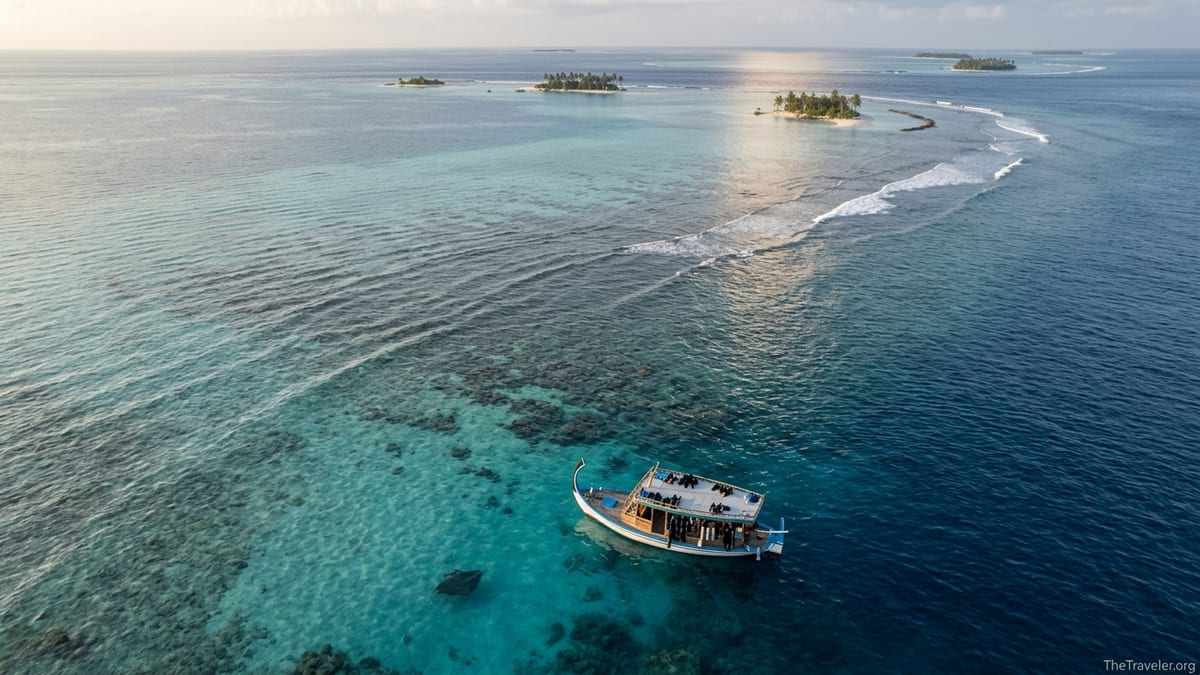
For planning, think in terms of how you want to dive. Resort-based diving suits those who prefer comfort, family facilities or a fixed base near a single atoll’s highlights. Liveaboards, which many divers now book for around one week at a time, are ideal for covering several atolls in one trip. For example, a typical “North & Baa” itinerary may depart Hulhumale, head to Lhaviyani for sharks and channels, then move to Baa for Hanifaru Bay manta aggregations and finish in Raa for thilas before returning to Male.
Baa Atoll: Manta Capital and Biosphere Reserve
Baa Atoll is the headline destination in the northern region, primarily because of Hanifaru Bay, a small lagoon inside a UNESCO Biosphere Reserve where plankton-rich currents can funnel in dozens of reef mantas and occasional whale sharks between roughly June and October. During peak days in July and August, dive boats and local guesthouses on islands such as Dharavandhoo often operate “manta call” systems where staff monitor conditions and alert guests when the bay opens for controlled snorkeling sessions.
Hanifaru itself is snorkel-only and tightly regulated, but Baa’s dive sites deliver excellent scuba. Reefs like Nelivaru Thila and Dharavandhoo Thila offer classic Maldivian topography, with steep walls, overhangs and cleaning stations where mantas circle above blocks of coral while cleaner wrasse pick over their wings. On a typical two-tank morning from a resort such as Dusit Thani Maldives or a guesthouse on Dharavandhoo, you might see turtles, schooling fusiliers, bluefin trevallies and patrols of white-tip reef sharks along the drop-offs.
Commercially, Baa offers the broadest range of price points in the northern region. Budget-minded divers often base themselves on local islands like Dharavandhoo or Thulhaadhoo, staying in small guesthouses that sell 2 or 3 dive packages with Hanifaru excursions added where permits allow. At the higher end, integrated resort islands such as Soneva Fushi or Amilla often run in-house dive centers with well-equipped dhonis, nitrox, private guiding and photopro services aimed at families and couples. Many liveaboards now schedule seasonal “Hanifaru specials,” planning several nights in Baa during the manta season and combining the bay with surrounding dive sites that are less restricted.
Lhaviyani Atoll: Channel Sharks, Wrecks and Accessible Variety
Lhaviyani, sometimes listed as Faadhippolhu Atoll, has become known among divers for its high-energy channel dives and reliable shark encounters. Kuredu Express, a protected marine area near Kuredu Island Resort, is one of the Maldives’ signature drift dives. Divers drop on the outer reef and descend to terraces at roughly 20 to 30 meters, hooking into the current while grey reef sharks patrol in front, with eagle rays, tunas and schooling jacks in the blue. On days with strong in-flowing current, experienced divers often rate it among their top sites worldwide for shark action.
The atoll also offers accessible wreck and reef diving. The Shipyard is a standout, with two wrecks lying upright at recreational depths on the same site, both smothered in soft corals and home to batfish, lionfish and swirling glassfish in the holds. Kuredu Caves, nicknamed “Turtle Airport,” is a series of overhangs on the reef wall where green turtles rest and queue for cleaning; it is one of the few sites in the region where snorkelers regularly report seeing more than a dozen turtles in a single session. These sites are all within boat distance of resorts such as Kuredu Island, Hurawalhi and Komandoo, which host well-established dive operations.
Lhaviyani is particularly attractive if you want a fixed base but still crave variety. A one-week stay at a resort with a strong dive center can easily deliver 15 or more distinct sites including channels, thilas, wrecks and gentle reefs suitable for less experienced buddies. For certified divers, expect two-tank morning trips, optional third dives and occasional night dives. Non-divers in a group still have good snorkeling from house reefs that often hold turtles and small reef sharks. Compared with Baa, Lhaviyani has fewer domestic flight transfers; many packages include direct seaplane from Male, making it relatively straightforward for first-time visitors to the Maldives.
Noonu and Raa: Thilas, Reefs and Under-the-Radar Sharks
Noonu and Raa Atolls sit just north of Baa and offer a mix of quietly thriving coral gardens and less crowded shark and manta sites. While they lack a single iconic spot like Hanifaru Bay, both atolls are increasingly included on “North & Central” liveaboard routes and are home to several mid-range and upscale resorts with resident dive centers. In Noonu, sites such as Orimas Thila and Christmas Rock are known for schooling snappers, sea fans, soft corals and regular sightings of white-tip and grey reef sharks, especially at current-facing corners where nutrient flows concentrate.
Raa Atoll is often described as a thila-focused destination, with submerged pinnacles dotted across open channels. Reethi Thila and nearby pinnacles regularly feature in liveaboard itineraries for their fish biomass, including swarms of fusiliers chased by tunas, clouds of anthias on the top of the reef and occasional visits from mobula rays and eagle rays in the blue water. Many divers first experience Raa from resort islands such as Reethi Faru or from liveaboards that overnight near central moorings and fan out to different thilas each day by dhoni.
For divers who care about coral health and fewer crowds, Noonu and Raa can be appealing. Because boat traffic is lower than in the central atolls, it is common to have an entire site to your group, especially outside the busiest holiday weeks. House reefs at properties like Noku Maldives or You & Me in Raa often offer straightforward shore dives with abundant macro life, from leaf scorpionfish to nudibranchs, while offshore sites provide the classic Maldivian mix of sharks, rays and schooling fish. Pricing here tends to sit between Baa and the far north, with a good range of full-board resort packages and growing numbers of guesthouses on local islands.
Far-North Atolls: Frontier Diving in Haa Alifu, Haa Dhaalu and Beyond
The far-north atolls, notably Haa Alifu, Haa Dhaalu and Shaviyani, remain the least dived region of the Maldives, which is precisely their appeal. Geographically close to India’s Lakshadweep Islands, they are characterized by wide channels, micro-atolls and relatively untouched reefs. Divers who make the journey, often via a domestic flight to airports like Hanimaadhoo, are rewarded with fewer boats, more exploratory dives and, in many cases, very healthy hard coral.
Dive reports from Haa Alifu and Haa Dhaalu highlight classic Maldivian reef species along with large tunas, bumphead parrotfish and numerous reef sharks. Some sites feature cleaning stations where grey reef sharks and occasional silvertips circle, while others offer gently sloping plateaus covered in staghorn and table corals that have recovered well compared with more heavily trafficked regions. Because these atolls see less tourism, dive centers are usually attached to a small number of resorts and local-island guesthouses rather than being present on every island.
From a trip-planning perspective, the far north suits experienced divers who have already seen the central and northern highlights and want something more exploratory. Liveaboards sometimes schedule specific “Far North” weeks, starting with a domestic flight to meet the vessel and then working its way through Shaviyani, Haa Dhaalu and Haa Alifu before returning south. Land-based options work best if you are happy to focus on a smaller radius of sites near one island. Prices can be comparable to Baa or slightly lower, but boat fuel and domestic flights add to total costs, so it is worth comparing a full board resort package with a liveaboard week when budgeting.
Sharks, Mantas and Seasonal Conditions Across the North
Although each atoll has its own character, the broader northern Maldives share certain patterns of marine life and seasonality. Reef sharks, primarily grey and white-tip, are present year-round in Lhaviyani’s channels and on the thilas of Noonu and Raa, with numbers generally higher when currents are strong and visibility is slightly reduced by plankton. Nurse sharks and tawny nurse sharks occasionally rest under ledges, while schools of barracuda, jacks and batfish circle popular pinnacles.
Manta rays are more localized. Baa has the best-known manta aggregation at Hanifaru Bay during the southwest monsoon, roughly June to October, though sightings vary daily and are influenced by lunar cycles and plankton blooms. Lhaviyani and Raa host manta cleaning stations where smaller numbers of rays visit throughout the year, with peaks often occurring during the periods when currents shift. Noonu’s reefs can see both cleaning and feeding mantas along outer walls, often combined with reef shark sightings on the same dive.
Visibility and sea conditions also vary by season. During the northeast monsoon, typically January to April, clearer water on eastern sides of the atolls can produce 25 to 30 meters of visibility and calmer seas, great for wide-angle photography. The southwest monsoon months bring more plankton and sometimes choppier conditions but increase the chance of large filter feeders, including mantas and occasional whale sharks in Baa. For trip planning, many operators recommend choosing between slightly cooler, clear-water reef diving in early-year months and warmer, plankton-rich big-animal encounters in mid-year, then building your atoll choice around that preference.
Resort Diving vs Liveaboards: Choosing the Right Setup
In the northern Maldives, both resort-based diving and liveaboards are well developed, but they deliver different experiences. Resort diving in Baa, Lhaviyani, Noonu and Raa typically centers on a single island with an in-house dive center operating daily boats, house reef diving and courses. This works well if you travel with non-divers, children or anyone who wants spa facilities and fixed schedules. A week at a resort like Kuredu Island in Lhaviyani or Reethi Faru in Raa might include 10 to 12 boat dives, unlimited house reef snorkeling, and plenty of surface-interval time on white-sand beaches.
Liveaboards, by contrast, allow you to link several atolls on one trip and maximize time at signature sites. A “Hanifaru & North” itinerary might depart Male, dive channels in Lhaviyani for two days, spend several days in Baa to time snorkel sessions at Hanifaru Bay and dives at nearby thilas, then finish in Raa before returning. On board, divers typically make three or four dives per day, including night dives, and move moorings overnight. Cabins range from simple bunks to suites, with prices varying widely depending on vessel size and comfort level.
From a cost perspective, entry-level liveaboards sometimes undercut mid-range resorts on a per-dive basis, especially once you factor in unlimited diving within safe limits and the lack of extra speedboat fees. However, resort packages can be competitive when booked with international flights or during low season, and they offer more flexibility to skip dives without feeling you are “wasting” a dive-intensive itinerary. If you are primarily interested in Hanifaru Bay mantas, consider a resort or guesthouse in Baa that offers frequent trips to the bay, or a liveaboard operating a dedicated Baa-focused route during the season rather than a generic “Best of Maldives” that may only pass through briefly.
Practical Planning: Transfers, Certification and Budget
Getting to the northern atolls usually involves one or two additional legs after arriving at Male’s international airport. Baa, Lhaviyani, Noonu and Raa are commonly served by seaplanes or short domestic flights followed by speedboat. The far-north atolls often require a domestic flight to an airstrip such as Hanimaadhoo and then a boat transfer. These internal transfers can add significantly to trip cost, so check whether your package is “all-in” or if transfers are billed separately per person.
In terms of certification, most northern sites are suitable for Advanced Open Water divers comfortable in mild to strong current. Channel dives at places like Kuredu Express in Lhaviyani or exposed thilas in Raa and Noonu may require current hooks and good buoyancy control. Many resorts and liveaboards run PADI Advanced courses and drift specialties, so newer divers can upgrade early in the trip. Nitrox is widespread on both resort islands and liveaboards and is strongly recommended for repetitive diving, particularly at 20 to 30 meter profiles common in channels and on pinnacles.
Budgets vary widely. At the lower end, divers on local islands in Baa or Raa can often find guesthouse stays with daily two-dive packages at prices that, once flights are included, remain competitive with other Indian Ocean destinations. Mid-range all-inclusive resorts often bundle 10-dive packages or offer discounted unlimited house reef diving, appealing to couples who mix diving and relaxation. High-end options such as private-island resorts in Baa or Noonu add seaplane transfers, gourmet dining and a higher staff-to-guest ratio, but for some divers the ease of stepping from villa to dive dhoni makes the extra cost worthwhile.
The Takeaway
For divers choosing between Baa, Lhaviyani, Noonu, Raa and the far-north atolls, the decision boils down to what you most want to see and how you prefer to travel. Baa is unmatched for seasonal manta aggregations and a broad spread of budget to luxury options. Lhaviyani excels at high-energy channels, sharks and easily accessed variety from a single resort base. Noonu and Raa offer under-the-radar pinnacles, healthy reefs and fewer boats, ideal for those who prioritize a quieter experience over a single marquee site. The far north rewards repeat visitors with frontier-style diving, healthier hard coral and fewer crowds at the cost of longer transfers and more limited choice of operators.
Whether you board a liveaboard that strings these atolls together or settle into one island and work its surrounding reefs, the northern Maldives remain one of the rare places where mantas, sharks, coral gardens and clear water come together with comfortable logistics and a wide spectrum of budgets. With some careful thought about season, certification level and travel style, you can tailor a trip that hits your personal sweet spot, from manta-filled lagoons in Baa to sharky channels in Lhaviyani and exploratory reefs in the far north.
FAQ
Q1. When is the best time to dive Baa Atoll for mantas at Hanifaru Bay?
The most reliable manta season at Hanifaru Bay is roughly June to October, with peak aggregations often in July and August when plankton levels are highest.
Q2. I am a new Open Water diver. Which northern atoll is most suitable for me?
Calmer reef and thila sites in Baa, Noonu and Raa generally offer easier conditions, while more advanced channel dives in Lhaviyani and the far north are better tackled after gaining experience.
Q3. Do I need a liveaboard to enjoy the northern Maldives, or is a resort enough?
A liveaboard is best if you want to visit several atolls in one trip, but a resort or guesthouse in a single atoll such as Baa or Lhaviyani can still deliver excellent week-long diving.
Q4. How do internal transfers work to Baa, Lhaviyani, Noonu and Raa?
Most travelers fly into Male, then connect by seaplane or short domestic flight and speedboat to their island or liveaboard. These transfers are usually arranged by your operator and added to the trip cost.
Q5. Are shark dives in Lhaviyani safe for intermediate divers?
Sites like Kuredu Express involve strong currents, so they are recommended for confident Advanced Open Water divers, but reputable centers manage depth, entry points and current hooks to keep dives controlled.
Q6. How do prices compare between resort diving and liveaboards in the north?
Entry-level liveaboards can be cheaper per dive, especially with three or four dives daily, while mid-range resorts may be similar in overall cost but include more non-diving comforts and flexibility.
Q7. Can I see whale sharks in the northern atolls, or should I go south?
Whale sharks occasionally appear in Baa during plankton-rich months, but encounters are not guaranteed. For more consistent whale shark diving, many divers combine a northern trip with a separate southern atoll visit.
Q8. Is nitrox widely available in Baa, Lhaviyani, Noonu and Raa?
Yes, most established resort dive centers and many liveaboards in the northern atolls offer nitrox, and it is recommended for repetitive dives at 20 to 30 meter depths.
Q9. What kind of wetsuit should I bring for a northern Maldives trip?
Water temperatures typically sit around 27 to 29 degrees Celsius, so most divers are comfortable in a 3 mm full suit or even a thinner shorty, with a hooded vest for longer liveaboard schedules.
Q10. Are there good options for budget-conscious divers in the northern Maldives?
Local-island guesthouses in atolls like Baa and Raa, combined with independent dive centers, can significantly reduce costs compared with luxury resorts while still accessing many of the same sites.