


Lhaviyani Atoll in the Maldives is quietly building a reputation as a manta ray hotspot, but it works very differently from the headline-grabbing, mass-feeding scenes of Baa Atoll’s Hanifaru Bay. Here, mantas are encountered in smaller numbers on cleaning stations and channels scattered around the atoll, often as part of broader diving and snorkeling programs built around sharks, turtles and healthy reefs. If you are considering Lhaviyani specifically for manta rays, it pays to understand how seasons, monsoon currents and local site conditions shape your chances, and why even the best months can never offer cast-iron guarantees.
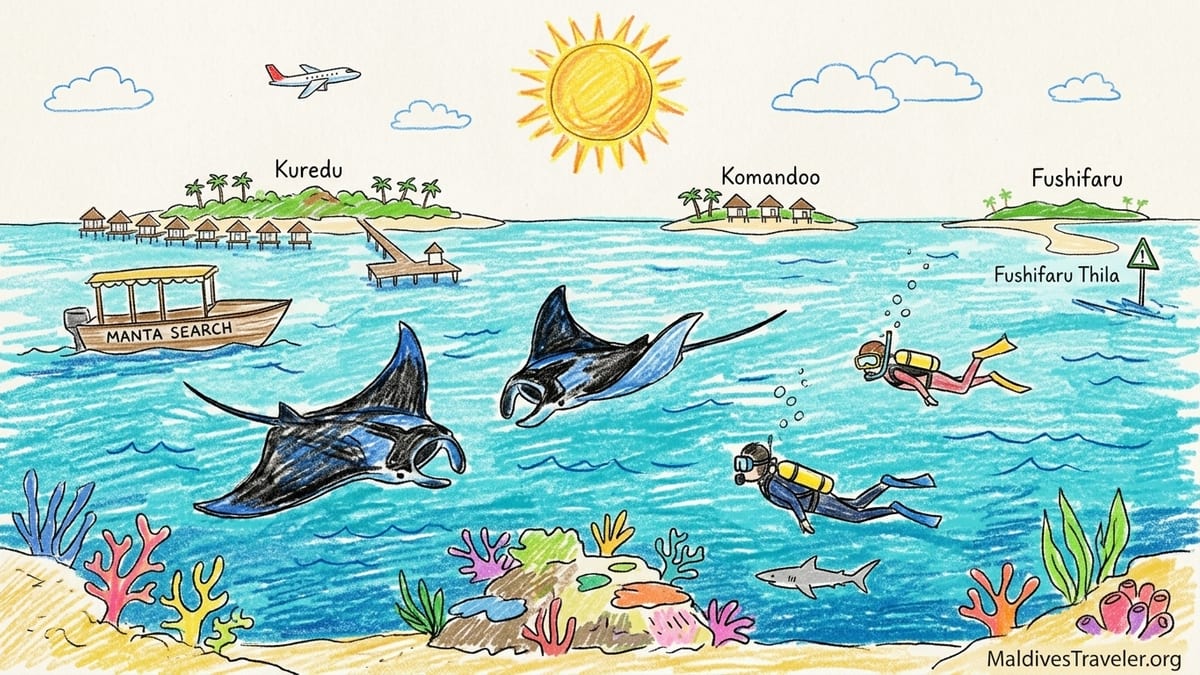
How Manta Season Works in Lhaviyani Atoll
Unlike Baa Atoll, where Hanifaru Bay has a tight feeding season and strict visitor quotas, Lhaviyani’s manta rhythm is spread across several sites and two broad seasonal windows. Recent dive guides and resort briefings describe Lhaviyani’s manta activity concentrating around cleaning stations such as Fushifaru Thila and nearby channels, with peaks commonly reported from about September or October into March or April, and a second period around late northeast monsoon. Operators emphasize, however, that these windows shift slightly from year to year as currents and plankton blooms change.
For example, Kuredu Island Resort, one of the atoll’s largest dive bases, promotes a main manta season from roughly September to March, when snorkeling and diving excursions to known cleaning stations run more regularly and sightings are often more frequent. Staff updates mention that manta search trips usually start once early sightings and plankton blooms appear in October, and may continue into late March or early April if conditions remain favorable. These statements are always couched in careful language: there can be sightings outside those months, and there are no daily guarantees even during the peak.
Independent diving guides focusing specifically on Lhaviyani’s sites describe a similar pattern, with one recent 2026 diving overview noting that manta encounters in the atoll show two distinct peaks: around October to November, and again from about February to April. In practice, many visitors staying at resorts such as Komandoo, Fushifaru and Six Senses Kanuhura experience mantas most often in the October to November window, especially on the eastern side of the atoll where cleaning stations sit in channels exposed to seasonal currents.
What this means for trip planning is that Lhaviyani is not a one-site, one-season story. Instead, different resorts and local islands sit closer to particular cleaning stations and channels that may “switch on” at slightly different times, depending on which side of the atoll is receiving nutrient-rich water and where plankton is concentrated. The core manta period still straddles the late southwest monsoon and early northeast monsoon, but specific weeks and hotspots are best confirmed with the dive center you plan to use.
Key Manta Areas: Fushifaru, Kuredu and Kanuhura
The best-known manta focus in Lhaviyani Atoll today is the protected area around Fushifaru Thila, a channel site recognized as a manta cleaning station. Here, a plateau of coral heads hosts resident cleaner fish that service reef mantas as they circle slowly above the reef, often passing repeatedly over the same bommies. Recent dive descriptions emphasize that Fushifaru combines this cleaning behavior with one of the stronger grey reef shark presences in the region, so divers might watch mantas gliding overhead while sharks patrol the channel below.
Fushifaru Resort, which sits close to this channel, currently highlights manta activity around its cleaning station in the October to November period. Guests might join a short boat ride to the site, where experienced guides brief them on how to position themselves away from the coral and let the mantas choose the distance of approach. On calm days, snorkelers can sometimes hover near the top of the reef while divers remain deeper, creating two distinct viewing layers for the same small group of animals.
To the northwest, Kuredu Island Resort and nearby Komandoo operate extensive diving and snorkeling programs that include manta-focused excursions in season. Kuredu’s communications reference manta search trips typically operating from mid-October through March or April, often marketed to guests who want to combine encounters with other big-animal sites such as sharky channels and local turtle hotspots. Day-to-day decisions about which sites to visit are made based on current reports from boat captains and guides, who share information about where mantas have been seen in the last few days.
On the southern side of the atoll, Six Senses Kanuhura positions itself as a base for Lhaviyani’s eastern channels. Its latest seasonal guidance explains that manta rays are frequently sighted at Fushifaru Thila, just a short speedboat ride from the resort’s jetty, particularly during the October to December period. At the same time, Kanuhura’s broader marine calendar promotes turtle nesting, birdlife and reef diversity throughout the year, framing mantas as part of a wider natural story rather than the sole reason to visit.
Cleaning-Station Diving, Snorkeling and Opportunistic Encounters
Most manta encounters in Lhaviyani revolve around cleaning stations, where mantas circle in the current while cleaner wrasse and other fish remove parasites from their skin and gills. For divers, this usually means dropping onto the reef up-current, then settling on the sand or behind a coral block to avoid drifting across the cleaning area itself. Guided groups are normally briefed to stay low, maintain neutral buoyancy and keep a respectful distance so that mantas feel comfortable enough to continue circling.
At Fushifaru Thila, for instance, dive groups are typically positioned along the edge of the plateau, facing into the current. If conditions line up, a handful of mantas may loop past repeatedly at arm’s length; on quieter days, divers might glimpse only one or two individuals cruising by before they vanish into the blue. Because visibility can range from ten to more than twenty meters depending on the season, guides adapt their positioning so that both photographers and first-timers have a realistic chance of seeing the animals without crowding them.
Snorkeling encounters are more opportunistic and heavily dependent on surface conditions. Resorts such as Kuredu and Fushifaru often run dedicated manta snorkel trips in peak months, sometimes combining them with a visit to a sandbank or a calmer reef. When mantas are feeding higher in the water column or moving between cleaning stations, boat crews may spot their cephalic fins or dark shapes from the surface and drop snorkelers in ahead of the animals. Guests who are comfortable swimming in mild current and following the guide’s instructions can sometimes share long, gentle drifts alongside one or two mantas.
There are also unplanned encounters. Divers at Lhaviyani’s popular wrecks and shark channels occasionally report mantas gliding through mid-water, especially in changeover periods between monsoons when plankton is patchier. Snorkelers exploring resort house reefs sometimes encounter solitary manta rays cruising past the drop-off at sunrise or sunset. These moments cannot be scheduled, but they underline why a broad, active water program maximizes your overall chances. The more time you spend in the water across a week, the more likely you are to be in the right place when a manta decides to appear.
Monsoon, Plankton and Why Timing Is Never Exact
Manta seasons across the Maldives are driven by monsoon patterns that shift currents and concentrate plankton along different sides of the atolls. From roughly May to November, the southwest monsoon tends to push nutrient-rich water toward eastern atoll edges, which often makes east-facing channels like Fushifaru more productive. During this period, plankton blooms near the surface can reduce visibility for divers but create prime feeding conditions for plankton-feeding animals such as reef mantas.
From around December to April, the northeast monsoon usually brings calmer seas and better visibility on eastern reefs, while pushing richer water toward western sides of many atolls. However, the exact onset and strength of each monsoon have become more variable, with local dive operators noting that winds now sometimes switch earlier or later than the historical averages. This means that a week described as “perfect manta timing” in one year might play out differently the next, with blooms and cleaning activity peaking a few weeks earlier or later.
Site-level conditions complicate the picture further. A cleaning station like Fushifaru Thila relies on a particular balance of current strength, plankton presence and water clarity. If the current is too weak, mantas may not bother to hold position over the coral heads; if it is too strong, guides may decide that the site is unsuitable for less experienced divers or snorkelers. On days of very clear, nutrient-poor water, mantas may choose instead to feed in more turbid channels or along outer reefs where plankton layers have formed.
For travelers, the practical implication is clear. Broad guidance such as “October to November and February to April are good bets for Lhaviyani mantas” can help with initial planning, but you should always contact your intended dive center before booking flights, especially if mantas are a high priority. Ask what patterns they have seen in the last couple of years, whether the animals have been favoring particular sites, and how flexible their boat schedule is for manta-focused trips. Their recent logs and local experience matter more than any fixed calendar you might find in an older brochure.
Choosing Your Season: Calmer Months vs Peak Manta Periods
Once you understand that manta timing in Lhaviyani is shaped by monsoon-driven currents, the trade-offs between different travel windows become easier to weigh. Broadly speaking, the northeast monsoon months from about January to April bring calmer seas, brighter skies and generally better visibility underwater, especially in February and March. These conditions are ideal if you want smooth boat rides, easier snorkeling for children, and a good mix of manta possibilities alongside turtles, sharks and colorful reef life.
The later southwest monsoon and shoulder months, particularly from around September through November, are when many operators see the sharpest manta activity in Lhaviyani, especially at east-facing cleaning stations. In October and November, for example, Fushifaru’s cleaning plateau often sees heightened manta traffic in moderate visibility, while some house reefs closer to channels report more incidental sightings. The downside is that you may experience rougher seas, more frequent rain showers and reduced horizontal visibility on some dives compared with the crystal days of late northeast monsoon.
Different traveler profiles will prioritize different trade-offs. A family staying at Kuredu in February might enjoy short, calm-conditions snorkel trips, clear-water dives on wrecks and channels, and at least a reasonable chance of joining a manta excursion if animals are active nearby. A dedicated diver visiting Komandoo or Fushifaru in late October might accept choppier crossings and moodier light in exchange for a higher probability of dedicated cleaning-station dives, even if the water is greener and the surface occasionally squally.
If your dates are locked to a specific school holiday or honeymoon week, speak honestly with the resort or local dive shop about what that period usually delivers. For instance, a late May visit might bring wonderful turtle encounters, schooling reef fish and sharks in steadier visibility, but very limited manta activity around Lhaviyani compared with the core October to March season. Being realistic about these trade-offs from the outset prevents disappointment and helps you choose an atoll whose strengths align with your dates.
Ethical Manta Encounters: How to Behave in the Water
Because Lhaviyani’s manta encounters usually involve small groups at cleaning stations rather than large, crowded bays, guest behavior has a direct impact on whether the animals stay relaxed. Many resorts now provide pre-trip briefings or even printed codes of conduct developed with conservation organizations, outlining how to enjoy encounters without stressing the mantas or damaging the reef. These guidelines are underpinned by simple principles: move calmly, give mantas space and never prioritize a photo over the animal’s welfare.
In practice, ethical manta encounters in Lhaviyani start long before you enter the water. Divemasters typically ask guests to check their weights and buoyancy control on an easier dive before visiting a cleaning station, so that nobody crashes into the coral if a manta passes close. Underwater, divers are asked to settle in a line and avoid swimming toward the mantas; instead, they wait and allow the animals to make the approach. Flash photography is often discouraged or banned, and guides ask everyone to keep their fins flat on the sand to avoid stirring up silt that can irritate manta gills.
For snorkelers, the key rule is to stay at the surface and avoid duck-diving directly into the mantas’ path. Boat crews will usually drop snorkelers slightly up-current of the animals so that they can drift gently while maintaining a respectful distance. Touching mantas is never acceptable, and chasing them from behind can quickly end an encounter not only for you but for everyone else in the water. Resorts that work closely with marine biologists often encourage guests to submit ID photos of manta belly patterns after the trip, turning encounters into citizen-science contributions that help track individual animals across the Maldives.
Many of Lhaviyani’s larger resorts, including Kuredu, have published simple “how to swim with mantas” checklists as part of their sustainability communications. These cover basics such as entering the water quietly, staying streamlined, not blocking the manta’s path and listening closely to guides. When guests follow these guidelines, mantas are more likely to continue using the same cleaning stations, which in turn supports long-term, low-impact tourism for future visitors.
Setting Expectations: Lhaviyani as a Complete Marine Destination
Perhaps the most important message for anyone planning a trip to Lhaviyani Atoll is that it should be chosen as a complete marine destination, not sold or booked as a guaranteed manta experience. While recent research and resort reports list hundreds of individual reef mantas identified in the atoll and highlight generally reliable activity in core months, there are still many days and even whole weeks within the season when mantas simply do not appear at popular sites. Weather, currents and individual animal behavior introduce an element of chance that no operator can remove.
The good news is that Lhaviyani’s wider diving and snorkeling offering easily fills any manta gaps. Divers can explore respected shark channels with grey reef and blacktip reef sharks, visit scuttled wrecks that are now clad in coral and teeming with fish, and drift along outer reefs that host eagle rays, humphead wrasse and abundant turtles. Kuredu’s environment assessments, for example, highlight nearby turtle seagrass beds and frequent green turtle sightings right off the resort. Guests at Six Senses Kanuhura often report daily turtle encounters on the house reefs even when mantas are absent.
For snorkelers, resort house reefs and shallow lagoons around Lhaviyani present accessible adventures independent of manta activity. Many visitors report seeing rays, turtles and schooling fusiliers just a few fin kicks from their villa steps. Day trips to sandbanks combine relaxed beach time with gentle reef snorkels that can be enjoyed by beginners. From this perspective, mantas become a sought-after highlight rather than the sole measure of a successful trip.
When comparing atolls, it is worth noting that destinations such as Baa Atoll and parts of Ari Atoll offer more structured, sometimes more predictable manta experiences, but may involve stricter rules, higher prices for specialized excursions or longer travel times from the international airport. Lhaviyani strikes a different balance, blending strong all-round diving, comfortable resort infrastructure and the real possibility of intimate manta encounters, without concentrating everyone into a single headline site.
The Takeaway
For travelers who dream of swimming with manta rays but also want a varied Maldivian reef experience, Lhaviyani Atoll offers a compelling, if subtly structured, option. Its manta season is not a single, rigid block but a pattern shaped by monsoon winds, shifting plankton blooms and the quirks of individual cleaning stations. Core activity often clusters between about October and March, with noticeable peaks around October to November and again in late northeast monsoon, yet no responsible operator will promise that mantas will show up on any given day.
By framing mantas as one star in a wider cast that includes sharks, turtles, wrecks and vibrant coral shelves, you can approach Lhaviyani with realistic expectations. Choose your season according to your tolerance for choppy seas versus your desire for higher manta odds, book with a resort or local island that has strong ties to an experienced dive center, and stay flexible once you arrive. Crucially, treat every manta encounter as a privilege rather than a product: follow ethical guidelines, keep your distance and let the animals dictate the terms of the interaction.
If you go in with this mindset, Lhaviyani Atoll rewards you not only with a credible chance of seeing mantas circling a cleaning station, but with a broader appreciation of how monsoon-driven ecosystems underpin life on the reefs. Whether your trip delivers dozens of manta passes or none at all, you will still leave with a deep-water portfolio of sharks, turtles and luminous coral gardens that justify the journey in their own right.
FAQ
Q1. When is the best time to see manta rays in Lhaviyani Atoll?
The most commonly recommended period is from about October to March, with many operators highlighting October to November and late February to April as particularly productive windows. However, sightings vary year to year with monsoon timing and plankton conditions, so there is never a guarantee.
Q2. Which resorts in Lhaviyani are best placed for manta encounters?
Resorts close to Fushifaru Thila and nearby channels, such as Fushifaru, Kuredu, Komandoo and Six Senses Kanuhura, frequently organize manta-focused trips in season. The best choice for you depends on whether you prioritize easy access to cleaning stations, house reef quality, or a wider range of activities for non-divers.
Q3. Can I see mantas by snorkeling, or do I need to dive?
Both options are possible. Cleaning stations like Fushifaru Thila are usually dived, but snorkel trips may run when mantas are shallower or feeding near the surface. Many guests who do not dive still experience memorable manta encounters by joining guided snorkel excursions from their resort.
Q4. Are manta sightings guaranteed if I visit in peak season?
No. Even during core manta months, there are days or weeks when mantas do not appear at popular sites. Weather, current strength and plankton distribution can all influence whether mantas choose to visit cleaning stations, so reputable operators avoid making promises about specific encounters.
Q5. How does Lhaviyani compare to Baa Atoll’s Hanifaru Bay for mantas?
Baa Atoll’s Hanifaru Bay is famous for dense feeding aggregations and operates under strict regulations, with snorkel-only access and limited daily visitor numbers. Lhaviyani, by contrast, focuses on smaller-scale encounters at cleaning stations that can be dived or snorkeled, and does not offer the same mass-feeding scenes, but can provide more intimate views of individual mantas.
Q6. Is Lhaviyani a good choice if mantas are my only priority?
If your absolute top goal is the highest possible chance of large manta aggregations, you might also consider atolls such as Baa or parts of Ari that specialize in manta tourism. Lhaviyani is better viewed as a well-rounded marine destination with solid manta potential, not as a single-purpose manta hotspot.
Q7. What is the sea and weather like during manta season?
Conditions vary within the season. Early and mid-season months around October and November can bring more wind, choppier seas and lower visibility, which often coincide with strong manta activity. Later northeast monsoon months like February and March typically offer calmer seas and clearer water, with continued but sometimes more variable manta encounters.
Q8. How should I prepare for a manta-focused dive or snorkel trip?
Work on your buoyancy and comfort in mild current before visiting cleaning stations, and bring a well-fitting mask, reef-safe sunscreen and a rash guard or light wetsuit. Listen carefully to your guide’s briefing about where to position yourself, how far to stay from the cleaning area and why you should never chase or touch mantas.
Q9. Can children or non-swimmers join manta excursions in Lhaviyani?
Policies differ by resort and operator. Confident child snorkelers can sometimes join under close supervision in calm conditions, but strong swimming ability is essential when currents are present. Non-swimmers are generally better suited to glass-bottom boat tours or shallow house-reef snorkeling lessons rather than open-channel manta trips.
Q10. How can I get the latest information on current manta activity before I book?
The most reliable approach is to contact the dive center or resort where you plan to stay and ask about recent manta sightings in the period you are considering. They can share up-to-date patterns from their logbooks and advise whether your preferred dates align with the more active part of the local manta season.