


The Maldives has never been more accessible, with 2026 bringing an explosion of resort offers, flight-plus-hotel bundles and creative all inclusive plans. At the same time, working out what you will actually pay has become more complicated. Transfers, taxes, meal plans and fine print can easily turn a headline bargain into an expensive surprise at checkout. This guide walks through the main types of Maldives resort packages and shows you, with real world examples, how to compare total trip cost instead of chasing the cheapest advertised room rate.
Understanding the Real Cost of a Maldives Stay in 2026
On paper, the Maldives looks simple. You pick a resort, choose a villa type and see a nightly rate. In reality, that nightly rate is only one piece of the bill. In 2026 every resort stay carries 17 percent Goods and Services Tax, a 10 percent service charge and a Green Tax of about 12 US dollars per person per night. Those three line items alone can add roughly 30 percent to whatever base rate you see for rooms, transfers and extras.
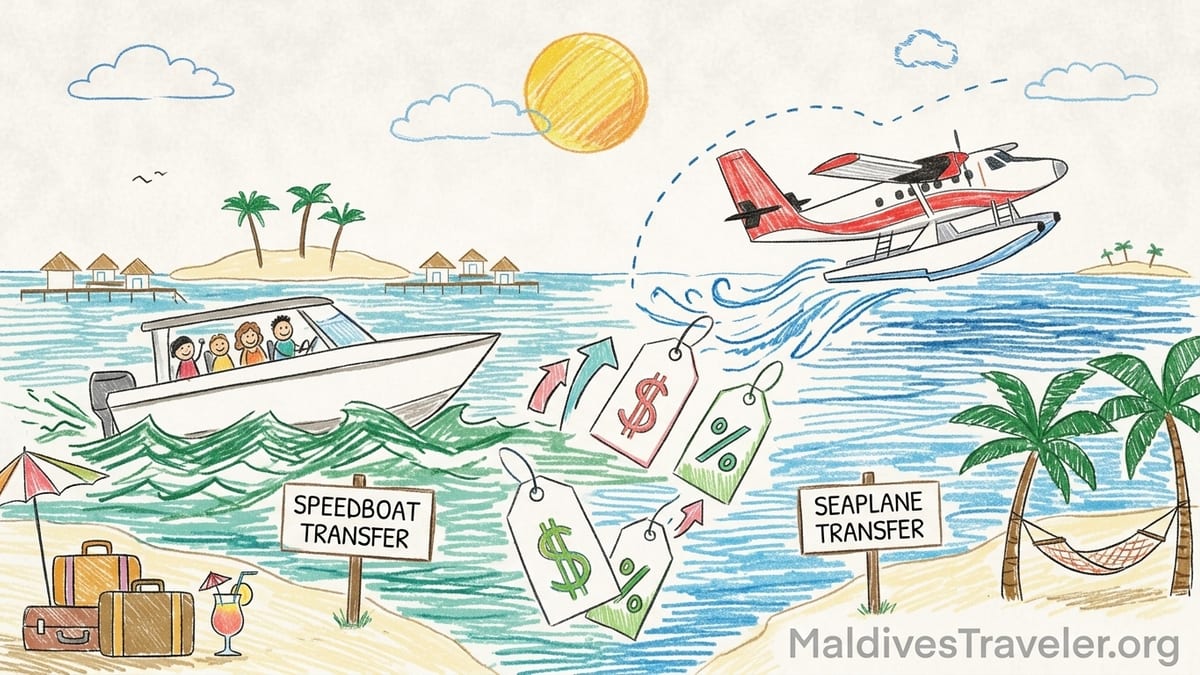
Airport transfers are another major cost that often hides in the small print. Speedboat, seaplane and domestic flight transfers are almost never included in the bare room rate you see on an international booking site. A five night stay that seems cheaper by 80 dollars a night can easily become more expensive if it requires a 700 dollar per person seaplane that is added later. That is why many serious Maldives specialists now quote room, transfers and taxes bundled together, so the total is clear from the beginning.
Finally, the meal plan can change the real cost more than most first time visitors expect. Resorts that look affordable on a room only basis can become costly once you add three restaurant meals, drinks and a la carte prices plus tax and service. In contrast, a premium all inclusive resort with a higher nightly rate might end up cheaper once you factor in cocktails, coffee, water sports and transfers that are already included.
Key Taxes and Fees: GST, Service Charge and Green Tax
Every Maldivian resort invoice is built on three pillars of mandatory charges. First is Tourism Goods and Services Tax, commonly shown as GST, which is 17 percent in 2026 on nearly all resort services, including rooms, transfers, food, drinks, spa and excursions. Second is the 10 percent service charge that most islands apply instead of tipping. This means that any menu price or spa rate you see before tax will increase by 27 percent once GST and service are added together.
The third component is the Green Tax, a per person nightly environmental levy collected by the government. In 2026 this stands at about 12 US dollars per person per night in resorts. For a couple staying seven nights that is around 168 dollars on top of the room and food bill. For a family of four in one villa the Green Tax alone can exceed 300 dollars, so it is not a small line item.
To see how this plays out, imagine a beach villa advertised at 500 dollars per night plus breakfast, excluding transfers. Over five nights the base room cost is 2500 dollars. Once you add 27 percent GST and service, the room portion rises to about 3175 dollars. Add Green Tax for two adults at roughly 12 dollars per person per night, and you add another 120 dollars. Before you have paid for a single lunch, cocktail or excursion, your real accommodation cost is already around 3295 dollars, and transfers still need to be added.
Transfer Types in 2026: Speedboat, Seaplane and Domestic Flights
In most destinations the hotel room and the airport taxi are separate decisions. In the Maldives, the transfer type is part of the resort choice itself and has a major impact on total price. Resorts close to Velana International Airport in North and South Male Atolls typically use shared speedboats, with 2026 return prices often ranging from roughly 100 to 490 dollars per adult depending on distance and whether the transfer is shared or private. These are usually the most economical transfers and run day and night in normal sea conditions.
Resorts in atolls further from Male often rely on seaplanes, which are the classic Maldives postcard experience but come at a premium. Shared seaplane returns in 2026 commonly sit between about 400 and 820 dollars per adult, with children charged a reduced rate. Seaplanes only operate in daylight, typically between early morning and late afternoon, which can affect your international flight choices and sometimes forces an overnight stay in Male if you arrive late.
The third category serves the far north and south: domestic flights on small jets or turboprops, followed by a short speedboat ride. Return domestic flight plus boat transfers in 2026 usually cost between around 350 and 520 dollars per adult. Crucially, scheduled domestic flights can sometimes be cheaper overall than mid range seaplane hops, especially to atolls like Gaafu Alifu, Gaafu Dhaalu or Addu. A resort that appears remote can therefore have more competitive transfer pricing than one much closer to the capital.
The practical lesson is that whenever you compare two resorts you must compare the full transfer cost in and out for everyone in your group, not just the room category. A resort that is 100 dollars a night cheaper but requires an 800 dollar per person seaplane can quickly lose its price advantage over a speedboat resort 45 minutes from Male.
Core Package Types: Resort Only vs Flight Bundles vs All Inclusive
By 2026 most travelers will encounter five main Maldives package structures. The first is the classic resort plus transfer package, where you arrange your own international flights and the hotel or an agent bundles room, meal plan, taxes and mandatory transfers into one quote. For example, a North Male speedboat resort might quote 5 nights in a beach villa on full board for 3200 dollars for two, including return speedboat, GST, service and Green Tax. This style of package is transparent and flexible for people using airline miles or starting from different cities.
The second structure is the flight plus resort bundle, sold by major tour operators and online travel agencies in markets like Europe, the Middle East and Asia. In these offers your international flights, resort stay and transfers are sold together for a single per person price, often based on specific departure dates and airlines. A typical example could be an economy class flight from London with 7 nights at a mid range all inclusive resort, including seaplane transfers and taxes, from around 3500 to 4500 dollars per person in shoulder season.
The third is the modern all inclusive package sold directly by resorts or Maldives specialists. These offers usually quote a nightly rate per villa that already includes meals, drinks, transfers and all resort taxes. Looking at 2026 market examples, a speedboat accessed four star all inclusive resort may advertise starting from about 170 to 250 dollars per person per night, while premium five star islands with extensive dine around and branded drinks can run from about 350 dollars per person per night upward, all based on double occupancy and often with minimum stay rules.
Finally, there are dynamic promotional packages that combine discount percentages, free night offers and bundled transfers. For instance, a resort might have a stay 7, pay 5 offer where you receive two nights free, complimentary seaplane transfers for two adults and an upgrade from half board to all inclusive, on stays booked by a certain date. On paper the nightly room rate might still appear high, but once you factor in the free nights, the saving on transfers and the richer meal plan, the total package can represent excellent value.
Reading All Inclusive Plans: What Is Really Included
Not all all inclusive plans in the Maldives are created equal, and in 2026 the variety is greater than ever. Some resorts operate true all inclusive, where buffet and a la carte dining in several restaurants, house or premium alcohol, soft drinks, coffee, snorkel gear, non motorised water sports and sometimes even massages or excursions are covered in the package price. Others use more limited inclusions, where only buffet meals, house wine and beer, and a short list of cocktails are included, with speciality restaurants, premium spirits and minibar charged extra.
Real world numbers help show the difference. A popular speedboat resort in North Male might charge around 280 dollars per person per night for a standard all inclusive plan that covers all restaurants, house drinks and a basic minibar refill. A nearby premium resort could charge about 330 dollars per person per night but include a dine around plan, a wider choice of branded spirits and wines, daily refilled minibar with snacks, and extra benefits like complimentary excursions or spa discounts. Depending on your drinking habits and dining style, the more expensive plan can easily become better value.
Seaplane resorts often use all inclusive as their only meal plan, and factor the higher transfer cost into the nightly rate. In practice this can make your budgeting easier. For instance, a five star seaplane island might advertise all inclusive from about 600 dollars per person per night, which already includes return seaplane, all meals, a broad selection of drinks, kids club, snorkel equipment and taxes. While the headline price looks steep, a comparable resort selling room plus breakfast for 400 dollars per person per night plus transfers and à la carte meals might end up closer to, or even above, the all inclusive resort once everything is added.
Whenever you see an all inclusive label, read the inclusions list carefully. Check which meals and restaurants are covered, the drink brands, minibar policy, snorkelling and non motorised water sports, and whether airport transfers, GST, service charge and Green Tax are genuinely included. A transparent all inclusive quote should leave very few compulsory costs to pay on the island, beyond optional extras like spa, motorised sports and premium wines.
Multi Resort and Split Stay Packages
A growing 2026 trend is the multi resort or split stay package, where you spend, for example, three nights at one island and four at another. This can combine two different atolls, transfer types and price levels in one trip. A realistic package might pair three nights at a budget friendly speedboat resort in North Male with four nights at a seaplane accessed house reef haven in Ari Atoll. The package quote would include all inter island transfers, international airport transfers, taxes and the meal plans at each resort.
Multi resort packages can be attractive because you sample more of the Maldives without having to organise complex logistics yourself. However, the extra transfers between islands add cost and can eat into your holiday time. A split stay that moves you from a speedboat island to a seaplane island and then back to Male will typically involve at least two different transfer legs beyond your arrival and departure, which can add several hundred dollars per person.
Some operators design smarter routes that minimise cost, such as pairing two seaplane resorts in the same atoll or combining a domestic flight resort with a nearby speedboat only local island guesthouse. In these cases the inter island transfer may only add a modest surcharge compared with returning to Male. When evaluating multi resort offers, always look at the full itinerary with transfer times as well as prices, and confirm that GST, service charge and Green Tax are included at both properties.
How to Compare Total Price Across Different Offers
Because packages can be built in so many ways, the single most important skill for Maldives shoppers is comparing like with like. Start by taking any quote or website price and breaking it into five components: room rate, meal plan, transfers, taxes and extras such as excursions or spa credit. Then adjust each offer so you are looking at the same length of stay, the same number of guests and as close as possible the same inclusions.
For example, imagine two seven night options for a couple in May. Option A is a four star speedboat resort quoting a half board package at 4200 dollars, including return transfers and all taxes. Option B is a five star seaplane resort quoting 550 dollars per villa per night plus seaplane at 750 dollars per person, with only breakfast included and taxes extra. At first glance Option B appears more luxurious but not dramatically more expensive. Once you calculate total cost, Option B becomes closer to 550 times 7 nights, which is 3850 dollars for the room, plus around 27 percent tax and service, bringing it to nearly 4890 dollars. Add seaplane for two at 1500 dollars and Green Tax at roughly 168 dollars, and you are already above 6500 dollars before lunches and dinners. Suddenly the 4200 dollar half board package with transfers included looks more compelling.
A simple way to keep things straight is to calculate a per night price that already includes everything you will definitely use. For an all inclusive resort with transfers and taxes included, the nightly per person cost is essentially the package total divided by the number of nights and guests. For a room only deal, add a realistic daily food and drink budget per person, plus transfer cost spread across your stay, plus 27 percent tax and service, then divide by nights. This makes it clearer whether that glamorous seaplane island or that sensible speedboat resort really suits your budget and style.
Always ask for written confirmation from your resort or agent that your quote includes, or does not include, the core elements: GST, service charge, Green Tax and mandatory transfers. If any of these are missing, request that they be added into a revised total before you decide. Comparing all in pricing is much easier than trying to mentally add hundreds of dollars in taxes and transfers to each competitor.
Real World 2026 Price Ranges and Example Packages
Prices in the Maldives fluctuate with season, resort tier and demand, but by mid 2026 some broad ranges have emerged for typical 5 to 7 night packages for two adults. At the lower end, a simple three star or entry level four star speedboat resort package on full board or all inclusive might start at around 2400 to 3500 dollars outside peak season, including transfers and taxes. These packages usually involve beach villas, buffet restaurants, house brand drinks and a few non motorised activities.
Mid range four star and entry five star all inclusive packages, often in larger resorts with more facilities, commonly fall in the 4000 to 7500 dollar range for a week for two, depending on the transfer type. Examples include all inclusive speedboat resorts with nightly per person rates around 180 to 250 dollars, and popular seaplane islands where nightly per person rates might range from about 300 to 450 dollars once transfers and taxes are included. These deals often provide several restaurant choices, broader drink lists, kids clubs and decent house reefs.
The aspirational five star and boutique segment, including some of the better known international brands, tends to start around 8000 dollars for seven nights for two and can climb to 15,000 dollars or more for large pool villas, top shelf all inclusive and private seaplanes during holiday weeks. Flight plus resort bundles in premium cabins can push that number even higher. When looking at this tier, perks like complimentary domestic transfers, resort credits or free half board upgrades can meaningfully offset the higher base room rate, so it is important to price those benefits into your comparisons as well.
Across all budget levels the lesson is consistent. The cheapest advertised room rate on a search engine rarely represents the best value once 17 percent GST, 10 percent service charge, Green Tax, compulsory transfers and realistic food and drink spending are accounted for. The smartest Maldives travellers in 2026 look for packages where these elements are already built into a clearly stated total and compare that total across islands and operators.
The Takeaway
Planning a Maldives trip in 2026 involves more moving parts than simply picking a pretty overwater villa on a booking site. Between GST, service charge, Green Tax, varied transfer types and a spectrum of meal plans, the final price you pay at checkout can be very different from the headline nightly rate you first see. Understanding each cost component and how it behaves across different resort and package types is the key to avoiding surprises and maximising value.
For most travellers the most reliable strategy is to work with total package figures that already include transfers and taxes, then convert those into a realistic per night, per person cost that reflects how you actually travel and eat. Speedboat resorts with solid all inclusive plans can often match or beat apparently cheaper seaplane islands once the cost of flying is added in, while well designed premium packages can make upscale resorts more attainable than you might assume.
If you take only one rule from this guide, let it be this: never choose your Maldives resort solely on the cheapest advertised room rate. Choose based on the full, tax inclusive and transfer inclusive total for the stay you want, in the season you are travelling, with the meal plan you will actually use. Do that, and you will arrive in the Maldives focused on the lagoon in front of you, not on the bill waiting at the end.
FAQ
Q1. What taxes will I definitely pay on a Maldives resort stay in 2026?
In 2026 you should expect 17 percent GST and a 10 percent service charge on most resort services, plus a Green Tax of about 12 US dollars per person per night in resorts, unless a package explicitly states these are already included in the total price.
Q2. Are airport transfers ever included in the room rate?
Transfers are usually not included in bare room rates seen on general booking sites, but many resort direct offers and specialist packages include shared speedboat, seaplane or domestic flight transfers in the quoted total, so always check the inclusions list.
Q3. How much should I budget for seaplane transfers in 2026?
Shared seaplane transfers typically run at least several hundred dollars per adult return, often between about 400 and 820 dollars, with children usually charged a reduced rate; exact pricing varies by resort and season.
Q4. Is all inclusive always better value than half board or breakfast only?
All inclusive can be better value if you enjoy restaurant dining, drinks and activities, but if you eat lightly, do not drink alcohol and are happy with simple buffets, a half board or even breakfast only plan at the right resort might work out cheaper overall.
Q5. Do I need to worry about domestic flight schedules when booking international flights?
Yes, because domestic and seaplane schedules are built around daylight and demand; to avoid long waits or an unplanned night in Male, try to match your international arrival and departure times with your resort’s latest domestic or seaplane connections.
Q6. Can I mix two different resorts in one trip without spending a fortune on transfers?
Yes, but it requires planning; combining two speedboat resorts near Male, or two seaplane resorts in the same atoll, usually keeps extra transfer costs manageable compared with switching between distant atolls or mixing several different transfer types.
Q7. How do I compare a flight plus hotel bundle with a resort only package?
Start by stripping the bundle into its components and pricing the international flights separately for your dates; then compare what you would pay booking flights on your own plus a resort only package that already includes transfers and taxes, looking at the final total in both cases.
Q8. Are Maldives packages priced per person or per room?
It depends on the seller; resorts usually think in terms of villa rates based on two adults, while tour operators and online agencies often present a per person price for the whole trip, so always check whether a quoted figure is per person, per night or per villa.
Q9. Do children pay full price for transfers and taxes?
Children almost always pay Green Tax and may pay reduced or sometimes complimentary rates for transfers and meal plans depending on age and resort policy, so families should ask for a detailed breakdown of child pricing before confirming.
Q10. What is the simplest way to avoid bill shock at checkout?
The simplest approach is to secure a written package that clearly states it includes room, your chosen meal plan, return airport transfers for all guests, GST, service charge and Green Tax, then budget extra only for optional items like spa treatments, premium wines and special excursions.