


The image of a thatched-roof villa hovering above electric-blue water has become shorthand for the Maldives. Yet once you start planning, you quickly discover that “overwater villa” is not one simple category. Deck design, pool or no pool, lagoon versus reef side, sunrise or sunset orientation, and even child-safety policies can change your stay completely. This guide breaks down how to choose and what to book, with real resort examples, so you can decide when an overwater villa premium is truly worth paying.
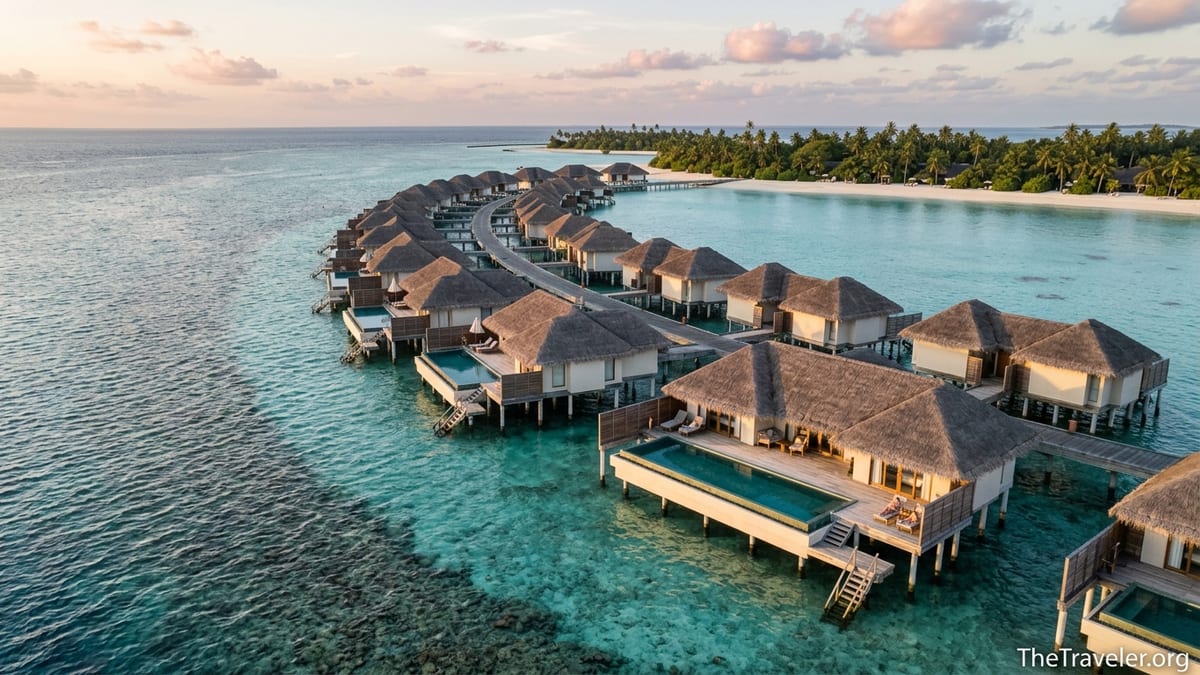
What “Overwater Villa” Really Means in the Maldives
In the Maldives, overwater villas are usually built along a curved or straight jetty extending from a small coral island. They range from relatively simple wooden bungalows to multi-bedroom residences with glass floors, private gyms, and butler service. A classic entry-level water villa at a mid-range resort might be around 80 to 100 square meters with a sundeck and direct ladder access to the sea, while top-tier properties sell sprawling 300-square-meter-plus residences with full-sized pools and separate living rooms.
At many resorts, every villa category now includes a private pool, both on the beach and overwater. At Anantara Kihavah in Baa Atoll, for example, all overwater villas come with pools facing the house reef and open ocean, while neighboring beach villas also feature private pools tucked among palm trees. This means the overwater price difference is about feeling suspended above the water rather than simply gaining a pool, so you need to decide whether that specific sensation is worth the extra nightly rate.
Resort scale also matters. A boutique property with 40 to 60 villas, such as Kagi Maldives Resort & Spa with just 50 villas in total, will usually feel quieter on the jetties and in the water beneath you than mega-resorts with over 200 rooms. Fewer villas often means fewer neighboring decks and less traffic on the walkways, which can be important if you value privacy and a sense of being alone on the ocean.
Finally, remember that overwater villas are always part of a broader island layout. Some islands are ringed by a healthy coral house reef that drops steeply, while others sit in huge lagoons with very shallow, sandy bottoms. Choosing the right overwater location within that environment has a bigger impact on your daily experience than brand names alone.
Private Pools: When the Upgrade Is Worth It
A private pool is one of the main reasons overwater villas command higher prices. On many islands, the jump from a non-pool water villa to a pool category runs several hundred dollars per night. At a premium all-inclusive property, you might see entry overwater villas start in the lower hundreds in low season, with pool villas priced several hundred dollars higher per night for the same dates. During peak months of January to March, that gap can widen further as demand rises.
Whether the pool premium is worth it comes down to how you actually use your villa. If you plan to spend most afternoons on your deck, a small infinity pool facing the lagoon feels indulgent and private, and it stays comfortable even when currents make the sea slightly choppy. At Hurawalhi, for instance, the Ocean Pool Villas are specifically marketed for guests who want to linger on their decks at sunset, with the pool blurring into the horizon. At Kagi Maldives, every overwater villa category includes a pool, but location shifts the feel: Ocean Pool Villas sit on the outer edge with more open sea, while Lagoon Pool Villas face a calmer inner lagoon.
By contrast, if you expect to spend the bulk of your time snorkeling, diving, or at the main pool, the upgrade is often less compelling. The sea beneath your villa is effectively a giant natural pool, and on reef-facing jetties you can swim straight out to coral gardens. Many repeat visitors quietly choose a spacious beach pool villa instead, trading the overwater wow factor for more square meters, stronger privacy screens, and a lower per-night cost while still enjoying a private pool.
Families should also think practically. Some resorts require parents to sign disclaimers when booking overwater villas with children, particularly where pools and decks do not have full safety barriers. A few high-end family-focused properties are starting to add child-safety features around overwater pools, but at many resorts, a beach pool villa will be the more relaxed option if you are traveling with younger kids.
Lagoon vs Reef: How Location Changes the Experience
One of the most important booking decisions is whether you want your villa positioned over a shallow lagoon or along the edge of a living coral reef. Lagoon villas typically sit above calm, sandy-bottomed water that changes shade with the sky. At Kagi Maldives, for example, Lagoon Pool Villas are located toward the interior side of the jetty, where the water is smoother and shallower, which suits light swimmers and those who simply want to float or use stand-up paddleboards without worrying about currents.
Reef-facing villas, by contrast, sit where the lagoon drops off into deeper water and coral. Resorts in atolls with strong house reefs, like some in Baa and Ari atolls, position their outer overwater villas so guests can snorkel straight off their decks into areas with higher fish life. On calm days, this is as close as you get to having your own mini reef. You can slide down a ladder and drift above coral bommies while reef fish, turtles, and sometimes reef sharks cruise past.
That drama comes with trade-offs. Reef sides usually see stronger currents and more wave action, especially during the southwest monsoon months when winds pick up. The water can also be noticeably deeper right off the steps, making it less comfortable for nervous swimmers or small children. Lagoon sides are usually more forgiving but can be very shallow at low tide. In some spots, you may find only ankle-deep water and soft sand, which is perfect for wading and photos but not ideal if you want to swim laps.
If snorkeling is a top priority and you do not want to rely solely on boat trips, consider resorts specifically praised for house-reef access and check villa maps carefully. Some islands, such as those in UNESCO biosphere reserves, highlight overwater categories that back directly onto reef drop-offs. Others, particularly in wide lagoons closer to Malé, offer postcard-perfect aquamarine views but require a boat ride to reach better coral. Knowing which type of water you want under your villa will help you avoid disappointment.
Privacy, Layout and How Close Your Neighbors Really Are
Privacy in overwater villas is less about star ratings and more about design. On some islands, villas are staggered so that decks do not directly face each other, with solid wooden dividers extending all the way to the rail of the deck. On others, particularly older properties, decks can sit in a straight line with only partial screens between neighbors, meaning you may see or hear other guests using their pools or outdoor showers.
Outer jetty positions tend to be the most private. At Kagi Maldives, Ocean Pool Villas sit on the edge of the island’s lagoon ring, looking out to open water with no villas directly opposite, while Lagoon Pool Villas face more of the interior lagoon and, depending on the angle, may have partial lines of sight to other decks. Similar patterns appear at other resorts: outer arc villas usually cost more per night because of this increased sense of seclusion and uninterrupted horizon views.
Distance to the island is another subtle privacy factor. Villas closer to the main island and restaurants make walking back for meals convenient, but they may also have more foot traffic and noise from buggies or service carts. Villas at the far ends of long jetties often feel quieter and more isolated, especially late at night when only the sea and wind are audible, but they involve longer walks in the heat or reliance on buggy shuttles.
When booking, ask the resort or your agent for a recent villa map and guidance on which numbers offer the best balance of privacy and convenience. Many experienced Maldives travelers request specific ranges that avoid corners where multiple jetties intersect or where boats regularly dock. If privacy is a priority, it is often better to book a slightly smaller pool villa in a more secluded position than a larger one close to the action.
Sunrise vs Sunset Villas: Light, Heat and Daily Rhythm
The orientation of your villa can dramatically change your experience, particularly if you care about photography, sunbathing, or cooler decks. In the Maldives, weather patterns are shaped by two main monsoon seasons: a drier northeast monsoon from around December to March, and a wetter, windier southwest monsoon from roughly mid-May to November. Within that structure, sunrise and sunset sides receive very different light and temperature throughout the day.
Sunrise-facing villas catch the first light in the morning and then experience shade earlier in the afternoon, which can be a relief during hotter months. At some resorts, travel writers note that sunrise decks feel cooler and breezier thanks to the way trade winds angle across central atolls during the dry season. For early risers who enjoy calm coffee moments and softer colors, or those who prefer to spend afternoons at the main pool or spa rather than on their deck, sunrise orientation is often ideal.
Sunset-facing villas give you warm light and sun on your deck later into the day. At places like Hurawalhi, guides explicitly mention that the left-side Ocean Pool Villas face the sunset, delivering classic golden-hour views over the infinity pool and open sea. Many guests feel these decks match the mental picture of a Maldives honeymoon: long afternoons in the sun, then watching the sky shift from orange to purple without leaving your loungers.
However, sunset decks can be very warm, especially from January to April when skies are clearest and humidity builds in the afternoons. If you burn easily or travel with young children, you may end up retreating indoors during peak hours. A practical strategy is to decide how you want to spend 3 to 6 pm each day: if you imagine yourself on your private deck at that time, sunset may be worth the premium some resorts charge for those villa numbers. If you see yourself out on excursions or at the bar, sunrise can offer better sleep and comfort without sacrificing the overall experience.
Children, Safety and Family-Friendly Overwater Options
Not every overwater villa category in the Maldives is open to children, and the rules vary considerably between resorts. Some adults-only properties do not accept anyone under 18 anywhere on the island. Others welcome families but restrict younger children from staying overwater due to safety concerns about open railings, direct sea access, and unguarded pools. You may be asked to sign a waiver acknowledging these risks before a booking is confirmed.
Many family-focused resorts have begun adding dedicated “family overwater villas” with extra bedding, sofa beds, and sometimes partial safety screens along the deck. A number of mid-market and upscale islands advertise water villas that can officially accommodate two adults and two children, provided they are above a specified age, often around five years and older. Separately, some luxury properties that used to be couples-focused have loosened policies, allowing children in overwater categories while still recommending beach villas for guests with toddlers.
If you are traveling with very young children, a beach pool villa is often a better choice. They offer instant sand access, more space to play, and fewer hazards than stairs descending straight into deep water. It also means you do not have to worry about supervising kids walking along high jetties at night or in wet conditions. Overwater stays can still be part of your trip: some families book a split stay, spending the first few nights on the beach and then moving to an overwater villa once everyone is settled and familiar with the environment.
When booking, be specific about ages and sleeping arrangements, and ask for confirmation in writing that your chosen villa category is appropriate. Check whether the resort can provide temporary deck gates, pool alarms, or extra railings. While not yet universal, several higher-end family resorts have quietly introduced these safety add-ons, reflecting growing demand for safe yet spectacular overwater experiences with kids.
Weather, Seasons and How They Affect Overwater Stays
Climate should be part of your overwater booking strategy. The Maldives has a tropical monsoon climate with two dominant seasons: a drier northeast monsoon usually running from around December through March, and a wetter southwest monsoon from roughly mid-May to November. The transition months of April and November can be mixed, with changeable skies and sudden showers. The most consistently dry, sunny months tend to be January, February and March, which is why prices and occupancy usually peak then.
During the dry season, seas are generally calmer and visibility for snorkeling and diving is often at its best, making reef-facing villas particularly appealing. Locating over deeper water feels pleasant because you can step down and cool off easily, and you are more likely to enjoy uninterrupted sunset or sunrise views. However, the same pleasant conditions draw more visitors, so overwater villas with pools, prime reef positions, and sunset orientation can sell out months ahead.
The southwest monsoon months bring more rain showers, stronger winds, and choppier seas, though there can still be bright, sunny spells. In this period, lagoon-facing villas can feel more comfortable for swimming and lounging, since wave action is usually gentler over shallow, sandy bottoms. Some guests deliberately travel in shoulder months such as late April or early November to balance slightly lower prices with a decent chance of good weather, accepting the possibility of occasional storms in exchange for a quieter resort and more availability.
Regardless of timing, it is wise to think about wind direction and exposure. Overwater jetties are more exposed to gusts than beach villas shielded by vegetation. If you are a light sleeper or dislike wind noise, you may prefer lagoon sides, which sometimes sit in the lee of the island. Asking the resort which villas are most sheltered for your travel month can help fine-tune your choice.
Is the Overwater Premium Really Worth Paying?
The central booking question is whether you should pay extra for an overwater villa at all, and if so, for which nights of your trip. Overwater villas in the Maldives almost always cost more than equivalent beach categories at the same resort. In some cases, the difference between an entry-level beach villa and an entry-level overwater room can be significant, even before adding pools or reef-facing locations.
For many travelers, the premium is worth it for at least part of the stay. Sleeping over the water, hearing waves under the deck, and stepping straight into the sea are quintessential Maldives experiences that you cannot replicate exactly on land. Honeymooners, couples celebrating anniversaries, and first-time visitors often describe their overwater nights as the highlight of the trip, especially when paired with private pool decks and clear weather.
However, you do not need to stay overwater for your entire holiday to capture that feeling. A popular strategy is to split a seven-night trip into three nights overwater and four on the beach. This lets you enjoy the novelty without paying the higher rate for every night, and it can also give you more variety in swimming and snorkeling options. Many resorts will handle the move seamlessly, transferring luggage while you are at breakfast or on an excursion.
If your priority list includes space, privacy, shaded outdoor areas, and child-friendly layouts more than the visual drama of stilts and jetties, you may find better value in a high-quality beach pool villa. Guests who return regularly to the Maldives often discover that while overwater villas deliver magical first impressions, beach villas offer more everyday comfort and a stronger connection to the island itself. Thinking honestly about how you will use your room can keep your budget focused on what matters most to you, whether that is a reef-facing sunset pool deck or an expansive patch of private sand under palm trees.
FAQ
Q1. Are overwater villas in the Maldives safe for children?
Many family-friendly resorts accept children in overwater villas but often set minimum age guidelines and may ask parents to sign safety waivers. Decks, open railings, ladders and private pools can be hazardous for toddlers, so families with very young children usually find beach pool villas more relaxed and practical.
Q2. What is the best time of year to book an overwater villa in the Maldives?
The driest, sunniest months are typically from January to March, which is also peak season with higher prices and limited availability. Shoulder months like late April and early November can offer a balance of lower rates and decent weather, but you should be prepared for occasional showers and wind.
Q3. Should I choose a lagoon-facing or reef-facing overwater villa?
Choose a lagoon-facing villa if you prefer calm, shallow water for wading, floating and relaxed swimming. Opt for a reef-facing villa if snorkeling is a priority and you are comfortable with deeper water and stronger currents, as these villas often deliver the best marine life straight off your deck.
Q4. Is a private pool on an overwater villa worth the extra cost?
A private pool is worth it if you plan to spend long afternoons on your deck, value privacy, and like to cool off without climbing in and out of the sea. If you expect to be out diving, snorkeling or at the main pool most of the day, a non-pool villa or a beach pool villa may offer better value.
Q5. What is the difference between sunrise and sunset overwater villas?
Sunrise villas offer early-morning light and cooler decks in the late afternoon, which can be more comfortable in hotter months. Sunset villas stay sunnier later in the day and provide classic evening views over the water, but they can be warmer, especially from January to April.
Q6. How far in advance should I book an overwater villa with a pool?
For stays in January, February and March, it is sensible to book several months in advance, especially for pool villas on preferred sides of the jetty. In quieter months, you may find more flexibility, but specific villa numbers or orientations can still book out early at popular resorts.
Q7. Are overwater villas noisy when it is windy or raining?
Overwater villas sit fully exposed above the lagoon, so you will hear waves, wind and rain more directly than in beach villas. Some guests find the sounds soothing, while light sleepers or those unaccustomed to ocean noise might prefer beach-based categories, particularly during the wetter southwest monsoon months.
Q8. Do all Maldives resorts have overwater villas with direct ocean access?
Most Maldivian overwater villas include steps or ladders leading straight into the sea, but the depth and conditions vary. In shallow lagoons you may step into knee-deep water over sand, while reef-facing villas may drop immediately into deeper areas. It is worth asking the resort what the water is like under your chosen villa category.
Q9. Is it better to stay only in an overwater villa or split time with a beach villa?
Splitting your stay between beach and overwater villas is often the most rewarding and cost-effective approach. You experience the classic overwater setting for part of the trip while enjoying the extra space, shade and easy sand access of a beach villa on other nights, usually at a lower nightly rate.
Q10. How can I get more privacy in an overwater villa?
To maximize privacy, look for villas near the end of the jetty, on the outer arc facing open water, and with solid dividers between decks. Request specific villa ranges recommended for privacy, and consider smaller or slightly less central categories if they offer better orientation and fewer neighboring decks in direct view.