


The Maldives has a reputation as a honeymoon destination, but it is increasingly geared to families with toddlers, school‑age children and teens. The key is choosing the right island: one with a naturally shallow lagoon, practical family villas, a genuine kids’ club and a transfer that will not exhaust little travelers. This guide compares real resorts and atolls so you can match your family’s needs with the right Maldivian escape.
How to Choose the Right Atoll With Young Children
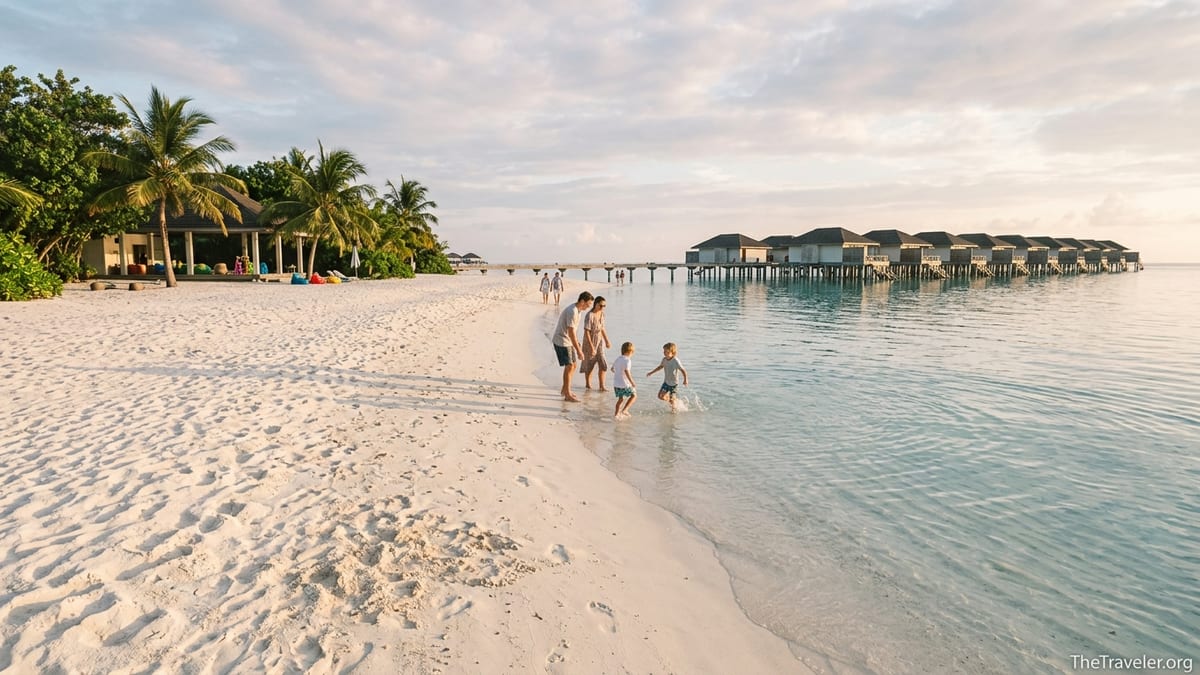
For families, the most important decision is often not the resort brand but the atoll and its lagoon. Many of the best family properties sit on islands with broad, shallow, sandy lagoons where small children can paddle without steep drop‑offs or strong currents. Resorts in atolls such as North Male, South Male and parts of Noonu typically offer sheltered lagoons and easy access house reefs, which let beginners see fish and coral just off the beach rather than via long boat rides.
If you are traveling with toddlers or nervous swimmers, North Male Atoll is particularly practical. Islands close to Velana International Airport are naturally protected and usually have calm, shallow water right off the sand. Kurumba Maldives, for example, sits just a short speedboat ride from the airport yet has a wide lagoon with gentle entry points and minimal wave action, making it easy to supervise small children from a beach lounger while they splash in ankle‑ to knee‑deep water.
Families willing to travel a bit farther can look at Noonu Atoll, where large islands such as Siyam World and Sun Siyam Iru Fushi combine warm, shallow waters with extensive family facilities. Here the lagoons are often broad and dappled with sandbanks at low tide, creating natural paddling pools. These outer atolls can feel more remote, but they reward the journey with bigger islands, more space for bikes and playgrounds, and a greater sense of adventure for older kids.
By contrast, some far‑flung atolls with dramatic channels and strong currents that appeal to divers may be less forgiving for very young children or non‑swimmers. When comparing resorts, ask specifically about where the lagoon is shallowest, whether there are entry points without coral rubble, and how far you need to wade before the depth drops off. Photos can be misleading, so it is worth emailing the resort for details and requesting a room category that fronts the calmest stretch of beach.
Transfers: Speedboat vs Seaplane With Tired Kids
Transfer logistics can make or break a family holiday in the Maldives, especially if you land late at night with jet‑lagged children. Resorts in North and some parts of South Male Atoll are reached by speedboat only, usually in 10 to 45 minutes. Kurumba Maldives, for instance, is around 10 minutes by speedboat from the international airport, which means many families can be in their room within an hour of clearing immigration. Villa Nautica at Paradise Island and nearby Malahini Kuda Bandos offer similarly short rides, which can be a major advantage with toddlers or babies who have already spent many hours on a long‑haul flight.
Seaplane transfers open up more remote islands but come with added complexity. You will usually clear customs, transfer to a seaplane lounge and then take a 30 to 45 minute flight that only operates during daylight hours. Resorts such as Anantara Kihavah in Baa Atoll are reached by a seaplane flight of roughly 35 minutes, which is memorable for older children who enjoy the view of atolls from above but can be challenging with infants or after a red‑eye arrival. If your international flight lands in the evening, you may need to overnight near the airport before continuing by seaplane the next morning.
When pricing your trip, factor in that return transfers can add a four‑figure cost to a family booking, particularly on seaplanes that charge per person including children above a certain age. Many family‑oriented properties periodically run promotions where kids under a threshold age receive discounted or free transfers, but these offers change frequently and need to be checked at the time of booking. If you are budget‑conscious or traveling with several children, a short speedboat transfer can free up funds for a better room category or a longer stay.
If your children are sensitive to motion, ask about transfer timing and typical sea conditions for your travel month. Speedboats can feel choppy during the southwest monsoon, while seaplanes can be noisy. Noise‑canceling headphones for older kids and pre‑charged tablets with downloaded shows help keep the journey manageable. Above all, aim for an itinerary with as few changes as possible: one international flight and a quick speedboat is usually easier on families than multiple flights and a late seaplane connection.
Kids’ Clubs, Babysitting and Family Programming
Modern Maldivian resorts increasingly compete on the quality of their kids’ clubs, from simple playrooms to multi‑level adventure zones. Soneva Jani in Noonu Atoll has set a benchmark with The Den, widely described as the largest kids’ club in the Maldives. It combines indoor play spaces, a dedicated pool, imaginative craft and science areas, and outdoor zones designed to keep children busy for hours. Access is typically complimentary for in‑house guests, and daily programs might include marine biology workshops, cooking classes and treasure hunts around the island.
On larger, more active family islands, kids’ clubs become small villages of their own. Siyam World in Noonu Atoll operates Kidz World, a club geared to ages roughly 3 to 12 with supervised activities such as beach games, arts and crafts and nature walks, often at no extra cost during set hours. The resort also runs the Maldives’ largest floating water park, which older children and teens can enjoy under lifeguard supervision, providing an outlet for high‑energy play beyond the kids’ club itself.
At the more traditional end, properties like Kurumba Maldives in North Male Atoll run Majaa Kids’ Club, generally welcoming children from around 4 up to early teens. The focus is on structured, age‑appropriate play such as Maldivian craft sessions, kids’ yoga and simple language lessons, alongside free play with toys and books. For under‑4s who are not yet eligible for the kids’ club, many resorts, including Kurumba and several Sun Siyam properties, offer paid babysitting by the hour, often with a minimum booking period and higher rates in the evening.
When comparing resorts, request the current kids’ club schedule and check minimum age, opening hours and whether lunch or dinner supervision is provided. Some upmarket properties offer evening cinema under the stars or pyjama parties so parents can enjoy a long tasting menu in peace. Others close mid‑day. Babysitting rates often start around a modest hourly fee plus service charges and taxes, with a surcharge for additional children. Make sure your resort can guarantee an English‑speaking sitter if needed and that babysitting is available in‑villa if you have a sleeping baby.
Family Villas, Pools and Lagoon Access
The postcard image of the Maldives is an overwater villa, but for most families with younger children a beach villa is more practical. Beach villas at family‑oriented properties usually open directly onto soft sand and shallow water, with daybeds and shaded verandas where adults can relax while watching children build sandcastles. Many resorts now offer specific family categories, such as two‑bedroom beach pool villas and interconnecting rooms that share a covered terrace and private garden.
At Sun Siyam Iru Fushi, a large island in Noonu Atoll that has been recognised by regional travel publications for its family appeal, multi‑bedroom villas give larger families or multi‑generation groups space to spread out. Children can step straight from their bedroom onto the sand or into a private pool, while parents retain their own sleeping area and outdoor bathroom. Soneva Jani and Anantara Kihavah both offer expansive two‑bedroom beach pool villas designed with families in mind, with shaded pools, enclosed gardens and direct access to calm lagoon water ideal for safe paddling.
For families still tempted by overwater living, look for resorts that allow children in water villas subject to age limits and safety rules, and that provide secure railings and lockable doors. Siyam World, for example, has two‑bedroom lagoon villas with private pools and even slides into the sea, which can be thrilling for older kids who are confident swimmers. Some properties place families with small children in overwater units closest to shore, where currents are weaker and access ladders descend into shallower water.
Pool safety is another point of comparison. While many Maldivian resorts feature private pools with every villa, not all include safety features like shallow ledges or fencing. If you have toddlers, you may prefer a garden or beach villa without a private pool, relying instead on the resort’s main pools, which often include shallow children’s areas. Ayada Maldives in the south, for example, highlights a dedicated kids’ pool at its club, while multiple other resorts provide stepped entry pools where little ones can play in knee‑deep water under supervision.
Meal Plans, All Inclusive Options and Practical Costs
Dining in the Maldives can be expensive, especially once you add children’s meals and drinks to the bill on a remote island. Choosing the right meal plan is therefore a key part of any family comparison. Many family‑focused resorts now run variations of all inclusive or premium all inclusive plans that bundle most meals, soft drinks and activities into a predictable daily rate. Siyam World markets a 24‑hour all inclusive concept that covers several restaurants, snacks and a wide range of non‑motorised water sports, which can simplify budgeting for active families.
On more traditional islands, half board or full board plans remain common. A typical family pattern might be breakfast and dinner included, with lunch purchased á la carte or skipped after a large breakfast. Kurumba, for example, has a choice of restaurants including buffet and à la carte options, and families often opt for half board combined with simple poolside lunches such as sandwiches and salads. Some resorts run “kids stay and eat free” offers where children below a certain age share parents’ meal plans at no extra cost; Sun Siyam Iru Fushi has promoted such deals for children up to mid‑teens in recent seasons, making a significant difference to the overall bill.
Drinks policies are worth checking in detail. Premium all inclusive packages may include mocktails, smoothies and ice creams for children, which quickly adds value compared with paying individually. If you are traveling with a baby, confirm availability and approximate pricing of formula, jarred food and child‑friendly snacks. While most resorts can prepare purees and simple dishes on request, availability of branded products varies and prices can be much higher than at home. Many parents bring familiar baby snacks and formula powder in checked luggage for peace of mind.
Hidden costs can catch families unaware. In addition to transfers, look at mandatory festive supplements over Christmas and New Year, extra charges for à la carte restaurants even on all inclusive plans, and pricing for popular paid activities such as dolphin cruises or semi‑submarine trips. Asking your travel agent or the resort to provide an itemised list of what exactly is included on each meal plan, and which activities incur surcharges, will allow you to compare islands fairly and avoid uncomfortable surprises at check‑out.
On‑Island Activities for Different Ages
A good Maldives family resort offers more than just a beach and pool. For younger children, simple pleasures like collecting shells, spotting hermit crabs, and splashing in the shallows are unbeatable, but structured activities help break up the day. At family‑oriented properties such as Ayada Maldives and Centara’s new family‑centric islands, kids’ clubs organise daily programs that mix local culture with play: coconut painting, Maldivian drumming sessions, mini gardening classes and guided fish feeding at the jetty are common examples.
Older children and teens typically graduate to water sports and adventure. Many resorts maintain water sports centers that rent kayaks, stand‑up paddle boards and small catamarans, often included for limited hours in all inclusive plans. House reefs accessible from the beach or short dhoni rides allow families to snorkel together; Baa and Noonu Atolls are known for clear water and good chances of spotting turtles and rays. At some upscale properties, teens can enroll in PADI dive courses, marine biology workshops or citizen‑science programs tracking manta rays and coral growth, adding educational depth to the holiday.
Families also appreciate land‑based options when children tire of the sun. Larger islands such as Siyam World and Sun Siyam Iru Fushi often feature tennis and basketball courts, games rooms with table tennis, foosball and billiards, and shaded playgrounds. Soneva Jani’s Den includes climbing structures, music rooms and reading nooks designed to be device‑free, giving screen‑saturated children a rare chance to immerse themselves in imaginative play. Evening entertainment might include open‑air cinema screenings, family quiz nights or live music on the beach.
When comparing resorts, look at how many of these activities are complimentary and how many are chargeable. A dolphin cruise or sunset fishing trip can be a highlight but may cost a meaningful amount per person, especially on private boats. Some family packages bundle one or two excursions into the room rate; others discount spa treatments for parents while the kids’ club supervises children free of charge for a set time. Matching the resort’s activity mix to your children’s ages and interests will ensure everyone feels engaged without the need for constant upsells.
Which Specific Resorts Work Well for Families?
Several Maldivian resorts consistently surface in conversations about family travel thanks to their balance of location, facilities and value. Kurumba Maldives in North Male Atoll is a classic choice for first‑time visitors with young children. Its 10‑minute speedboat transfer, Majaa Kids’ Club, range of room categories and paved paths make it particularly friendly for strollers and grandparents who prefer firm footing over long stretches of soft sand. The lagoon is calm and shallow around much of the island, and the choice of restaurants helps satisfy fussy eaters.
In the more spacious category, Siyam World in Noonu Atoll suits larger families and active kids. Spread over a big island with long beaches, it combines multi‑bedroom beach residences and lagoon villas with slides, a premium all inclusive concept, Kidz World kids’ club and the Indian Ocean’s largest floating water park. Children can bike around the island, spend afternoons at the water park and join supervised programs while parents enjoy the spa or quiet pool areas. The trade‑off is a longer domestic journey compared with North Male, but many families feel the facilities justify the extra travel time.
For families seeking barefoot luxury with strong eco‑credentials, Soneva Jani and its sister property Soneva Fushi are worth a close look. Both feature expansive family villas, outstanding kids’ clubs branded as The Den, open‑air cinemas and thoughtful touches such as complimentary ice cream and chocolate rooms that delight children and adults alike. Seaplane transfers and premium pricing place these resorts at the top of the market, but for milestone trips they offer a rare blend of indulgence and substance, particularly for school‑age children who can fully enjoy the experiences on offer.
Other notable names include Sun Siyam Iru Fushi, recognised regionally as a top family resort with kids stay and eat free promotions; Ayada Maldives in the south with its shallow lagoon and dedicated kids’ pool; and several North Male properties like Villa Nautica and Malahini Kuda Bandos that combine short speedboat transfers with accessible beaches and a casual, sociable vibe where families feel welcome rather than out of place among honeymooners.
The Takeaway
Planning a family holiday in the Maldives is less about chasing the most exclusive name and more about aligning practical details with your children’s ages and your travel style. For babies and toddlers, prioritise short speedboat transfers, shady beach villas set back from the water’s edge and kids’ clubs that offer babysitting or under‑4 supervision. For active school‑age children, a larger island with a genuine kids’ club, shallow lagoon, pools with children’s sections and a mix of complimentary activities will keep boredom at bay.
As your children grow into tweens and teens, a remote island with a great house reef, strong water sports program and thoughtful teen programming can turn the Maldives into an adventurous classroom. Whichever atoll you choose, ask detailed questions about lagoon depth, room locations, kids’ club age limits, meal plan inclusions and transfer schedules before you book. Matching these factors to your family’s needs will transform a dream of turquoise waters into a smooth, stress‑light reality.
Finally, remember that in the Maldives everything funnels through a single resort, so picking the right island matters more than in multi‑hotel destinations. Take the time to compare two or three promising properties on the specifics covered in this guide rather than chasing a long list of names. With a carefully chosen atoll and a family‑focused resort, the Maldives can be as child‑friendly as any tropical destination, with the added magic of those signature over‑water horizons.
FAQ
Q1. Are the Maldives suitable for families with toddlers?
Yes, provided you choose an island with a shallow, sandy lagoon, short transfer and babysitting or kids’ club options that accept younger children.
Q2. Is a speedboat or seaplane transfer better with young kids?
For toddlers and jet‑lagged children, a short speedboat transfer is usually easier. Seaplanes suit older kids who can tolerate a longer, noisier journey.
Q3. Can children stay in overwater villas in the Maldives?
Policies vary by resort. Some allow children above a certain age with signed waivers and safety rules, while others restrict overwater villas to adults only.
Q4. Which Maldives atolls are best for shallow lagoons?
North Male and parts of South Male and Noonu Atolls are popular with families thanks to broad, sheltered lagoons and beaches with gentle, sandy entry points.
Q5. Do most Maldives resorts have kids’ clubs?
Many four‑ and five‑star resorts now offer kids’ clubs, typically for ages 4 to 12, with supervised daily activities. Always confirm minimum ages and opening hours.
Q6. How expensive are meals for children in the Maldives?
Prices vary, but food can be costly on remote islands. All inclusive or half board plans and kids‑eat‑free offers can significantly reduce family dining costs.
Q7. Is the sun too strong for young children in the Maldives?
The sun is intense year‑round. Wide‑brim hats, high‑SPF reef‑safe sunscreen, long‑sleeve rash guards and planning outdoor play for mornings and late afternoons are essential.
Q8. What activities can older kids and teens enjoy beyond the beach?
Older children often enjoy snorkelling on house reefs, beginner dive courses, water sports, marine biology programs, beach sports, games rooms and outdoor movie nights.
Q9. Are strollers practical on Maldivian islands?
On islands with paved paths, such as some North Male resorts, strollers work well. On very sandy islands, lightweight travel strollers and baby carriers are more practical.
Q10. How far in advance should I book a Maldives family resort?
For school holiday periods, booking 6 to 9 months ahead is wise, especially if you need specific family villa types or connecting rooms at a popular resort.