


The Maldives has become shorthand for the ultimate honeymoon: overwater villas, private infinity pools and a sense of being marooned together in the middle of the Indian Ocean. Yet once you start researching, the sheer number of resorts, transfer types and packages can feel overwhelming. This guide focuses on what honeymooners actually care about in 2026: romance, privacy and value for money, with real examples of Maldivian resorts that deliver.
How to Choose the Right Maldives Atoll and Transfer Type
Before you fall in love with photos of overwater villas, it helps to understand where in the Maldives you are going and how you will reach your resort. Most international flights land at Velana International Airport near Malé. From there, you either transfer by speedboat to nearby atolls or by seaplane or domestic flight plus speedboat to more remote islands. Speedboat-only resorts in South Malé Atoll, such as Anantara Veli Maldives Resort, are popular with honeymooners who want to minimize hassle after a long-haul flight and start their holiday within 30 to 45 minutes of landing. Expect return speedboat transfers to add several hundred US dollars per couple to your bill, typically baked into many honeymoon packages.
Seaplane transfers open up more remote atolls, such as Baa, Raa and Lhaviyani, where many of the most photogenic overwater villa resorts sit on larger lagoons with strong snorkeling. A typical return seaplane transfer for two adults can easily reach four figures in US dollars, so a seemingly good room rate at a far-flung private island can become more expensive once transfers are included. For example, couples looking at adults-focused resorts such as Komandoo Island Resort in Lhaviyani Atoll often find that package tour operators combine seaplane transfers with half-board or all-inclusive deals to soften the blow. When comparing resorts, always factor in these transfer costs alongside the nightly room rate.
The trade-off is that remote atolls often feel more secluded and less overbuilt. Baa Atoll, home to boutique honeymoon favorite Milaidhoo, is within a UNESCO Biosphere Reserve known for manta rays in season. Here, seaplane arrivals are part of the experience: couples often describe the low flight over circular reef islands as a honeymoon memory in itself. If you are prone to motion sickness or nervous about small planes, however, a speedboat-access resort closer to Malé might be the more romantic choice in practice, even if the setting is less wild.
One final planning detail is timing. Seaplanes typically operate only in daylight hours, which affects late-night arrivals; an overnight in Malé or at an airport hotel may be required if you land after seaplane operations end. For short honeymoons of four or five nights, that lost night can be significant, so many couples opt for speedboat-access resorts to maximize time in their villa.
Overwater Villas vs Beach Villas for Honeymooners
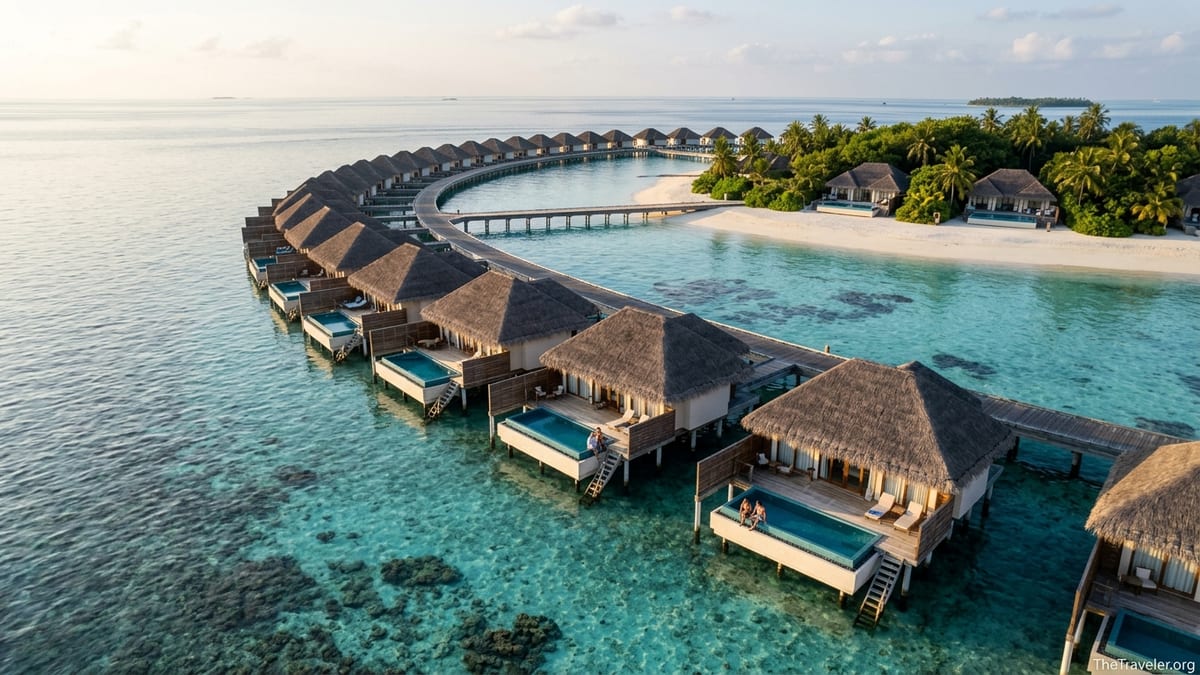
For many couples, the classic Maldivian honeymoon image involves an overwater villa with steps leading straight into a turquoise lagoon. There is no doubt these villas feel special: resorts like Anantara Veli, Kagi Maldives Spa Island and newer properties such as Nala Maldives have built entire marketing campaigns on the idea of honeymooners waking to water views in every direction. Overwater villas typically offer elevated privacy, with sun decks that face the ocean and, at higher price points, private pools that seem to merge with the sea. Nightly rates for entry-level overwater villas at premium five-star resorts often start around 800 to 1,200 US dollars in shoulder seasons, with private-pool versions tracking higher.
Beach villas, however, should not be dismissed for romance. On islands with wide beaches and natural vegetation, such as Six Senses Kanuhura or One&Only Reethi Rah, beach villas can feel like private homes set within lush gardens, often with generous outdoor bathrooms and direct sand access. Many have their own plunge or full-sized pools and high walls or dense planting that create a cocooned atmosphere. For honeymooners who value space and barefoot walks more than the novelty of being on stilts, beach villas can be both more private and better value. In several resorts, upgrading from a basic overwater villa without a pool to a beach villa with a large private pool is cost-neutral or even cheaper on certain dates.
The best approach for many couples is a split stay. A typical pattern is two or three nights in an overwater villa followed by three or four nights in a beach villa at the same resort. Some honeymoon-centric properties, such as Milaidhoo or Vakkaru, actively promote this format, and agents report that it can save hundreds of dollars over a full week in a premium overwater category while still ticking the bucket-list box. The key is to avoid too many room moves; switching villas once is manageable and can even feel like two trips in one, but frequent changes cut into relaxation time.
It is also worth asking how the resort handles privacy for each villa type. Some overwater decks are visible from neighboring walkways or boats passing in the channel. Beach villas, depending on their orientation, might face public stretches of sand. Couples keen on complete seclusion should ask for specific villa ranges known for privacy; for example, certain sunset-facing water villas or end-of-jetty units at high-end properties are prized for having no direct line of sight from other rooms.
Adults-Only vs Mixed-Age Resorts: Finding True Tranquility
Adults-only islands have become a powerful selling point for Maldives honeymoons. Resorts such as Anantara Veli, Komandoo and Kagi Maldives Spa Island cater almost exclusively to couples, with facilities, entertainment and room categories designed around romance and wellness instead of family activities. Honeymoon packages at these resorts often include extras like couples’ spa rituals, floating breakfasts in your private pool and private cinema screenings on the beach. The atmosphere is generally quieter, and restaurants tend to tilt toward candlelit, à la carte experiences rather than buffets catering to a broad age range.
There are also “resort within a resort” concepts that create adults-focused enclaves even on mixed-age islands. Prestige Water Villas, a premium overwater section that functions semi-independently with its own pool and restaurant, is a good example. Couples there enjoy butler-style service, a quieter overwater setting and the ability to dip into the larger island’s facilities when desired. Similar concepts appear in larger properties where some wings or jetty sections are marketed as more adult-oriented, even if the island itself accepts children year-round.
Mixed-age resorts should not be ruled out automatically. Many of the Maldives’ top luxury names, including Joali Maldives, Vakkaru and One&Only Reethi Rah, are technically family-friendly but manage guest flows so that couples can find quiet corners, adults-only pools and late-night bars that rarely see children. For honeymooners traveling outside peak school holiday seasons, these islands can feel almost as serene as adults-only properties while offering a wider range of dining and activities.
Pricing can tilt the choice either way. Adults-only resorts are not always more expensive; several mid-range options in the 400 to 700 US dollar per night bracket offer strong value precisely because they focus on couples and keep facilities compact. At the very top end, fully private islands and ultra-luxury openings in 2024 and 2025 tend to command premium rates regardless of age policy, driven more by villa size, design pedigree and brand reputation than by whether children are allowed.
Private Pools, Privacy and Romantic Design Details
A private pool is often the single feature that pushes a honeymoon villa from “nice” to “unforgettable.” In practice, the experience depends less on pool length and more on how well it is integrated into the villa design. At adults-only Anantara Veli, for example, the Ocean Pool Villas suspend a compact infinity pool directly over the lagoon, with floor-to-ceiling glass on the bedroom side and a wide deck that captures sunrise views. Couples often report spending entire afternoons rotating between the pool, outdoor daybed and steps into the sea, barely visiting the main resort pool at all.
Elsewhere, boutique honeymoon properties such as Milaidhoo focus on organic shapes and Maldivian materials. Its water villas with private pools curve gently out over the lagoon, with thatched roofs, light wood interiors and wide decks that feel more like open-air living rooms than simple terraces. Newer five-star openings in 2024 and 2025 have leaned into similar aesthetics: softer lines, textured stone, and muted color palettes that let the sea and sky dominate. Even in more affordable four-star resorts that have added entry-level plunge pools, the most successful designs shield guests from neighboring decks with screens or lush planters rather than stark walls.
Privacy is not solely about being unseen. Sound insulation between villas, the layout of walkways and even the rules for drone use all affect how secluded your stay feels. On some compact overwater jetties, sun decks face each other across narrow canals; on larger islands, like those in Raa or Dhaalu Atoll, villas can be spaced more generously so that you rarely register neighbors. If total seclusion is critical to you, it is wise to ask your agent or the resort directly for honest assessments of specific categories, using recent resort maps and photos rather than relying solely on wide-angle marketing images.
Look also at small romantic touches that matter day to day. Many honeymoon-focused resorts offer in-villa breakfast service at no extra delivery charge, turndown service with petal baths on arrival night, and thoughtful lighting that allows you to see the stars without harsh glare from your deck. Others arrange simple but impactful experiences such as a bottle of sparkling wine on check-in, complimentary photoshoots around the island or handwritten notes from the general manager. These “soft” elements often differentiate resorts in the same price bracket more than incremental increases in pool size.
Dining, All-Inclusive Plans and Couples’ Spa Experiences
Food becomes a central part of a Maldives honeymoon simply because there are no outside restaurants to break up your dining routine. The more remote the island, the more important it is to get the culinary side right. Top-tier honeymoon resorts typically offer at least one fine-dining venue, a main all-day restaurant and one or two specialty options such as a grill, Asian fusion spot or overwater bar. Vakkaru, for example, complements its beachside main restaurant with a stylish overwater Japanese venue and atmospheric wine cellar, while Anantara Dhigu and Veli, operating side by side, allow guests to dine at multiple outlets across both islands.
All-inclusive and half-board plans can make budgeting easier. A common pattern is to pay a higher nightly rate that includes breakfast and dinner, sometimes with a credit toward à la carte options in specialty restaurants. On certain islands, fully all-inclusive packages roll in cocktails, non-motorized water sports and even selected excursions; this can represent strong value when main-course dishes at Maldivian five-star resorts frequently sit in the 40 to 80 US dollar range, and a simple lunch for two with drinks can easily exceed 100 dollars. Couples choosing a la carte dining should factor this into their overall honeymoon budget to avoid unpleasant surprises at check-out.
Spa experiences are another cornerstone of a romantic stay. Many of the most honeymoon-friendly resorts feature treatment pavilions over the water with glass-panel floors, allowing couples to watch fish glide by as therapists work. Adults-only Kagi Maldives, for instance, is built around a large circular wellness complex that dominates one end of the island, with multiple couples’ suites, a hydrotherapy pool and daily yoga. In Baa Atoll, boutique resorts integrate wellness more softly, offering locally inspired treatments using coconut oil, sand scrubs and Maldivian herbs alongside international brands.
When comparing resorts, pay attention not only to the spa menu but also to how often honeymooners realistically use these facilities. Packages that include a single 60-minute couples’ massage or spa credit of a few hundred dollars are often more practical than unlimited spa access that you may struggle to fit around beach time, snorkeling and dinners. Ask whether spa bookings are easily available during sunset hours, which tend to be the most romantic but also the most requested.
Honeymoon Inclusions, Perks and Seasonal Pricing
Most Maldivian resorts actively court honeymooners with dedicated packages and added benefits. Common inclusions range from a complimentary bottle of wine and a decorated bed on arrival to more substantial perks such as a free excursion, sunset cruise or spa treatment when you stay a minimum number of nights. At several five-star properties, couples traveling within six to twelve months of their wedding date can qualify for additional discounts on room rates or meal plans if they provide a marriage certificate on booking or check-in.
A typical mid-range honeymoon package at an adults-oriented resort may bundle a week in an overwater villa with half board, return transfers and a few extras for a total cost in the mid four-figure range in US dollars, depending on season. At the top end, stays in large pool villas on boutique private islands, particularly over Christmas and New Year, can reach well into five figures for a week. Promotions shift throughout the year, with many resorts offering “stay 7 pay 5” or “free upgrade to all-inclusive” offers during shoulder seasons such as May, June and September, when humidity and the chance of short rain showers increase but temperatures remain warm.
Seasonality matters. The traditional high season in the Maldives runs roughly from December through March, when drier northeast monsoon conditions prevail and rates are highest. Transitional periods in April, as well as October and November, can bring more mixed weather but often better value. Some honeymooners are now deliberately targeting these shoulder months to maximize villa quality and length of stay while accepting the possibility of passing storms. If you are planning far in advance, it can be worth asking specialists about which atolls traditionally see clearer water or better manta and whale shark encounters at different times of year, as marine experiences are often a key part of a romantic trip.
Do not overlook cancellation terms and flexibility. In recent years, more Maldivian resorts have introduced semi-flexible rates with lower deposits or free date changes up to a certain point before arrival. For a once-in-a-lifetime honeymoon, the ability to shift dates by a few weeks if personal circumstances change can be worth paying a small premium over the absolute lowest non-refundable rate you find in an online search.
Luxury Icons vs Value-Focused Gems
At the very top of the market, a small group of Maldivian resorts function as global honeymoon icons. Names often mentioned by luxury travel advisors include Joali Maldives, Cheval Blanc Randheli and Velaa Private Island, along with more recently opened ultra-luxury hideaways that emphasize exceptional privacy, yacht-friendly facilities and large villas designed by well-known architects and interior studios. These properties tend to offer sprawling one-bedroom villas with enormous private pools, dedicated butlers, serious wine programs and highly individualized experiences such as private sandbank dinners, chartered yachts and multi-course chef’s tasting menus.
Nightly rates at these icons are correspondingly high, often starting well above 2,000 US dollars before taxes and service for entry-level villas, with pool villas and overwater residences tracking much higher. For some honeymooners with flexible budgets, the argument is that a short stay of three or four nights at such a property, perhaps combined with time in a more moderately priced resort, delivers an unforgettable highlight. Others decide that similar romance, strong service and excellent snorkeling can be found for far less, particularly at well-run five-star or high four-star resorts in less-hyped atolls.
Value-focused gems exist across the archipelago. Newly opened five-star properties designed to compete on rate, such as Nala Maldives, tend to offer contemporary villas with private pools, attractive introductory offers and solid inclusions at price points that undercut long-established icons. In the adults-only space, smaller islands like Komandoo or Kagi have built loyal followings by balancing polished service, good food and strong wellness programs with packages that many couples find attainable with careful saving. Several mixed-age islands with adults-only areas also deliver good value by spreading operating costs across more rooms while still carving out calm corners for honeymooners.
When weighing luxury versus value, focus on the elements you will remember ten years from now. If you are passionate about food and wine, a resort with an exceptional culinary program and thoughtful all-inclusive or half-board plan may be worth a splurge, even if villas are smaller. If your dream is to snorkel with manta rays or nurse sharks together, then proximity to key marine sites in atolls such as Baa or Ari may matter more than designer furniture. Honest conversations with a specialist who sells many Maldivian resorts can help reveal where you are genuinely paying for substance versus marketing.
The Takeaway
Planning a Maldives honeymoon in 2026 means navigating a crowded field of seemingly similar overwater villas and private island resorts. The most successful trips start with a few clear priorities: whether you prefer the ease of a speedboat-access island or the seclusion of a seaplane-only atoll, whether an overwater pool villa is essential for your entire stay or just part of it, and how important adults-only peace is compared with a broader choice of dining and activities.
From adults-only standouts like Anantara Veli and Kagi to boutique gems in Baa Atoll and new five-star openings chasing value-conscious couples, there is no single “best” Maldives honeymoon resort. Instead, there are tiers of romantic experiences at different price points, each combining overwater living, private pools, thoughtful service and the simple luxury of time together. With realistic budgeting, careful attention to transfers and packages, and a willingness to travel in shoulder seasons if needed, most couples can find a Maldivian island that feels made for two.
Above all, remember that the essence of a Maldives honeymoon is not just the villa but the rhythm of days spent snorkeling, lingering over long breakfasts, watching reef sharks cruise under your deck and sharing sunsets with nowhere else to be. If the resort you choose supports that quiet, shared experience, the finer details of tile choices and pool lengths will quickly fade behind the memory of being alone together on the water.
FAQ
Q1. How much does a Maldives honeymoon with an overwater pool villa typically cost?
For a five to seven night stay in a good five-star resort with an overwater pool villa, half-board or all-inclusive meals and transfers, many couples spend somewhere in the mid four-figure to low five-figure range in US dollars, depending on season and brand.
Q2. Is it worth paying extra for a private pool if the sea is right there?
Many honeymooners find a private pool worthwhile because it offers a comfortable space to relax together without currents, sand or other guests nearby, and it allows for lazy afternoons and evenings on your deck even if the sea is choppy or you are tired from snorkeling.
Q3. Are adults-only resorts really quieter than mixed-age Maldives resorts?
Adults-only islands are generally quieter, especially around pools and at breakfast, but well-managed mixed-age resorts also create calm zones and adults-only areas, so the difference depends as much on the specific property and travel dates as on policy.
Q4. What is the best month for a Maldives honeymoon?
Conditions are usually driest and most settled from about December to March, but shoulder months such as April, October and November can offer better value with warm temperatures and a mix of sun and short showers.
Q5. Should we choose a seaplane or speedboat-access resort for our honeymoon?
Speedboat-access resorts near Malé minimize travel time and work well for shorter trips, while seaplane-access islands feel more remote and can offer larger lagoons and reefs, at the cost of higher transfer prices and dependence on daylight flight schedules.
Q6. Is all-inclusive good value for honeymooners in the Maldives?
All-inclusive or generous half-board plans can be good value because restaurant prices are high and there are no outside dining options, but it is important to read the fine print on what drinks, activities and specialty restaurants are included.
Q7. How long should we stay in the Maldives for a honeymoon?
Five to seven nights is a common sweet spot, giving enough time to settle into island life, enjoy spa treatments and excursions and perhaps split your stay between overwater and beach villas without feeling rushed.
Q8. Is a split stay between two different resorts a good idea?
A split stay can work for longer honeymoons of eight nights or more, but each move involves packing, check-out and another transfer, so many couples prefer to change villa types within one resort rather than switch islands.
Q9. How far in advance should we book a Maldives honeymoon?
For peak season dates and in-demand adults-only resorts, booking six to twelve months ahead is sensible to secure preferred villa types, while shoulder-season trips sometimes allow more flexibility for late offers.
Q10. Do Maldives resorts offer special honeymoon perks?
Yes, many offer honeymoon benefits such as complimentary sparkling wine, flower-bed decorations, a sunset cruise or a spa discount for couples traveling within a set period after their wedding, often subject to a minimum stay and proof of marriage.