


The Maldives can be blissfully simple or surprisingly complex to plan. Beyond choosing an overwater villa, travelers have to factor in seaplane schedules, local ferries, island-hopping logistics and the real cost of getting between atolls. This guide breaks down realistic 5, 7, 10 and 14-day itineraries that combine resorts, local islands and dive-focused stays, with concrete examples and transfer timings so you can match the dream to your budget and calendar.
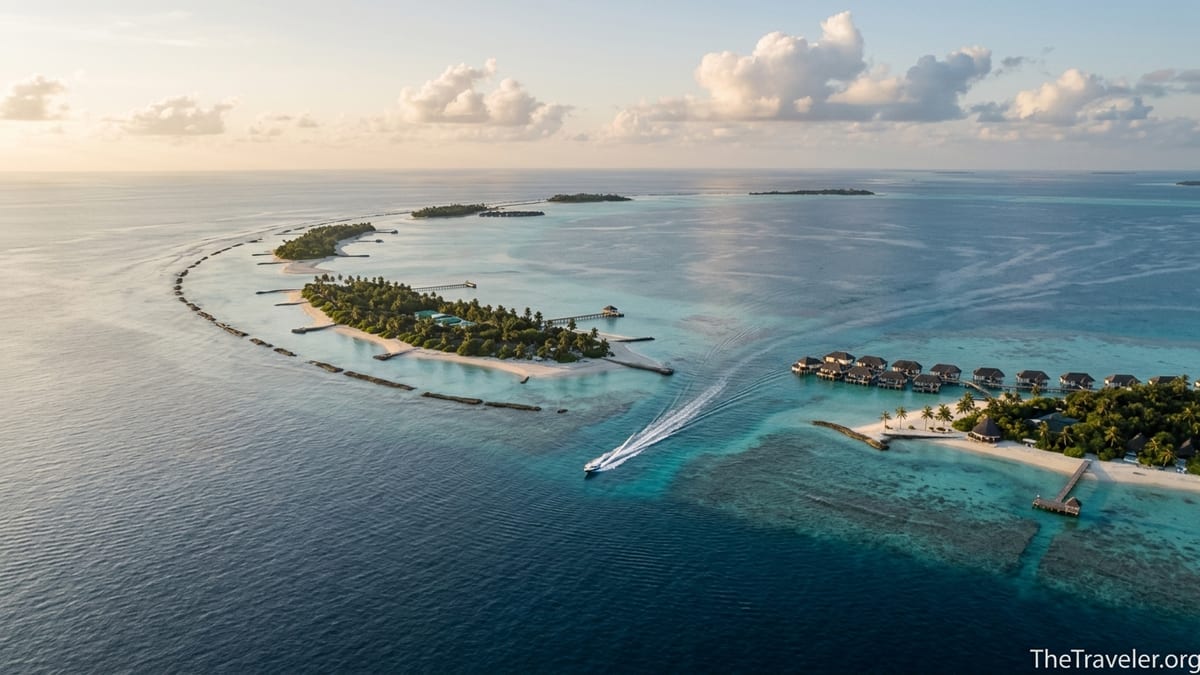
How Maldives Trips Really Work: Resorts, Local Islands and Transfers
Every Maldives itinerary is shaped by two decisions: whether you stay on a private resort island, a local inhabited island, or a mix of both, and how you move between them. Resorts usually package everything from meals to snorkeling excursions but almost always charge extra for mandatory transfers such as shared speedboats or seaplanes. Local islands like Maafushi, Thulusdhoo and Dhigurah offer guesthouses, cafes and public ferries at far lower prices, but you trade away the seclusion of a private island.
Most travelers arrive at Velana International Airport near Malé and continue by shared speedboat, seaplane or a domestic flight plus speedboat combination. As of 2026, return speedboat transfers to resorts close to Malé often run in the range of about 100 to 250 US dollars per adult, while seaplane transfers to outer atolls can reach around 400 to 800 dollars or more per adult, depending on distance and resort category. Domestic flights followed by a short speedboat ride are common for southern atolls and tend to sit roughly between the two in price, especially for family groups.
Public ferries and local speedboats connect Malé to popular inhabited islands on more limited schedules. For example, the shared speedboat to Maafushi in South Malé Atoll typically takes around 45 minutes and costs in the region of 25 dollars one way per person, while services to Thulusdhoo in North Malé Atoll are similar in style and price. These routes make it straightforward to pair a resort stay with a few nights on a local island, provided you schedule flights to arrive early enough in the day to catch onward boats.
With this context in mind, the most realistic itineraries keep you in one atoll or on one main transfer route rather than jumping across the country. The following 5, 7, 10 and 14-day plans focus on combinations that are actually feasible without wasting holiday time sitting in terminals.
5-Day Itinerary: One-Resort Escapes and Resort Plus Nearby Local Island
With only five days on the ground, transfer efficiency is everything. The most practical approach is to choose a resort accessible by speedboat from Malé and, if you want a taste of local life, add one nearby local island night either at the beginning or the end of your stay. This keeps total boat travel to around one hour each way and avoids the risk of seaplane delays cutting into a short break.
A straightforward example is a five-night stay at a single resort in North or South Malé Atoll, such as a mid-range property that offers both beach villas and entry-level overwater villas. Many of these resorts run shared speedboats throughout the day, so if your international flight lands by mid-afternoon you can usually be on the island in under two hours from landing to check-in. Once there, time is best spent snorkeling house reefs, joining a sunset cruise and making use of spa or half-board dining packages rather than moving around.
For a more varied but still realistic five-day plan, you might spend the first night on a local island like Hulhumalé or Maafushi, followed by three nights at a nearby resort and one final night back close to the airport. For example, you could land in the evening, take a 15-minute taxi to a simple Hulhumalé guesthouse, then the next morning transfer by shared speedboat to your resort. After three nights of all-inclusive relaxation, you return to Hulhumalé or Maafushi for a final night, which positions you close to the airport for a morning departure and avoids relying on early resort boat schedules.
Divers with limited time might instead choose a dive-oriented local island such as Rasdhoo or Thoddoo in the Ari region, where guesthouses partner with local dive centers offering two- or three-tank boat dives daily. In this case, a five-day plan is best kept fully on the same island: arrive in Malé, take the scheduled speedboat directly, enjoy three full days of diving, then return to Malé the day before departure or in time for an evening flight.
7-Day Itinerary: Classic Resort Stay or Resort Plus Local Island Combo
A week in the Maldives opens the door to one seaplane transfer or a more relaxed resort plus local island combination. Many honeymooners choose a single resort for seven nights, especially if it is further out in atolls like Baa or Ari that are best reached by seaplane. With a seaplane, you typically connect via the dedicated terminal near Malé, check in your bags with the resort representative and then fly 30 to 45 minutes over the atoll lagoons before transferring to a short boat ride. The premium is price and the trade-off is weight limits on luggage, but for seven days the aerial arrival and remoteness often justify the cost.
A sample seven-day one-resort itinerary might look like this: Day 1 arrival in Malé and seaplane to a resort in Baa Atoll, followed by Days 2 to 6 at leisure with one organized house reef snorkel, a manta ray excursion if in season, and an evening sandbank trip. Day 7 is your departure, with the resort scheduling a seaplane back to Malé to connect with your international flight, often requiring check-out and departure from the resort several hours earlier than you might expect to build in transfer buffers.
Travelers seeking a mix of luxury and local culture can use seven days to combine a speedboat-accessible resort and a nearby guesthouse island. One realistic plan is three nights on a local island like Thulusdhoo or Huraa in North Malé Atoll, where guesthouses often run under 100 to 150 dollars per night for a clean air-conditioned room, and meals at local cafes cost significantly less than resort restaurants. You can book half-day excursions such as turtle snorkeling or sandbank picnics at relatively modest rates from local operators.
After three nights, you transfer by pre-arranged speedboat directly to a resort in the same atoll such as a four-star property with an all-inclusive plan. You then spend three or four nights there enjoying overwater villa life without the higher cost of doing a full week in that setting. On your final day, you return to Malé by the resort speedboat in time for your flight, noting that many resorts set the exact departure time the evening before based on confirmed international schedules.
10-Day Itinerary: Two-Resort Stays and Intro Dive Holidays
Ten days allows enough time to split your stay between two resorts or between a resort and a dedicated dive island without feeling rushed. A common pattern is to choose one resort close to Malé for easy access, then transfer once to a more remote atoll that offers different scenery or activities. To keep transfers manageable, it is wise to stay within adjacent atolls or use Malé as a central pivot, returning there between properties if the resorts use different seaplane operators or domestic carriers.
One concrete example would be three nights at a speedboat-accessible resort in North Malé Atoll followed by six nights at a seaplane-accessible resort in South Ari Atoll known for whale shark excursions. You would arrive in Malé, transfer directly by speedboat to your first resort, enjoy a few days of lagoon-side relaxation and short snorkeling trips, then on Day 4 return by boat to Malé. After a brief layover at the seaplane lounge, you would board a seaplane to South Ari, arriving with enough afternoon left to check into your villa and explore the house reef.
Divers looking for a gentle introduction often choose a 10-day plan that pairs a guesthouse-based dive hub with a comfort-focused resort. For example, you might spend four nights in Rasdhoo or Dhigurah, doing guided boat dives on nearby channels known for reef sharks and manta encounters, using gear rented from the island dive center. Many dive operators in these islands run two-tank morning trips with optional afternoon or night dives and can accommodate a range of experience levels, including open water divers who are just starting out.
After completing your core dive package over four or five days, you could transfer by scheduled speedboat back to Malé and then onward by resort speedboat to a private island where the rest of your stay is dedicated to relaxation. This avoids the fatigue of continuous early-morning dives while still letting you log eight to ten memorable dives during a single trip. Key is to leave at least 18 to 24 hours between your last dive and your international departure for safety, so building a non-diving resort segment at the end of the itinerary can be ideal.
14-Day Itinerary: Serious Diving, Multi-Atoll Routes and Slower Travel
With two weeks, you can consider more ambitious routes such as multi-atoll dive itineraries or a slow combination of several local islands and one resort. However, the geography of the Maldives still makes frequent long-distance hops impractical. A realistic upper limit is two or three major transfer legs across the entire trip, particularly if some involve seaplanes or domestic flights.
A dive-centric 14-day itinerary might combine a week on a resort or local island famed for house reef and day-boat diving with a week on a liveaboard cruise through central or southern atolls. Central atoll itineraries often link areas such as Rasdhoo, Ari, Vaavu and the Malé atolls, focusing on channel dives with schools of grey reef sharks, nurse shark night dives in Vaavu, and wreck or thila sites. Liveaboard cabins typically include full-board meals and up to three or four guided dives per day, and operators frequently handle domestic connections and airport transfers as part of the package.
Travelers who prefer to stay on land can use 14 days to explore a mix of two local islands and one resort without rushing. For example, you might begin with four nights on Thulusdhoo, surfing or snorkeling and sampling local cafes, then transfer by speedboat to a mid-range resort in the same atoll for five nights of all-inclusive ease. Afterward, you return toward Malé and continue to a second local island like Maafushi or Guraidhoo in South Malé Atoll for four nights of budget-friendly swimming, excursions and souvenir shopping.
An alternative southern route involves a domestic flight from Malé to a regional airport such as in Gaafu Alifu or Addu Atoll, followed by a speedboat to a remote resort. Here, 14 days gives you enough time to justify the longer travel day: you might spend the first night in Malé or Hulhumalé to reset after long-haul travel, take the domestic flight the next morning, and then enjoy ten or eleven nights at a quiet southern resort known for healthy reefs and fewer crowds, before flying back to Malé for a final night and onward departure.
Realistic Transfer Planning: Timings, Costs and Hidden Constraints
Building a workable Maldives itinerary starts with checking transfer schedules for each property on your short list. Speedboats to islands in the Malé atolls tend to run several times a day and can operate into the evening, making them flexible for late flight arrivals. By contrast, seaplanes operate only in daylight hours and are subject to weather constraints, so if your flight lands in Malé after mid-afternoon you may need to overnight near the airport before continuing to a seaplane resort the next morning.
Costs can surprise first-time visitors. Return transfer charges are usually billed separately from room rates and are mandatory if you book directly with the resort. As of 2026, families of four flying to a distant seaplane resort can easily add well over a thousand dollars to their total bill just in transfers. Budget-conscious travelers often choose speedboat-only resorts or structure itineraries around local islands served by scheduled public or private boats, where transfers can be as low as tens rather than hundreds of dollars per person.
Another commonly overlooked constraint is luggage. Seaplane operators impose stricter weight limits than international carriers, and excess baggage is charged per kilogram and may not travel on the same flight as you if planes are full. This matters particularly to photographers and divers carrying heavy gear. In contrast, shared speedboats and public ferries rarely weigh baggage formally, though space can be tight on busy routes and large hard cases may be less convenient to maneuver on jetties.
When combining more than one resort or island, it helps to map how you will physically move between them. Transfers are not always direct, especially if two properties use different partners. You may need to return to Malé, switch terminals, wait in a lounge and then board a second transfer. For trip lengths under ten days, each extra transfer leg can consume a half day or more of beach time, which is why many experienced visitors favor one or two well-chosen bases rather than hopping every few days.
Dive-Focused Itineraries: Choosing Atolls and Bases
The Maldives is one of the world’s classic dive destinations, and many visitors build itineraries almost entirely around underwater time. Different atolls have distinct personalities: South Ari is widely known for year-round whale shark encounters, Baa for seasonal manta aggregations, and channels in areas like Vaavu and certain central atolls for strong currents, schooling sharks and dramatic walls covered in soft corals. The choice of base shapes not only the marine life you will see but also how convenient daily diving feels.
Resort-based diving suits travelers who want comfort between dives and are traveling with non-diving partners or children. Resorts with strong house reefs often let experienced divers shore dive between scheduled boat trips, and many operate modern, well-equipped dive centers offering nitrox, rental gear and guided excursions tailored by experience level. In such cases, a 7- or 10-day stay allows you to log a relaxed slate of dives while still enjoying spa treatments and wider resort facilities.
Local island guesthouses support a growing number of independent dive centers, particularly in islands like Rasdhoo, Dhangethi, Dhigurah and Fulidhoo. Here, accommodation costs are lower but boats, guides and safety protocols can still be of high quality, particularly at established operators that work regularly with international guests. A dive itinerary might involve four to six days of two-tank morning dives, with optional night dives on shark or manta cleaning stations, sandwiched between non-diving arrival and departure days to respect surface interval recommendations before flying.
Liveaboards remain the most intensive option. For serious divers with 10 to 14 days available, a week-long liveaboard combined with a few days at a guesthouse or resort before or after can offer the best of both worlds. Central routes might take you to renowned sites such as long outer reefs and deep channels where currents attract pelagic life, while southern routes in the right season target more advanced shark encounters. These trips usually include airport transfers, so itineraries revolve around the cruise departure date and port.
Budgeting and Choosing Between One and Multiple Bases
Many travelers find that once flights are booked, the big budget levers are transfers, meal plans and how many different bases they choose. One-resort stays tend to be simpler and can be more economical if you secure a promotional package that includes transfers and at least half board. Two- or three-stop itineraries feel more adventurous but usually add cumulative transfer fees and incidental spending during each move, such as meals during layovers in Malé.
A practical way to balance cost and experience is to pair a few nights in a modest guesthouse with a shorter, high-comfort resort stay. For instance, three or four nights in a local island guesthouse at under 150 dollars per night, with affordable meals in local cafes, followed by three or four nights in a more expensive overwater villa, can bring the average nightly cost down while still delivering the classic Maldives luxury feel. This model works particularly well for couples and small groups who enjoy simple surroundings and local food as part of the experience.
Families often prioritize speedboat-accessible resorts that bundle kids’ clubs, shallow lagoons and all-inclusive dining. For them, the marginal cost of a second base may not make sense if packing up young children and moving is stressful. In such cases, choosing one well-equipped resort with varied excursions and perhaps a nearby sandbank for day trips can provide enough variety over a week or longer.
Whatever your party type, start planning by fixing your dates and flight times, shortlisting two or three atolls that match your priorities and then comparing actual transfer options and costs for specific properties. Once you identify where transport schedules align neatly with your flights and how those movements affect your first and last days, you can fit the 5, 7, 10 or 14-day itinerary shape that best matches your travel style.
The Takeaway
Designing a Maldives itinerary is less about chasing the most exotic atoll and more about finding a rhythm of travel that fits your time and budget. Five days works beautifully for a single speedboat-accessible resort or a quick resort plus local island pairing. Seven to ten days opens the door to one seaplane journey, two contrasting bases or an intro dive holiday that still leaves space for rest. Fourteen days gives divers and slow travelers room to explore multiple atolls or mix local islands with a longer, more secluded resort stay.
Across all these trip lengths, the most successful plans tend to avoid over-hopping, respect transfer realities, and build in unstructured time to simply float, snorkel and watch the sky change colors over the lagoon. By anchoring your choices in real transfer schedules, clearly defined budgets and a sense of what you most want to remember about your time in the Maldives, you can create an itinerary that feels both practical and genuinely special.
FAQ
Q1. Is a 5-day trip to the Maldives really worth it?
Yes, if you choose a resort or local island close to Malé that is reachable by speedboat, a 5-day trip can feel surprisingly relaxed, especially if you avoid extra transfers and focus on one base.
Q2. How many islands or resorts should I include in a 7-day itinerary?
For a week, most travelers are happiest with one or two bases. A single resort keeps things simple, while combining a local island with a nearby resort adds variety without excessive transfer time.
Q3. Do I need to overnight in Malé before taking a seaplane?
If your international flight lands in the late afternoon or evening, you may need to spend the first night in Malé or Hulhumalé because seaplanes operate only in daylight and on fixed schedules.
Q4. How much should I budget for transfers in the Maldives?
Approximate return costs range from tens of dollars per person for public or shared speedboats to several hundred dollars per person for seaplanes or domestic flights, depending on distance and resort choice.
Q5. Is it cheaper to stay on local islands than on resorts?
Generally yes. Guesthouses on local islands tend to have lower nightly rates and food costs than private resorts, though you will not get the same level of facilities, privacy or meal inclusions.
Q6. What is a good trip length for a dive-focused holiday?
Seven to ten days works well for a resort or local island dive base, giving time for multiple dive days plus rest. Serious divers often aim for 10 to 14 days or pair a week-long liveaboard with extra nights on land.
Q7. Can I visit more than one atoll on a single trip?
Yes, but it is most practical on longer stays of 10 to 14 days and when you accept that each atoll change usually requires a return through Malé and at least a half day of travel.
Q8. Are seaplane resorts always better than speedboat resorts?
Not necessarily. Seaplane resorts feel more remote and scenic in flight but cost more and have stricter schedules. Many speedboat-accessible resorts offer excellent lagoons, reefs and facilities with simpler logistics.
Q9. How far before my flight should I stop diving?
Most dive operators recommend at least 18 to 24 hours between your last dive and your international flight, so plan to finish diving the day before you leave or shift to a non-diving resort segment at the end.
Q10. When is the best time of year to follow these itineraries?
The Maldives is a year-round destination, but conditions vary by monsoon and region. Many visitors target the drier months and specific seasons for mantas or whale sharks, then build itineraries around those windows.