


The Maldives is not one single destination but a chain of 26 coral atolls scattered across the Indian Ocean, and where you choose to stay will shape almost every part of your trip. From quick speedboat rides to North Malé to seaplane hops out to Baa or Ari, transfer times, reef quality, resort style and nightly rates can vary dramatically from one atoll to the next. This guide compares the main atolls most visitors consider, with real examples of resorts, rough price bands and who each area suits best, so you can match the right island to your budget and travel style.
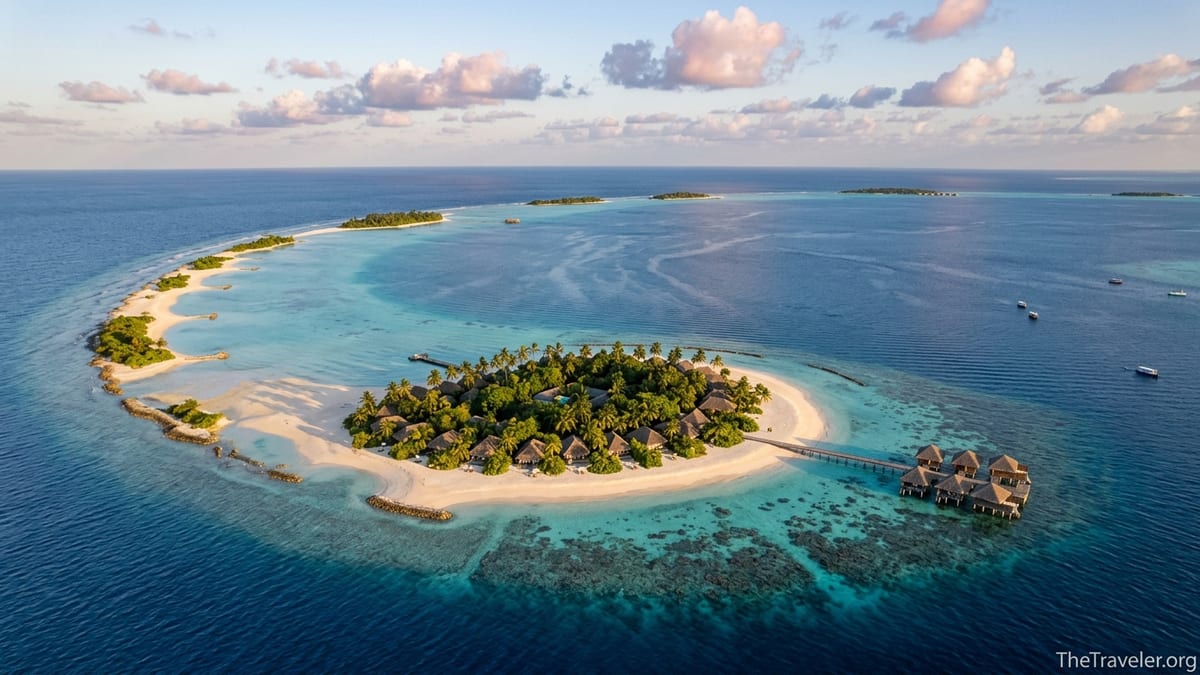
How Atoll Choice Shapes Your Maldives Experience
Most visitors arrive at Velana International Airport near Malé and then connect straight to their resort by speedboat, seaplane or a domestic flight plus short boat ride. Resorts in North and South Malé Atolls typically use speedboats, with transfers of roughly 20 to 45 minutes in most cases, which keeps costs and travel time down. Further-flung atolls such as Ari, Baa, Raa and Dhaalu usually require a seaplane flight of about 25 to 50 minutes, while the very remote northern and southern atolls can involve an additional domestic hop.
Transfer costs are a major but often overlooked part of a Maldives budget. As a general rule, shared speedboat transfers to North and South Malé tend to run from approximately 50 to 200 US dollars per person round trip, with some mid-range resorts including them in packages. Seaplane transfers are significantly more expensive, often in the range of about 400 to 800 US dollars per person round trip depending on distance and operator. Those flying on late-night international arrivals should note that speedboats can usually operate after dark, while seaplanes are restricted to daylight hours.
Beyond transfers, each atoll has its own personality. North Malé has the densest concentration of resorts and easy access, South Malé mixes ultra-luxe hideaways with family-friendly islands, Ari is famous for whale sharks and year-round diving, Baa is known for manta rays and UNESCO biosphere status, and quieter atolls like Raa, Dhaalu and Vaavu offer a more off-grid feel. Understanding these differences is key to making sure your chosen island fits your expectations, whether that is barefoot luxury, strong house-reef snorkeling or maximum privacy.
Price levels vary widely even within the same atoll. In almost every region you can find relatively affordable three- or four-star resorts with seasonal offers, along with headline-grabbing villas that can run into several thousand dollars per night. For most travelers, the sweet spot in the Maldives is often a well-reviewed four- or five-star resort with a good meal plan, sensible transfer costs and a proven track record on reef quality or family facilities, depending on priorities.
North Malé Atoll: The Most Convenient Classic
North Malé Atoll is the Maldives at its most accessible. Resorts here are typically reached by speedboat direct from the airport jetty, with journey times usually between about 20 and 45 minutes depending on the island. That makes this atoll ideal for short stays, late-night arrivals or anyone who wants to avoid the extra cost and logistics of a seaplane. It is also the area with perhaps the broadest range of properties, from long-established mid-range islands to polished international brands and a handful of ultra-luxury retreats.
Concrete examples in North Malé include Sheraton Maldives Full Moon Resort & Spa, which often targets couples and families with mid-range all-inclusive offers and regular speedboat transfers, and VARU by Atmosphere, a premium all-inclusive island reached by speedboat in roughly 45 minutes. At the higher end, several designer resorts occupy private islands with expansive villas and strong spa and dining programs, but the concentration of properties can mean more boat traffic and less of that castaway feeling than in outer atolls.
For reef lovers, North Malé still offers attractive snorkeling and diving, but some travelers and dive professionals note that reefs close to Malé see more pressure and boat activity than those in more distant atolls. Many resorts compensate with easy access to channels where reef sharks, rays and schooling fish are still commonly seen, and day trips to renowned surf breaks and dive spots are widely available. If house-reef snorkeling straight from your villa is a top priority, it is worth checking recent guest reviews for each individual resort, as conditions can vary from island to island.
Budget-wise, North Malé has something for almost every price bracket. In low season it is sometimes possible to find entry-level rooms in simpler resorts from the mid-200s to 300s US dollars per night before taxes and transfers, while premium all-inclusive options and overwater villas can run from the mid-hundreds into four figures. The key advantage is that transfer pricing is predictable and relatively modest compared with seaplanes, which helps keep overall trip costs under control.
South Malé Atoll: Easy Access with an Upscale Edge
Separated from North Malé by a deep channel, South Malé Atoll offers similar speedboat convenience with a slightly more spread-out feel. Resorts here are also reached entirely by speedboat, generally in about 25 to 45 minutes, so night arrivals are typically possible. This atoll is home to some of the country’s most prestigious names as well as several excellent mid-range islands that work well for both couples and families seeking a balance of design, lagoon beauty and activities.
Among the high-end examples, Waldorf Astoria Maldives Ithaafushi has gained attention for its large overwater villas, extensive restaurant collection and made-to-measure experiences, all within a speedboat ride of the airport. Naladhu Private Island caters to guests seeking maximum seclusion, with just a handful of villas and personalized service on a boutique-sized island. These ultra-luxury options suit travelers who want the privacy and service levels of far-flung atolls without long transfers, though rates often reflect their flagship status.
More accessible choices in South Malé include Anantara Dhigu and Anantara Veli, sister resorts linked by boat shuttles that share facilities and mix family-friendly and adults-only concepts. Properties like these typically offer a choice of beach and overwater villas, multiple dining venues and strong activity programs, from surf lessons to kids’ clubs. Many package deals bundle half-board or full-board options with shared speedboat transfers, which can make South Malé a smart pick for those who want easy logistics but a resort feel that is one step removed from the capital.
For snorkeling and diving, South Malé has a good range of sites, though, as with North Malé, some reefs have been affected over time by coral bleaching events and human activity. Guests interested in marine life should ask specifically about house-reef access and typical visibility during their travel month. Overall, South Malé is a strong all-rounder: convenient for short and long stays, attractive for both honeymooners and families, and well supplied with resorts at different budget levels.
Ari Atoll: Whale Shark Heartland and Dive Favorite
Ari Atoll, often divided into North Ari and South Ari, is one of the Maldives’ best-known diving regions and a top choice for travelers focused on marine life. Many resorts here are reached by seaplane from Malé, with flights typically around 30 minutes, though a few islands in the southern part of the atoll use a domestic flight plus speedboat combination. The payoff for the extra effort is a wider sense of space, darker night skies and, particularly in South Ari, a strong chance of encountering whale sharks on organized excursions.
South Ari in particular has built a reputation as a year-round whale shark hotspot, with local operators reporting high success rates on dedicated trips along the outer reef. Resorts such as Lux South Ari Atoll and Conrad Maldives Rangali Island are frequently mentioned by divers and snorkelers seeking big-animal encounters. Typical whale shark excursions run as small-group boat trips that can cost roughly 125 to 300 US dollars per person, depending on duration and inclusions, and involve scanning the surface for the silhouettes of these gentle giants before slipping into the water with a guide.
Beyond headline wildlife, Ari offers some of the country’s most accessible channel and thila (pinnacle) dives, along with a wide spectrum of resorts. There are intimate barefoot-style islands with just a few dozen villas, as well as larger properties with several hundred rooms, multiple pools and full-service spas. Many mid-range and upper-mid-range resorts in Ari structure their pricing around half-board or all-inclusive options, which can be cost-effective given the limited opportunity to dine outside your resort once you arrive.
For couples and honeymooners, Ari combines a romantic feel with a tangible sense of adventure. Even non-divers can join guided snorkeling trips to manta cleaning stations or shallow reefs frequented by turtles and reef sharks. Families may find that some Ari resorts have fewer organized children’s facilities than those in Malé Atoll, though there are notable exceptions with strong kids’ clubs and family villas. Overall, Ari is an excellent choice for guests willing to budget for seaplane transfers in exchange for richer marine life and a slightly wilder ocean backdrop.
Baa, Raa and Dhaalu: Manta Rays, Design Resorts and Quieter Reefs
West and north of Malé, Baa and Raa Atolls have become bywords for upscale yet laid-back resort experiences, while Dhaalu further south offers a similar sense of space with a growing mix of properties. All three atolls are typically accessed by seaplane, usually in 25 to 50 minutes depending on distance, and appeal to travelers who prioritize reef quality, privacy and fresh design over absolute proximity to the airport.
Baa Atoll holds UNESCO biosphere reserve status and is known internationally for Hanifaru Bay, where large numbers of manta rays and, occasionally, whale sharks aggregate seasonally. Several heavyweight resorts cluster in Baa, including Soneva Fushi, which champions barefoot luxury and sustainability on a large natural island, Milaidhoo Maldives, often highlighted for its strong house reef and intimate scale, and Four Seasons Landaa Giraavaru, a frequent recommendation for families and marine-conservation enthusiasts. These properties sit firmly in the luxury and ultra-luxury range, with nightly rates that can run from high three figures to well into four figures in US dollars, particularly for overwater villas.
Raa Atoll has gained attention for design-forward resorts and relatively unspoiled reefs, partly thanks to its distance from Malé and lower boat traffic. Islands here tend to emphasize expansive lagoon views, modern architecture and well-planned overwater villa layouts. Travelers and travel advisors often point to Raa as a strong choice for couples seeking contemporary style and good snorkeling without the celebrity price tags of Baa’s most famous names, although seaplane transfer costs still need to be considered as part of the total budget.
Dhaalu Atoll, also known as Southern Nilandhe, sits further south and hosts a mix of mid-range and higher-end resorts on quiet islands surrounded by deep blue channels and sandbanks. Some properties here are experimenting with new leisure concepts, from elaborate water-sports centers to dedicated wellness retreats and even motorsport-style facilities on reclaimed land. As with Raa, Dhaalu works well for guests looking to feel far from Malé while still staying within a seaplane ride rather than a longer domestic flight.
For divers and snorkelers, all three atolls can deliver excellent conditions with less crowding than the central region. Seasonal variability, especially during the southwest and northeast monsoons, affects where plankton and pelagic species concentrate, so it is worth asking your chosen resort about typical marine life patterns during your intended travel month. Overall, Baa, Raa and Dhaalu are compelling for repeat visitors and first-timers alike who are willing to invest in seaplane transfers for richer reefs and high-end resort choices.
Vaavu and Other Off-Grid Atolls: Fewer Crowds, Strong Currents
To the southeast of Malé, Vaavu Atoll and its neighbors occupy a quieter corner of the Maldives that appeals strongly to divers and travelers chasing a less developed atmosphere. Resorts and guesthouses here are fewer in number than in the central atolls, and many are surrounded by channels with stronger currents and steep drop-offs that attract reef sharks, rays and schooling pelagics. Transfers are typically handled by seaplane or a combination of domestic flight and speedboat, depending on the specific island and current airline routes.
One of Vaavu’s calling cards is the chance to experience dramatic channel dives and shark sightings, sometimes even on dusk or night snorkels organized by local operators. At the same time, some resort islands in this region have been built on reclaimed or partially artificial land, with lagoons that may feel a little more structured than on untouched sandbanks. Prospective guests should look closely at island photos and layout descriptions if a natural-feeling shoreline is important to them, as well as checking whether the house reef is right off the beach or requires a short boat ride.
Other less-visited atolls, including some in the far north such as Haa Dhaalu and parts of Noonu, or deep-south groups like Gaafu Alifu and Gaafu Dhaalu, are typically reached by a domestic flight of around 45 to 90 minutes to a regional airport, followed by a speedboat ride. These multi-step transfers add travel time and cost, but they also deliver some of the Maldives’ most pristine reefs and a markedly lower density of boats and islands. Ultra-remote luxury projects in these areas focus heavily on privacy, sustainability and personalized service, often at price points comparable with or above Baa’s flagship resorts.
For many first-time visitors with a week or less, Vaavu and the far northern or southern atolls are best suited to those for whom diving or remoteness is the primary goal. Families with young children and travelers prioritizing smooth logistics might find the extra flights and weather-dependent connections less appealing. However, for experienced divers, underwater photographers or honeymooners who truly want to feel at the edge of the map, these outer regions can be unforgettable.
Speedboat vs Seaplane vs Domestic Flight: Which Transfer Fits You
Choosing between a speedboat, seaplane or domestic flight transfer is as important as selecting your atoll, because it affects not only cost and convenience but also how rested you feel when you step onto the sand. Speedboat-accessible resorts in North and South Malé suit late arrivals and short breaks, as you can often be at your island within an hour of clearing immigration. For example, guests arriving on an evening flight from Europe or North America can clear formalities, walk to the speedboat pier and reach a resort like Sheraton Maldives, VARU or an Anantara property in time for a late dinner.
Seaplanes, typically operated by local carriers using 15 to 19-seat aircraft, serve most mid-distance atolls like Ari, Baa, Raa, Lhaviyani and parts of Dhaalu and Vaavu. They offer a spectacular bird’s-eye view of sandbanks and reefs, but they run only during daylight hours and are subject to weather conditions. Typical shared seaplane transfers cost in the region of several hundred dollars per person round trip, and some resorts adjust their scheduled departures based on the day’s arrivals, so guests may spend some time waiting in a lounge at the seaplane terminal before boarding.
Domestic flights plus speedboat are the standard combination for very distant atolls in the far north and south. While ticket prices can sometimes be a little lower than seaplanes on a per-mile basis, the extra airport connection and baggage handling mean they can feel more tiring, particularly after a long-haul international flight. Some high-end resorts mitigate this with fast-track airport services, private lounges and coordinated schedules, but it remains a factor to consider carefully if you are traveling with small children or have limited mobility.
From a budget perspective, travelers should factor transfer costs into the per-night rate when comparing resorts. A property in Baa or Ari might look more expensive than one in Malé at first glance, but if its nightly rate includes seaplane transfers or offers a substantial discount for longer stays, the difference can narrow. Conversely, a seemingly affordable room on a far-flung island can become significantly pricier once two seaplane seats or domestic connections are added. Asking your travel agent or the resort for a full cost breakdown before booking is always wise.
Matching Atolls to Trip Type, Budget and Travel Style
For couples and honeymooners seeking a mix of romance and convenience, South Malé and Ari Atoll are often strong starting points. South Malé delivers overwater villas, quality spas and easy transfers on a reasonable budget, while Ari ups the ante on marine life, especially if swimming with whale sharks or mantas is a dream experience. Many couples opt for five to seven nights in a single resort to minimize packing and unpacking, often choosing an entry-level beach villa for some nights and an overwater villa for a special finale.
Families, especially those traveling with younger children, tend to favor atolls within speedboat range or those with strong kids’ facilities. North and South Malé both host resorts with children’s clubs, family suites, splash pools and kids-eat-free promotions during certain seasons. Baa and some parts of Raa also feature sophisticated family-friendly luxury resorts, though transfer logistics and higher nightly rates need to be weighed against the benefits of better reefs and more space.
Divers and serious snorkelers often look first to Ari, Baa, Raa, Vaavu and some of the far northern and southern atolls, where channel dives, cleaning stations and strong pelagic life are more common. Liveaboard dive boats also operate in these regions for guests who want to sample multiple atolls in a single trip, but for resort-based stays, choosing an island with an active dive center, easy access to house reefs and small-group boat trips can make a significant difference to overall satisfaction.
Travelers on tighter budgets do not have to rule out the Maldives entirely. Local-island guesthouses in several atolls provide more affordable stays with access to public beaches and day trips to nearby reefs, sometimes at a fraction of resort prices. Within the resort sector, older properties in North Malé, South Malé and parts of Ari sometimes offer competitive low-season rates and value-focused all-inclusive packages. Being flexible on travel dates, booking well ahead and watching for early-bird or shoulder-season promotions can make once-in-a-lifetime islands surprisingly attainable.
The Takeaway
There is no single “best” atoll in the Maldives, only the one that best matches your expectations, budget and appetite for travel time. North and South Malé Atolls are ideal for first-timers who want straightforward transfers and a wide choice of resorts across different price bands. Ari adds world-class marine life, particularly whale sharks and strong diving, at the cost of a seaplane hop. Baa, Raa and Dhaalu serve up some of the country’s most desirable luxury islands and quieter reefs, while Vaavu and the far northern and southern atolls reward those who prioritize remoteness and underwater adventure above all else.
When comparing options, look beyond glossy photos to practical details: transfer type and cost, meal-plan inclusions, reef access, children’s facilities and the scale of the island. Reading recent guest feedback about reef health, service consistency and food quality can also help narrow down the field. With a little research, you can choose an atoll and island that align closely with how you like to travel, ensuring that your Maldivian days unfold exactly the way you imagine: waking to the sound of gentle surf, slipping into clear water for a morning snorkel and watching the sky turn apricot over the lagoon each evening.
FAQ
Q1. Which Maldivian atoll is best for a first-time visitor? For most first-time visitors, North or South Malé Atoll is the easiest choice because the resorts are reached by speedboat in about 20 to 45 minutes, avoiding seaplane logistics and keeping transfer costs moderate while still offering classic overwater villas and turquoise lagoons.
Q2. If I want to see whale sharks, which atoll should I choose? South Ari Atoll is widely considered the best region for year-round whale shark encounters, with many resorts and dive centers running regular excursions along the outer reef where sightings are relatively frequent in suitable conditions.
Q3. Are seaplane transfers in the Maldives worth the extra cost? Seaplane transfers are more expensive than speedboats, but they give access to quieter atolls like Baa, Raa and much of Ari and provide spectacular aerial views, so they are often worth it if you value remoteness, stronger reefs and the experience of flying low over the islands.
Q4. Which atolls are best for strong house-reef snorkeling right off the beach? Reefs vary by individual island, but many travelers and dive professionals highlight Baa, Raa, parts of Ari and some outer atolls as having stronger, less crowded house reefs, while certain islands in the busy Malé Atolls may have more impacted coral close to shore.
Q5. Is the Maldives suitable for families with young children? Yes, many resorts in North and South Malé, Baa and other atolls cater specifically to families, with kids’ clubs, shallow lagoons and family villas, though parents should factor in transfer times and choose islands with medical support and child-friendly facilities.
Q6. How far in advance should I book a Maldives resort? For peak months such as December to March, booking several months ahead is advisable, especially for popular atolls like Ari and Baa, while in shoulder seasons you may find more flexibility and occasional last-minute offers, particularly in the Malé Atolls.
Q7. Can I split my stay between two different atolls? It is possible to split a stay, for example combining a speedboat-accessible resort in South Malé with a seaplane-accessible island in Ari or Baa, but you should allow for extra transfer time and cost and consider whether changing islands will eat into valuable relaxation days on a shorter trip.
Q8. Which atolls offer the most high-end luxury resorts? While there are luxury options across the country, Baa Atoll, parts of Ari, South Malé and some remote northern and southern atolls host a high concentration of ultra-luxury brands with expansive villas, private butlers and extensive wellness and dining programs.
Q9. Are there budget-friendly options in the Maldives, or is it only for luxury travelers? The Maldives is best known for luxury resorts, but there are more affordable guesthouses on local islands and older or more simply styled resorts in atolls like North Malé and Ari that can be surprisingly accessible, especially during low season and with all-inclusive or promotional packages.
Q10. How do I choose between a beach villa and an overwater villa? Beach villas usually offer more shade, easier access for children and slightly lower prices, while overwater villas provide direct lagoon access and iconic views, so many travelers choose a mix, starting in a beach villa and ending with a few nights over the water as a trip highlight.