


The Maldives has become shorthand for overwater villas and turquoise lagoons, but planning a first trip can feel surprisingly complex. This guide breaks down how the country is laid out, the differences between resort and local islands, how transfers work, when to go, what things really cost, and how to plan a first Maldives itinerary that matches both your budget and your travel style.
Understanding the Maldives and Its Atolls
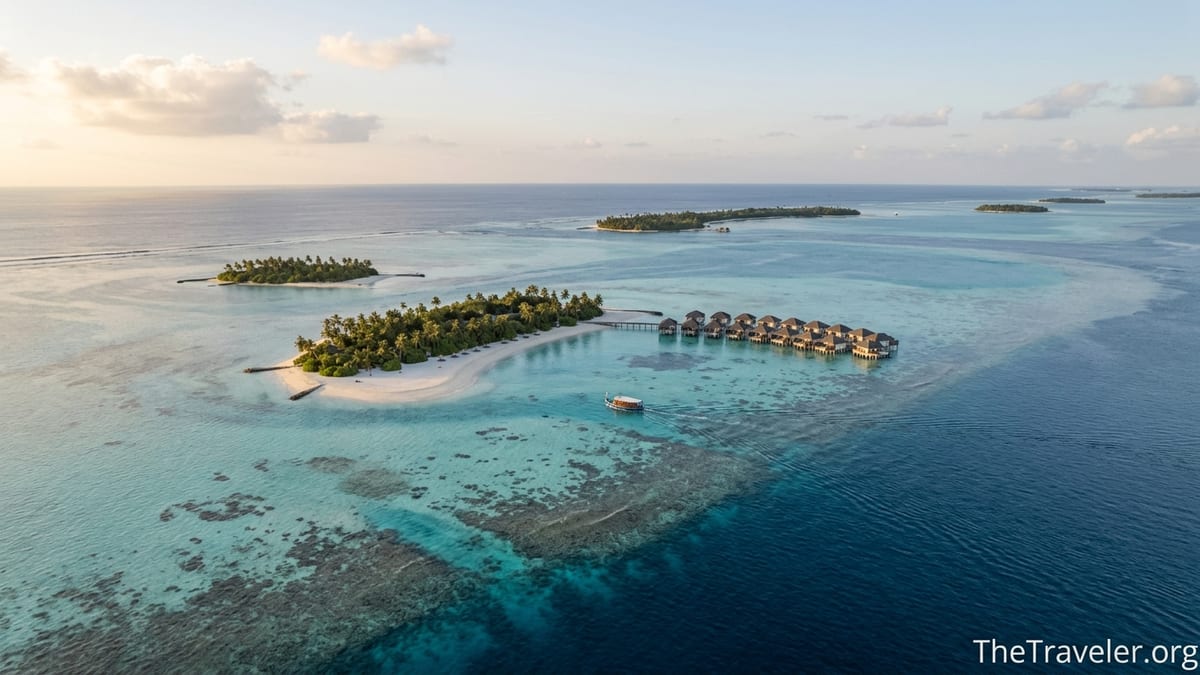
The Maldives is a chain of 26 natural atolls stretching north to south across the Indian Ocean, made up of more than a thousand low-lying coral islands. Only a fraction are inhabited, and tourism is concentrated on two main types of places: private resort islands and local islands where Maldivians live and guesthouses operate. For a first visit, it helps to think in terms of atolls such as North Malé, South Malé, Ari, Baa, and Addu, each with slightly different transfer logistics and marine life.
North Malé Atoll is the country’s traditional tourism hub and home to the capital, Malé. Many classic resorts such as Kurumba and Bandos sit here, as well as popular local islands like Maafushi and Thulusdhoo. The proximity to Velana International Airport keeps transfer times short and costs relatively low compared with more remote atolls. Further west, Ari Atoll is famous for year-round chances to see whale sharks and manta rays, while Baa Atoll includes Hanifaru Bay, a renowned manta feeding site that attracts snorkelers between roughly June and November.
Distances can be deceptive when you look at a map. Atolls are separated by deep channels and boat or seaplane rides often zigzag around reefs. A resort in the “central Maldives” might still be a 30-minute seaplane flight from Malé, while a local island in the same general area may require a domestic flight plus speedboat. When comparing destinations, do not just look at the atoll name; check the actual transfer type and duration quoted by the property.
Because everything in the Maldives is spread out, you rarely “island hop” the way you might in Greece or Thailand. Most first-timers choose one resort or one local island as a base for five to seven nights, or at most combine a few nights on a budget-friendly local island such as Hulhumalé or Maafushi with a shorter stay at a higher-end resort within the same transfer zone.
Resort Islands vs Local Islands
The Maldives is famous for its one-island, one-resort concept. On private resort islands, the entire island is managed by a single hotel brand. Examples include mid-range properties like Sun Siyam Olhuveli, and luxury names like Soneva Jani or Joali Maldives. These islands offer house reefs, multiple restaurants and bars, spas, kids’ clubs, and a full activities program. Alcohol is freely available, and dress codes are relaxed, with swimwear accepted almost everywhere except perhaps the lobby or main restaurant at dinner.
Local islands are inhabited by Maldivians and only opened to guesthouse tourism in the last decade. Places such as Maafushi in South Malé Atoll, Thoddoo in Alif Alif Atoll, Dhigurah in South Ari Atoll, and Thulusdhoo in North Malé Atoll now host dozens of small, family-run properties. Nightly rates for a clean, air-conditioned guesthouse room often start around 60 to 120 US dollars, significantly cheaper than most resort villas. You will usually eat in simple local cafés or small hotel restaurants, and excursions such as snorkeling trips are sold by independent operators on the island.
Cultural norms on local islands are important to understand. The Maldives is a Muslim country, and on inhabited islands alcohol is not served, and conservative dress is expected in public areas. Bikinis are only allowed on designated “bikini beaches” or private sandbanks during excursions. In practice, this means you wear swimwear on the signed beach area, then cover shoulders and knees when walking through the village. In contrast, resort islands are exempt from these rules, which is a key reason many visitors choose them for their first stay.
Each option offers a different experience. A week at a resort like Meeru Island in North Malé Atoll might include daily buffet breakfasts, sunset cocktails at an overwater bar, and snorkeling directly from your villa deck. A week on a local island like Dhigurah could involve chatting with café owners, buying fruit from a local shop, and joining a small-group whale shark trip with a community dive center. Increasingly, first-time visitors are combining the two styles to balance budget and comfort.
Beaches, Overwater Villas and Marine Life
The classic Maldives image is a long sandbar dotted with palm trees and ringed by bright turquoise water. Many resort islands, including Kuramathi in Rasdhoo Atoll and Reethi Beach in Baa Atoll, have broad, soft-sand beaches around most of their perimeter. Others are smaller and more compact, with just a couple of main beach sections. If having a wide, walkable beach is a priority, study the island map and recent photos carefully before booking, since erosion and seasonal winds can shift sand around.
Overwater villas are a major draw for first-timers. These bungalows are built on stilts above the lagoon and typically connected to the island by a wooden jetty. They range from relatively simple units at places like Furaveri Island Resort to ultra-luxury suites with private slides and retractable roofs at properties such as Soneva Jani. Prices vary widely, but overwater rooms often start around 450 to 700 US dollars per night at midrange resorts in shoulder season, and can climb to several thousand dollars per night at high-end properties in peak months.
Marine life is at the heart of any Maldives trip. Many islands have a “house reef” that you can access directly from the beach. Resorts like Vilamendhoo in South Ari Atoll and Mirihi in South Ari Atoll are well known among snorkelers for reef drop-offs teeming with reef sharks, turtles and colorful fish within a short swim of shore. Some local islands also offer decent house reefs, though you may need to take a short boat ride to reach the best spots, as with tours from Fulidhoo in Vaavu Atoll or Ukulhas in Alif Alif Atoll.
For divers and serious snorkelers, specific areas stand out. Baa Atoll’s Hanifaru Bay is one of the world’s famous manta aggregation sites, with regulated snorkeling tours during the southwest monsoon period. South Ari Atoll is among the best places in the country to spot whale sharks, often via half-day tours from Dhigurah or Maamigili, or resort-based excursions from islands like Lux South Ari. Even if you are a complete beginner, most resorts and many guesthouses offer guided “house reef” snorkels and introductory scuba experiences in shallow lagoon water.
Getting Around: Seaplanes, Speedboats and Domestic Flights
Almost all international flights land at Velana International Airport near Malé. From there, your onward transfer to your island is either by speedboat, seaplane, or a combination of domestic flight and boat. Properties arrange these transfers for you and will quote either a per-person price or build the cost into a package. It is important to factor this in at the planning stage because transfers can be a significant part of your overall budget.
Speedboat transfers are common for islands in North and South Malé Atolls and some nearby atolls like Vaavu. For example, a shared speedboat from the airport to Maafushi usually takes around 30 to 40 minutes, while transfers to resorts like Centara Ras Fushi or Bandos can be even shorter. Shared speedboat prices can start from roughly 25 to 50 US dollars per person each way for local islands, and 100 to 200 US dollars or more per person each way for resorts, depending on distance and whether the boat runs on a fixed schedule or privately.
Seaplanes, operated by companies such as Trans Maldivian Airways and Manta Air, connect Malé to more distant atolls including Baa, Noonu, Lhaviyani, and some parts of Ari. A typical seaplane transfer takes 25 to 45 minutes and can cost in the region of 300 to 600 US dollars per adult for a return ticket, sometimes higher at ultra-luxury properties. Flights operate only in daylight hours, so if your international flight arrives late afternoon or at night, you will need an overnight stay near the airport, often on Hulhumalé, before continuing the next morning.
Domestic flights on regular planes link Malé with regional airports such as Maamigili for South Ari, Gan for Addu, and Hanimaadhoo in the far north. From these airports, you usually connect by speedboat to your final island. Costs vary but are often comparable to or slightly lower than seaplanes for similar distances. Some budget travelers keep costs down by choosing atolls reachable by public ferry, but these ferries are slow, do not serve tourist resorts, and follow limited schedules, so they work best if you have plenty of time and are staying exclusively on local islands.
Weather, Seasons and When to Visit
The Maldives has a tropical climate with warm temperatures around 27 to 30 degrees Celsius throughout the year. Instead of four distinct seasons, there are two main monsoon patterns. The drier northeast monsoon generally runs from about December to March, bringing clearer skies and calmer seas, particularly to the central and northern atolls. The wetter southwest monsoon typically spans from around April or May through November, with a higher chance of showers, stronger winds and occasional rough seas, though plenty of sunshine still occurs.
In practical terms, the period from January to March is often considered peak season. During these months, resorts and guesthouses experience high occupancy, and nightly rates at popular properties can be significantly higher than in May or June. Many travelers from Europe and North America aim for this window to maximize their chances of blue-sky days and smooth boat transfers. Availability can tighten over New Year and other holiday periods, so booking several months in advance is advisable if you have fixed dates.
Shoulder seasons around April, May, late October and November can offer good value, with more flexible pricing and occasional special offers. You might encounter short, intense rain showers or overcast spells, but you also benefit from fewer crowds. Marine experiences vary with the seasons; for example, manta rays are strongly associated with certain monsoon-related currents, which is why Hanifaru Bay in Baa Atoll is typically marketed for visits between roughly June and November rather than January.
For many first-timers, the key is to balance budget, flexibility and expectations. If you can travel in May instead of February, you may save hundreds of dollars on room rates, at the cost of a slightly higher risk of rain. If you are particularly prone to seasickness, sea conditions during the windiest months might influence your choice of island and transfer. It is sensible to allow some buffer time in your schedule when connecting to long-haul flights, especially if you are relying on seaplanes or domestic flights that operate only in good daylight conditions.
Costs, Budgets and Types of Accommodation
The Maldives has a reputation for being expensive, and ultra-luxury stays can easily justify that image. Yet the range of accommodation across resorts, hotels, guesthouses and liveaboard boats means budgets can be more flexible than many first-time visitors expect. Government statistics in recent years show more than a thousand tourism properties in operation across the atolls, from small guesthouses with a handful of rooms to sprawling resort islands with several hundred beds.
At the high end, overwater suites at brands like St. Regis Maldives Vommuli or Joali often price from well over 1,500 US dollars per night before taxes and service charges, especially in peak season. These properties usually work on a half-board or full-board basis, and it is easy for a couple to spend an additional few hundred dollars per day on à la carte dining, premium drinks and excursions. In contrast, a midrange resort such as Sun Siyam Iru Fushi, Nova Maldives or Kuramathi may offer beach villas starting around 350 to 600 US dollars per night in shoulder season, with buffet-style meals included in half-board or all-inclusive packages.
On local islands, guesthouse rooms often range from about 60 to 150 US dollars per night depending on the island, room size and season. For example, a simple double room with breakfast on Thoddoo or Ukulhas might fall near the lower end of that range in May, while a seafront room in a stylish Maafushi boutique hotel in January will be higher. Meals at local cafés can cost roughly 5 to 15 US dollars per person, and a full-day snorkeling trip sold on the island might be in the region of 30 to 70 US dollars, depending on distance and inclusions.
Transfers and taxes are the main hidden costs that catch first-timers. In addition to 10 percent service charge and 16 percent GST added to most bills, there is a per-person green tax applied nightly at registered properties, which is higher at resorts than at guesthouses. When you compare offers, make sure you are looking at final prices including all taxes and mandatory charges, and add the quoted transfer cost for each traveler. A family of four flying by seaplane to a remote resort can see their transfer bill alone reach into four figures, so choosing a speedboat-accessible atoll can dramatically lower the total trip cost.
Snorkeling, Diving and Water Activities
Snorkeling and diving are central to the Maldives experience, and even first-time visitors with no prior experience can participate. Most resorts operate their own dive centers, typically partnering with an international scuba brand or local operator. Introductory scuba experiences, often called Discover Scuba Diving, allow beginners to try diving on the house reef under close supervision over half a day. Multi-day PADI Open Water courses are widely available and can be combined with a week-long stay.
Snorkeling gear can usually be rented from the resort or guesthouse, although frequent swimmers often prefer to bring their own mask and snorkel to ensure a comfortable fit. Popular snorkeling excursions include trips to nearby reefs, channels where reef sharks and eagle rays patrol, and sandbanks that appear at low tide. Properties in South Ari Atoll, for instance, regularly offer whale shark and manta snorkel trips, while those in Baa Atoll heavily promote Hanifaru Bay outings in season, sometimes with strict time limits and group sizes to protect the animals.
Other water activities range from kayaking and stand-up paddleboarding to jet-skiing, parasailing and sunset fishing. Many midrange and upscale resorts include non-motorized activities like kayaks and paddleboards in their room rates, while charging extra for motorized sports. On local islands, you might join a group night-fishing trip with simple hand lines or book a private sandbank picnic via a local tour shop. Prices vary, but a one-hour sunset cruise on a traditional dhoni boat might cost around 40 to 80 US dollars per person at many properties.
First-timers should be mindful of the sun and currents. The equatorial sun is intense, so reef-safe sunscreen, rash guards and hydration are crucial, especially during long snorkeling sessions. Always listen to local guidance on where currents run strongest; on many islands, certain entry and exit points are recommended on the house reef depending on tide direction. Following these simple precautions helps ensure that your first Maldives snorkeling or diving experience is memorable for the right reasons.
First-Time Planning Tips and Itinerary Ideas
Planning a first Maldives trip starts with clarifying your priorities. If your main goal is a classic overwater villa, look for resorts that offer entry-level water villas within your budget, even if that means staying fewer nights. If you care more about marine life than room type, focus on islands known for strong house reefs and wildlife, such as Vilamendhoo or Dhigurah, even if you stay on land-based beach rooms. Families often appreciate resorts with kids’ clubs and shallow lagoons, while honeymooners may favor adults-only or adults-oriented properties with more secluded villas.
A common first-timer itinerary for a one-week stay might involve three nights on a local island reachable by speedboat plus four nights at a midrange resort in the same general area. For example, you could spend a few days on Maafushi or Gulhi in South Malé Atoll, doing budget-friendly snorkeling trips and soaking up local culture, then transfer by speedboat to a nearby resort such as Olhuveli or Fihalhohi for an all-inclusive finish. Because both legs use the same airport and similar transfer routes, you keep costs manageable and avoid complicated domestic connections.
If you prefer to minimize logistics, choose a single resort accessible by speedboat from Malé and stay put. This works particularly well for shorter stays of four to five nights or for families with children who may not enjoy multiple transfers. On the other hand, if you have a longer holiday and higher budget, you might pair a northern atoll like Noonu, reachable by seaplane and known for high-end resorts, with a few days in Malé or Hulhumalé on either end to adjust to jet lag and explore the capital’s markets and mosques.
Booking strategies also matter. Package deals from major tour operators sometimes bundle flights, transfers and all-inclusive stays at competitive rates, especially from Europe or parts of Asia. Independent travelers can keep an eye on resort seasonal offers such as “stay seven nights, pay five” or complimentary seaplane transfers. When comparing offers, read the fine print on meal plans, included activities and cancellation terms. Because the Maldives sits in a low-lying, climate-vulnerable region, consider buying travel insurance that covers weather-related disruptions alongside standard medical and baggage protection.
FAQ
Q1. How many days do I need for a first Maldives trip?
Most first-time visitors find that five to seven nights is a good balance. It gives you time to recover from long flights, enjoy several snorkeling or diving excursions, and still have relaxed days on the beach without pushing costs too high.
Q2. Is the Maldives suitable for budget travelers?
Yes, as long as you are flexible. Staying on local islands in guesthouses, choosing speedboat-accessible atolls, and traveling in shoulder season can keep nightly costs and transfers far lower than a luxury resort stay, while still giving you access to clear lagoons and reef excursions.
Q3. Do I have to stay in an overwater villa?
No. Many travelers stay happily in beach villas or guesthouse rooms and spend most of their time outdoors. Beach rooms are usually more affordable, and in some cases closer to the best snorkeling entry points, so overwater villas are more about experience than necessity.
Q4. When is the best time of year to visit the Maldives?
The most popular period runs from about January to March when the weather is typically drier and seas calmer. However, good conditions can occur year-round, and traveling in shoulder months like April, May, October or November often brings better value with only a modestly higher chance of showers.
Q5. Can I drink alcohol in the Maldives?
Alcohol is served freely on private resort islands and liveaboard boats, but it is not available in cafés or shops on local inhabited islands. If you stay on a local island, expect soft drinks and juices, and plan any alcoholic drinks for time spent at resorts or on licensed vessels.
Q6. Do I need to worry about dress codes?
On resort islands, standard beachwear is widely accepted, though covering up slightly at dinner is usual. On local islands, you should dress modestly in public, covering shoulders and knees, and use designated bikini beaches for swimwear, in respect of local customs.
Q7. Is snorkeling safe for beginners in the Maldives?
Yes, if you follow local advice and start in calm, shallow areas. Many resorts and guesthouses offer guided sessions on their house reefs, provide life jackets on request, and point out safe entry and exit spots relative to tides and currents.
Q8. How far in advance should I book?
For peak season stays between December and March, it is wise to book several months in advance, especially for popular resorts and school holiday dates. For shoulder seasons, you may find more flexibility and last-minute offers, though securing flights early still helps with pricing.
Q9. Are there medical facilities on the islands?
Several larger resorts have on-site clinics or visiting doctors, and inhabited local islands typically have at least a basic health center. More advanced care is available in Malé. Comprehensive travel insurance and bringing any essential medications with you is strongly recommended.
Q10. Can I combine the Maldives with another country on one trip?
Yes. Many travelers combine the Maldives with Sri Lanka, India, the United Arab Emirates or Southeast Asian hubs by connecting through major transit airports. For a first trip, it can be relaxing to end your itinerary with the Maldives segment so you finish with beach time before flying home.