


The Maldives is no longer a one-note ultra-luxury splurge. From small barefoot islands with simple bungalows to private islands where you can book the entire atoll, there is now a Maldivian resort for almost every style and budget. This guide compares luxury, mid-range, boutique and private-island stays, with concrete examples of what you actually get for your money in 2025–2026, to help you choose the right island for your trip.
How Maldives Resorts Work: One Island, Many Experiences
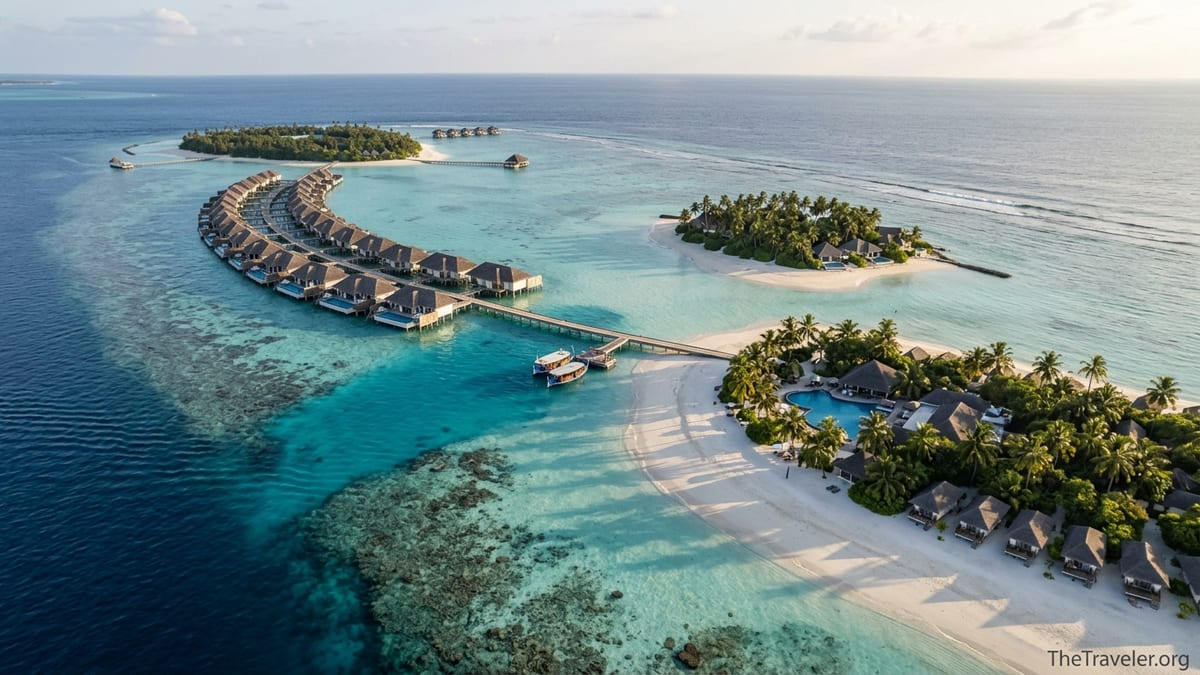
Most Maldives resorts still follow the classic one island, one resort concept. You land at Velana International Airport near Malé, transfer by speedboat, seaplane or domestic flight, and then spend your entire stay on that single island. Your choice of resort therefore determines almost everything about your holiday: the beach quality, house reef, food, activities and even the atmosphere at sunset. A glamorous overwater villa on a man-made lagoon can look perfect on social media, but if there is no reef you may need daily boat trips to snorkel, which adds both time and cost.
Prices are usually quoted per villa per night for two people, before taxes and service charges. As of 2025, you can expect an additional 17 percent goods and services tax, a 10 percent service charge and a per-person green tax added to your bill, which can increase the headline room rate by around one third. A mid-range resort that advertises an overwater villa from about 500 to 700 US dollars per night can realistically end up closer to 700 to 950 dollars once taxes, transfers and meals are factored in.
Resorts are scattered across atolls that vary widely in sea conditions, marine life and transfer logistics. Islands near Malé, such as Velassaru Maldives in South Malé Atoll, can be reached by speedboat in under 30 minutes, keeping transfer costs lower and schedules more flexible. More remote atolls like Noonu, Raa or Gaafu Alifu usually require a seaplane or a domestic flight plus a speedboat, which may add 300 to 800 dollars per person for a return journey, but often reward you with clearer water and more unspoiled reefs.
Finally, every resort leans towards a certain guest profile. Some are clearly family resorts with kids’ clubs, shallow lagoons and multi-bedroom villas, while others such as adults-only or tiny boutique islands focus on couples seeking quiet and privacy. Reading recent reviews and resort fact sheets gives a more accurate sense of whether the vibe is playful, barefoot and social or discreet, design-led and ultra-private.
Defining Luxury, Mid-Range, Boutique and Private-Island Stays
In the Maldives, luxury usually begins around the low four figures per night for two people once taxes and meals are included, though shoulder-season promotions sometimes reduce that. Resorts like Soneva Jani in Noonu Atoll or Anantara Kihavah Maldives Villas in Baa Atoll are firmly in the ultra-luxury tier, with expansive villas that often start near or above 2,000 US dollars per night and climb into five figures for multi-bedroom residences. You pay for space, design, fine dining and advanced experiences such as private observatories, underwater restaurants and highly personalized butler service.
Mid-range generally covers four-star and some entry-level five-star resorts, where beach villas may begin around 300 to 600 US dollars per night before taxes in low season. Properties like Reethi Beach Resort in Baa Atoll, Eriyadu Island Resort in North Malé Atoll or Ellaidhoo Maldives by Cinnamon in North Ari Atoll fall in this category. You might sacrifice ultra-modern interiors or cutting-edge dining, but you can still find very good house reefs, friendly service and simple overwater villas at a more attainable price per night.
Boutique in the Maldives typically refers to smaller design-led properties that emphasize a particular concept rather than scale or opulence. Examples include The Nautilus Maldives in Baa Atoll, which has only 26 beach and ocean houses, each with a private pool and a strong focus on bespoke service, and some of the more intimate COMO, Six Senses or W-branded resorts where architecture and wellness programming are as central as the beach itself. Nightly prices often resemble luxury-level rates, but the experience feels more personalized and less resort-like.
Private-island stays range from renting a small resort entirely for a group to booking ultra-exclusive islands operated by major brands. Four Seasons Private Island Maldives at Voavah is marketed as an exclusive-use hideaway where a single booking party enjoys all villas and facilities. Similar options exist at high-end resorts that offer full-island buyouts or dedicated private islands attached to a larger resort, such as the private island residence at Waldorf Astoria Maldives Ithaafushi. Rates are heavily customized, but it is realistic for a full-island buyout to run into tens of thousands of dollars per night, targeting extended families or celebration groups rather than typical holidaymakers.
Beaches, Lagoons and House Reefs: What Really Matters for the Sea
For many visitors the dream is to step from their villa directly into luminous turquoise water, yet different islands offer very different sea experiences. Some resorts sit in shallow lagoons with fine sand and calm water, ideal for younger children but with limited coral. Others are ringed by a steep drop-off where the house reef lies just a short swim from the beach, offering colorful coral, reef fish and even turtles or reef sharks within minutes of leaving your villa.
Resorts with consistently praised house reefs include Anantara Kihavah, which is surrounded by a natural reef accessible directly from the shoreline, and several North Ari and Baa Atoll islands such as Ellaidhoo Maldives by Cinnamon, Reethi Beach, and mid-range properties that attract divers and snorkelers specifically for their reefs. These islands often run guided snorkeling tours to the house reef, and guests regularly report seeing eagle rays, schools of fish and sometimes manta rays in season without taking a boat trip.
On the luxury side, many of the most sought-after resorts combine strong lagoons with good or excellent snorkeling. Soneva Fushi in Baa Atoll, for example, is known for its thick vegetation and long beaches, but it also offers a healthy reef and access to the wider UNESCO Biosphere Reserve. W Maldives in North Ari Atoll receives frequent recommendations from repeat guests who value its lively reef alongside a more social, music-driven atmosphere, making it a good fit for couples or groups looking for both marine life and nightlife.
If snorkeling is a top priority, pay close attention to whether the villas sit over sand or directly above the reef. At some resorts overwater villas are built out over a deep blue channel, so you may climb down a ladder into clear water but need to swim several minutes to reach living coral. By contrast, at more reef-oriented resorts you can step off your deck and immediately float above coral heads and schools of fish. Check recent photos and descriptions carefully, since new overwater structures can sometimes be constructed over previously intact reef sections.
Pools, Restaurants and Meal Plans: Understanding On-Island Value
Because there is usually no independent dining nearby, on-island restaurants and bars significantly affect overall value. A large integrated resort such as Niyama Private Islands offers multiple restaurants and bars, from beachfront grills to fine dining and destination experiences, along with central pools, private villa pools and kids’ facilities. Guests staying a week can rotate venues and avoid repetition, which matters if every meal is taken on the same island.
Mid-sized resorts typically have two or three main restaurants and perhaps a bar and coffee shop. Reethi Beach and Eriyadu Island Resort are good examples, with buffet restaurants for main meals and one or two speciality options for à-la-carte dinners. All inclusive or full-board meal plans at these properties can make costs more predictable. Guests opting for half-board might spend an extra 70 to 120 US dollars per person per day on drinks and lunches, while comprehensive all inclusive packages may feel expensive upfront but reduce bill shock on departure.
At high-end properties, food is often a highlight. Anantara Kihavah’s underwater restaurant and wine cellar illustrate how dining becomes a central part of the experience rather than a necessity. Soneva Jani pairs plant-forward menus and inventive fine dining with casual beach club experiences. However, à-la-carte pricing can be steep, and it is reasonable for a couple at an ultra-luxury resort to spend several hundred dollars per day just on meals and drinks if they are not on an inclusive package.
Pools are equally varied. Most top-tier villas, whether at Gili Lankanfushi, The Nautilus or Waldorf Astoria Maldives Ithaafushi, come with private pools in addition to one or more communal infinity pools. In the mid-range, private pools may be limited to higher villa categories, so guests seeking that feature without ultra-luxury prices sometimes target entry-level pool villas at mid-range or upper-mid-range resorts, accepting a simpler interior in exchange for the private plunge pool and direct lagoon access.
Families vs Couples: Matching Resorts to Your Travel Style
Family-focused Maldivian resorts tend to have wider beaches, more shallow water and extensive kids’ facilities such as kids’ and teens’ clubs, playgrounds and family villas with separate bedrooms. Four Seasons Resort Maldives at Landaa Giraavaru, for example, offers garden, beach and water villas plus a long list of activities aimed at children, from marine discovery center visits to water sports. Six Senses Laamu is another resort praised for balancing barefoot luxury with engaging programming for all ages, including sustainability and conservation activities.
Some luxury properties actively encourage family stays by building multi-bedroom overwater or beach villas with large pools and gathering areas. At St. Regis Maldives Vommuli Resort, a three-bedroom overwater estate can host extended families or groups of up to a dozen guests, while still providing direct lagoon access and dedicated butler service. Other islands, including Soneva Fushi and select residences at Waldorf Astoria Maldives Ithaafushi, also focus on generously sized family villas and curated experiences such as private sandbank picnics and guided snorkeling tailored to younger swimmers.
Couples and honeymooners often prioritize privacy, quiet and a romantic setting. Adults-only resorts or those with a clear adult-friendly orientation can be more appealing if you want candlelit dinners and peaceful pools rather than splash zones. Intimate luxury properties like The Nautilus Maldives, with only a few dozen houses and a high staff-to-guest ratio, specialize in bespoke experiences such as private cinema nights under the stars or unscripted dining with no fixed opening hours, which resonate particularly well with couples celebrating milestones.
Some mid-range islands balance both audiences. For instance, Reethi Beach and similar four-star properties tend to attract a mix of couples, divers and low-key families who prefer a simple, friendly atmosphere over formality. When choosing, look at recent guest comments about noise levels, presence of group bookings and the feel of the main bar and pool areas after sunset, as this often indicates whether the island skews more towards couples, families or social groups at your likely dates.
Transfers: Speedboat, Seaplane or Domestic Flight
How you reach your island shapes both your budget and your arrival experience. Resorts within about an hour of Malé are usually reached by speedboat, which runs around the clock and tends to cost from roughly 25 up to a few hundred US dollars per person for a return trip, depending on distance and resort policy. Islands such as Velassaru Maldives, several mid-range South Malé properties and some boutique resorts near the capital use speedboats, which are practical for late-night arrivals and shorter stays.
Seaplanes are the iconic Maldivian transfer, flying you low over atolls and giving a bird’s-eye view of sandbanks and reefs. They connect Malé to more distant atolls like Baa, Noonu and parts of Raa, with flight times typically between about 25 and 60 minutes. Return seaplane transfers commonly range from approximately 300 to more than 700 US dollars per person, depending on the resort and distance. Flights generally operate only in daylight, so if you land in Malé in the evening you may need an overnight near the airport before continuing by seaplane in the morning.
A third category involves a domestic flight on a turboprop aircraft to a regional airport such as Dhaalu or Hanimaadhoo, followed by a shorter speedboat ride. Some remote luxury resorts, including those in the far north or south, use this combination. The cost can be similar to a seaplane, but the schedule is sometimes more robust in bad weather and at night. When comparing resorts, it is worth asking for the exact current transfer price per person for your dates, as this can significantly change the true total cost of your stay.
If you are watching your budget, consider that a couple staying seven nights at a mid-range resort might spend 600 to 1,000 US dollars or more on transfers alone. That same amount could cover an extra night or a higher villa category at a closer resort. Conversely, if your dream is to stay on a remote atoll with minimal boat traffic and stronger reefs, a seaplane journey may be part of the experience you are willing to pay for.
Examples by Budget: What Your Money Buys in 2025–2026
At the top end of the spectrum, ultra-luxury islands such as Soneva Jani, The Nautilus Maldives and Waldorf Astoria Maldives Ithaafushi position themselves as destination resorts in their own right. A typical overwater pool villa at these properties can easily run to several thousand US dollars per night in high season for two adults, before adding transfers and meals. For that outlay you receive a very high degree of privacy, large indoor and outdoor living spaces, private pools, often direct reef or lagoon access, and personalized service that may include a named butler, tailored excursions and custom menus.
In the broader luxury tier, resorts like Anantara Kihavah, Gili Lankanfushi and W Maldives are often chosen by travelers who want strong hardware, high-end service and memorable dining in a more classic resort format. Entry-level villas here might be in the high hundreds to low thousands of dollars per night depending on season and promotions. These islands are good benchmarks when you evaluate whether another resort’s nightly rate is justified by its villa size, reef quality, restaurant count and transfer situation.
For travelers seeking value, mid-range resorts such as Reethi Beach Resort, Ellaidhoo Maldives by Cinnamon and Eriyadu Island Resort offer a very different price profile while still delivering a quintessential Maldivian setting. It is possible in low season to find beach villas at these properties advertised in the mid hundreds of dollars per night, translating to a total holiday budget, including flights from regional hubs, that is a fraction of an ultra-luxury trip. Facilities are simpler and interiors may be less polished, but good reefs, open-air bars and relaxed dining create a classic barefoot-island feeling.
If you value individuality over sheer scale, small boutique properties or semi-standalone private villas on local islands can bridge the gap. For example, a high-end villa on a local island with private staff and a pool might combine resort-style comfort with occasional access to village cafés and guesthouses, although alcohol and certain facilities follow local regulations. These hybrid options can appeal to experienced travelers who prioritize privacy and cultural contact over full resort amenities.
The Takeaway
Choosing the best Maldives resort starts with understanding how different islands match different priorities. The same nightly budget that buys an intimate overwater bungalow on a quiet mid-range island might only stretch to an entry-level beach villa at a well-known luxury brand. Conversely, a higher upfront spend at a resort with a strong house reef and a generous all inclusive plan can sometimes deliver better overall value than a cheaper stay on a lagoon island where you pay extra for every boat trip and meal.
Consider first what matters most to you: effortless snorkeling from your deck, a wide choice of dining, family-friendly facilities or total privacy and bespoke service. Then look closely at transfer costs, taxes, meal plans and recent guest feedback about reefs, beaches and atmosphere. By matching your expectations and budget to the strengths of a specific island, you can avoid disappointment and design a Maldivian stay, whether luxury, mid-range, boutique or private-island, that genuinely fits the way you like to travel.
FAQ
Q1. When is the best time of year to visit the Maldives for good weather?
High season runs roughly from December to April, when seas are calmer and skies are generally sunnier, though prices are also highest during this period.
Q2. How many nights should I stay at a Maldives resort?
Five to seven nights is a comfortable range for most travelers, allowing time to adjust after long flights, enjoy the reef and relax without feeling rushed.
Q3. Are all inclusive plans worth it in the Maldives?
They can be good value if you plan to eat and drink primarily at the resort, since à-la-carte prices are high and there are usually no independent restaurants nearby.
Q4. What is the difference between a lagoon and a house-reef island?
Lagoon islands have shallow sandy water ideal for paddling and photos, while house-reef islands offer nearby coral drop-offs with better snorkeling straight from the beach.
Q5. Do I need to worry about dress codes at Maldives resorts?
Resorts are relaxed and beachwear is standard by day, but many guests change into smart-casual clothing for dinner, especially at luxury and boutique properties.
Q6. Is it safe to swim and snorkel directly from my villa?
In normal conditions it is safe for confident swimmers, but you should always check local currents with the dive center and use fins, a mask and a snorkel buoy if recommended.
Q7. Can families stay in overwater villas with children?
Policies vary by resort and age; some allow children with signed waivers, others require families with young kids to choose beach villas for safety reasons.
Q8. How far in advance should I book a Maldives resort?
For peak dates such as late December to March, booking six to twelve months ahead secures the best choice of villas and transfer times, especially at smaller resorts.
Q9. Are there budget-friendly options for experiencing the Maldives?
Yes, guesthouses on local islands and simpler four-star resorts with strong house reefs can offer a Maldivian experience at a significantly lower cost than ultra-luxury islands.
Q10. Do I need travel insurance for a Maldives holiday?
It is strongly recommended, as flights, seaplane transfers and resort stays are expensive, and insurance can cover medical care, cancellations and unexpected travel changes.