


Island hopping in the Maldives is no longer just for divers and backpackers. With dozens of guesthouse islands now connected by public ferries, shared speedboats and domestic flights, it is entirely possible to combine two, three or even four islands in one trip while keeping transfers manageable and costs under control. The key is understanding how transport really works, how long you will spend in transit and which routes make sense for a 7, 10 or 14 day itinerary.
How Island Hopping in the Maldives Really Works
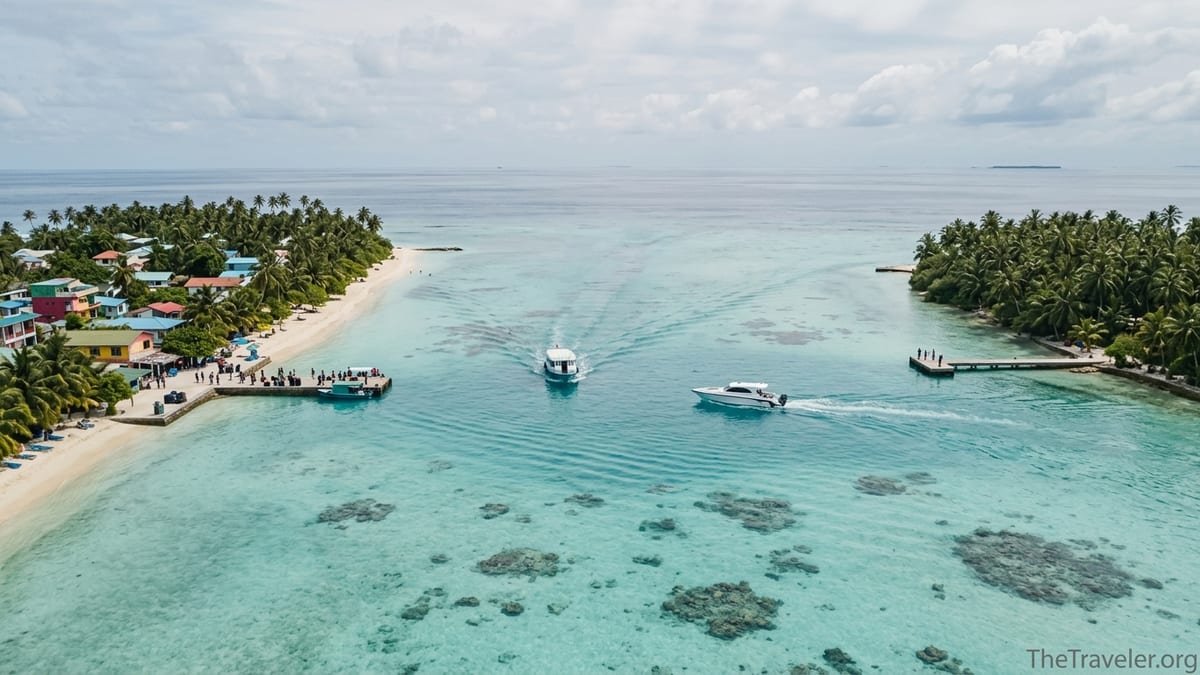
Most visitors still fly into Velana International Airport near Malé and go straight to a private resort. Island hopping works differently. You base yourself on inhabited local islands such as Maafushi, Rasdhoo, Thoddoo, Ukulhas, Dhigurah or Fulhadhoo, staying in guesthouses and using public ferries, shared speedboats and occasional domestic flights to move between atolls.
Guesthouse tourism on inhabited islands has expanded quickly since regulations were relaxed, and popular islands now have dozens of small hotels, dive centers and excursion operators. On Maafushi, for example, there are more than 60 guesthouses at a range of price points, with bikini beaches, restaurants and daily excursions to sandbanks and resort day trips. Rasdhoo and Thoddoo in Alif Alif Atoll offer strong diving and snorkeling, while Dhigurah in South Ari is known for whale shark excursions.
Transport is not as casual as in Thailand or Indonesia. You do not simply flag down a speedboat anywhere you like. Public ferries run on fixed schedules, often only a few times per week, and most shared speedboats operate as scheduled services between specific islands and Malé. For point to point hops between local islands, you usually either route via Malé or charter a private speedboat, which can be costly.
This means sensible island hopping focuses on one or two neighboring atolls, using well established shared speedboat routes and allowing transfer days when you move from one base to the next. Trying to cross the entire country in one holiday looks tempting on a map but in reality would devour days of your time in transit.
Ferries, Speedboats and Flights: What You Need to Know
Public ferries operated by MTCC are the cheapest way to move between islands. Fares for routes around Malé Atoll and nearby islands are typically only a few US dollars per person one way. For example, a ferry from Malé to a nearby local island in South Malé Atoll is often in the range of 2 to 3 US dollars, but journey times can be 60 to 90 minutes each way and services usually do not run every day. Ferries are also weather dependent and slower in rough seas.
Shared speedboats are the workhorse of independent travel. These scheduled boats link Velana / Malé with popular local islands such as Maafushi, Gulhi and Guraidhoo in South Malé, or Rasdhoo, Ukulhas and Thoddoo in Alif Alif. A shared speedboat from the airport area to Maafushi typically takes about 35 to 45 minutes and, as of 2025 to 2026, often costs around 20 to 30 US dollars per person one way when booked directly with a local operator or guesthouse. Longer routes to Rasdhoo, Ukulhas or Thoddoo can cost roughly 40 to 60 US dollars per person one way.
Private speedboat charter is the flexible but expensive option. For a couple or small group, a private boat from the airport to a popular local island can run into the hundreds of dollars one way, and long inter atoll trips easily exceed 1,000 US dollars. This is why most travelers planning multi island trips try to align with scheduled shared services whenever possible, only resorting to private charter when they are part of a larger group or when schedules make it unavoidable.
Domestic flights are useful for reaching more remote atolls such as Baa, Dhaalu or Addu, or for minimizing sea time in rough season. Airlines like Maldivian and Manta Air typically include about 20 to 23 kilograms of checked baggage plus around 5 kilograms of hand luggage on domestic routes, with excess charged by weight. Flight times from Malé to domestic airports such as Dharavandhoo in Baa Atoll are often around 20 to 30 minutes, but you should factor in check in, waiting and transfer time from airport to island by speedboat or dhoni.
Planning Around Transfer Days, Luggage and Practicalities
Transfer days are an unavoidable part of island hopping. If you are moving from Maafushi to Rasdhoo via Malé, for example, you might take a 9:00 shared speedboat from Maafushi to the airport, wait an hour or two, then board a midday shared speedboat north to Rasdhoo, arriving mid afternoon. Realistically, most of that day will be consumed by transfers and waiting even though your actual time on the water might be two hours or less.
The most successful itineraries build around fixed speedboat or ferry schedules rather than trying to squeeze excursions on transfer days. Plan your snorkeling trips, sandbank visits or whale shark excursions on full days when you know you will not be packing and moving. When you do have to transfer, treat it as a travel day, arrive on your next island by mid afternoon and simply walk the beach or settle into your guesthouse.
Luggage is another practical consideration. On shared speedboats there is usually no strict luggage check, but captains may limit very large or heavy items, particularly surfboards or dive gear, and you will be responsible for lifting bags on and off the pier. On domestic flights, standard baggage allowances apply and overweight surfboards or dive equipment can add noticeable extra cost. Soft sided suitcases or duffel bags in the 15 to 20 kilogram range per person are easiest to manage between piers, guesthouses and small jetties.
For payments, cash in Maldivian rufiyaa and a card are both useful. Many guesthouses and dive centers accept international cards for accommodation and organized excursions, but you will want local currency for ferries, small cafés and island shops. ATMs are available on some larger islands such as Maafushi and Ukulhas, yet it is still wise to withdraw in Malé or at the airport at the start of your trip to avoid any outages.
Choosing Islands That Link Well Together
When putting together a route, the easiest combinations are those that share strong speedboat links to Malé so that you can travel in a simple triangle: airport to island A, island A to Malé, Malé to island B, and finally back to the airport. Examples include pairing Maafushi in South Malé Atoll with Rasdhoo or Ukulhas in Alif Alif Atoll, or combining Thoddoo’s farming and beaches with Ukulhas’ reef and then finishing with a night in Hulhumalé.
Another practical strategy is to stay within one atoll and move by local dhoni or short speedboat rides. In South Ari Atoll, travelers commonly combine Dhigurah, Dhangethi and Mahibadhoo using locally arranged transfers that might cost similar to shorter shared speedboats from Malé but avoid the need to backtrack all the way to the capital. A week spent only in South Ari can include whale shark excursions from Dhigurah, manta and reef dives from Dhangethi and a quieter final stop on a smaller island.
If you want to experience very different sides of the Maldives in one trip, it can be worth pairing a local island with a short resort stay. An example is spending several nights in a guesthouse on Thoddoo or Ukulhas and then booking one or two nights at a nearby resort that can be reached on the same shared speedboat route or a short resort transfer boat. This lets you enjoy a classic overwater bar or house reef while keeping overall costs more moderate.
More ambitious itineraries using domestic flights, such as combining Baa Atoll for manta rays with South Ari for whale sharks and then a final night near Malé, are best for trips of 10 to 14 days. In these cases you will likely need at least one domestic flight leg plus local boat transfers on each end, so budget a full day for each major move and confirm flight schedules with airlines or your guesthouses in advance.
Sample 7 Day Maldives Island Hopping Route
A realistic 7 day itinerary works best when it focuses on two islands plus an arrival or departure night near the airport. One option is to combine a well connected South Malé island with a snorkeling focused Alif Alif island, using only shared speedboats.
On Day 1, arrive at Velana International Airport and take an afternoon shared speedboat to Maafushi in South Malé Atoll. Check into a guesthouse close to the bikini beach, stretch your legs and keep the evening light. Maafushi has many casual restaurants where a grilled fish dinner might cost the equivalent of 10 to 15 US dollars per person.
Days 2 and 3 are full Maafushi days. On one day, join a half day snorkeling trip to a sandbank and nearby reefs, with gear and a simple lunch included. Prices vary by operator, but expect something in the range of 25 to 60 US dollars per person depending on group size and inclusions. On the other day, you might book a resort day visit or focus on water sports such as kayaking and paddleboarding straight from the beach.
On Day 4, take a morning shared speedboat back to Malé or the airport jetty and connect with a second shared speedboat to Rasdhoo or Ukulhas. Both islands are popular bases in Alif Alif Atoll, with bikini beaches and snorkeling from shore. Plan for this to be primarily a transfer day, with perhaps a sunset beach walk on arrival.
Days 5 and 6 are for exploring your second island. In Rasdhoo you might join a manta or hammerhead dive trip in season or opt for a relaxed house reef snorkeling excursion. In Ukulhas you can walk the length of the island in under an hour and spend long afternoons swimming off the sandy western tip. On Day 7, take a morning shared speedboat back to the airport and connect with your flight home, leaving a buffer of several hours between boat arrival and flight departure in case of delays.
Sample 10 Day Route: South Ari and Maafushi
With 10 days you gain the flexibility to explore South Ari Atoll, one of the easiest areas to see whale sharks and manta rays on organized excursions. A popular plan is to combine Dhigurah or Dhangethi in South Ari with Maafushi in South Malé Atoll, splitting time roughly half and half.
On Day 1, fly into Malé and connect with a scheduled speedboat or domestic flight plus speedboat combination to Dhigurah. This island has a long sandbar style beach and several dive centers that arrange daily whale shark trips. Check in, get oriented and rest after a long travel day.
Days 2 to 4 can be based on Dhigurah. Aim for one full whale shark excursion with a reputable operator, ideally starting early in the morning for calmer seas. Another day might be devoted to two tank diving on nearby reefs, while a third is kept more relaxed with time on the beach and perhaps a short sunset boat trip. South Ari excursions can be more expensive than simple snorkeling trips near Malé, so budget accordingly.
On Day 5, transfer from South Ari toward Malé. Depending on schedules and your guesthouse’s arrangements, this may involve a direct shared speedboat from Dhigurah to the airport area or a combination of local boats linking via Mahibadhoo. Treat this as a travel day and aim to arrive in Maafushi by mid or late afternoon.
Days 6 to 9 are Maafushi based. Because you have already had your big wildlife experiences in South Ari, this section can be more about beach time, café hopping and occasional excursions. You might book one budget friendly snorkeling trip, one sandbank day with a picnic lunch and leave at least one day free for nothing more than swimming and walking the island. On Day 10, take an early speedboat back to the airport. If your flight is very early in the morning, consider spending Day 9 night in Hulhumalé so you are closer to the terminal.
Sample 14 Day Route: Two Atolls plus a Resort Taste
In two weeks you can comfortably experience three distinct sides of the Maldives: a lively local island with plenty of services, a quieter remote feel island in a different atoll and a short stay at a resort before flying out. The key is to minimize backtracking and accept that you will still have two or three full transfer days spread through the trip.
One example is to start in Alif Alif Atoll, move to Baa or South Ari and then finish near Malé. Days 1 to 4 could be spent on Thoddoo and Ukulhas. Fly into Malé, take a shared speedboat to Thoddoo and spend two nights enjoying its palm lined farming landscape and wide bikini beach. Then hop by short local boat or scheduled speedboat to Ukulhas for another two nights focused on the island’s excellent house reef snorkeling and relaxed cafés.
On Day 5, travel via Malé to your second atoll. If you choose Baa Atoll for manta season, for instance, you might take a domestic flight from Malé to Dharavandhoo and then a resort or guesthouse boat to your chosen island. Days 6 to 9 are then spent in Baa, either at a mid range guesthouse island with access to Hanifaru Bay excursions in season or at an all inclusive resort if your budget allows. Plan at least one or two days on the water for manta or reef trips, with quieter beach days in between.
On Day 10, return to the Malé area and transfer to a final local island or resort. You could opt for Maafushi or Gulhi if you want a lively local scene or choose a resort within a short speedboat distance for more seclusion. Days 11 to 13 are slow days: swimming, snorkeling and perhaps one last sunset cruise. On Day 14, take the short transfer back to the airport. Because domestic flight schedules and resort boats change seasonally, this multi atoll plan requires more advance coordination with each property to ensure connections line up.
Travelers who prefer to avoid domestic flights can instead design a 14 day loop that stays within speedboat reach of Malé, for example combining Maafushi and Guraidhoo in South Malé with Rasdhoo and Thoddoo in Alif Alif. You would still want to cluster islands by atoll, spending several nights in each rather than changing bases every day or two. This keeps transport costs down and maximizes your actual time on the beach or underwater.
The Takeaway
Island hopping in the Maldives rewards travelers who plan around real world logistics rather than trying to force a dream route onto a fixed schedule. Public ferries are slow but cheap, shared speedboats are the main practical link between Malé and popular islands, and domestic flights open up more distant atolls for trips of 10 days or longer. Guesthouses on islands such as Maafushi, Rasdhoo, Thoddoo, Ukulhas and Dhigurah now have enough tourism infrastructure to make independent travel comfortable while still feeling local and grounded.
Before you book, sketch your ideal length of stay on each island, then check actual ferry and speedboat times for your travel dates and adjust until the pieces fit. Leave buffers around transfers, keep your luggage manageable and work closely with your guesthouses, who often know the most up to date local transport options. With a realistic, well sequenced route, your Maldives holiday can include more than one island’s sands and lagoons without turning into a stressful race between boats.
FAQ
Q1. Is island hopping in the Maldives realistic for a first time visitor?
Yes, as long as you focus on well connected islands and build your itinerary around existing shared speedboat and ferry routes rather than trying to improvise on arrival.
Q2. How far in advance should I book ferries and speedboats?
Public ferries usually do not need very early booking, but shared speedboats can fill up in high season, so reserving at least a week or two ahead through your guesthouse is sensible.
Q3. Are public ferries comfortable enough for travelers with luggage?
Public ferries are basic but widely used by locals and visitors. They have bench seating and space for luggage, although boarding with large suitcases can be awkward at some simple piers.
Q4. How much should I budget for inter island transfers on a one week trip?
On a simple 7 day route using only shared speedboats near Malé, many travelers spend roughly 80 to 150 US dollars per person in total on boat transfers, depending on islands and operators.
Q5. Can I rely on island hopping without domestic flights?
Yes if you stay within atolls reachable by speedboat from Malé, such as Malé Atoll and Alif Alif. For more remote atolls, domestic flights save significant time and sea crossing distance.
Q6. What is the best season for island hopping in the Maldives?
Calmer seas generally occur from about December to April, which makes boat travel more comfortable, though this period is also busier and accommodation prices are often higher.
Q7. Do I need travel insurance that covers boat transfers?
It is strongly advisable. Look for a policy that clearly covers domestic transport disruptions, including missed connections caused by weather affecting boat or flight schedules.
Q8. Are there luggage limits on shared speedboats?
There are usually no formal weight checks, but captains may restrict very bulky items. Traveling with one medium suitcase or duffel plus hand luggage per person is generally acceptable.
Q9. Can I drink alcohol on local islands while island hopping?
No, alcohol is not served on inhabited local islands, though some day trips or floating bars offshore may sell it. Resorts on private islands are licensed to serve alcohol to guests.
Q10. Is it possible to add a resort stay to a guesthouse based itinerary?
Yes, many travelers spend most nights in guesthouses and add one or two nights at a resort that shares the same speedboat route or can be reached with a short additional transfer.