


The Maldives has long been a bucket list destination for divers chasing sharks, mantas and year-round warm water. Yet the experience you get varies dramatically depending on whether you base yourself on a tiny local island like Rasdhoo, go all-in on tiger sharks at Fuvahmulah, focus on whale sharks around Dhigurah and Maamigili, or book a week on a liveaboard cruising multiple atolls. This guide compares the strongest bases for big-animal encounters and channel diving, and looks at how they stack up on marine life, logistics, dive operators and accommodation.
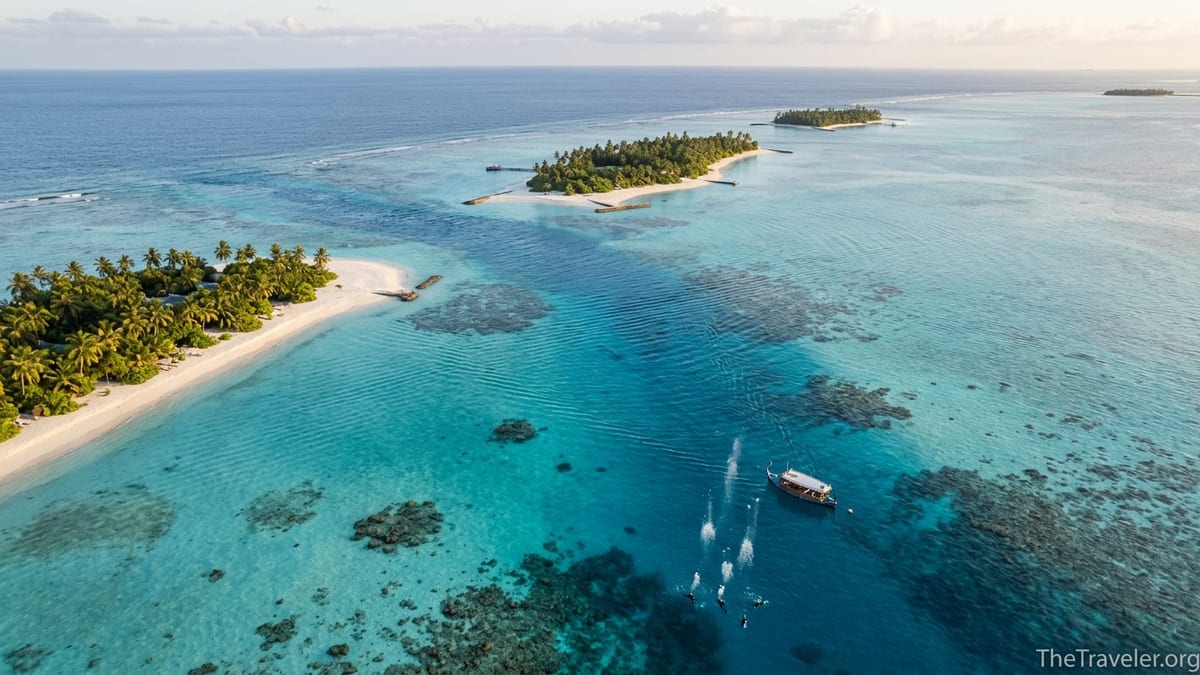
How Maldives Diving Works: Channels, Seasons and Big Animals
The Maldives is a long chain of atolls running across the equator, cut by deep channels where ocean currents funnel through. These channels, known locally as kandus, are where nutrient-rich water brings in sharks, mantas and schooling fish. Central atolls such as North Ari, South Ari, North Male and Vaavu have made the country famous for reliable shark walls, manta cleaning stations and occasional hammerhead sightings. Further south, atolls like Fuvahmulah and Huvadhoo add pelagic species such as tiger, thresher and oceanic manta rays.
Conditions are shaped by two monsoon seasons rather than temperature. From roughly December to April, the northeast monsoon brings calmer seas and clearer water on the eastern sides of the atolls, which is often best for classic blue-water channel dives and schooling grey reef sharks. From about May to November, the southwest monsoon flips the currents and pumps plankton onto the western sides. That can reduce visibility but supercharges manta and whale shark encounters, particularly around western reefs of Ari and Baa Atolls, including famous aggregations at Hanifaru Bay.
Water temperatures normally sit around 27 to 29 degrees Celsius, so most visiting divers are comfortable in a 3 mm wetsuit or even a shorty. What matters far more is current. On many of the best channel sites, guides use reef hooks so you can clip in at 20 to 30 metres and watch sharks glide past with minimal finning. Most reputable Maldivian dive centers will only take Advanced Open Water divers with at least 30 to 40 logged dives into the strongest channels, and many make nitrox almost standard for three-dive days.
For visitors deciding between a land-based island stay and a liveaboard, the key trade-off is variety versus simplicity. Liveaboards move across several atolls in one trip, giving you a mix of channels, pinnacles and cleaning stations. Island-based diving is more relaxed and often cheaper overall, but you will largely repeat variations of the same local sites. Where you choose to stay therefore has an outsized impact on what you see underwater.
Rasdhoo: Compact Atoll with Hammerheads and Channels
Rasdhoo is a small atoll just off the northeastern edge of North Ari, reachable by public ferry or speedboat transfer from Male. It is one of the most popular local islands for independent divers because you can walk from simple guesthouses to the dive jetty, yet still access classic Maldivian megafauna. The atoll is particularly famous among experienced divers for early morning hammerhead dives at a site commonly known as Hammerhead Point or Rasdhoo Madivaru, where groups drop to around 25 to 30 metres at sunrise to watch for cruising scalloped hammerheads in the blue.
Beyond hammerheads, Rasdhoo offers a compact but varied set of sites that include channel walls, pinnacles and outer reefs. On Rasdhoo Channel, experienced divers often hook in to watch grey reef sharks, white-tip reef sharks and eagle rays in medium to strong current, while calmer days allow for more relaxed drifts to search for turtles and schooling jacks. Nearby thilas, or submerged pinnacles, host schools of fusiliers, snappers and occasional mobula rays, with visibility often in the 20 to 30 metre range in the dry season.
Dive infrastructure on Rasdhoo has grown steadily. Several small operators run two or three-dive day trips plus night dives, often bundled with accommodation in dive lodges. Prices in 2026 typically run in the region of 45 to 60 US dollars per dive including tanks and weights, with 10-dive packages working out more economical. Many centers offer nitrox at a modest daily surcharge and provide rental dive computers, which is important when doing repetitive deep channel dives.
On land, Rasdhoo remains a local island, not a resort, so travellers should expect conservative dress codes away from the designated bikini beach, simple restaurants serving curries and grilled fish, and basic but clean guesthouses in the 60 to 120 US dollars per night range for a double. This setup appeals to divers who want multiple hammerhead attempts without resort prices. Rasdhoo also works well as a short add-on before or after a central atolls liveaboard, with many visitors scheduling two or three days of land-based hammerhead dives around a week on a boat.
Fuvahmulah: Tiger Shark Capital at the Edge of the Indian Ocean
Fuvahmulah, a single large island in the far south of the Maldives, has become synonymous with tiger shark diving. Unlike the ring-shaped atolls further north, Fuvahmulah rises almost directly out of very deep ocean, which explains the remarkable catalogue of pelagic life reported here, from tiger, thresher and hammerhead sharks to mola mola and oceanic manta rays. Several local operators now run daily tiger shark dives tailored to experienced divers, often using baiting techniques at a fixed site along the reef slope to keep sharks passing predictably through the viewing area.
Most visitors reach Fuvahmulah via a domestic flight of around 1.5 hours from Male to the island’s small airport. Once on the island, logistics are straightforward: dive centers typically include transfers, full gear rental and two or three guided dives per day in package prices that may average between 1300 and 2000 US dollars per week for diving plus guesthouse accommodation, depending on season and inclusions. Groups often plan five to six days of diving to maximise chances of varied encounters, mixing tiger-focused dives with blue-water or reef wall dives looking for threshers and schooling tuna.
Diving here tends to be more advanced than on many central atoll reefs. Currents can be strong, surface conditions choppy, and depth control important on the deeper pelagic slopes. Many operators require at least 50 logged dives and Advanced certification, and strongly recommend nitrox. Safety has been an active topic, with Maldivian authorities reviewing shark-feeding practices and issuing guidelines in recent years, so responsible operators now emphasise clear briefings, strict positioning in the water column, and limited group sizes around the baiting area.
Topside, Fuvahmulah feels very different from the resort-focused central atolls. It is a lived-in island with motorbikes, small shops and local cafes, plus a scattering of diver-oriented guesthouses that offer air conditioned rooms and set meals. While there is no classic overwater bungalow scene, the atmosphere can feel more authentic and social, with divers gathering at communal dinners to share stories of that day’s tiger shark encounters. For many, the island is best treated as a stand-alone, shark-specific extension to a broader Maldives trip rather than a first-time introduction to the country’s diving.
Dhigurah and Maamigili: South Ari’s Whale Shark Corridor
The southern outer reef of South Ari Atoll is one of the most consistent areas in the Maldives for whale sharks. Islands such as Dhigurah and Maamigili sit close to a stretch of reef where these gentle giants cruise and feed, and a small industry of local guesthouses, dive centers and boat operators has grown up around this fact. While whale shark sightings are never guaranteed, many visitors planning four or five days of diving and snorkelling in the area report multiple encounters, particularly between roughly August and October on the western side of the atoll, and again during calmer periods around the monsoon transition.
Dhigurah, a long thin island with a beautiful sandbank at its southern tip, has become a favourite with independent divers and snorkellers who want a quieter, barefoot base. Guesthouses range from simple rooms to more design-focused boutique stays, with nightly rates roughly between 80 and 200 US dollars for a double, depending on standard and board plan. Local dive centers typically offer two or three boat dives per day to nearby reef and thila sites, alongside special whale shark search trips that may mix snorkellers and divers depending on regulations and conditions.
Maamigili, by contrast, is busier and more developed thanks to its domestic airport, which handles flights linking South Ari to Male. Its location near the whale shark zone has made it a practical overnight or short-stay option for travellers who want to minimise transfer times. Several guesthouses and small hotels now cater specifically to divers, offering packages that bundle airport pickup, accommodation and daily boat trips to the outer reef. Prices for standard boat dives in South Ari are usually in the 50 to 70 US dollars per dive range, with dedicated whale shark excursions sometimes costed as separate half-day trips.
Beyond whale sharks, South Ari delivers classic Maldives variety: reef manta cleaning stations, channels where grey reef sharks patrol, and pinnacles with dense fish life and occasional leaf scorpionfish, frogfish and nudibranchs. Many liveaboard itineraries labelled as “Best of Maldives” include a night or two along the South Ari outer reef precisely to maximise whale shark chances. For travellers who would rather sleep on land, Dhigurah and Maamigili provide direct access to this same corridor, with the trade-off of repeating a smaller set of sites compared with a multi-atoll safari boat.
Other Strong Bases: Vaavu, Baa and Central Atoll Liveaboards
While Rasdhoo, Fuvahmulah, Dhigurah and Maamigili attract much of the attention, several other areas deserve consideration, especially if you are comparing land-based islands with liveaboard routes. Vaavu Atoll, southeast of Male, is known for high-energy channel dives such as Fotteyo Kandu, often rated among the country’s best for grey reef sharks, eagle rays and schooling barracuda. It also offers a well-known night dive with nurse sharks and stingrays around an outer reef jetty, which has become a fixture on many central itineraries.
North Male and South Male Atolls are the most accessible regions from the international airport and host many resort islands with on-site dive centers. While these atolls do not have the single huge draw of Fuvahmulah’s tiger sharks or South Ari’s whale sharks, they offer solid all-round diving with pinnacles, wrecks, manta cleaning stations and reliable reef shark encounters. Resorts like medium-range dive-focused properties often price two-tank boat trips in the 150 to 220 US dollars range including equipment, while independent guesthouse islands in the same atolls can offer day-boat diving for less.
Baa Atoll, to the northwest, has earned global fame for seasonal manta aggregations at Hanifaru Bay, a protected marine area where divers can no longer use scuba but snorkellers, under permit, may share the water with dozens of feeding mantas when conditions align. Many nearby resorts and local islands provide daily trips during the August to October peak, and several liveaboard itineraries time visits to coincide with that window. Outside Hanifaru, Baa offers thilas and channels with reef sharks, turtles and macro life, though currents are generally milder than on some southern atolls.
Liveaboards knit these regions together. Typical seven-night “Best of Maldives” trips depart from Male and loop through North Male, South Male, Ari and sometimes Vaavu, packaging mantas, reef sharks, pinnacles and at least an attempt at whale sharks. More specialised itineraries spend part of the year in the far south, linking Fuvahmulah and Huvadhoo during the period when conditions there tend to be more favourable. For divers balancing limited vacation time with a desire to see multiple marquee species, these boats remain one of the most efficient ways to sample the country’s highlights.
Comparing Dive Styles, Skills and Safety Across Islands
Although they all sit within the same country, Rasdhoo, Fuvahmulah, Dhigurah and Maamigili offer quite different diving styles. Rasdhoo is about compact-atoll variety with a strong focus on early-morning deep blue-water hammerhead searches and medium-to-strong channel currents. Dhigurah and Maamigili are centred on the outer reef and whale sharks, with plenty of easy reef dives that suit less experienced divers. Fuvahmulah is a specialised pelagic destination where the headline is close passes by large tiger sharks and the supporting cast can include other deepwater species.
Skill expectations mirror these differences. A newly certified Open Water diver may find Dhigurah’s shallow reefs and some South Ari sites a comfortable and rewarding environment, especially with conservative depth limits. The same diver might still be able to dive around Rasdhoo on sheltered reefs but could be excluded from the most current-prone channels or from hammerhead dives below 25 metres. Fuvahmulah operators, by contrast, often want Advanced certification, documented experience in currents, and a number of logged dives to accept a booking for tiger shark programmes.
Across the Maldives, safety standards vary, so it pays to research operators carefully. Reputable centers maintain well-serviced compressors and boats, include surface oxygen and first aid equipment on every trip, and limit groups to a manageable ratio such as one guide to four or six divers. They will also run thorough briefings that cover current direction, expected depths, emergency procedures and signals. Because many signature sites are relatively deep, divers should realistically factor in a dive computer, SMB and reef hook among their essential kit, whether rented or brought from home.
Insurance is another important consideration that visitors sometimes overlook. A number of Maldivian dive centers now actively request proof of diving accident insurance that includes hyperbaric treatment before allowing guests onto more advanced dives. Given the distances involved between remote islands and the larger medical facilities, many experienced travellers pay for short-term dive insurance policies timed around their trip. While emergency response in the Maldives has improved over the past decade, conservative depth limits, good buoyancy control and cautious no-deco planning remain critical to safe enjoyment of its deeper channels.
Diver-Friendly Accommodation, Costs and Practical Logistics
Accommodation options on these islands span simple guesthouses on local islands to high-end resorts and liveaboard cabins. On Rasdhoo, Dhigurah and Maamigili, most visitors stay in guesthouses or small hotels. These usually provide air conditioning, private bathrooms, breakfast and Wi-Fi, with some offering full-board packages aimed at divers. A typical diver-focused guesthouse package might run to around 900 to 1500 US dollars per person for a week including seven nights’ accommodation and 10 to 12 boat dives, depending on season and room type.
Fuvahmulah packages skew higher due to the remoteness and specialised nature of the diving. Weekly stays including two or three tiger shark dives per day, airport transfers, most meals and basic equipment rental can climb to the mid or high two-thousands of US dollars per person, particularly in peak months. Liveaboards covering central atolls may start around 1800 to 2500 US dollars for seven nights on a budget or mid-range boat with three dives a day, rising significantly for luxury vessels with spacious cabins, spa facilities and gourmet food.
Transfers are a key planning detail. Dhigurah and Maamigili are normally accessed via domestic flights or speedboats from Male. Schedules and operators change relatively frequently, so travellers often book transfers through their guesthouse or dive center rather than piecing them together independently. Rasdhoo can be reached by public ferry on certain days of the week or by scheduled speedboat services that typically take under two hours, which keeps costs lower. Fuvahmulah and many deep south atolls require domestic flights, adding both time and cost but opening up a very different style of diving.
On all these islands, visitors should remember local culture. Alcohol is generally available only at resort islands and liveaboards, not on local islands like Rasdhoo, Dhigurah, Maamigili and Fuvahmulah. Dress codes are modest away from designated tourist beaches, and Friday prayer times may shift shop and ferry opening hours. Most dive centers accept major credit cards, but keeping some local currency on hand for cafes and small purchases remains wise. Taken together, these factors create a framework within which divers can tailor trips to their budget, comfort level and appetite for adventure.
The Takeaway
Choosing the best Maldives island for diving hinges on what you most want to see and how you like to travel. Rasdhoo delivers a compact atoll with accessible hammerhead encounters and classic channels, ideal for experienced divers who want to focus on early-morning big-fish dives without resort prices. Dhigurah and Maamigili sit beside South Ari’s whale shark corridor, giving both newer and seasoned divers a realistic chance of sharing the water with these giants while enjoying a mix of reefs and manta cleaning stations.
Fuvahmulah stands apart as a dedicated pelagic outpost, rewarding confident, current-savvy divers with some of the most intense tiger shark encounters available in tropical waters, alongside the possibility of other deepwater visitors. Meanwhile, liveaboards that link central and, in season, southern atolls remain the most efficient way to combine South Ari whale sharks, Rasdhoo hammerheads, Vaavu channels and perhaps even a taste of Fuvahmulah or Huvadhoo on a single trip.
For many travellers, the most satisfying approach is a hybrid itinerary that pairs a week on a central atolls liveaboard with a few extra days on a chosen island base. That might mean hammerhead hunting on Rasdhoo, slow beach days between whale shark trips on Dhigurah, or a focused tiger shark programme on Fuvahmulah. With thoughtful planning around seasons, skill level and budget, the Maldives still offers some of the world’s most memorable warm-water diving, from shark-filled channels to manta clouds and beyond.
FAQ
Q1. Which Maldives island is best if I want to see both whale sharks and mantas?
Dhigurah and Maamigili in South Ari are strong bets for whale sharks and also have access to manta cleaning stations, while many central atoll liveaboards include manta-focused sites on the same trip.
Q2. Is Rasdhoo suitable for beginner divers?
Rasdhoo has some sheltered reefs that beginners can enjoy, but its signature hammerhead and channel dives often involve depth and current, so it is more comfortable for Advanced divers with some experience.
Q3. How many days should I plan for Fuvahmulah tiger shark diving?
Most visitors plan at least four to six days of diving in Fuvahmulah to allow for changing conditions and to mix dedicated tiger shark dives with other pelagic or reef wall sites.
Q4. Do I need a liveaboard to dive the best sites in the Maldives?
You can see whale sharks from land-based bases like Dhigurah and tiger sharks from Fuvahmulah, but a liveaboard is the most efficient way to combine multiple atolls and dive a wider variety of channels and pinnacles.
Q5. What certification level is recommended for Maldives channel diving?
Advanced Open Water certification with recent experience in currents is recommended for most channel dives, especially around Rasdhoo, Vaavu and the deeper sites of the southern atolls.
Q6. When is the best time of year to visit South Ari for whale sharks?
Whale sharks can be seen year-round in South Ari, but many operators report increased activity on the western outer reef during the southwest monsoon months when plankton levels rise.
Q7. Are local-island guesthouses comfortable enough for a dedicated dive trip?
Yes, many guesthouses on Rasdhoo, Dhigurah, Maamigili and Fuvahmulah now cater specifically to divers, with air conditioning, hot water, reliable Wi-Fi and convenient dive center partnerships.
Q8. How much should I budget per dive in the Maldives?
Land-based fun dives generally cost around 45 to 70 US dollars per dive, while liveaboard packages average out slightly lower per dive but require a larger upfront trip cost.
Q9. Is nitrox necessary for diving in the Maldives?
Nitrox is not mandatory but is strongly recommended, as many dives are in the 20 to 30 metre range and itineraries often include three dives per day, which benefits from reduced nitrogen loading.
Q10. Can non-divers enjoy these islands while their partners dive?
Yes, non-divers can enjoy snorkelling, sandbanks and beaches on Dhigurah, Maamigili and Rasdhoo, though Fuvahmulah is more focused on serious diving and less on conventional resort-style leisure.