


Planning a Maldives holiday with children is very different from choosing a romantic escape. Calm lagoons, short and predictable transfers, family-friendly guesthouses, kid-appropriate activities, and reliable medical access suddenly matter more than the most dramatic overwater villa. This guide focuses on real islands and concrete logistics, so parents can compare the best Maldivian options for younger children and choose a base that is beautiful and practical at the same time.
How to Choose a Family-Friendly Island in the Maldives
For families, the most important decision is not the individual guesthouse or resort but the island itself. A good family island combines a sheltered lagoon with sandy access into the water, minimal boat traffic close to shore, and infrastructure that lets you walk to restaurants, small shops, and the jetty without long transfers or complicated arrangements. In practice, that usually means islands in North and South Malé Atolls or nearby atolls such as Vaavu and Ari, which can be reached by scheduled speedboat in under 90 minutes from Malé.
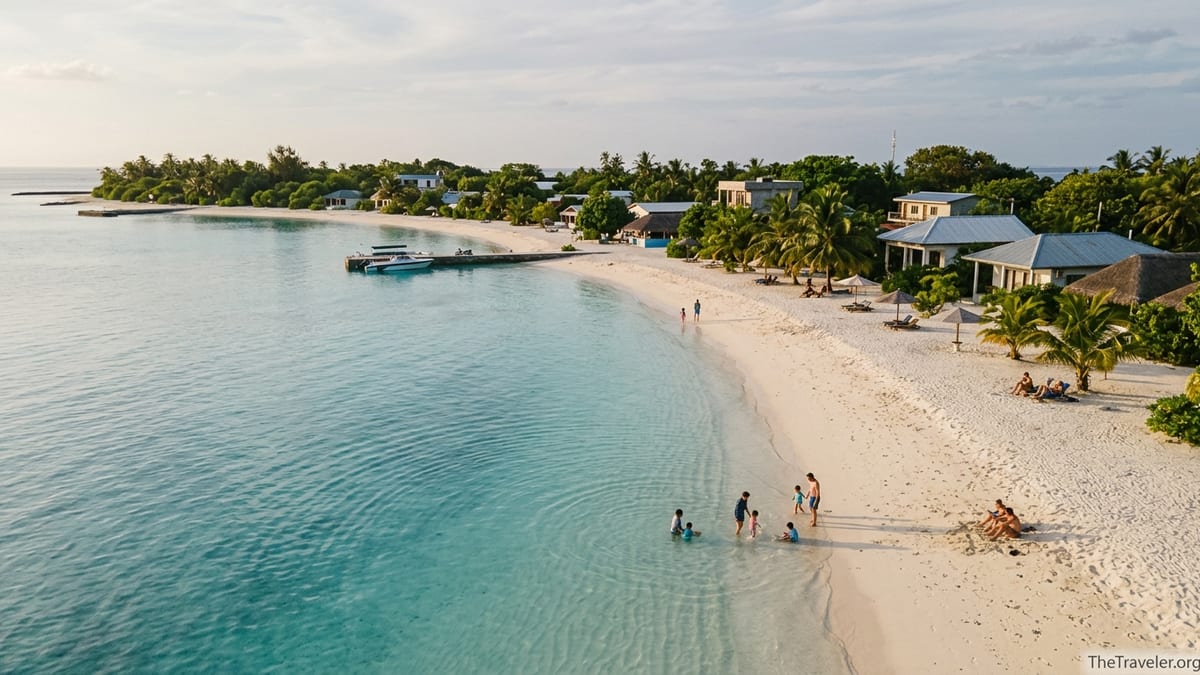
Parents with toddlers and early swimmers should look for a wide, shallow “bikini beach” zone where the depth stays below an adult’s waist for at least 10 to 15 metres, with a sandy bottom rather than broken coral. On islands like Maafushi and Ukulhas, for example, the main tourist beach sits inside a turquoise lagoon that is naturally protected by a reef further offshore, so small children can paddle while parents supervise from a shaded lounger. The trade-off is that these calm lagoons are sometimes less dramatic for advanced snorkelers than a steep outer reef, but for most families safety and ease win.
Transfer time is just as important. After a long overnight flight, many parents prefer to avoid seaplanes and domestic flights. A number of local islands and some family resorts can be reached in about 30 to 60 minutes by shared speedboat from the airport, at typical prices around 25 to 40 US dollars per adult each way and half or free for young children, depending on the operator. Public ferries can be much cheaper, often only a few dollars per person, but they are slower and run on limited schedules that do not always match flight arrivals.
Finally, think about medical access and day-to-day convenience. Several inhabited islands have small health centres and pharmacies, and many more sit within one to two hours’ boat ride of the main hospitals in Malé or Hulhumalé. For a family with a child who occasionally needs a doctor, knowing there is a clinic on the island or a reliable speedboat back to the capital provides real peace of mind.
Maafushi: The Most Practical All-Rounder for First-Time Families
Maafushi, in South Malé Atoll, is often described as the most practical starting point for families visiting the Maldives on a mid-range budget. The island is reached in about 30 minutes by shared speedboat from the airport, with several operators running multiple departures per day from Malé and Velana International. Tickets are generally in the region of 25 to 30 US dollars per adult one way, with reduced rates for children, which keeps costs manageable compared with seaplanes. There is also a slower public ferry that takes around 90 minutes and costs only a few dollars per person, though it usually runs once a day and not on Fridays.
For parents, one of Maafushi’s main attractions is its broad, purpose-designed bikini beach facing a calm lagoon. The sandy entry shelves very gently, so younger children can sit and play at the water’s edge or wade in gradually without encountering sharp coral. The beach is lined with simple loungers and umbrellas belonging to nearby guesthouses, which typically cost between 50 and 120 US dollars per night for a family room depending on the season and proximity to the beach. Many of these guesthouses, such as small family-run properties on the north shore, offer breakfast included and can arrange baby cots or extra beds on request.
Families will also appreciate Maafushi’s choice of restaurants and easy access to excursions. Along the main beach road you will find casual cafés serving grilled fish, fried rice, fresh juices, and simple children’s dishes like pasta or chicken fried rice for roughly 6 to 12 US dollars per plate. Several dive and excursion centres operate daily trips to sandbanks, turtle and reef snorkelling sites, and even seasonal manta or whale shark excursions in nearby atolls, though those longer trips can involve two to three hours on the boat and are better suited to older kids. On the island itself, there are small supermarkets where you can buy nappies, snacks, and sunscreen, which avoids packing everything from home.
In terms of health and safety, Maafushi has a local health centre and pharmacy, and in more serious situations, families can be transferred to the hospitals in Malé or Hulhumalé in around 30 to 60 minutes by speedboat, weather permitting. The island’s popularity does mean it is busier than quieter local islands and the beach can feel lively in high season, but the trade-off is a very smooth, well-supported experience for first-time visitors with children.
Gulhi and Fulidhoo: Smaller Islands and Softer Pace
Families who like the idea of South Malé Atoll but prefer a quieter environment than Maafushi should consider nearby Gulhi. Gulhi is a small inhabited island a short ride away by local ferry or speedboat, with a reputation for having a particularly pretty stretch of white sand and a wide lagoon that stays calm most of the year. The beach is only a few minutes’ walk from most guesthouses, and the shallow water makes it easy for parents to supervise small children close to shore. There are fewer restaurants than on Maafushi, but you can still find simple cafés serving curries, noodles, and grilled fish at moderate prices.
Accommodation on Gulhi is typically in small guesthouses with perhaps 6 to 15 rooms, many of which are family-owned. Nightly rates for a standard family room often sit in the 60 to 120 US dollar range, depending on the season and whether meals are included. Because the island is compact, walking distances are very short, which can be a real advantage with tired toddlers in the evening. The island is also close enough to Maafushi and Malé that arranging a private speedboat for families with specific flight times is relatively straightforward, though public ferries remain the cheaper option for flexible itineraries.
Further out, Fulidhoo in Vaavu Atoll offers a different style of small-island experience while still remaining accessible. It lies around an hour and a half by speedboat from Malé on typical shared transfers, and the island is known for its large natural lagoon, used historically as a safe harbour. From a family perspective, this translates into broad, protected shallows that look like a turquoise swimming pool on calm days. A bikini beach on the island’s outer edge provides soft sand and gentle waves, and the island’s size keeps noise and vehicle traffic low, with only occasional bicycles and handcarts.
Fulidhoo has a basic health centre and pharmacy, which is reassuring for parents, as well as a small selection of guesthouses that generally price in the 70 to 150 US dollar range for double or family rooms, depending on amenities. You will find a handful of local eateries where a family of four can comfortably eat for 25 to 40 US dollars, ordering shared curries, rice, and fresh juice. Boat excursions here tend to focus on snorkelling the outer reefs, visiting sandbanks, and occasionally watching traditional drumming performances, which can be memorable cultural experiences for older children.
Ukulhas and Thoddoo: Beach-Focused Islands with Calm Lagoons
In North Ari Atoll, the islands of Ukulhas and Thoddoo are popular with families who want an excellent beach and good snorkelling but are still prepared to take a slightly longer boat ride from Malé. Shared speedboats typically take around 80 to 90 minutes, with prices often in the region of 40 to 60 US dollars per adult each way. The journey is longer than to Maafushi or Gulhi, but many parents judge that the payoff in terms of beach quality and atmosphere is worth it, especially for stays of a week or more.
Ukulhas is particularly known for its long, west-facing bikini beach, which curves around a shallow lagoon with soft sand underfoot. The lagoon remains calm under normal conditions, and there are zones where the water stays shallow enough for very young children to splash safely. Families often choose guesthouses just behind the tree line that offer two-bedroom suites or connecting rooms, many priced between 80 and 180 US dollars per night. Several properties provide free beach toys, snorkelling gear, and bicycles with child seats, which can be helpful if you are travelling light.
Thoddoo, by contrast, is a larger agricultural island ringed by palms and fruit plantations, with idyllic beaches on its outer shores. The main family-friendly bikini beach sits on a side of the island where the lagoon is particularly tranquil and framed by thick vegetation, which gives natural shade during the day. Because Thoddoo is bigger, the walk from guesthouses in the village centre to the beach can take 10 to 20 minutes, so it suits families with slightly older children or those happy to use bicycles. On the plus side, there is a good range of local produce, and children may enjoy seeing watermelons and papayas growing just inland from the beach.
Both Ukulhas and Thoddoo have small health posts or clinics, and in an emergency a speedboat evacuation to the regional hospital or to Malé can be organised through guesthouses or local authorities. Everyday needs such as bottled water, snacks, and basic pharmacy items are easy to find, though specialized baby products are not always available, so parents who rely on a particular formula or brand of nappies are wise to bring sufficient supplies from home.
Dhigurah and Other Family Options in Ari Atoll
South Ari Atoll, sometimes called Alifu Dhaalu, is famous for its marine life, including whale sharks and manta rays, and the inhabited island of Dhigurah combines that reputation with a long, beautiful beach that works well for active families. Dhigurah is a slim strip of land more than three kilometres long, with a fine sandy beach running much of its length and a sandbar extending into the lagoon at one end. Shared speedboats from Malé typically take around two hours, and the island also links to the domestic airport at Maamigili, which allows for short domestic flights followed by a quick boat ride for families who prefer to break up the journey.
The main bikini beach on Dhigurah looks out over a luminous lagoon that deepens gradually. Older children and confident swimmers can enjoy snorkelling from shore or by joining short boat trips to nearby reefs, while younger ones can stay in the shallows under an umbrella. Guesthouses and small boutique hotels line the island’s central trail, with many offering rooftop terraces, small plunge pools, and family suites. Prices for mid-range family rooms usually start around 100 US dollars per night and can rise to 200 US dollars or more in high season, particularly for properties that are closer to the beach.
Dhigurah has a local health centre and basic emergency care options, as listed by the Maldivian health authorities, and larger cases are typically referred to nearby regional hospitals or to facilities in Malé. Everyday life on the island is relaxed and low-key. Children can enjoy barefoot walks along the beach, watching reef fish and small rays in the shallows at sunset, and parents can join them for gentle bicycle rides from one end of the island to the other. Because whale shark excursions are a major draw in this atoll, they usually involve at least several hours on the water, so they are better suited to older children who are comfortable on boats and in deeper water.
Elsewhere in Ari Atoll, a number of private resort islands position their family villas on especially calm lagoon-facing shores. While this article focuses on local islands and guesthouses, parents comparing options will notice that some family-focused resorts advertise shallow sandy lagoons, kids’ clubs, and on-site medical clinics staffed by nurses or doctors. These can be attractive for families with higher budgets or very young children, though transfers by seaplane or domestic flight need to be factored in when considering nap schedules and overall travel time.
Calm Lagoons, Activities and Practicalities with Young Children
Across all of these islands, calm lagoons remain the single most important feature for families with younger children. On local islands, the designated bikini beach is usually sited on the most sheltered side, with sandbags, groynes, or natural reef formations reducing wave action. Parents should still remain cautious on windy days or at high tide, but in normal conditions these beaches resemble a giant paddling pool. Simple safety gear like float vests, arm bands, and reef-safe sunscreen will help children enjoy the water comfortably.
Activities for families tend to fall into three groups: gentle water play in the lagoon, half-day boat excursions, and land-based experiences. In the lagoon, younger kids can paddle, use inflatable toys, and try basic snorkelling close to shore with a mask and life vest. For older children and teenagers, guesthouses and local operators offer banana boat rides, stand-up paddleboards, and introductory scuba sessions in shallow water. A typical snorkelling excursion to a nearby reef or sandbank costs roughly 25 to 50 US dollars per person, including gear, with family discounts often available if you book as a group through your guesthouse.
On land, local islands provide a glimpse of Maldivian village life that resort islands sometimes lack. Children can visit small mosques from the outside, watch locals playing football in the late afternoon, or try traditional snacks at tiny cafés. Parents should remember that local islands are alcohol-free and more conservative than resorts, so appropriate beachwear is expected away from the bikini beach zones, which are clearly signposted. This environment can feel calm and low-key for families, with early nights and quiet streets once the sun has set.
Daily practicalities are generally straightforward. Most islands in this guide have at least one small supermarket selling bottled water, biscuits, noodles, juice, and basic toiletries, plus one or two pharmacies stocking common medicines. Prices are higher than in large regional hubs but still manageable: for example, a large bottle of water might cost around 1 US dollar and a simple sit-down meal in a local café between 6 and 12 US dollars per adult. Card payments are increasingly accepted in guesthouses and some restaurants, but it is wise to carry Maldivian rufiyaa or US dollars in small denominations for ferries, snacks, and tips.
Transfers, Medical Access and When to Consider a Resort
Transfer logistics can make or break a family holiday in the Maldives, especially with toddlers who have limited patience for long travel days. When comparing islands, check both shared speedboat schedules and public ferry timings ahead of time, and share your international flight details with your guesthouse so they can recommend the best option. A shared speedboat that meets your flight on the same afternoon is usually worth the extra cost compared with waiting until the next day for a cheaper ferry, particularly if you are travelling from Europe or North America and crossing multiple time zones.
From a medical perspective, parents should understand that most local islands have only a small health post or clinic staffed by nurses and sometimes a general practitioner. These can handle common issues such as minor infections, fever, or small injuries, but serious conditions are referred to regional hospitals or to the main hospitals in Malé and Hulhumalé. In practice, this usually involves a speedboat transfer, so comprehensive travel insurance that covers medical evacuation is important. Families of children with specific medical needs may feel more comfortable on islands that have a named health centre and regular boat links to the capital.
There are situations where a private resort island may be the most practical choice. Many family-oriented resorts maintain 24-hour clinics with an on-site doctor, lifeguards on the main family beach, and kids’ clubs that provide supervised activities throughout the day. Transfers are often arranged directly by the resort and can involve speedboats or seaplanes timed to your arrival. This level of support comes at a higher nightly price, often several hundred dollars or more, but some families find it worthwhile during the baby and toddler years or when travelling with multiple children and grandparents.
For most budget-conscious or mid-range families, however, the combination of a carefully chosen local island, a handful of well-reviewed guesthouses, and thoughtfully planned transfers strikes the best balance between cost, safety, and authentic experience. The key is to choose an island where the lagoon, infrastructure, and medical backup all align with your children’s ages and your own comfort level.
The Takeaway
Choosing the best Maldives island for a family trip means thinking beyond postcard photos. For younger children, a calm, shallow lagoon on a sheltered side of the island is far more important than the most dramatic overwater bungalows. Easy transfers by speedboat from Malé, a good spread of family guesthouses and restaurants within walking distance, and at least basic medical facilities or reliable access to the capital will shape your experience far more than the colour of the sand alone.
Islands such as Maafushi and Gulhi in South Malé Atoll, Fulidhoo in Vaavu, and Ukulhas, Thoddoo, and Dhigurah in Ari Atoll illustrate the range of options available. Maafushi offers the easiest first-time logistics and the widest choice of excursions, Gulhi and Fulidhoo deliver smaller-scale tranquillity, while Ukulhas, Thoddoo, and Dhigurah trade slightly longer transfers for outstanding beaches and, in Dhigurah’s case, access to world-class marine life. All combine calm lagoons with a practical mix of guesthouses and local life that works well for families.
With thoughtful planning around transfers, health and safety, and the specific needs of your children, a Maldives holiday can be surprisingly manageable even with toddlers in tow. Focusing on the right island first, then narrowing down guesthouses and activities, will help you create a trip that feels both magical and low-stress for the whole family.
FAQ
Q1. Which Maldives island is best for a first family trip with young children?
For a first visit with young children, many parents choose Maafushi because it combines a calm lagoon, short 30 minute speedboat transfer from the airport, a wide choice of guesthouses, several casual restaurants, and basic medical facilities, all within easy walking distance.
Q2. Are Maldives local islands safe for children who cannot swim yet?
Local islands with well protected bikini beaches and shallow lagoons can be very manageable for non swimmers, provided parents supervise closely, choose calm days, use flotation aids, and keep children in the shallows where the sandy bottom shelves gently.
Q3. What is the easiest way to get from Malé airport to a family friendly local island?
The simplest option for most families is a shared speedboat arranged through their guesthouse, which typically meets flights and takes 30 to 90 minutes depending on the island, avoiding the need to navigate public ferry timetables after a long journey.
Q4. How much should we budget per night for a family guesthouse on a local island?
On popular family islands, a clean, air conditioned double or family room in a guesthouse usually costs between 60 and 150 US dollars per night, with higher prices for larger suites, beachfront locations, or packages including meals, especially in peak season.
Q5. Do local islands in the Maldives have restaurants suitable for picky eaters?
Yes, most tourist friendly local islands offer simple, familiar dishes such as fried rice, noodles, grilled chicken, pasta, and omelettes alongside Maldivian curries, so it is usually possible to find options that suit picky eaters and younger children.
Q6. What medical facilities are available if a child becomes ill on a local island?
Many inhabited islands have a small clinic or health centre and at least one pharmacy for common medicines, and in more serious cases guesthouses can arrange speedboat transfers to regional hospitals or to the main medical facilities in Malé or Hulhumalé.
Q7. Is it better to stay on a local island or a private resort with kids?
Local islands are more affordable and offer everyday Maldivian life, while private resorts typically provide kids’ clubs, on site medical staff, and more structured facilities, so the better option depends on your budget, children’s ages, and how much support you prefer.
Q8. Are there cultural rules families should know about when staying on local islands?
On local islands, modest clothing is expected away from the designated bikini beach, alcohol is not served on island, and visitors should respect prayer times and local customs, which can actually create a quieter and more relaxed atmosphere for families.
Q9. What is the best time of year to visit the Maldives with children?
The drier months, often from about December to April, tend to bring calmer seas and more predictable sunshine, which is ideal for lagoon play and boat trips with children, though prices are usually higher and advance booking is recommended.
Q10. Can we easily find baby supplies like nappies and formula on local islands?
Most tourist oriented local islands stock basic nappies, wipes, and snacks, but specific brands of formula or specialised baby products may not be available, so parents who rely on particular items should bring enough for the entire trip.