


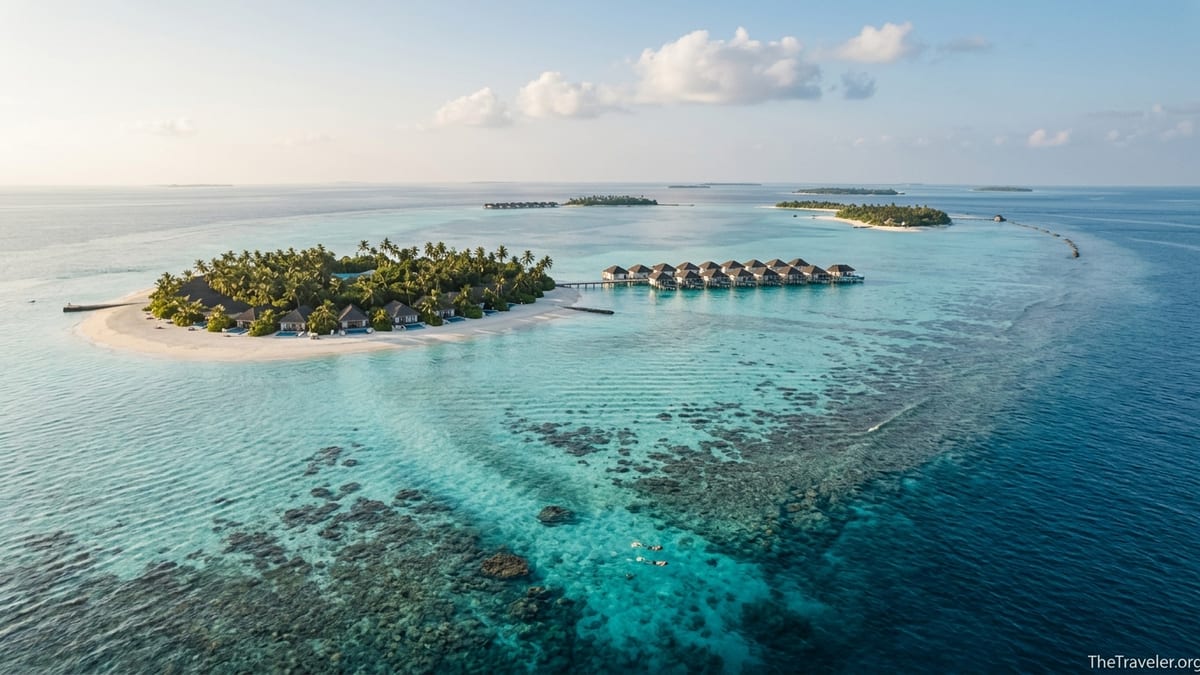
The Maldives is one of the few places on earth where you can step out of a beachfront villa, wade a few strokes from shore and find yourself hovering above a wall of coral, watching turtles graze and reef sharks cruise by. Yet not every island is equal. Some resorts sit behind wide, sandy lagoons that require a long swim or boat ride to reach the reef, while others offer a drop-off just a few meters from the beach, plus regular manta and whale shark excursions. This guide compares some of the most reliable islands for house reef snorkeling in 2025 and 2026, with a focus on shore entry, marine life, beginner suitability and how close your accommodation really is to the action.
How to Choose a Maldives Island for Serious Snorkeling
When people talk about a “good house reef” in the Maldives, they usually mean a reef that starts close to shore, has a clear drop-off and offers consistent encounters with turtles, reef sharks, rays and dense fish life. Recent house reef comparison projects by local agents now rate islands on factors such as swim distance to the reef (often under 10 to 20 meters for the best spots), ease of entry, current strength and coral health. These scores highlight how wide the differences can be, even between neighboring resorts in the same atoll.
For confident snorkelers, a slightly stronger current or a 20 to 30 meter swim through a shallow lagoon is manageable. For beginners, children or less confident swimmers, you will want a reef that sits almost at the shoreline, with sandy channels that let you walk in, float out and return without climbing over coral. Islands like Baros in North Male Atoll, Dhigali in Raa Atoll and Adaaran Select Meedhupparu in Raa Atoll are often praised because the drop-off is close to the beach but still reachable via clear sandy cuts, making supervision and exits easier.
Another key factor is what you can expect to see without booking a boat every day. Many resort and local island dive centers report that green and hawksbill turtles, blacktip reef sharks and eagle rays are regular house reef visitors. For mantas and whale sharks, however, you will almost always need excursions to outer cleaning stations or channels, such as Hanifaru Bay in Baa Atoll for mantas or South Ari Atoll’s Maamigili area for whale sharks, which are typically offered as half- or full-day trips.
Finally, consider budget and atmosphere. Legendary snorkel islands range from rustic adults-only retreats to ultra-luxury hideaways and a growing number of affordable local islands with guesthouses. Deciding whether you want barefoot simplicity, high-end villas or a local island vibe will help narrow the shortlist of reefs that best match both your underwater and on-land priorities.
Best All-round House Reefs With Easy Shore Entry
For travelers who want to step out of their villa and be on the reef within minutes, several islands consistently stand out. Baros in North Male Atoll is frequently rated near the top of independent house reef rankings for its short swim to the drop-off, mild currents and overall coral quality. The reef almost circles the island, and many beach villas have a sandy entry point just a few meters away, so you can time short snorkel sessions between meals without relying on boats or long swims.
Dhigali in Raa Atoll publishes its own house reef fact sheet, noting that the reef starts roughly three to four meters from the beach before dropping to deeper water. In practice this means you can wade out from the sand, put your mask in the water and find coral structure and schooling fish almost immediately, which is ideal for cautious swimmers. The drop-off is close enough to feel dramatic but still within easy reach of the shore, and the resort allows unguided snorkeling for guests who are comfortable in the water.
Park Hyatt Maldives Hadahaa, in the remote Gaafu Alifu Atoll, offers one of the most talked-about 360 degree house reefs in the country. The reef ring encircles the entire island just a short distance from every villa, which makes it particularly attractive if you want to spend a week simply swimming different sections each day. Turtles are frequently sighted along the reef edge, and the close proximity to shore means you can enter at various sandy spots depending on the wind and current on a given day.
If you prefer an adults-only atmosphere, Komandoo in Lhaviyani Atoll combines a strong house reef with a quiet, romantic setting. The dive center describes the reef as steps from both water and beach villas, with eagle rays, turtles and reef sharks among the regular sightings. For less confident snorkelers, guided house reef introductions are easy to arrange, helping you learn the safest entry and exit points around the island before exploring on your own.
Islands Known as Turtle and Beginner Havens
Travelers who dream of daily turtle encounters but are nervous about currents or deep water should look for atolls and islands specifically described as turtle-rich and beginner-friendly. Raa and Lhaviyani Atolls, for instance, are often highlighted for their high turtle populations, with resorts and dive centers emphasizing calm lagoons and accessible house reefs suitable for first-time snorkelers.
Adaaran Select Meedhupparu in Raa Atoll is frequently recommended as a “turtle haven” for beginners. Snorkeling reports describe shallow water with comfortable visibility and turtles grazing on seagrass or resting near coral blocks in just a few meters of depth. This makes it possible for children or less experienced swimmers to watch turtles from the surface without venturing near the main drop-off, and the resort’s guides can organize gentle reef tours that follow the current rather than fighting it.
Local islands are also stepping into the spotlight. In South Male Atoll, Guraidhoo has a house reef that can be reached directly from its public beach. Guesthouses and small dive centers on the island advertise dedicated turtle snorkel tours to nearby feeding and resting sites, and some explicitly offer beginner-friendly guiding on the house reef itself. For budget-conscious travelers, this combination of inexpensive guesthouse stays and reliable turtle encounters from shore rivals what you might find at more expensive resort islands.
Families with small children may prefer islands where the lagoon is calm and shallow, with the main reef set a short but manageable swim away. In such cases, parents can let kids practice with masks and fins in knee to waist-deep water before joining a guide on a short, supervised excursion to the reef edge. Many family-oriented resorts now include “house reef discovery” sessions for kids, often starting from the beach with flotation aids and ending at nearby coral blocks teeming with clownfish and parrotfish.
Manta Ray Hotspots and Hanifaru Bay Access
While mantas occasionally cruise past some resort house reefs, the most reliable encounters come from excursions to well-known cleaning stations and feeding areas. Baa Atoll is particularly famous because of Hanifaru Bay, a UNESCO Biosphere Reserve where, in season, dozens of mantas sometimes gather in the plankton-rich bay. Resorts such as Anantara Kihavah, Milaidhoo and several newer properties in Baa Atoll run seasonal trips there, typically from around May to October, depending on conditions.
Staying on an island that combines a solid house reef with easy access to Hanifaru can give you the best of both worlds. Some resorts in western Baa Atoll advertise short boat distances to the bay plus resident mantas that occasionally appear on nearby outer reefs. You might spend the morning snorkeling your house reef and then join a half-day trip where guides monitor currents and park regulations, entering the water only when mantas are present and crowd levels are carefully controlled.
Baa is not the only manta option. Avani+ Fares, for example, promotes dedicated manta snorkeling trips to Hanifaru Bay from its location on the western side of the atoll, but also offers local reef excursions where reef manta rays are occasionally seen. Other atolls, including some channels in the far north and deep south, also have seasonal manta cleaning stations that are within reach of certain resorts, though these are more typically visited on organized boat outings rather than from the house reef itself.
If mantas are a top priority, pay close attention to seasonality and daily logistics. Most resorts treat manta trips as premium excursions, often lasting several hours and priced accordingly, and sightings are never fully guaranteed. Choosing an island where you would be happy with the house reef alone is important, so that your trip remains satisfying even if a manta encounter does not happen during your stay.
Where to Base Yourself for Whale Shark Encounters
For whale sharks, South Ari Atoll is the main magnet. Here, several resort and local islands sit within day-trip distance of spots such as the Maamigili area, where whale sharks are known to cruise outer reef slopes. Islands like Vilamendhoo, Dhigurah and neighboring properties market regular whale shark searches, combining reef snorkeling with the possibility of sliding into the water alongside these slow-moving giants when they are found.
Many of these islands also offer strong house reefs in their own right. Some resorts publish snorkeling maps showing beginner zones close to the sandy beach, intermediate routes along the inner reef and more advanced circuits that take confident swimmers to the outer drop-off. This layered structure suits mixed-experience groups well: novices can explore sheltered areas while seasoned snorkelers tackle longer drifts along the deeper reef walls, all returning to the same jetty or beach entrance.
Trip brochures from several South Ari atoll resorts highlight “Whale Shark Seeker” or similar excursions, typically run by on-site marine biologists or experienced guides. These outings are often scheduled a few times per week, with boats scanning known hotspots and entering the water only when guides judge conditions to be safe and respectful of the animals. Combining these searches with a resort that has an engaging house reef means you can still enjoy rich snorkeling on days when whale shark conditions are less favorable.
Local islands in South Ari, such as Dhigurah, have become popular with independent travelers for this reason. Guesthouses arrange shared or private whale shark trips at lower price points than many high-end resorts, while also offering access to nearby turtle reefs and coral gardens. The trade-off is typically a simpler room product and fewer resort-style facilities, but for travelers who value time in the water above overwater villas, this can be an attractive compromise.
Balancing Coral Health, Currents and Safety for Beginners
Coral bleaching events in recent years have affected many Maldivian reefs to varying degrees. Some well-known house reefs still show sections of past damage, yet remain rich in fish life and larger animals, while others, particularly in more remote atolls, have pockets of healthier hard coral growth. When comparing islands, look for up-to-date comments on coral condition rather than relying on decade-old praise, and be prepared for a mix of healthy and recovering patches even on highly rated reefs.
Curry-like currents are another crucial consideration, especially for beginners. Many house reef rating tables now include a current score, from mild to strong, along with recommended experience levels. Islands with sheltered sides or horseshoe-shaped reefs can often offer both gentle and more challenging conditions on different parts of the island, allowing guides to choose the safest route for the day. If you or your travel partners are nervous swimmers, prioritize resorts that explicitly describe mild currents and guided house reef introduction sessions in shallow water.
Entry and exit are where most snorkeling accidents and scrapes happen. Ideally you want a sandy channel or steps that let you slip into deeper water without walking on coral rubble or sea urchins. Several resorts, including those in Raa and Lhaviyani Atolls, mark their preferred snorkel access points on maps and brief guests at check-in, often recommending that you always exit at the same spot to avoid surprises with waves or sharp coral. Following these guidelines and using fins, a mask that fits and, for nervous swimmers, a snorkeling vest can make even a first house reef outing feel manageable.
Finally, consider the proximity of snorkeling to your room. Overwater villas perched on the drop-off can be spectacular, with ladder access straight into the reef, but they usually sit in deeper water with currents that can feel intimidating for first-timers. Beach villas set near a calm lagoon and a marked snorkel channel offer a gentler introduction, especially for families. A smart strategy is to split a stay between the two: start in a beach villa while you build confidence, then move to an overwater villa once you are comfortable with currents and exits.
The Takeaway
Choosing the best Maldives island for snorkeling is less about finding a single “perfect” reef and more about matching the island’s conditions and logistics to your expectations and experience. Strong house reefs with short swim distances, sandy entries and regular turtle and reef shark sightings are scattered across atolls such as North Male, Baa, Raa, Lhaviyani, South Ari and the remote southern atolls. Some combine this with seasonal manta trips to Hanifaru Bay or nearby cleaning stations, while others specialize in whale shark expeditions in South Ari.
If you are a confident swimmer looking for wall-to-wall reef, islands like Park Hyatt Hadahaa or compact, reef-wrapped resorts in North Male and Baa Atolls can keep you busy all week without a single boat trip. Beginners and families may be happier on islands with very shallow, calm lagoons and clearly marked snorkel channels, or on local islands that offer guided turtle tours at modest prices. Either way, paying attention to house reef distance, current strength, coral condition and how close your villa is to the preferred entry points will go a long way toward making your Maldivian snorkeling holiday as effortless as slipping on a mask and floating out from the shore.
FAQ
Q1. Which Maldives island is best for snorkeling right from the beach?
There is no single winner, but islands such as Baros, Dhigali, Komandoo and some South Ari and Baa atoll resorts are consistently praised for strong house reefs that start close to shore with easy sandy entry points.
Q2. Where can I snorkel with turtles in the Maldives?
Turtles are widely distributed, but Raa, Lhaviyani and South Ari Atolls are often highlighted for frequent sightings. Resorts like Adaaran Select Meedhupparu and several guesthouses on local islands such as Guraidhoo and Dhigurah offer regular turtle snorkel tours and often report encounters in shallow water close to the beach.
Q3. Are there Maldives islands suitable for beginner snorkelers and children?
Yes. Look for islands that describe their lagoons as calm and shallow with mild currents and house reefs just a short swim away. Family-oriented resorts and many local islands now offer guided “house reef discovery” sessions, flotation aids and clearly marked entry points designed with beginners and kids in mind.
Q4. How do I choose a resort if I want to see manta rays?
If mantas are a priority, focus on Baa Atoll during the May to October season, when many resorts run trips to Hanifaru Bay, or on islands closer to known cleaning stations in other atolls. Select a resort with a strong house reef so that even on days without manta excursions you will still enjoy rich snorkeling from shore.
Q5. Which atoll is best for snorkeling with whale sharks?
South Ari Atoll is the classic choice for whale shark snorkeling. Islands such as Vilamendhoo and Dhigurah, along with several neighboring resorts, organize regular boat trips to outer reef slopes where whale sharks are seen, while still offering rewarding house reef snorkeling on non-excursion days.
Q6. How affected are Maldives house reefs by coral bleaching?
Many reefs show signs of past bleaching, but the extent varies widely. Even on affected reefs you are likely to see abundant fish life, turtles and reef sharks, while some more remote or carefully protected sites have pockets of healthier hard coral. It is wise to check recent comments and photos to set realistic expectations.
Q7. Is it safer to stay in a beach villa or an overwater villa for snorkeling?
For beginners and families, beach villas near shallow lagoons and marked snorkel channels usually feel safer and more flexible. Overwater villas can offer spectacular ladder access directly to the drop-off, but currents can be stronger and the water deeper, so they are more comfortable once you have built some snorkeling confidence.
Q8. Do I need to join guided tours, or can I snorkel the house reef on my own?
Most resorts allow unguided snorkeling once you have attended a safety briefing, but a guided house reef introduction is recommended, especially on your first day. Guides can explain currents, show you preferred entry and exit points and help you avoid fragile coral and shallow patches that might be difficult to cross.
Q9. What snorkeling gear should I bring to the Maldives?
At a minimum, bring a well-fitting mask and snorkel, comfortable fins and a rash guard or thin wetsuit for sun and jellyfish protection. Many resorts rent or lend equipment, but having your own ensures a better fit and more enjoyable time in the water, especially if you plan to snorkel several hours a day.
Q10. Can I find good snorkeling on budget or local islands, not just expensive resorts?
Yes. A growing number of local islands such as Dhigurah, Guraidhoo and others in atolls like South Ari and South Male now host guesthouses that offer guided house reef snorkeling, turtle tours and even whale shark trips at lower prices than many luxury resorts, though facilities are simpler and there are fewer resort-style amenities.