


Local islands have transformed the Maldives from a pure luxury-resort destination into somewhere independent travelers can visit on a realistic budget. You sleep in small guesthouses instead of overwater villas, use public or shared speedboats, and spend your days between bikini beaches, reef snorkels and sandbank picnics. The experience is more grounded and social, but each island has a very different feel. This guide compares seven of the most popular local islands for independent travelers – Maafushi, Dhigurah, Thoddoo, Ukulhas, Fulidhoo, Rasdhoo and Thulusdhoo – to help you choose the best base for your style and budget.
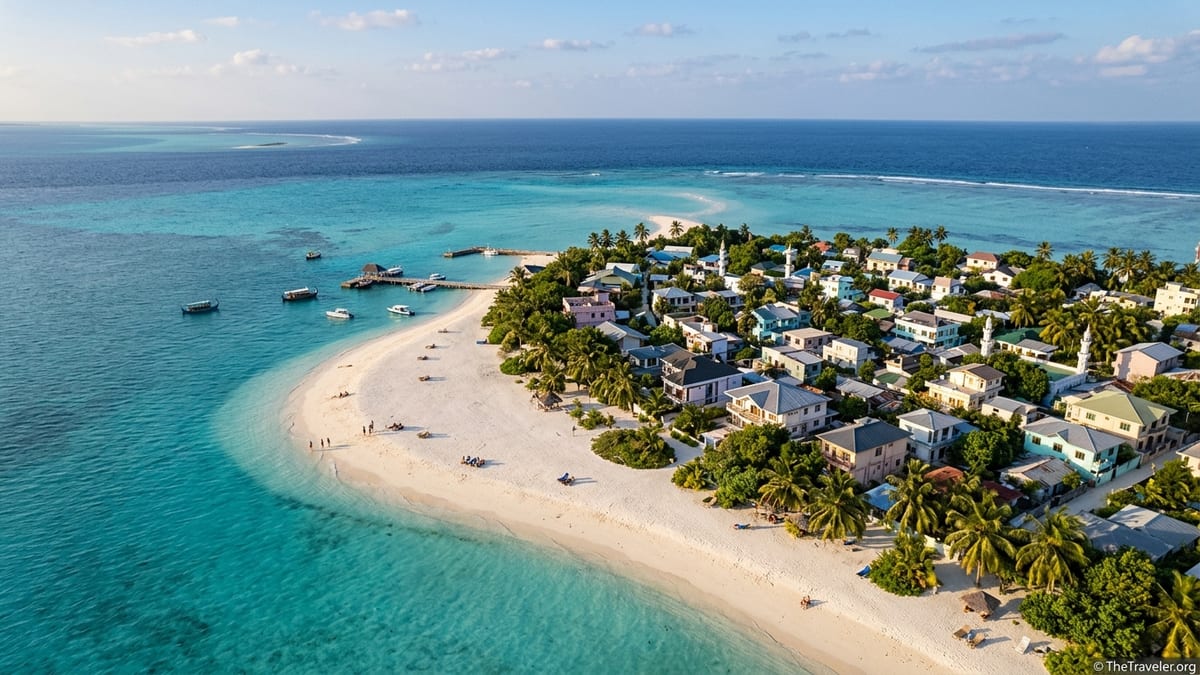
How Local-Island Travel in the Maldives Works
Since regulations changed in 2009 to allow guesthouses on inhabited islands, the Maldives has quietly built a parallel tourism scene away from private resorts. Instead of paying resort package rates, you book small hotels or guesthouses on local islands, usually with 8 to 30 rooms, and buy excursions à la carte. Many properties are family run, and you are surrounded by everyday island life rather than all-inclusive seclusion.
Prices vary by season and island, but on the main local-island circuit a clean, air-conditioned double with breakfast often starts around 60 to 90 US dollars per night outside peak dates, rising above 120 dollars at the most polished beachfront places in high season. On top of that, there is a mandatory government Green Tax, commonly 3 dollars per person per night for small guesthouses on inhabited islands. Food is also more reasonable than on private resorts: a typical café meal of grilled fish with rice or a curry might run 7 to 15 dollars, while Western dishes and espresso-style coffees cost a little more.
There are some important cultural differences from resort islands. The Maldives is a Muslim country and local customs apply on inhabited islands, which means no alcohol and conservative dress in villages. Swimming in bikinis or shorts is generally permitted only on officially designated “bikini beaches,” which are clearly signed tourist beaches screened from the rest of the island. Most of the islands in this guide now have a dedicated bikini beach with loungers and shade, but you still need to cover shoulders and knees when walking through town.
Transport is another key factor in planning. Maafushi and Thulusdhoo in Kaafu Atoll are among the quickest to reach, with shared speedboats from the airport or Malé often taking 20 to 40 minutes. Islands like Thoddoo, Ukulhas, Fulidhoo, Rasdhoo and Dhigurah usually involve a speedboat of around one to two hours, sometimes via Malé. Schedules change with seasons and demand, so it is wise to ask your guesthouse to arrange transfers and quote prices before you book flights.
Maafushi: Social Hub and Easiest Budget Entry Point
Maafushi in South Malé Atoll is the classic starter island for budget travelers and short breaks. It is only around 30 to 35 minutes from the airport by shared speedboat, and competition has produced the widest range of room prices and tour operators of any local island. Many visitors combine Maafushi with one quieter island rather than staying here for their entire trip.
The main bikini beach sits at the southern end of the island and has a distinctly developed feel, with a sandy strip backed by small hotels, cafés and shaded loungers. The water is shallow and calm, ideal for casual swimming rather than dramatic drop-off snorkeling. You will not find pristine house-reef corals just off the beach, but Maafushi compensates with very affordable day trips. Dozens of small operators and guesthouses sell shared excursions to reefs, sandbanks, nurse shark points and resort day visits. Travellers commonly report half-day snorkel trips with two or three stops costing in the region of 30 to 50 dollars per person, and full-day packages including a sandbank picnic running higher but still under typical resort excursion prices.
On land, Maafushi has the liveliest scene in this comparison. It has the highest number of guesthouses and small hotels among the islands listed, with options that range from simple two-storey guesthouses a few minutes’ walk from the beach to boutique properties directly facing the lagoon. Several streets are lined with cafés serving burgers, pizzas, fresh juices and Maldivian dishes, plus souvenir shops and basic services like ATMs and dive centers. For sociable solo travelers, Maafushi’s density of visitors and choice of tour boats make it easy to join groups and keep costs down, though those seeking quiet, empty beaches may find it too busy.
Dhigurah: Long Island, Whale Sharks and Wide Beaches
Dhigurah in South Ari Atoll appeals to travelers who prioritize marine life. The island sits within one of the Maldives’ best-known whale shark hotspots, and local guesthouses work closely with independent dive centers and speedboat captains who spend much of their week scanning the surrounding channels for these gentle giants. Excursions to look for whale sharks and manta rays are among the signature experiences here. Prices vary by season and operator, but travelers often report full-day small-group trips, including multiple snorkel stops and a simple lunch, in the low to mid hundreds of dollars per person from nearby resorts, with locally organized trips typically a little lower.
Dhigurah’s geography gives it a different atmosphere to smaller islands. Its name translates as “long island” and much of the western shore is a sweeping beach that tapers into a natural sandspit at the southern end. There is a large, designated bikini beach with fine white sand and typically clear, shallow water suitable for relaxed swimming. The coral right off the beach is modest, so most snorkelers head out by boat to reefs and cleaning stations where mantas or turtles are more frequently seen.
Guesthouses on Dhigurah tend to be a touch more expensive than on Maafushi but generally quieter and more focused on diving and snorkeling. A number of properties style themselves as dive lodges or boutique beach hotels, bundling room rates with diving packages or multi-day whale shark trips. The village itself is low-key, with a handful of cafés and local shops, but little nightlife. If your priority is big-animal encounters and long walks on a near-empty beach rather than restaurant hopping, Dhigurah offers strong value compared with booking a dedicated whale-shark focused resort stay.
Transfers are more involved than for islands near Malé. The standard route combines a domestic flight from the airport to a nearby local airport in South Ari, followed by a short speedboat or local boat to the island, or a direct shared speedboat that takes roughly two hours when sea conditions are favorable. Because demand fluctuates, it is best to confirm current transfer options and approximate costs with your chosen guesthouse before committing to dates.
Thoddoo and Ukulhas: Green Islands With Strong Beaches
Thoddoo and Ukulhas sit in Alif Alif Atoll and are often discussed together by repeat travelers. Many visitors split a week between the two islands, combining Thoddoo’s farmland interior and broad beaches with Ukulhas’s compact village and easy swimming. Both islands have designated bikini beaches, modest-sized guesthouse clusters and regular speedboats from Malé or from Rasdhoo, another local tourism hub in this atoll.
Thoddoo is known within the Maldives as an agricultural island, famous for its watermelons and papayas. Away from the shore, plantations and palm-lined sandy lanes give it a rural feel that contrasts with the more hotel-lined streets of Maafushi. The bikini beaches, particularly on the northwestern and northern sides, are wide, with plenty of natural shade from palms and a relatively gentle lagoon. Many travelers consider the beaches here among the best on local islands in terms of sand quality and space. Off the beach, snorkeling offers a fair chance to see turtles and reef fish, but serious snorkelers often add boat trips to outer reefs.
Ukulhas, by contrast, is smaller and more compact, with a dense main street and guesthouses never far from the sea. It has a clearly marked bikini beach along the western shore with sunbeds under trees and a shallow, turquoise lagoon that shelves gradually. Local tourism promoters highlight Ukulhas as one of the cleaner and more environmentally conscious islands, with waste management programs and regular beach cleaning. The snorkeling from shore is often described as good rather than spectacular, with scattered coral heads and plenty of small fish just off the sandy bottom.
In both Thoddoo and Ukulhas, guesthouses cluster in the streets just back from the beach. Pricing tends to sit in the mid-range of local islands, above the cheapest rooms on Maafushi but often below dedicated dive islands. Simple doubles with breakfast can often be found from around 70 to 100 dollars in shoulder seasons, with beachfront or larger rooms costing more. The dining scene is more limited and low-key compared with Maafushi, typically a few local cafés and a couple of guesthouse restaurants serving grilled fish, curries, pasta and fruit juices. Alcohol is not available, though some islands host anchored “floating bars” offshore which can be accessed by small shuttle boats arranged locally.
Fulidhoo and Rasdhoo: Compact Islands With Character
Fulidhoo in Vaavu Atoll and Rasdhoo, the administrative island of a small atoll of the same name, are smaller than most others in this comparison and attract visitors looking for an intimate feel. Their limited size means fewer guesthouses and cafés, but also short walks between the harbor, village and bikini beaches.
Fulidhoo lies roughly an hour or more by speedboat south of Malé, depending on route and sea conditions. The island is tiny, with sandy streets and colorful houses that feel unhurried compared with busier hubs. It has a modest bikini beach with soft sand and clear water, and the reef snorkeling close to shore is appealing when conditions are calm. Because the lagoon is more exposed than in some atolls, waves can reduce visibility on windy days, so many visitors balance shore snorkeling with boat trips arranged through their guesthouse. Popular excursions include nurse shark points, sandbanks and full-day snorkeling circuits that visit two or three reefs.
Rasdhoo is about 20 kilometers from Thoddoo and serves as a small transport and diving hub for Alif Alif Atoll. The island’s bikini beach occupies part of the western shoreline, looking towards resort islands and channels where hammerhead sharks and pelagics are found on dive sites. Snorkeling from shore is considered decent, and diving is the bigger draw, with several independent dive centers based on the island. Many travelers use Rasdhoo as a base for affordable access to the surrounding reefs and then move on to a second island for a different atmosphere.
Both Fulidhoo and Rasdhoo offer a handful of guesthouses rather than dozens. Rooms range from simple family-run places a few minutes from the harbor to smarter properties with small courtyards or rooftop terraces. Rates often fall in the same band as Thoddoo and Ukulhas, with seasonal fluctuations. The restaurant scene is compact, typically one or two local cafés, coffee shops with views of the harbor and in-house dining at guesthouses. For travelers who value quiet evenings, easy walks and quick access to the sea over a large choice of eating and shopping, these islands provide good value.
Thulusdhoo: Surf Vibe Close to Malé
Thulusdhoo, in North Malé Atoll, is another easy-to-reach local island with a distinct personality. It serves as the atoll capital and has a long association with surfing, thanks to nearby reef breaks that attract wave riders during the surf season. Shared speedboats from Malé or the airport typically take around 30 to 40 minutes, and some budget travelers combine a few nights on Thulusdhoo with time on another local island or a guesthouse in Hulhumalé for late-night flight connections.
The island has a designated bikini beach on the lagoon side where visitors can swim and sunbathe in standard swimwear. The beach is broad, with stretches of white sand and good swimming in calm conditions, and has a more relaxed feel than heavily built-up strips. Outside the tourist beach, Thulusdhoo feels like a working island, with a small harbor, school, mosque and residential streets. Surf camps and guesthouses line some of the sandy lanes, many catering specifically to surfers with board storage, guiding and boat rides to nearby breaks.
Snorkeling and casual swimming are easily arranged, though Thulusdhoo is best known in travel circles for its surf and for being a quieter alternative to Maafushi while still offering a reasonable number of cafés and guesthouses. Beachfront guesthouses and surf-focused lodges usually command higher prices, especially in peak surf months, while rooms a few streets back from the sea offer more budget-friendly rates. Food options include local restaurants serving Maldivian curries and rice dishes, small bakeries and a couple of Western-style cafés where visitors gather after surf sessions or snorkel trips.
For travelers who want to keep transfers simple, enjoy a slightly bohemian atmosphere and perhaps learn to surf or watch experienced riders on nearby reefs, Thulusdhoo balances accessibility, activities and value. Those who are uninterested in surf or prefer lush, agricultural scenery may feel better matched with Thoddoo or Ukulhas instead.
Comparing Atmosphere, Activities and Value
Choosing the best local island in the Maldives is less about searching for an objective “top” destination and more about matching your preferences for atmosphere, activities and budget. Maafushi wins for ease of access, choice of guesthouses and low excursion prices thanks to its scale. It works particularly well for travelers who have four to five nights and prefer to keep costs very controlled by joining group tours. The trade off is a busier beach and a more commercial strip that some visitors find less serene than smaller islands.
Dhigurah, Fulidhoo and Rasdhoo tilt towards marine-life experiences. Dhigurah is ideal if your dream is snorkeling with whale sharks and mantas in season, and you do not mind paying a bit more for transfers and activity-focused guesthouses. Fulidhoo and Rasdhoo, meanwhile, are compact, social islands where it is easy to walk everywhere, join shared snorkel or dive trips and feel part of a small community for a few days.
Thoddoo and Ukulhas occupy something of a sweet spot for many independent travelers. They have excellent, relatively uncrowded bikini beaches and a mid-range guesthouse scene that keeps prices reasonable without feeling bargain-basement. Their compact restaurant offerings and the absence of loud nightlife appeal to couples and solo travelers who prioritize quiet swims, fruit smoothies and evening walks on the beach over beach parties.
Thulusdhoo delivers strong value in terms of quick access from Malé paired with a surf vibe, a defined bikini beach and a growing café scene. It is a good choice if you want to avoid multiple long speedboat rides but still experience a local island beyond the airport suburb of Hulhumalé. Ultimately, many travelers plan a route that combines two contrasting islands, for example Maafushi plus Thoddoo, or Thulusdhoo plus Dhigurah, to balance budget, marine life and beach quality.
The Takeaway
Local islands make the Maldives accessible to a far wider range of travelers than the country’s luxury reputation might suggest. By choosing guesthouses on inhabited islands, accepting cultural norms such as no alcohol and modest dress in village areas, and traveling by shared speedboats or public ferries where available, you can experience world-class lagoons and coral reefs without resort-level prices.
When comparing Maafushi, Dhigurah, Thoddoo, Ukulhas, Fulidhoo, Rasdhoo and Thulusdhoo, start by asking what matters most to you. If it is simple logistics and low excursion prices, Maafushi leads. If your priority is long, quiet beaches with plenty of space, Thoddoo, Ukulhas and Dhigurah stand out. If you want intimate islands with strong personality and easy access to dive sites, consider Fulidhoo and Rasdhoo. And if you are drawn to surfing and want a short hop from the airport, Thulusdhoo has particular appeal.
Whichever island you choose, booking a reputable guesthouse that communicates clearly about transfers, excursion options and seasonal conditions will have more impact on your experience than fine distinctions between islands. With realistic expectations about comfort levels and an openness to local culture, local-island travel in the Maldives can deliver some of the same white sand, turquoise water and reef wildlife that define the country’s most exclusive resorts, at a fraction of the cost.
FAQ
Q1. Can I wear a bikini on all of these local islands? On all the islands covered here there are designated bikini beaches where standard swimwear is allowed, but in village areas you must cover shoulders and knees.
Q2. How much should I budget per night for a guesthouse stay? For a mid-range guesthouse on a popular local island, many travelers plan around 70 to 120 US dollars per night for a double with breakfast, plus the nightly Green Tax.
Q3. Which island is best if I want to see whale sharks? Dhigurah in South Ari Atoll is particularly convenient for whale shark excursions, with local guesthouses and dive centers running regular trips in season to nearby channels.
Q4. Is Maafushi too busy for a relaxed beach holiday? Maafushi has the liveliest atmosphere and most built-up tourist strip of the islands described, but many visitors still enjoy it, especially if they focus on boat trips and quieter corners of the beach.
Q5. Which island has the best value for long, uncrowded beaches? Thoddoo and Ukulhas are strong candidates, with wide bikini beaches, a good range of guesthouses and a calmer feel than the most commercialized islands.
Q6. Are there ATMs and card payments on these local islands? Maafushi and Thulusdhoo usually have ATMs and many guesthouses take cards, while smaller islands may be more cash focused, so it is wise to carry some Maldivian rufiyaa and a backup card.
Q7. Can I visit more than one island in a week? Yes, many travelers combine two islands in seven to ten days, such as Maafushi and Thoddoo or Thulusdhoo and Dhigurah, but adding more hops quickly eats into beach time.
Q8. Will I get good snorkeling directly from the beach? Beach snorkeling is pleasant on most of these islands, but for healthier coral and better chances of turtles, mantas or sharks, boat trips to outer reefs usually offer more rewarding experiences.
Q9. Is alcohol available on local islands? Alcohol is not sold on inhabited local islands, including their guesthouses and cafés; some areas have offshore “floating bars,” but generally you should expect an alcohol-free stay.
Q10. How far in advance should I book my guesthouse and transfers? For peak season from roughly December to March, it is sensible to book guesthouses and confirm transfer options several months ahead; in shoulder seasons you often find more flexibility but should still ask properties to arrange boats before you arrive.