


Choosing between Kaafu Atoll and Ari Atoll is one of the most important calls you will make when planning a Maldives trip. Both sit in the central Maldives, both offer the classic mix of overwater villas, powdery sandbanks and turquoise lagoons, yet they deliver very different experiences in terms of access, cost, marine life and mood. This guide compares them in practical, real-world terms so you can decide which atoll is better for your style of travel and budget.
Geography and First Impressions: Two Very Different "Central" Atolls
Although both are considered central Maldives, Kaafu Atoll and Ari Atoll feel quite different the moment you arrive. Kaafu is the administrative atoll surrounding the capital Malé and Velana International Airport. It includes North Malé Atoll, South Malé Atoll and nearby island groups, which is why many of the country’s most established resorts and local islands are found here. The upside is convenience: lagoon views can start as little as 15 to 30 minutes after you clear immigration.
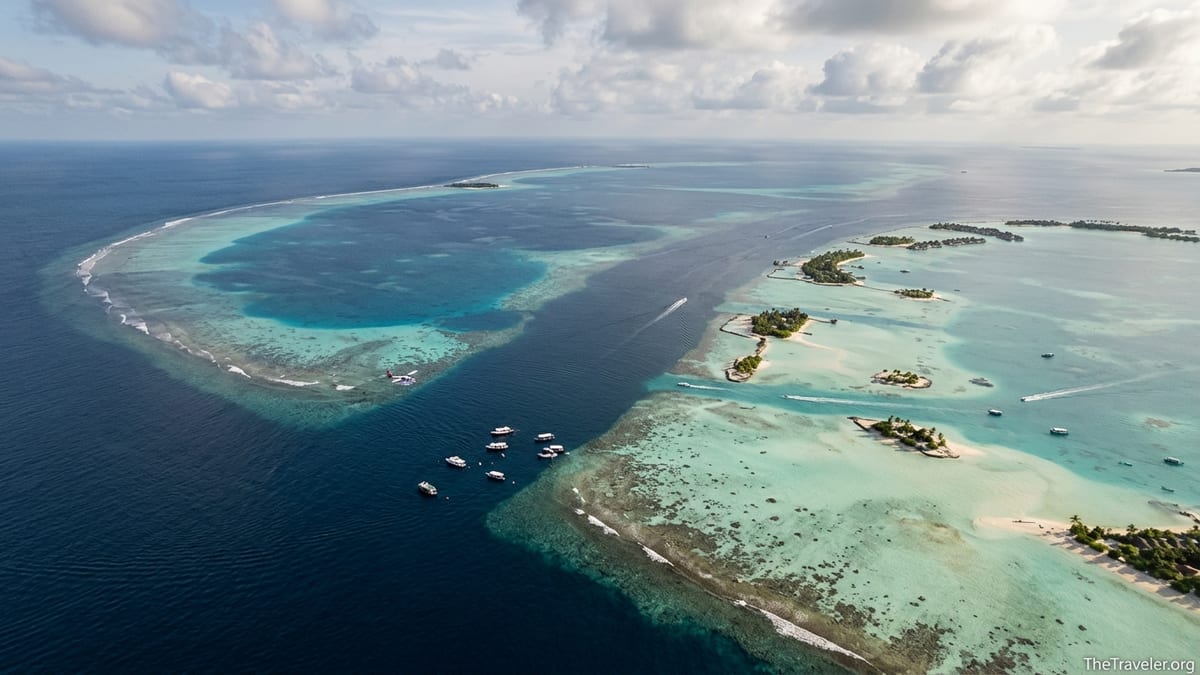
Ari Atoll, often split into North Ari (Alifu Alifu) and South Ari (Alifu Dhaalu), lies to the west of Malé. It is broader, more open-ocean facing and less influenced by the capital’s busy shipping lanes. From the air, Ari looks like a long oval scattered with tiny resort and local islands, many of them edging deep channels frequented by pelagic marine life such as whale sharks and mantas. This geography is key to why divers and snorkellers speak of Ari almost in reverent tones.
In broad terms, Kaafu suits travellers who prioritise quick access, shorter transfers and easy resort choice close to the airport. Ari appeals more to those willing to travel a bit further in exchange for big-animal encounters, an away-from-it-all feel and a marine environment that is often a main reason to come to the Maldives in the first place.
Understanding this geographic contrast is the foundation for every other decision you make, from budget and length of stay to whether you travel with kids, surfboard or dive log in hand.
Airport Access and Transfers: Time and Money to Reach Your Island
If fast, simple access from Malé matters, Kaafu Atoll wins clearly. Most Kaafu resorts and local islands are reached by shared speedboat directly from Velana International Airport. Classic resorts such as Villa Nautica (formerly Paradise Island) sit less than 10 kilometres from the airport, with transfer times of around 15 to 20 minutes by boat. Similar timings apply to other well known North Malé properties like Varu by Atmosphere or Huvafen Fushi, which typically quote 30 to 35 minutes by speedboat from the airport.
Speedboat transfers in Kaafu are not cheap in absolute terms, but they are usually more affordable than seaplanes. As a very rough guide, many premium Kaafu resorts currently quote return shared speedboat transfers around 300 to 700 US dollars per adult, depending on distance and level of luxury. For example, a high-end Fari Islands property has recently quoted about 2000 US dollars return for two adults on its private luxury speedboat. Travellers staying on local islands such as Himmafushi or Thulusdhoo may pay much less by choosing public ferries or scheduled shared speedboats, sometimes under 50 US dollars per person one way at the time of writing, in exchange for fixed timetables and slower crossings.
Ari Atoll requires more logistics and a higher transfer budget. Many resorts in both North and South Ari rely on seaplanes from Malé, often around 25 to 35 minutes of flight time. Return seaplane transfers for central Maldives resorts commonly sit in the region of 450 to 600 British pounds or roughly 550 to 750 US dollars per adult, sometimes more at luxury brands. Some South Ari properties combine a 20 to 25 minute domestic flight to Maamigili or another regional airport with a short speedboat hop, keeping prices broadly in the same bracket as seaplanes but offering more schedule flexibility in poor weather.
For local islands in South Ari, such as Dhigurah, Maamigili or Dhangethi, the most common access is now a combination of domestic flight or speedboat. Travellers often fly from Malé to Maamigili on a short domestic hop, then transfer by speedboat or local boat to their island guesthouse. The door to door cost can still come in below a resort seaplane, particularly for longer stays and families, but you should expect transfers to represent a noticeable slice of your total budget compared with a simple Kaafu speedboat ride.
Resorts and Local Islands: Style, Choice and Price Points
Kaafu Atoll has the densest choice of resorts and local islands in the country. On the resort side, you find everything from long-established all inclusive properties with hundreds of rooms to sleek design-led islands with strong wellness or culinary programs. Examples include large-scale options such as Villa Nautica or Bandos, boutique hideaways like Huvafen Fushi, and luxury brands in the Fari Islands cluster. Because Kaafu resorts are close to the capital, competition is high and there is usually something at almost every budget level, especially outside peak season.
Local islands in Kaafu such as Maafushi, Thulusdhoo and Himmafushi have become hubs for lower cost Maldives trips. On Maafushi, for instance, you can still find guesthouse rooms that are a fraction of typical resort villa prices, while access to day-trip excursions makes it possible to experience sandbanks and reefs without paying private-island rates. Thulusdhoo is known among surfers for its easy reach to famous breaks, yet also offers family friendly guesthouses and bikini beaches. These local islands are affordable by Maldives standards but can feel busy, with speedboat jetties, dive boats and shops concentrated along short waterfronts.
Ari Atoll’s resort scene is more spaced out and often more focused on house-reef quality and dive access. North Ari offers smaller islands like Gangehi and boutique resorts with strong dive centres, while South Ari’s line up includes heavyweight names such as LUX* South Ari Atoll and Conrad Maldives Rangali. Many Ari properties lean into the atoll’s marine reputation, promoting whale shark trips, manta cleaning stations and easy access to famous dive sites like Kudarah Thila or Broken Rock as central pillars of the guest experience.
On the local-island side, Ari’s headline name is Dhigurah in South Ari. The island is long, narrow and fringed by a sweeping beach on its western side, with several guesthouses, dive centres and excursion providers. It has become one of the strongest value bases for travellers who care more about whale sharks and diving than private-resort aesthetics. Nearby islands such as Maamigili and Dhangethi also host guesthouses and dive shops, often marketing themselves as convenient gateways to the South Ari Marine Protected Area.
Surfing, Diving and Snorkelling: Where the Ocean Really Shines
For surfing, Kaafu is the natural choice. The North Malé Atoll area hosts some of the Maldives’ most famous reef breaks, and islands such as Thulusdhoo and Himmafushi have grown around this reputation. Surfers base themselves in simple guesthouses or surf-focused lodges and ride regular dhoni boats to breaks like Coke’s or Jailbreaks. Several resorts in Kaafu also market surf packages with on-site surf guides and boat transfers. If you plan to combine a family holiday with a few surf days, choosing a Kaafu resort with access to these breaks can make logistics far easier than trying to surf from Ari.
Diving is where Ari Atoll steps decisively into the spotlight. The outer edge of South Ari is home to the South Ari Marine Protected Area, a roughly 40 kilometre strip of reef from Rangali to Dhigurah that is globally recognised for frequent whale shark visits. Dive operators based on islands such as Dhigurah, Maamigili and Dhangethi, as well as resort-based centres at properties like LUX* South Ari or Conrad Rangali, regularly run trips to these sites. Success rates for seeing whale sharks during peak periods are often described as higher than anywhere else in the country, and sightings occur year round, although there are always no-guarantee days.
Ari’s dive portfolio does not end with whale sharks. North and South Ari both feature renowned thilas and channels with reef sharks, turtles, schooling fish and occasional manta rays. Sites such as Maamigili Beyru, Dhigurah Beyru, Kudarah Thila and Rangali Madivaru (sometimes called Manta Point) appear repeatedly in trip reports for very good reason. Most are accessible to divers of all levels when conditions permit, and many offer excellent snorkelling on shallower sections for non-divers who simply want to drift over coral and schooling fish.
Kaafu Atoll also offers solid diving and snorkelling, especially on outer reefs further from Malé’s busy channels. However, compared with Ari, it is less well known for headline pelagic encounters. You are more likely to book Kaafu for a mix of house-reef snorkelling, reef sharks, turtles and colourful fish rather than for a specific big-animal goal. If daily diving is not your primary focus, Kaafu’s easier access can still make for rewarding underwater days without the transfer overhead associated with Ari.
Whale Sharks and Mantas: Why South Ari Is a Global Name
If swimming with whale sharks is on your Maldives wish list, Ari Atoll, and specifically South Ari, is the more strategic choice. The southern outer reef is protected as the South Ari Marine Protected Area, created in recognition of its importance as a globally significant aggregation site for whale sharks. The area runs along the outer edge between Rangali and Dhigurah, close to local islands such as Maamigili and Dhigurah, which is why these names dominate whale shark discussions and itineraries.
From South Ari guesthouses or resorts, whale shark excursions typically involve a 15 to 45 minute boat ride to known hotspots, followed by patient searching along the reef edge. When a shark is spotted, boats brief guests to enter the water calmly and keep respectful distances. Over the course of a week-long stay in South Ari, many travellers report multiple successful encounters, although nature never follows a guaranteed timetable. The same boats may also visit manta cleaning stations or combine trips with reef snorkels and sandbank stops.
Mantas add another layer to Ari’s appeal. Sites such as Rangali Madivaru can host cleaning stations where mantas circle over bommies while cleaners pick parasites from their skin. Conditions are seasonal, with manta activity influenced by currents and plankton blooms, but many dive centres publish approximate “manta seasons” and adjust their daily plans accordingly. The combination of high-probability whale shark sightings and accessible manta dives is unusual even within the Maldives, and it is what pushes Ari ahead for many marine-focused travellers.
Kaafu is not devoid of whale sharks or mantas, but encounters are far more sporadic and typically require longer boat trips from specific resorts or liveaboards passing through. As a result, if your entire trip justification is “I want to swim with whale sharks,” South Ari in particular is likely to offer a better balance of cost, time and probability than Kaafu.
Families vs Couples: Atmosphere, Practicalities and Daily Rhythm
For families, Kaafu Atoll offers two major advantages: easier transfers and more flexible schedules. Long seaplane days can be challenging with younger children, especially if international arrival times mean waiting several hours at the seaplane terminal. By contrast, a 20 to 40 minute speedboat from the airport to a Kaafu resort allows you to be in the pool before jet lag has fully set in. Many of Kaafu’s larger resorts feature family rooms, kids’ clubs, multiple dining venues and on-island medical support, which can bring peace of mind for multigenerational trips or first-time long-haul holidays.
Families using local islands also benefit from Kaafu’s ferry network and shorter crossings. Staying on Maafushi or Thulusdhoo lets you blend local culture with easy access to snorkel and sandbank excursions, while still being close enough to Malé to change plans if a child becomes unwell or the weather shifts. Budget conscious families often appreciate being able to mix restaurant meals with supermarket snacks and lower excursion prices than at many private resorts.
For couples and honeymooners, Ari Atoll, especially South Ari, often feels more like the fantasy Maldives of glossy brochures. Seaplane arrivals, long outer-reef views and fewer flight paths overhead create an away-from-everything atmosphere that some Kaafu islands, under the flight path from the capital, struggle to match. Many Ari resorts emphasise privacy, with villas spaced further apart, out-of-the-way sandbanks for private dinners and experiences centred on sunrise or sunset cruises plus marine life.
That said, couples prioritising short stays or tight budgets might still find Kaafu a better fit. A long weekend from Europe or the Middle East can make more sense when you avoid seaplanes and arrive at your villa within an hour of landing. Kaafu also gives couples the option of mixing a few nights on a local island with a shorter splurge at a resort, something that is logistically more involved in Ari due to transfer costs and schedules.
Costs, Value and Choosing the Right Atoll for You
When comparing Kaafu and Ari on cost, a simple rule of thumb is that Kaafu usually wins on transfer savings, while Ari often offers better value for serious divers and whale shark enthusiasts. A family of four paying, for example, 600 US dollars per adult for seaplane transfers to an Ari resort could easily add several thousand dollars to the trip budget before accommodation or food. The same family might pay closer to half that for speedboat transfers to a Kaafu island, and those savings can fund extra nights, upgraded meal plans or private excursions.
On the other hand, a diver booking a week in a South Ari guesthouse such as those on Dhigurah or Maamigili might spend a bit more reaching the island, then recoup value through reasonable room rates and competitively priced dive packages that include multiple whale shark or manta dives. For this traveller, an outer reef teeming with life justifies paying more to get there. Similarly, honeymooners set on a once-in-a-lifetime trip may decide that the cost of a seaplane into Ari is simply part of the overall investment in a dream experience.
In practice, the best atoll for you often comes down to the balance between time, money and priority experiences. If you want fast access, more flexible dates and a wide range of resort and local-island prices, Kaafu is usually the more practical option. If you are prepared to pay a premium for richer marine life, quieter horizons and specific big-animal encounters, Ari, and especially South Ari, is likely to feel worth the extra outlay.
Whichever atoll you choose, build realistic transfer costs into your planning from the start rather than treating them as an afterthought. Ask resorts and guesthouses for up to date return transfer prices for your exact dates and compare them side by side, especially if you are weighing up a Kaafu property using speedboats versus an Ari property requiring seaplanes or domestic flights.
The Takeaway
There is no universal “better” atoll between Kaafu and Ari in the central Maldives, only a better fit for different travellers. Kaafu’s strengths are undeniable: quick, mostly speedboat access from the international airport, a large and varied resort landscape, busy but affordable local islands and strong options for families, short breaks and surf-focused trips. It is the atoll that makes the Maldives feel surprisingly straightforward, even for a first visit.
Ari Atoll’s appeal lies in its water. North and especially South Ari offer some of the country’s most reliable whale shark and manta encounters, a network of thilas and channels that divers travel across the world to explore, and a general sense of being out on the archipelago’s wild edge. Transfers take longer and cost more, but for many travellers the chance to drift beside a whale shark or watch mantas circling a cleaning station justifies the extra logistics.
For travellers asking which central atoll is better, the practical answer is this: choose Kaafu if your priorities are convenience, shorter transfers, a wide spread of budgets and perhaps some surfing. Choose Ari if your trip is built around diving, snorkelling, whale sharks or mantas, and you are willing to pay more and travel a bit farther to maximise your chances. Both atolls deliver the classic Maldives palette of turquoise lagoons and white sand. The difference lies in how you get there, what you pay, and how wild you want the ocean just beyond your villa to feel.
FAQ
Q1. Which atoll is easier to reach from Malé, Kaafu or Ari?
Kaafu is easier because most islands use direct speedboat transfers from the airport, often 20 to 45 minutes. Many Ari resorts and islands require more expensive seaplanes or domestic flights plus boats.
Q2. Where are whale sharks more reliable, Kaafu or Ari?
Whale sharks are far more reliably encountered in South Ari Atoll, particularly along the South Ari Marine Protected Area near islands like Dhigurah and Maamigili, rather than in Kaafu.
Q3. Which atoll is better for families with young children?
Kaafu usually works better for families thanks to shorter speedboat transfers, a wide choice of family friendly resorts, and easier access to medical services and flexible schedules.
Q4. Is Kaafu or Ari cheaper overall?
Kaafu often ends up cheaper because transfers cost less and you can choose from budget local islands to mid range and luxury resorts. Ari can offer great value for divers, but seaplanes and domestic flights add to the total cost.
Q5. Which atoll should divers choose?
Serious divers typically prioritise Ari, especially South Ari, for its whale sharks, mantas and famous thilas. Kaafu has good diving, but Ari has a stronger reputation for big marine life and iconic sites.
Q6. Where are the best surf spots, Kaafu or Ari?
Kaafu, and particularly North Malé Atoll, is better for surfing. Islands like Thulusdhoo and Himmafushi sit near well known reef breaks, while Ari is not a primary surf destination.
Q7. Can I stay on a local island instead of a resort in both atolls?
Yes. Kaafu has popular local islands such as Maafushi and Thulusdhoo with guesthouses, while South Ari has islands like Dhigurah, Maamigili and Dhangethi that cater to guesthouse travellers and divers.
Q8. Are seaplane transfers to Ari Atoll worth the extra cost?
For travellers focused on whale sharks, mantas or a more remote feel, many find Ari’s seaplane transfers worth the price. If your priorities are mainly relaxing and convenience, Kaafu’s speedboats may feel more sensible.
Q9. Which atoll has better house reefs for snorkelling?
Both atolls have islands with good house reefs, but Ari tends to offer more options right on the outer edge of the atoll, with easier access to deeper drop offs and larger marine life directly from the beach or jetty.
Q10. How should I decide between Kaafu and Ari for a one week trip?
Start with your top priority: if it is easy access and a mix of relaxation and activities, lean towards Kaafu; if it is diving or snorkelling with whale sharks and mantas, lean towards Ari, accepting the higher transfer costs as part of that choice.