


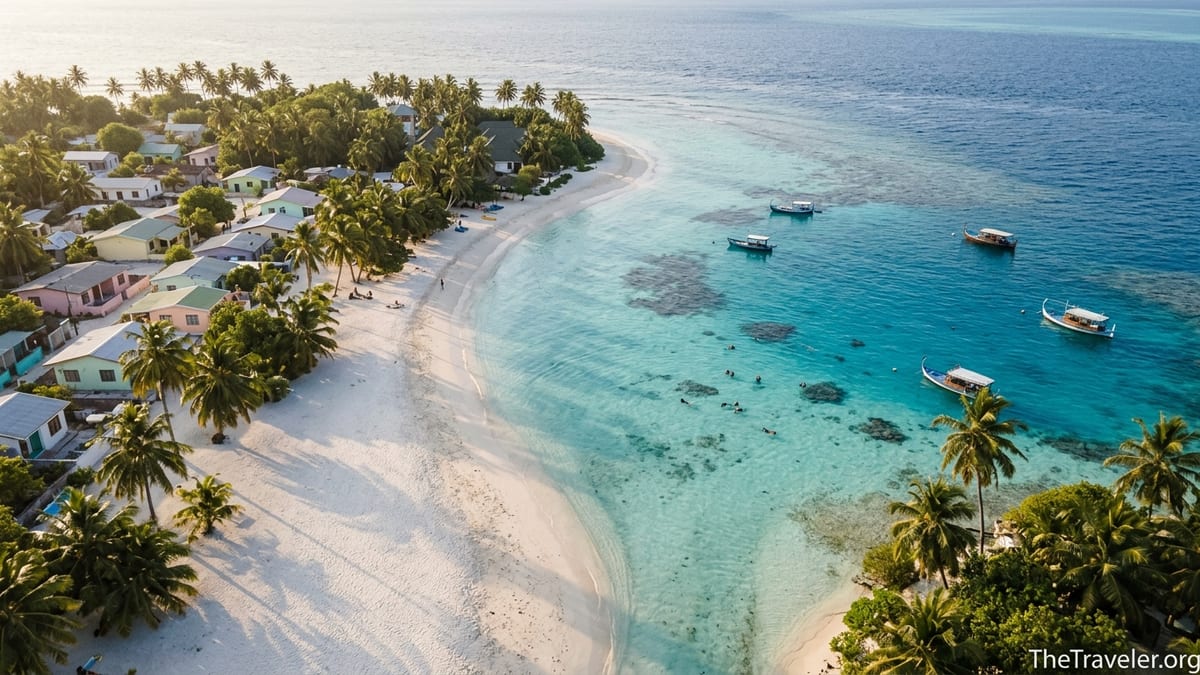
The central atolls of the Maldives are where local island travel really hits its stride. Here you can sleep in small guesthouses, walk sandy village streets, swim at designated bikini beaches and join affordable excursions to manta points and surf breaks, all without resort price tags. This guide compares some of the most appealing central local islands for independent travelers who want solid value, reliable bikini beaches and good access to snorkeling, diving and culture.
How Central Local Islands Work: What To Expect And Budget
Guesthouse tourism on inhabited Maldivian islands has been legal since 2009 and is now well established across the central atolls, especially Kaafu, Ari, Vaavu and Baa. Most visitor-friendly islands have a compact village core with mosques, schools and small shops, a handful of low-rise guesthouses and one or more designated bikini beaches where swimwear is allowed. Away from those beaches, visitors are expected to dress modestly in line with local norms, which in practice means covering shoulders and thighs.
Prices on central local islands are significantly lower than at private resorts. Recent comparisons from local operators indicate that standard guesthouse rooms typically start around 70 to 120 US dollars per night including taxes, with midrange boutique options in the 130 to 180 dollar range depending on season. By contrast, mid-market resorts often begin near 500 dollars per night before transfers. Meals on local islands usually cost around 8 to 15 dollars for a simple curry, fried rice or grilled fish plate in a small restaurant, with daily food budgets around 30 to 60 dollars per person if you mix local cafes and guesthouse dinners.
The main extra cost to consider is transport. Central islands within speedboat reach of Male, such as those in Kaafu, Vaavu and North Ari, tend to have shared transfers in the 30 to 80 dollar range one way for a scheduled speedboat. Islands that rely on private speedboats or flights can be more expensive. Excursions are sold on a pay-as-you-go basis: half-day snorkeling trips might be 35 to 60 dollars, full-day safaris 70 to 120 dollars, and surf boat transfers from Thulusdhoo to nearby breaks around 10 to 20 dollars per person. Overall, a carefully planned week for two on central local islands can often come in around a quarter of an equivalent resort stay, while still delivering clear-water lagoons and strong marine life.
Because these are lived-in communities, the experience is more immersive but also less polished than resorts. You will hear the call to prayer before sunrise, walk past schoolkids on sandy lanes and sometimes experience power cuts or weak water pressure. In return, you gain a sense of everyday Maldivian life, supportive local hosts and more flexibility to dine, explore and move between islands.
Thulusdhoo: Surf Hub With A Breezy Village Feel
Thulusdhoo, in North Male Atoll, is one of the most developed central local islands for independent travelers and surfers. It sits opposite the famed Cokes reef break, with Chickens break just across a channel, making it the unofficial surf capital of the central atolls. Several guesthouses and surf camps line the waterfront facing Cokes, with packages that often include three daily meals and surf guiding. Recent price examples for basic surf guesthouses show air-conditioned double rooms with full board starting in the region of 90 to 130 dollars per person per night in shoulder season.
The island has a designated bikini beach on the opposite side from the village harbor, where sunbeds and simple beach bars serve cold drinks and snacks. While alcohol is not available on local islands, many operators run sunset or “floating bar” trips to offshore boats where alcohol is licensed. For non-surfers, Thulusdhoo offers affordable snorkeling trips to nearby reefs, sandbanks and resort house reefs, often priced between 40 and 70 dollars for a half or full day including gear. The coral around North Male Atoll shows signs of bleaching but still supports plenty of reef fish, turtles and occasionally reef sharks.
On land, Thulusdhoo has a relaxed, surf-town character. Streets are sandy but busy, with a mix of local homes, small cafes, souvenir stalls and grocery shops. It is easy to find espresso, smoothies and simple Western dishes alongside Maldivian hedhikaa snacks and tuna curries. Culturally, you are still in a conservative community, but visitors are used to seeing surfers walking through town with boards, and English is widely spoken. For travelers who want a social island with nightlife limited to beach gatherings, plus reliable surf and a decent bikini beach, Thulusdhoo is one of the strongest all-round choices in the central region.
In value terms, Thulusdhoo is not the very cheapest island but offers a strong cost-to-activity ratio. Its proximity to Male keeps transfer costs modest, and the concentration of surf camps and excursion operators tends to hold prices competitive. It works particularly well if you plan to split time between surfing and snorkeling, or if you want a first-time local island that still feels fairly set up for tourists.
Ukulhas, Rasdhoo And Mathiveri: Snorkeling, Mantas And Easy Island-Hopping
North Ari Atoll, also called Alif Alif, hosts several standout local islands that combine strong bikini beaches with excellent access to manta rays, sharks and vibrant reefs. Ukulhas is often described as one of the most attractive bikini beaches on a local island, with a long, wide stretch of soft sand, calm lagoon and shaded palms. The island has gained recognition for its environmental practices and waste management, which contribute to clean public areas and generally clear water. Guesthouses range from simple rooms around 70 to 90 dollars per night in low season to more design-focused stays closer to 140 to 180 dollars in peak periods.
From Ukulhas, local operators offer manta ray trips in season, reef snorkeling safaris and sandbank picnics. A typical half-day snorkeling excursion might cost around 45 to 60 dollars including guide and gear. The house reef is accessible from shore in several spots, and turtles are commonly seen. The village itself has a decidedly relaxed pace, with a handful of cafes and shops; it feels less built up than major islands in Kaafu but more organized than very small atolls.
Nearby Rasdhoo has built a name around diving and early morning hammerhead shark trips. The island has a sheltered bikini beach and a compact but lively main street of cafes, dive centers and stores. Prices are broadly similar to Ukulhas, though budget travelers can sometimes find slightly cheaper basic rooms. Day trips usually include manta cleaning stations in season, channel dives with reef sharks and snorkeling on shallow reefs, creating excellent value for certified divers who do not need resort-level comfort.
Mathiveri, further west in the same atoll, feels smaller and more intimate. Its main draw is striking sandbanks and shallow turquoise flats nearby, often used for picture-perfect sandbank lunches and drone-style photos. Guesthouses are fewer and generally midrange in price, with a mix of simple family-run lodgings and newer boutique houses. For value, these North Ari islands lend themselves well to island-hopping. Shared speedboats from Male serve Ukulhas and Rasdhoo, and short local transfers can be arranged between neighboring islands, allowing travelers to combine a few days of manta-focused snorkeling with a quieter sandbank island without dramatically increasing costs.
Fulidhoo And Vaavu Atoll: Laid-back Villages And Sharky Channels
Vaavu Atoll sits southeast of Male and is known for its narrow channels, abundant fish life and a growing cluster of local island tourism. Fulidhoo is the best-known island here, popular with divers and snorkelers drawn by nurse shark encounters, channel drifts and fluorescent night dives. The island itself is small and friendly, with a single sandy main street lined with a handful of guesthouses and cafes, and a pleasant bikini beach at one end of the island. Accommodation tends to be midrange local island pricing, commonly around 80 to 140 dollars per night depending on room size and season.
Excursions from Fulidhoo skew marine heavy. Operators frequently advertise day or half-day trips to channels where nurse sharks gather, reefs with schooling jacks and snappers, and night snorkeling or diving where plankton glows under torchlight. These experiences are not private-resort-exclusive and can be significantly more affordable than similar big-name shark trips at luxury properties. A shared shark and sandbank trip might be quoted in the region of 80 to 120 dollars including lunch, varying with group size and fuel costs.
Other islands in Vaavu, such as Thinadhoo and Keyodhoo, also host guesthouses and bikini beaches, each with a slightly different mood. Thinadhoo often appeals to couples thanks to long sandspits, while Keyodhoo has a more lived-in, village feel. Because the atoll is compact, excursion boats can range across multiple channels and reefs in a single day, giving good variety even for a short stay.
For travelers focused on snorkeling and diving rather than extensive restaurant choice or nightlife, Vaavu offers strong value. Transfer times by shared speedboat from Male are reasonable, keeping transport costs in check. On the downside, expect somewhat limited shopping and dining options compared with more established islands like Maafushi or Thulusdhoo. It suits visitors who are happy with a few simple cafes, quiet evenings and early nights before dawn dives.
Goidhoo, Fehendhoo And Fulhadhoo: Quieter Baa Atoll Alternatives
Baa Atoll is widely known for Hanifaru Bay and its seasonal manta aggregations, but many resort stays here are expensive. For independent travelers, a trio of islands in the Goidhoo region of Baa offers a lower-cost way into the atoll’s lagoons. Goidhoo is the main island, with neighboring Fehendhoo and Fulhadhoo strung out across the lagoon. All three host small guesthouse communities and designated bikini beaches, generally with fewer visitors and more space than the better-known islands closer to Male.
Fulhadhoo in particular is frequently singled out for its long, near-empty white sand stretches and very clear water, giving something of a castaway feel despite the presence of several guesthouses. The bikini beach areas here can feel closer to the postcard resort experience simply because visitor numbers are lower. Room prices vary with size and distance from the beach, but recent surveys of Baa guesthouses suggest ranges broadly similar to North Ari, often between 80 and 150 dollars per night.
Excursions from these islands typically involve sandbank visits, snorkeling on outer reefs with good fish life and the possibility of day trips toward manta hotspots in season. Because the Goidhoo region sits somewhat away from the main resort cluster, house reefs and nearshore coral bommies can feel less trafficked. The trade-off is that transfers here are slightly longer and may involve timed shared boats or domestic flights combined with speedboats, which can add to travel complexity.
These quieter Baa islands work well for travelers who prioritize tranquility, long walks, stargazing and casual snorkeling over a packed activity schedule. Restaurant options are simpler, with most guests opting for half-board or full-board plans at their guesthouse and perhaps one or two independent meals at island cafes. Cultural interaction tends to be more personal, as many guesthouse owners also live on the island year-round and are happy to talk about fishing, festivals and daily life.
Culture, Dress Codes And Eating On Local Islands
Central local islands share the same broad cultural framework. Communities are Muslim, with mosques anchoring daily rhythms and the call to prayer audible five times a day. Visitors are welcome but expected to be respectful. This means modest dress in village areas, refraining from public intoxication and being mindful of noise late at night. Public displays of affection are common among tourists but can feel out of step in very traditional villages, so erring on the side of discretion is advisable.
Bikini beaches are a key feature for most central islands that court tourism. These are usually signposted stretches of shore, often on the outer edge of the island, where standard swimwear is acceptable. Some are equipped with loungers, swings and simple beach infrastructure; others remain almost wild. Away from these zones, swim in at least a T-shirt and shorts or a light cover-up. Enforcement is generally polite rather than heavy-handed, but staying within local norms helps maintain positive relations between visitors and residents.
Food is an integral part of the experience. Guesthouses typically serve breakfasts of tuna curry, roshi flatbreads, eggs and fruit, with coffee and tea. Lunches and dinners might feature grilled reef fish, fried noodles, rice dishes and occasional Western items like burgers or pasta. Independent cafes on islands such as Thulusdhoo, Ukulhas and Rasdhoo serve smoothies, mocktails, pizza and pastries aimed squarely at tourists. A rough rule of thumb is that a simple local meal might cost around 8 to 10 dollars, while imported dishes and more elaborate plates run closer to 12 to 18 dollars.
Ramadan and local holidays can subtly alter island life, with some cafes closing during the day and activities leaning more to the evenings. Travelers visiting during these periods should be prepared for quieter daytime streets and a slightly slower pace in service. At the same time, it can be a rewarding window into community celebrations if you are invited to share special meals after sunset or observe traditional bodu beru drumming events.
Snorkeling, Diving And Surfing: Matching Islands To Interests
When choosing between central local islands, it helps to prioritize your main water interests. For surfers, Thulusdhoo is the obvious anchor point. It offers walking-distance access to Cokes, easy boat hops to Chickens and other nearby waves, and a social circle of guesthouses and surf camps. Day rates for boat transfers to surf breaks are often in the low tens of dollars per session when shared with other surfers, and multi-day surf packages bundle accommodation, meals and guiding at competitive local-island rates.
For snorkelers and casual divers, North Ari and Vaavu stand out. Ukulhas and Mathiveri offer house reefs and short boat trips to manta sites when conditions are right, with manta-viewing seasons typically peaking around the southwest monsoon months, though exact timing varies with currents and plankton. Rasdhoo combines an accessible bikini beach with diving focused on hammerhead shark encounters and healthy reef walls, which appeals to more experienced divers. In Vaavu, Fulidhoo serves as a hub for snorkel trips featuring nurse sharks, turtles and large schools of reef fish in relatively shallow water.
If your priority is tranquil lagoon time with occasional snorkeling rather than headline marine encounters, the quieter Baa islands of Goidhoo, Fehendhoo and Fulhadhoo or smaller pockets of Alif Dhaal such as Dhigurah and Dhangethi can work well. They provide long beaches and gentle shallows suitable for families or less confident swimmers, often without crowds. The coral in these areas has also been affected by bleaching in recent years, but pockets of healthy hard coral and soft corals persist, especially on outer reefs and cooler channels, and fish life remains surprisingly abundant.
Whichever island you choose, it is sensible to bring or rent good-quality snorkeling equipment, reef-safe sunscreen and, if you are sensitive to currents, a shorty or rashguard for warmth and protection. Local guides know the currents and can advise on safe entry points. Because many excursions depend on a minimum number of participants and safe weather conditions, having some flexibility in your schedule allows you to shuffle activities around and avoid disappointment.
Affordability, Value And How To Combine Islands
From a pure budget perspective, the most affordable central islands tend to be those with frequent shared speedboat links from Male and a high density of guesthouses. Parts of Kaafu such as Thulusdhoo or some islands in Vaavu and North Ari often have the lowest transfer costs and the widest range of room categories. In many cases, you can find clean, air-conditioned doubles in smaller guesthouses for under 100 dollars per night in low or shoulder seasons, especially if you book directly or stay several nights.
Value, however, is not just about nightly rates. When comparing islands in the central belt, factor in what is realistically accessible without expensive private charters. A slightly higher room rate on Ukulhas, for example, may be offset by low-cost snorkeling right off the beach and short, affordable boat rides to manta spots. A quieter island in Baa with marginally more expensive transfers could still be excellent value if your goal is empty sandbanks and minimal spending on on-island entertainment.
One practical strategy is to build a short local-island circuit. For a week to ten days, many travelers combine two islands in the same or neighboring atolls to balance cost and variety. An example itinerary might include four nights in Thulusdhoo for surfing and a social scene, followed by four nights in Ukulhas or Rasdhoo for clearer lagoons and manta or shark excursions. Another approach is to pair an activity-heavy base like Fulidhoo with a quieter “do very little” island such as Fulhadhoo or Fehendhoo. Coordinating transfer days with scheduled shared boats helps keep overall costs competitive.
Booking patterns on local islands still favor direct communication with guesthouses by email or messaging apps, though many now also appear on major booking platforms. Direct bookings can sometimes yield more flexible meal plans or bundled excursion discounts. In all cases, confirming what taxes and service charges are included in quoted rates is important, as these can add roughly 20 to 25 percent to base prices in the Maldives.
The Takeaway
The central Maldives local islands offer a spectrum of experiences that sit between ultra-luxury resorts and bare-bones backpacking. At one end are surf-heavy hubs such as Thulusdhoo, where guesthouses cluster close to reef breaks and bikini beaches double as sunset social spaces. At the other are quieter communities in Baa and outer Ari atolls, where a handful of guesthouses back onto long, empty beaches and evenings revolve around simple meals and stargazing.
For travelers focused on value, the key is to map your priorities. If you care most about consistent surf, pick an island like Thulusdhoo with multiple breaks and plenty of operators. If mantas, hammerheads or nurse sharks are your main goal, look to North Ari and Vaavu. If your idea of a perfect Maldives stay is a peaceful stretch of sand with a few snorkeling sessions and a strong sense of place, consider the smaller Baa islands or the less-busy corners of Ari and Vaavu.
Whichever island or combination you choose, expect a slower, more grounded Maldives: sandy streets, mosque calls, friendly but busy residents, and guesthouse hosts who remember your name. With realistic expectations, sensitivity to local culture and a bit of logistical planning, central local islands can deliver clear-water lagoons, memorable encounters with marine life and a surprisingly affordable window into everyday Maldivian life.
FAQ
Q1. What is the main difference between a local island and a resort island in the Maldives?
On a local island you stay in guesthouses within a lived-in community, follow modest dress rules away from bikini beaches and pay a la carte for excursions, while resort islands are self-contained, more expensive and allow swimwear almost everywhere.
Q2. Which central local island is best for first-time visitors on a budget?
Thulusdhoo and some of the North Ari islands such as Ukulhas and Rasdhoo work very well for first-timers, as they balance reasonable guesthouse prices, reliable bikini beaches, frequent shared speedboats from Male and a good choice of excursions and cafes.
Q3. How much should I budget per day on a central Maldives local island?
Many travelers find that around 120 to 200 US dollars per person per day covers a midrange guesthouse room, three meals, one modest excursion every second day and shared speedboat transfers averaged across the trip, though very frugal or higher-end stays can fall outside this range.
Q4. Are bikini beaches available on all central local islands?
Almost all local islands that actively market to tourists have at least one designated bikini beach where standard swimwear is accepted, but the size, facilities and privacy of these beaches vary, so it is worth asking your guesthouse for details before booking.
Q5. Is alcohol available on central local islands?
Alcohol is not sold on inhabited local islands due to national regulations, but some guesthouses can arrange short boat trips to licensed offshore “floating bars” or sandbank dinners where alcohol is served, usually at additional cost.
Q6. Which central islands are best for snorkeling and manta encounters?
Islands in North Ari such as Ukulhas, Rasdhoo and Mathiveri, along with some parts of Baa and Alif Dhaal, offer strong access to manta cleaning stations and healthy reefs in season, with plenty of operators running half-day snorkeling safaris.
Q7. Where should surfers base themselves in the central Maldives?
Most surfers choose Thulusdhoo in North Male Atoll as a base because it is close to world-class breaks like Cokes and Chickens, hosts several surf camps and has regular speedboats from Male that keep transfer costs manageable.
Q8. Is it easy to move between different local islands during one trip?
It is feasible to combine two or three central islands if you plan around shared speedboat timetables or arrange reasonably priced private transfers, but last-minute hops can be limited by weather, available boats and minimum passenger numbers.
Q9. How respectful do I need to be about local customs and dress?
Visitors should dress modestly in village areas, avoid topless sunbathing anywhere, keep alcohol off local streets and be discreet with public affection; following these guidelines helps maintain good relations and makes communities more open to tourism.
Q10. Do I need to book excursions in advance or can I decide after arrival?
On most central local islands you can wait until arrival to arrange snorkeling, diving and sandbank trips through your guesthouse or local operators, but during peak seasons it is wise to express interest early, as some smaller-boat tours require minimum numbers and can fill up quickly.