


The central Maldives are where the classic lagoon dream meets serious underwater adventure. Within a short hop of Malé’s Velana International Airport, you can access atolls with world-class snorkeling, channel diving, reliable surf breaks and a growing mix of both high-end resorts and budget-friendly local islands. Choosing where to stay is less about finding a pretty island and more about matching the atoll, transfer and style of accommodation to the kind of trip you want. This guide breaks down the key central atolls and compares staying on resort islands versus local islands, with real-world examples and price ranges to help you decide.
Understanding the “Central Maldives” and Transfer Times
When Maldivians and surf operators talk about the central atolls, they usually mean the belt of atolls between Malé and the far south: Meemu, Dhaalu, Thaa and Laamu for surf-focused trips, and often Ari and Vaavu when people talk about snorkeling and diving within easy reach of the capital. These atolls sit within roughly 30 to 60 minutes by seaplane or 45 to 120 minutes by speedboat from Velana International Airport, which keeps transfer times and costs lower than the remote north and south.
For very short stays of three to five nights, it usually makes sense to stay in Kaafu (the greater Malé atolls), Ari or Vaavu where you can reach your island the same day on a shared speedboat. Guesthouses on islands such as Maafushi and Fulidhoo typically arrange seats on scheduled boats for around 25 to 40 US dollars per person one way, while nearby resorts in the same atolls might charge 100 to 250 dollars per adult for return speedboat transfers built into a package. These figures change with fuel prices and season, but they are useful ballpark numbers when comparing options.
Further south, the surf-focused central atolls of Meemu, Dhaalu, Thaa and Laamu are usually accessed by a 35 to 60 minute domestic flight from Malé to small regional airports such as Kadhdhoo in Laamu, followed by a short speedboat. Many surf resorts in Laamu quote return domestic transfers in the 300 to 500 dollar range per adult, which can be worthwhile if you are staying a week or more to make the most of consistent waves and uncrowded reefs.
Because transfers in the Maldives are almost always arranged directly through your resort or guesthouse rather than booked independently, you should confirm the exact cost and schedule before you commit. A seemingly cheaper room rate can quickly be offset by a long, expensive transfer, whereas an island that is 30 minutes by speedboat from Malé often represents the best value for long weekends or families arriving on late flights.
Resort Islands vs Local Islands: How to Choose Your Base
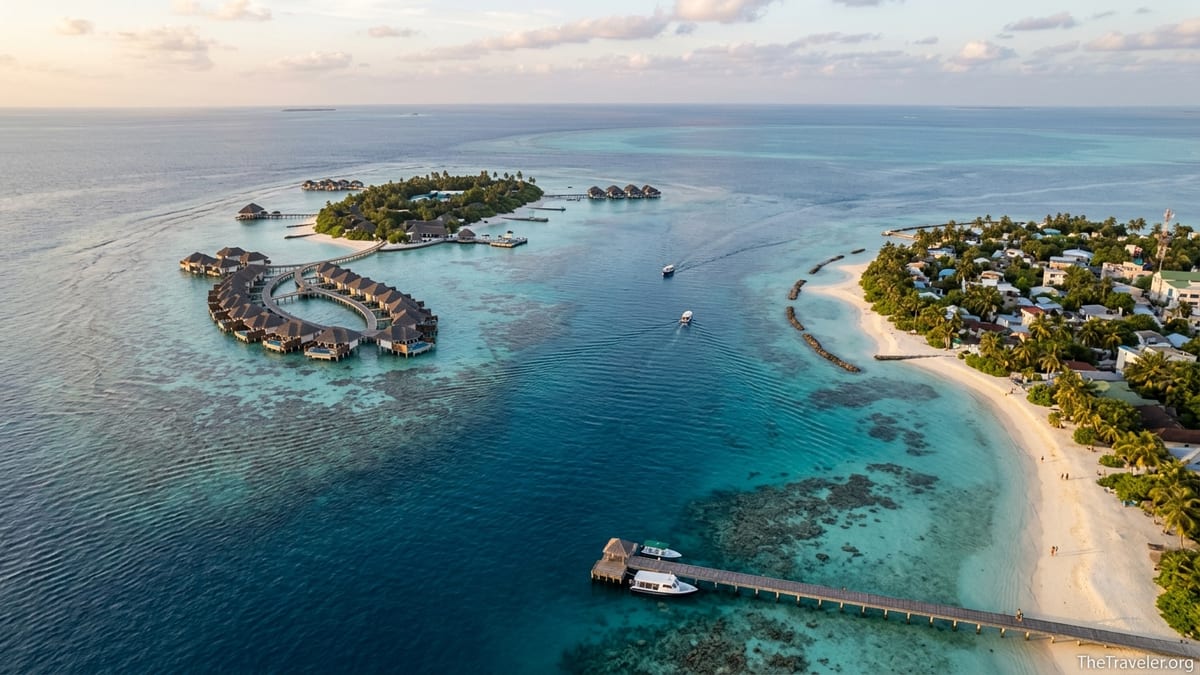
Every atoll in the central Maldives now offers a mix of private resort islands and inhabited local islands with guesthouses and small hotels. Resorts occupy entire uninhabited islands and operate on a one-island-one-resort model with private beaches, house reefs and all-inclusive meal plans. Nightly rates at four and five-star properties often start around 500 to 800 dollars per couple in the low season and climb well beyond that in peak months, but transfers, meals and some activities are packaged to simplify planning.
Local islands such as Maafushi in South Malé Atoll or Fulidhoo in Vaavu Atoll offer a more affordable, community-based experience. Here you stay in family-run guesthouses or simple boutique hotels, often for 50 to 150 dollars per night including breakfast, and then pay separately for activities. A snorkel trip with a small operator might cost 30 to 60 dollars per person, while a two-tank dive may run 80 to 120 dollars depending on distance and equipment rental. On local islands you will find designated “bikini beaches” for tourists, while other community beaches require modest dress, so the feel is more village than private resort.
For honeymooners and couples who want a seamless, indulgent stay, resorts such as those in South Ari or Laamu Atoll offer overwater villas, fine dining and curated dive centers with their own boats. For independent travelers, divers on a budget or families watching costs, local islands offer the same ocean and access to many of the same reefs at a fraction of the price. The right answer is often a mix: two or three nights on a local island like Fulidhoo or Dhigurah combined with three nights at a resort in the same atoll can balance cost and comfort.
Think practically about your priorities. If you are mainly coming for house reef snorkeling and do not want to organize daily excursions, a resort with strong reef access directly from the beach makes sense. If you want to dive different channels, meet Maldivian families and keep restaurant choices open, a local island with multiple dive shops and cafes will feel more flexible. Either way, staying within the central atolls keeps your transfer time reasonable and your choices broad.
Best Central Atolls for Snorkeling and Classic Lagoon Scenery
For many visitors, the Maldives are first and foremost about snorkeling over bright reefs, spotting turtles and reef sharks, and spending lazy days in shallow turquoise lagoons. In the central band of the country, Ari, Vaavu and the Malé atolls deliver that postcard experience with relatively short transfers. These atolls sit within a few hours of Malé by speedboat or a short seaplane hop, which is ideal if you want to maximize time in the water rather than in transit.
Vaavu Atoll, sometimes called Felidhoo Atoll, is especially well regarded for snorkel-friendly channels and shark encounters, with sites near Fulidhoo and Keyodhoo offering regular sightings of nurse sharks and stingrays. Fulidhoo’s guesthouses typically sell half-day snorkeling trips that visit two or three reefs and a sandbank for roughly 50 to 70 dollars per person, including basic equipment and drinks. The house reef off Fulidhoo’s bikini beach is also good for casual swims where you might see blacktip reef sharks cruising in shallow water.
In Ari Atoll, both resort islands and local islands like Rasdhoo and Thoddoo offer easy lagoon access plus boat trips to thilas and reefs known for manta rays and whale sharks, especially in the South Ari area. Resorts in Ari often market themselves as “snorkeler’s paradises,” with drop-offs accessible from the jetty and guided night snorkeling to see nurse sharks and bioluminescence. Local islands keep costs lower: a mid-range guesthouse on Rasdhoo might charge around 100 dollars a night in high season, while a simple snorkeling excursion to nearby Madivaru Corner or other reefs is usually under 60 dollars per person.
For travelers who prefer to avoid domestic flights, the North and South Malé atolls are the most convenient snorkeling bases. Maafushi, Guraidhoo and Gulhi in South Malé Atoll all have guesthouses that arrange budget snorkel trips to nearby reefs, shipwreck sites and picnic sandbanks. A family of four might spend around 150 to 200 dollars on a half-day private excursion including soft drinks and simple snacks, which compares favorably to resort day trips that can exceed that figure per person. The trade-off is that near-Malé waters are busier, with more boat traffic, so if you value solitude as much as coral, look to Vaavu or Ari.
Diving Hubs in the Central Atolls: Channels, Pelagics and Liveaboards
The central Maldives are considered one of the world’s most reliable areas for warm-water diving, with a mix of channel dives for sharks and pelagics and sheltered thilas rich in reef life. Vaavu and Ari Atolls stand out for land-based divers, while Meemu, Dhaalu, Thaa and Laamu further south are often explored on liveaboards or from dedicated dive resorts. Diving in the Maldives is not the cheapest in Asia, but central atolls offer excellent value when you factor in access and marine life.
Vaavu’s channels such as Miyaru Kandu are often described by dive operators as among the best in the country for schooling grey reef sharks and eagle rays, particularly during incoming current. Dive centers on local islands like Fulidhoo and Keyodhoo typically charge from around 90 to 120 dollars for a two-tank boat trip including tanks and weights, with discounts for multi-day packages. Many guests stay five to seven nights on Fulidhoo solely to dive these channels repeatedly, taking advantage of small-boat groups and the island’s quiet, low-rise guesthouse atmosphere.
Ari Atoll is the classic all-rounder for diving in the central Maldives, with famous sites in both North and South Ari. Resorts and local islands alike advertise excursions to thilas known for dense fish life and manta cleaning stations, while South Ari’s outer reef is one of the country’s most reliable regions for spotting whale sharks. Local islands such as Dhigurah in South Ari attract divers who want the freedom of independent restaurants and guesthouses but still plan two or three days of diving or snorkeling focused on whale sharks and mantas. Expect dive packages of ten dives here to start somewhere around 600 to 900 dollars excluding full gear rental, depending on operator and season.
For advanced divers chasing quieter sites, the surf-focused central atolls of Meemu, Dhaalu, Thaa and Laamu are increasingly popular. Many visitors book a week on a liveaboard that cruises this belt, diving channels that are rarely visited by day boats and often encountering fewer other groups underwater. Liveaboard trips typically bundle accommodation, meals and three dives per day into packages starting near 1,800 to 2,500 dollars per person for a week, not including international flights. For those who prefer to sleep on land, islands like Gan in Laamu Atoll host small guesthouses and a handful of resorts with in-house dive centers that offer daily boat diving to outer reefs and channels.
Surfing the Central Atolls: Meemu to Laamu
While surf in the Maldives was first popularized around the Malé atolls, the central surf atolls of Meemu, Dhaalu, Thaa and Laamu are now considered a step up for those seeking longer, more powerful waves and fewer crowds. Surf operators often describe this region as offering a mix of reef points and walls that pick up solid south swells between about May and October, with June to August usually the peak for consistent surf. Most breaks are coral reefs, so intermediate to advanced surfers are best suited here.
Laamu Atoll has emerged as the most accessible central surf base thanks to its small airport and a flagship surf resort that fronts a well-known left-hand reef break. Here, surfers often stay five to ten nights and surf with in-house guides who limit numbers at each break. The resort’s surf packages may include boat transfers to nearby waves, video coaching and board rental, with total trip costs easily running into several thousand dollars per person once domestic flights, accommodation and meals are included. This is a polished experience focused on comfort as much as surf.
Further north, Meemu, Dhaalu and Thaa see fewer resort developments and more boat-based surf traffic. Many surfers choose a charter boat that cruises these atolls, anchoring near breaks that work on the day’s wind and swell combinations. On a typical seven to ten night surf charter, you might wake up anchored off a reef pass, paddle out for a morning session with only your group in the lineup, then reposition by boat to a different break for the afternoon. Prices for full-board surf charters in this region vary widely but often fall in the 2,000 to 3,500 dollar range per person for a week, depending on vessel standard and group size.
For budget-conscious surfers or those new to reef waves, a compromise is to base on a local island in the North Malé or South Malé Atoll, such as Thulusdhoo or Guraidhoo, and join daily surf boat trips while getting a feel for Maldivian reefs. Later trips can push further into the Meemu-to-Laamu belt. In all cases, travel insurance that covers reef breaks, good booties and an honest self-assessment of your surf level are essential.
Short Transfers and Family-Friendly Choices
Families, long-weekend travelers and anyone anxious about small planes tend to prioritize short, simple transfers. In the central Maldives, that usually means staying within speedboat range of Malé in Kaafu, Vaavu or Ari Atolls. Shared speedboats from the airport jetty mean you can often land in the afternoon and be on your island beach by sunset without overnighting in the capital. Travel times range from about 30 minutes to Maafushi in South Malé Atoll to roughly 90 minutes to some Ari or Vaavu islands, depending on route and sea conditions.
Resorts close to Malé that are popular with families often package transfers and kid-friendly facilities into one price. Many offer spacious beach villas that can sleep two adults and two children, kids’ clubs with daily activities and shallow lagoons where young swimmers can safely play. While nightly rates at these properties can be higher than more remote islands with smaller kids’ facilities, the short transfer can be worth it after a long-haul flight with children. Some resorts also run promotions where children under a certain age stay or eat free when sharing a villa with parents during off-peak months.
Local islands like Maafushi and Thulusdhoo have become practical family bases for those watching costs but still wanting organized activities. A family of four can often find a clean, air-conditioned guesthouse room with breakfast from around 100 to 150 dollars per night in shoulder seasons, then add affordable excursions: a half-day snorkel and sandbank trip for perhaps 180 to 220 dollars total for the family, or a sunset dolphin cruise in the 80 to 120 dollar range. Restaurants on these islands serve both Maldivian and simple international dishes, with many cafes offering child-friendly menus and fresh juices.
When traveling with young children, ask detailed questions before booking: is there shade on the main tourist beach, can the guesthouse provide cots or extra beds, are there medical clinics or pharmacies on the island, and what is the latest return time of the speedboat to the airport on your departure day. Staying in the central atolls close to Malé typically means better transport frequency and easier logistics in case of weather delays.
Budget Travel on Local Islands: What Costs to Expect
The opening of guesthouses on local islands has transformed the central Maldives from a purely luxury destination into something that budget travelers can realistically access. On islands such as Maafushi, Fulidhoo, Thulusdhoo, Dhigurah and Rasdhoo, you can now find simple rooms starting around 40 to 60 dollars per night in low season and 70 to 120 dollars per night in high season. These often include breakfast, air conditioning and private bathrooms. Mid-range boutique guesthouses with sea views and rooftop terraces may run closer to 120 to 180 dollars per night but still undercut nearby resorts significantly.
Daily expenses on local islands are manageable if you plan ahead. Sit-down meals in casual cafes typically range from 7 to 15 dollars per person for grilled fish, curries, rice and fresh juice, while a coffee and snack at a local tea shop might be just a few dollars. Excursions are the major extra cost: shared group snorkeling trips often run 30 to 60 dollars per person, while private boat charters and bespoke trips cost more. Budget-conscious divers can sometimes negotiate discounted multi-dive packages if they commit to several days of diving with the same center.
Transfers are the hidden line in many budgets. Public ferries between Malé and some central atoll islands are extremely cheap, sometimes under 5 dollars per person one way, but run only on certain days and take several hours. Shared speedboats cost more but are far faster and run more frequently. For instance, a shared speedboat to a popular island within South Malé or Vaavu can cost roughly 30 to 60 dollars per person each way, depending on distance and whether the service is subsidized by local businesses.
Even when traveling on a budget, it is worth leaving room for one or two special experiences. That could be a manta-focused snorkel trip in Ari Atoll, a night dive in Vaavu, or a simple “day pass” to a nearby resort that includes lunch, pool access and use of sun loungers. Day passes vary widely but often start around 100 to 200 dollars per person at resorts within reach of busy local islands like Maafushi, giving you a taste of resort life without paying full overnight rates.
The Takeaway
Choosing where to stay in the central Maldives is ultimately about trade-offs between transfer time, budget, privacy and the type of water activities that matter most to you. Snorkelers and casual swimmers who want easy house reef access might lean toward Ari or Vaavu, either in a resort with a strong house reef or on a local island with daily boat trips. Serious divers could base on Fulidhoo, Dhigurah or a dedicated dive resort, or join a liveaboard through Meemu and Laamu for quieter channels and pelagic encounters. Surfers may be drawn to Laamu’s polished resort breaks or to charter boats roaming Meemu, Dhaalu and Thaa.
Centrally located local islands have made the Maldives more accessible than ever for couples and families traveling on realistic budgets. By mixing a few nights on a local island with a shorter resort stay, or choosing an atoll that keeps transfers to a simple speedboat ride, you can experience the same luminous lagoons and rich reefs that made the Maldives famous without overspending. The key is to match your base to your priorities, ask detailed questions about transfers and activities in advance, and treat the central atolls not as a single destination but as a set of distinct options, each suited to a different style of traveler.
FAQ
Q1. Which central Maldives atoll is best if I only have three or four nights?
For very short trips, staying within speedboat range of Malé is ideal. Islands in the Malé atolls, Ari or Vaavu let you arrive and reach your guesthouse or resort the same day, minimizing travel time and maximizing time in the water.
Q2. Are local islands in the central Maldives safe for solo travelers?
Local islands in the central atolls are generally considered safe, with small communities and guesthouses used to hosting independent visitors. Normal common-sense precautions apply, and solo travelers often appreciate the social atmosphere of shared excursions and small cafes.
Q3. How much should I budget per day on a local island, excluding flights?
A realistic daily budget on a central local island might start around 80 to 150 dollars per person, including a mid-range guesthouse, meals in local cafes and at least one shared excursion every day or two. Divers and frequent excursion-goers should allow more.
Q4. Do I need to book snorkeling and diving in advance?
In high season from roughly December to April it is wise to reserve at least your first day or two of diving or key excursions before arrival, especially on smaller islands with only one or two operators. Outside peak periods, you can often arrange trips on the spot through your guesthouse.
Q5. Are domestic flights worth it compared with speedboats?
Domestic flights to atolls such as Laamu or Dhaalu cost more than speedboats but open up quieter surf breaks and less developed reefs. They become more worthwhile on trips of a week or longer, when the extra cost is spread over more nights and you gain access to less crowded sites.
Q6. Can I drink alcohol on local islands?
Alcohol is not served in regular cafes or guesthouses on inhabited local islands, and bringing your own is restricted by local law. Some cruise boats and offshore “floating bars” serve alcohol, but if having drinks at sunset is important, a resort island is the more straightforward choice.
Q7. What is the best time of year for snorkeling and diving in the central atolls?
Snorkeling and diving are possible year-round, but conditions vary with monsoon patterns. The dry season around December to April usually brings calmer seas and better visibility, while the wet season can offer richer plankton life and different pelagic encounters, especially in some channels.
Q8. Do families with young children do better on resorts or local islands?
Resorts near Malé tend to be easier with very young children because of kids’ clubs, shaded pools and simple transfers. Families with older children or teenagers who are comfortable with modest dress codes and village life often enjoy the freedom and value of local islands.
Q9. Is surfing possible from a local-island base in the central Maldives?
In the strict central-surf belt from Meemu to Laamu, most surfers stay on boats or at specialized resorts, but closer to Malé some local islands act as surf bases. Many travelers start there, then join a charter or resort-based surf trip further south once they know their preferences.
Q10. How far in advance should I book accommodation in the central atolls?
For peak holiday periods and popular islands within speedboat range of Malé, booking three to six months ahead secures the best choices. In shoulder seasons, you can often find guesthouse availability with a few weeks’ notice, while liveaboards and marquee surf resorts may require longer lead times.