


Fushifaru Maldives has always marketed itself as a boutique, barefoot-luxury island, but in 2026 the resort doubled down on that identity with a new “Sleep Under the Stars” experience on what it calls the largest natural sandbank in Lhaviyani Atoll. I combined a multi-night villa stay with this new sandbank sleepout to see how the promise of a tiny island, serious marine life and a showpiece sandbank actually feels once you have sand between your toes and salt in your hair.
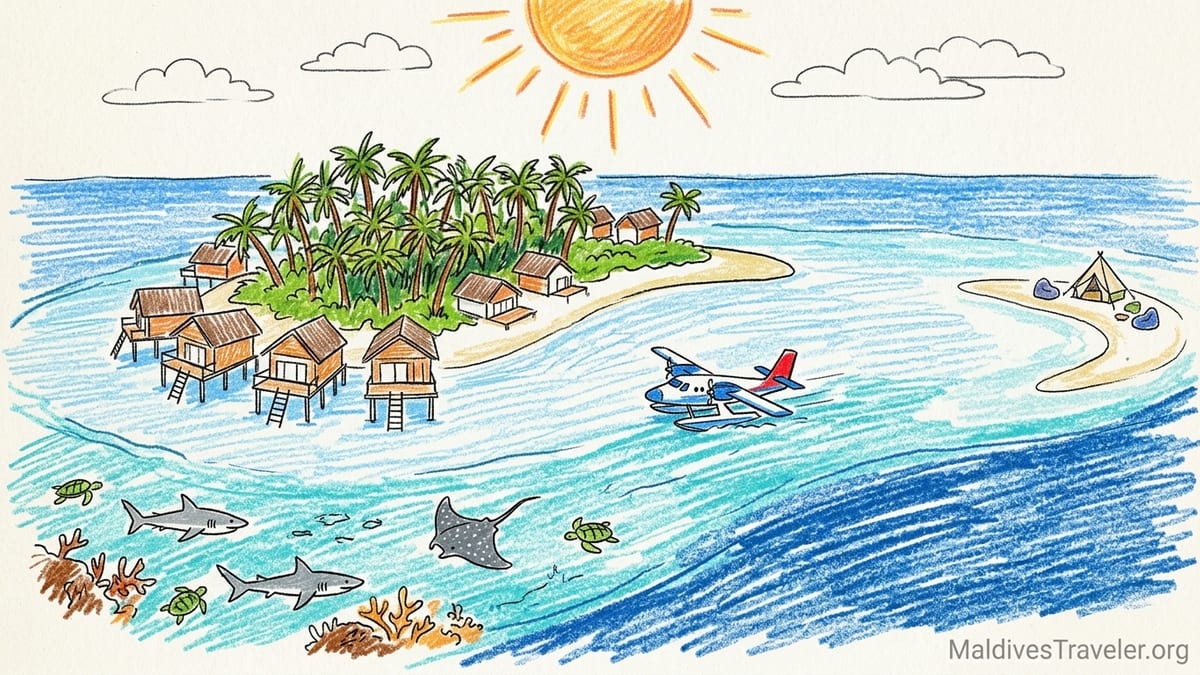
Where Fushifaru Sits in Lhaviyani’s Line-Up
Fushifaru lies in Lhaviyani Atoll, roughly a 35-minute seaplane hop north from Malé’s Velana International Airport. The resort operates as a small private island tucked beside a designated Marine Protected Area and within reach of several well-known dive sites, so the setting is more about corals and channels than postcard sandbars alone. The arrival is classic Maldives: seaplane skimming turquoise water, a short jetty walk, and a welcome team waiting with cool towels and drinks before you even reach the open-air lobby.
The island itself is small. According to the resort’s own materials, Fushifaru has 63 beach and water villas, which aligns with independent brochures that list 63 villas split between the beach and lagoon. You can walk a complete loop around the island in about 15 to 20 minutes at a relaxed pace, even stopping for photos and to peer into the shallows. That puts it in the same “pocket-sized” category as places like Baros, but distinctly more intimate than Lhaviyani neighbors such as Kuredu, which has several hundred rooms and multiple jetties.
Being next to a Marine Protected Area matters. The resort’s 2024 press material emphasizes its position between the protected zone and three of the atoll’s notable dive spots, and dive staff on the island repeatedly highlighted the channels near Fushifaru as manta and shark feeding grounds in season. During my stay, the ocean-facing side of the island felt very alive; reef sharks regularly cruised past the drop-off, and eagle rays were common enough that staff barely pointed them out anymore.
For travelers trying to pin down Fushifaru’s place on a map filled with new openings, it helps to think of it not as a mega-resort with every possible venue, but as a compact, house-reef-oriented island that uses its sandbank and reef to differentiate itself from the larger, more built-up properties in the same atoll.
Villa Types, Layout and Realistic 2026 Rates
Fushifaru’s accommodation is simple on paper but more nuanced in reality. Official villa information lists 44 beach villas and 19 water villas. Among the beach options are standard Beach Villas, Beach Villas with Pool and versions facing sunrise or sunset. Overwater, current lineups from specialist sites confirm three categories: Jacuzzi Water Villas, Pool Water Villas and Premium Pool Water Villas, the latter being the newest and largest, added as the resort expanded its overwater offerings.
I stayed in a Sunrise Beach Pool Villa and later moved to a Jacuzzi Water Villa to sample both sides. The Sunrise Beach Pool Villa delivered the classic Maldivian mix: a generous bedroom with king bed, a shaded terrace looking straight out to the lagoon, and an open-air bathroom with a freestanding tub and outdoor shower surrounded by planted greenery. The pool was just large enough for short laps, with privacy provided by hedging and the natural curve of the beach, although you still glimpse neighbors walking past at the high-tide line.
The Jacuzzi Water Villa, sitting on the main lagoon jetty, measured a bit under 100 square meters, with indoor-outdoor living focused on the deck. The selling point is the circular whirlpool tub on the terrace, facing the channel, and direct ladder access into the lagoon. Inside, it felt more compact than the beach pool villa but still well-organized: a central sleeping area with a sea-facing bed, a small living zone, and a bathroom at the back with both indoor and semi-open shower spaces.
On pricing, multiple live-rate tools checked in October 2026 show starting prices around 600 to 700 US dollars per night for entry-level villas in shoulder season once taxes and service are included, rising well above 1,000 US dollars for premium overwater categories in busier months. As one concrete example, a three-night package in a Jacuzzi Water Villa in mid-November 2026 with breakfast and seaplane transfers was listing just under 4,000 US dollars for two adults through a specialist agency. Direct-contract winter offers from late 2024 brochures show that rates are quoted per villa per night and carry the usual Maldivian add-ons: 10 percent service charge, 16 percent tourism goods and services tax, and a 6 US dollar per-person nightly green tax. Families should also note that two children under 12 can usually stay and dine free on the same meal plan as parents when booked into standard villas, which softens the bill considerably compared to many high-end competitors.
Beach, Lagoon and the Everyday Feel of the Island
Fushifaru’s marketing claims it “was born from a natural sandbank” and press material repeatedly highlights the powder-soft sand as a signature. That is not just a line. The sand around most of the island is fine and pale, comfortable under bare feet, especially along the sunrise side where my villa sat. The shoreline does shift with seasons, and you can see low sea walls and subtle erosion control in a few spots, but during my October visit, the main swimming beaches were wide enough for loungers and gentle entry even at high tide.
The lagoon on the sunrise flank is shallow, graded and ideal for just standing out in waist-deep water while fish dart past your ankles. At low tide you need to wade out a bit further to swim properly, which is typical for reef islands in this atoll. The sunset side faces the channel and feels wilder, with stronger currents and quicker access to the drop-off; this is where you are more likely to see reef sharks and rays cruising by, and where the sound of the surf can lull you to sleep in the water villas.
From a practical guest perspective, the small scale means everything is under a 10-minute sandy stroll. The main restaurant, pool, bar, water sports center and spa cluster near the middle, while the villas ring the island. After the first day I rarely used the buggy service except when it rained. For people who enjoy walking a long, uninterrupted beach, the circumference is short, but if you enjoy circling the island barefoot two or three times a day, it becomes a pleasant ritual rather than a limitation.
Nighttime on Fushifaru is very dark, with limited pathway lighting, which suits the star-gazing pitch but requires a bit of care if you are walking back to your villa after a late drink. Torches are provided in rooms and became essential when clouds rolled in and the moon disappeared.
House Reef and Marine Life: Small Island, Big Reef
If you are choosing Lhaviyani specifically for snorkeling, Fushifaru’s house reef is one of its strongest assets. A widely shared independent review from 2026 characterizes the reef as “small island, big reef,” and that reads true. There are several easy entry points from the beach, marked by buoys. From my sunrise villa, I simply walked 30 meters into the lagoon and kicked out another 20 before the corals began rising to meet me.
Coral recovery is still patchy in places, but sections of the reef show healthy hard coral growth, and fish life was consistently good. In three snorkel sessions on the house reef alone, I saw multiple blacktip reef sharks, a hawksbill turtle, schools of fusiliers, big parrotfish, and the usual cast of damsels and wrasses. On one afternoon snorkel, an eagle ray glided along the slope right below me for a good 30 seconds before turning into the blue. Visibility varied with currents, but even on the murkier days it remained enjoyable.
The dive center, which operates its own boats, focuses heavily on channel dives and manta sites in season. Briefings reference the reef’s position near the Marine Protected Area and outline where sightings are most common at different times of year. Guests keen on mantas should plan around traditional Lhaviyani manta seasons and confirm with the dive team. During my stay, mantas were being seen at a cleaning station reachable within a short boat ride, though my own manta excursion was weathered out.
Compared with larger resorts in the atoll, which sometimes require long boat rides to decent snorkeling, Fushifaru’s drop-off right off the beach is a major reason to choose it. You do, however, need reasonable confidence in the water, especially along the channel side where currents can be strong and quickly carry you along the reef edge.
Food, Bars and How Dining Works in Practice
As a small resort, Fushifaru cannot compete with the restaurant count of mega-islands, but it does cover the key bases. The main restaurant serves buffet breakfast and dinner with rotating themes, while a specialty restaurant near the water focuses on grilled seafood and Maldivian-influenced dishes. There is also a poolside bar that handles à la carte lunch and snacks, along with a small selection of cocktails and mocktails that lean into tropical flavors without becoming sugary caricatures.
Breakfast was a strong point, with a wide selection of fruits, yogurts, pastries and a made-to-order egg station. Coffee quality was better than expected; baristas happily pulled double espressos and cappuccinos without extra charge on my bed-and-breakfast plan. Dinner buffets mixed international staples with more locally inflected dishes. One evening, the Maldivian corner presented fragrant tuna curry, coconut-laced sambols and flatbreads, which became the meal I went back for twice. Another night, the focus shifted to Mediterranean grilled fish, which showcased the local catch well.
Pricing for à la carte meals and drinks sits in the mid-range for the Maldives. During 2026, resort documentation and third-party breakdowns of costs show main courses in the 25 to 45 US dollar range, with cocktails typically between 18 and 25 US dollars before taxes and service. Some agencies quote bundled half-board and full-board supplements that, when compared to paying entirely à la carte, make sense if you are likely to eat two substantial meals a day at the resort rather than snacking through midday.
Service at the restaurants was friendly and unhurried. Staff quickly remembered room numbers and simple preferences, like how I took my morning coffee or my habit of asking for extra lime with grilled fish. There were minor delays at peak times, particularly for made-to-order dishes at the pool bar during lunchtime, but nothing that undermined the overall dining experience.
Service Culture and the Feel of a Boutique Operation
Fushifaru promotes itself as a boutique property, and the service culture largely fits that description. Check-in happened in-villa, with a guest experience host walking me through details of the room, meal plan and activities calendar. WhatsApp support operated reliably from 7 a.m. until late evening, and requests for extra snorkel gear, a different pillow and a late housekeeping service were all acknowledged quickly and handled within 30 minutes.
Because of the small villa count, staff faces become familiar very quickly. The same bartender might mix your sundowner, then be part of the team hosting a simple Maldivian boduberu drum evening later. For some guests, that repetition feels warmly personal; for those who value anonymity, it can feel like there is no place to fully disappear. I found the balance comfortable. Conversations about reef conditions or traditional Maldivian dishes felt genuine, and there was no pressure to sign up for add-on experiences beyond a polite mention.
Turn-down service arrived while I was at dinner each night, with curtains drawn, mosquito coil set discreetly on the terrace and bottled water replenished. On one rainy afternoon, housekeeping also left a small note with the next day’s forecast and a suggestion to book a morning snorkel when visibility was likely to be best. It is the kind of small, human touch you tend to see more on compact islands where teams communicate closely.
Where the boutique scale shows its limits is during peak occupancy. On one night when the resort was near full, the main bar felt busy, and queues formed at the espresso corner at breakfast. These were minor but serve as a reminder that with a single central restaurant and bar, peak-time bottlenecks are hard to avoid. If you prefer multiple quiet venues, one of Lhaviyani’s larger resorts will suit better.
Sleep Under the Stars: The 2026 Sandbank Experience in Detail
In 2026 Fushifaru formally launched its “Sleep Under the Stars” overnight package on what the resort describes as the largest natural sandbank in Lhaviyani Atoll. The experience is promoted as the pinnacle of romance: a completely private night on an untouched tongue of sand with the ocean on both sides and nothing man-made in sight once the boat pulls away. I booked one night through the resort directly to see how that promise holds up.
The evening begins shortly before sunset. A small dhoni boat collected us from the main jetty, with a butler and boat crew on board. The ride to the sandbank took about 10 to 15 minutes across calm lagoon water, long enough to watch the island recede but short enough that you never feel completely cut off. As we approached, the sandbank looked like a slender crescent, with a few low dunes and the tent structure set up near the widest part. There were no other boats or islands in immediate view, which amplified the sense of isolation.
The setup itself is more glamping than rough camping. A sturdy canvas tent, already pitched, housed a proper bed with a quality mattress, crisp linen and overhead fan powered by a discreet generator tucked behind a sand berm to muffle sound. On the sand outside, the team had arranged a low table, lanterns and beanbags for sunset drinks and later star-gazing. For a time, it really did feel like you had the ocean entirely to yourself, with waves lapping on both sides and the sky turning pink, then deep blue.
Practicalities are often glossed over in romantic brochures, but here is how they play out. Bathroom facilities are handled via a portable but fully enclosed bathroom tent set a short walk behind the main sleeping tent, with a chemical toilet and a simple but functional handwashing setup. It is not luxurious, but it is private, clean and mercifully free of noticeable odors. The butler and crew stay on a small support boat anchored at some distance, close enough for safety but far enough that you cannot hear them over the surf. A radio and phone are provided in the tent for emergencies or if you decide in the middle of the night that you want to return to the island.
Wind, Insects, Privacy and How Much You Actually Sleep
Conditions on a natural sandbank are shaped by wind and tide, and that is something the resort is upfront about. On my night, a steady breeze blew across the bank from the lagoon side, which kept temperatures comfortable and significantly reduced insects. Mosquitoes were far fewer than on the main island, presumably because there is no vegetation or standing water. A few small flies appeared around food at dinner but disappeared as soon as the dishes were cleared. I used insect repellent once at dusk and did not feel the need to reapply.
Privacy is excellent by Maldivian standards, but not absolute in a theoretical sense. The resort schedules the overnight so no other excursions use the same sandbank, and during my stay no passing boats came close enough to see more than a small cluster of lanterns flickering in the distance. Within that envelope, you genuinely feel alone. Sound travels differently over water, so you hear only wind and waves, occasionally punctuated by the soft slap of the support boat’s hull in the distance.
The biggest surprise was how much sleep I actually got. Between the novelty of the setting, the unfamiliar noises of the open ocean on two sides and a bright moon that rose halfway through the night, deep sleep was lighter and more fragmented than in the villa. I would estimate five to six hours of real rest in total, broken into two or three stretches. The bed itself was comfortable, and the tent’s canvas muted the wind without trapping heat. If you are a very light sleeper, be prepared to trade a normal night’s rest for the memory of waking up at 3 a.m., unzipping the tent and stepping out into an enormous sky thick with stars.
In the morning, the butler returned quietly just after first light with coffee and a simple breakfast basket. Watching the sun lift over an empty horizon with bare feet in the cool sand explains why the resort is confident enough to center its brand around this sandbank. It is a moment that is hard to replicate on a busy main island where boats, staff and other guests are always somewhere in sight.
Does the Small Scale Feel Intimate or Limiting?
After several nights split between beach and water villas, plus the sandbank sleepout, the question became whether Fushifaru’s tiny footprint still charmed or started to feel restrictive. For me it landed on the intimate side, but with clear caveats. If your idea of a Maldives holiday involves hopping between six restaurants, late-night DJs and long cycling paths, this is not your island. You will quickly know every pathway, recognize every server and probably say hello to the same fellow guests each sunrise.
The upside of that scale is the ability to structure your days around simple, elemental pleasures: morning house-reef snorkels, barefoot walks around the island, an hour in the spa and late-afternoon cocktails watching the light change on the lagoon. It is easy to settle into a rhythm that feels far removed from busy, resort-style entertainment calendars. I found three to five nights to be the sweet spot for this approach, with the sandbank experience slotted in mid-stay to break the pattern.
Where some might feel limited is during poor weather. On a gray, windy day when snorkeling was off the cards and rain shut down much of the outdoor lounging, indoor options felt thin: a small gym, the spa relaxation lounge and your villa. Larger Lhaviyani resorts with libraries, multiple bars and extensive indoor lounges cope better with several days of poor weather. At Fushifaru, you notice the lack of alternatives quickly when the elements keep you inside.
For couples who are content with a slower rhythm and appreciate repetition, the island’s small scale reinforces the feeling of being temporarily removed from the world. For restless travelers or families with teens craving activity variety, a bigger island will likely deliver more satisfaction after day three.
The Takeaway
Fushifaru Maldives delivers on its promise as a boutique, reef-focused island that leans heavily into its origin story as a sandbank. The 35-minute seaplane transfer keeps you within easy reach of Malé but far enough away to feel like you have stepped into a different world, especially once you start gliding along its house reef or sail out to the sandbank at sunset.
The exact villa mix, from Sunrise Beach Villas to Premium Pool Water Villas, covers the main Maldivian wish lists without overwhelming you with subcategories. Rates in late 2026 are not “budget Maldives” by any stretch, but they sit in a band where you can still access strong snorkeling, personalized service and a headline sandbank experience without paying flagship-brand prices. Food is solid rather than culinary-competition level, but there is enough variety over a typical week, and the service, in my experience, skewed warm and attentive.
The new Sleep Under the Stars sandbank stay is the signature differentiator. It is not for everyone. You swap air conditioning, a fully plumbed bathroom and guaranteed deep sleep for the romance of a private sandbank, glamping-level comforts and the bragging rights of having woken up surrounded by nothing but sea and sky. For me, it was absolutely the most memorable night of the trip. If I were budgeting a future stay, I would pay extra to do it again, but I would book it as a one-off highlight, not several times across a single visit.
Who should choose Fushifaru over one of Lhaviyani’s larger resorts? Couples and small groups who care more about snorkeling, intimate scale and a strong sense of place than about long restaurant lists and big-resort nightlife. First-time Maldives visitors who want the archetypal turquoise-water-and-white-sand visuals without needing a sprawling island will also be well served. Those traveling with children who need many structured activities, or anyone who prefers extensive entertainment and multiple indoor venues, may find better fits at larger Lhaviyani properties that trade some reef immediacy for more infrastructure. For everyone else, especially travelers who are drawn to the idea of a resort born from a sandbank and crowned by a night sleeping back on one, Fushifaru makes a compelling, distinctive choice.
FAQ
Q1. How long is the seaplane transfer from Malé to Fushifaru Maldives?
The seaplane transfer from Malé’s Velana International Airport to Fushifaru typically takes around 35 minutes, depending on routing and weather conditions on the day.
Q2. How many villas does Fushifaru have and what are the main types?
Fushifaru has 63 villas in total, split between 44 beach villas and 19 water villas, including Beach and Beach Pool Villas, plus Jacuzzi Water Villas, Pool Water Villas and Premium Pool Water Villas.
Q3. What are realistic 2026 room rates at Fushifaru Maldives?
Checked in October 2026, starting rates for entry-level villas often appear around 600 to 700 US dollars per night in shoulder periods, with premium overwater villas rising above 1,000 US dollars per night once taxes, service and seaplane transfers are factored in.
Q4. How long does it take to walk around the island?
At a relaxed pace, including a few photo stops, you can walk a full loop around Fushifaru in about 15 to 20 minutes, which reinforces its intimate, small-island feel.
Q5. What is the beach and lagoon like at Fushifaru?
The sunrise side has soft, fine sand and a gently shelving lagoon ideal for swimming, while the sunset side faces a channel with livelier waves and faster access to the house reef and drop-off.
Q6. How good is the snorkeling on the Fushifaru house reef?
The house reef is one of Fushifaru’s main strengths, with multiple beach entry points and regular sightings of reef sharks, turtles, rays and abundant reef fish, though currents can be strong on the channel side.
Q7. What exactly is included in the Sleep Under the Stars sandbank experience?
The sandbank package typically includes boat transfer, a private glamping-style tent with full bed, simple bathroom tent, dinner setup on the sand, overnight support from a distant crew boat and breakfast at sunrise.
Q8. Is the sandbank experience suitable for light sleepers or people who dislike camping?
The sandbank stay offers a real bed and tent but remains close to nature, with wind, wave noise and basic bathroom facilities, so very light sleepers or those who strongly dislike camping-style amenities may prefer to skip it.
Q9. Is Fushifaru better suited to couples, families or groups of friends?
Fushifaru’s small size, focus on snorkeling and romantic sandbank experiences make it especially appealing to couples and small groups seeking quiet time together, while families with children who need lots of structured activities may be happier on a larger island.
Q10. Would you personally choose Fushifaru again over a larger Lhaviyani resort?
Knowing what I do now, I would choose Fushifaru again when I want strong house-reef snorkeling, barefoot simplicity and the sandbank sleepout, and would opt for a larger resort only if my priority were more restaurants, indoor facilities and activity variety.