


The central Maldives has quietly become one of the most accessible world-class surf zones on the planet. Nowhere is this more obvious than around Malé Atoll, where powerful reef passes like Cokes, Chickens and Jailbreaks sit within an hour of Velana International Airport and are ringed by a growing mix of surf resorts, guesthouses and charter boats. This guide focuses on Malé Atoll breaks and islands such as Thulusdhoo and Himmafushi, with a practical look at seasons, transfers, where to stay and how to match the right package to your level and budget.
Malé Atoll at a Glance: Layout, Access and Surf Vibe
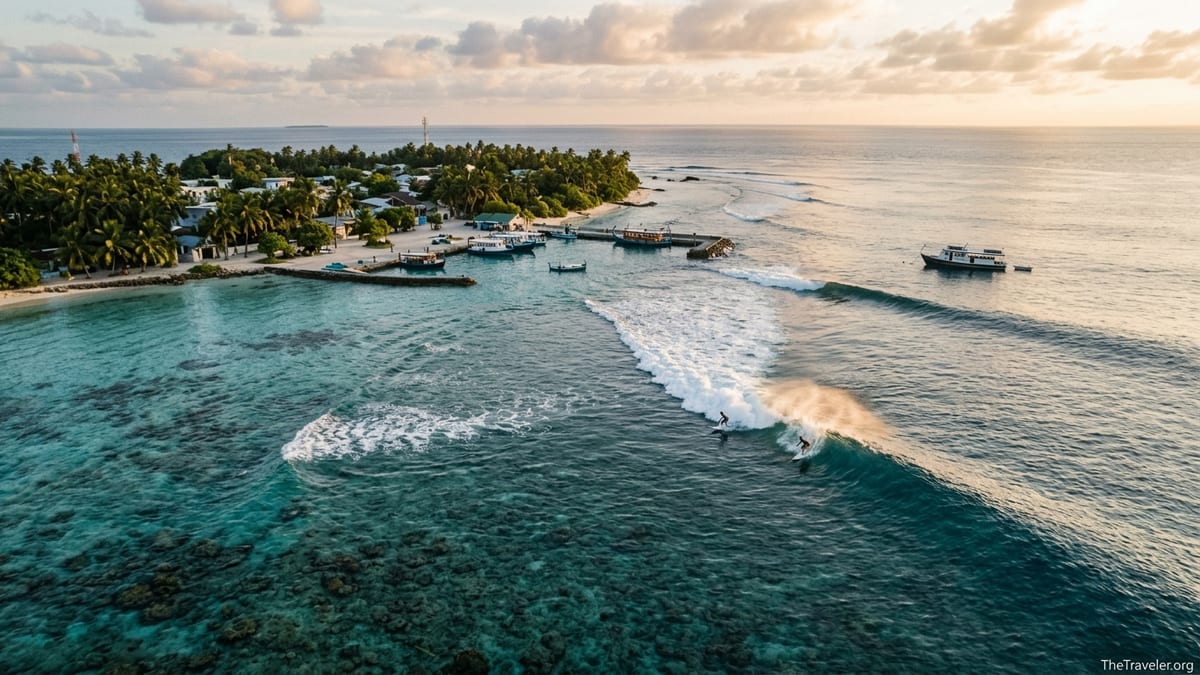
Malé Atoll is split into North and South Malé, with most of the famous surf concentrated in the north. The atoll is essentially a necklace of coral islands wrapped around deep-water channels, where Indian Ocean swells wrap and refract into peeling right and left reef breaks. The proximity to the capital means you can land at Velana International Airport, step onto a speedboat and be watching lines wrap into Cokes or Jailbreaks in roughly 30 to 60 minutes, depending on where you are staying.
For surfers, the main hubs in North Malé Atoll are the local islands of Thulusdhoo and Himmafushi. Thulusdhoo sits beside the Cokes right-hander with Chickens, a long left, across the channel. Himmafushi has the right-hand point of Jailbreaks running down its eastern shore. Around these local islands are several private-island resorts that market themselves as surf-friendly, often including guided day trips by speedboat to the same breaks, priced per trip or bundled into surf packages.
The vibe in the central Maldives has changed from being almost exclusively boat-charter territory to a mix of land camps and budget guesthouses. You can now put together a one-week trip with a room in a simple Thulusdhoo guesthouse, daily boat rides to different Malé Atoll breaks and three meals a day for a fraction of top-end resort prices. At the other end of the spectrum, some five-star resorts offer guided half-day surf excursions by private speedboat, board hire and spa access for couples who want to combine serious waves with soft-sand luxury.
Most visiting surfers build their trip around a handful of headline breaks: Cokes and Chickens off Thulusdhoo, Sultans and Honky’s closer to resort islands, and Jailbreaks off Himmafushi. All are reef breaks with distinct personalities and varying degrees of hazard, so understanding the conditions and your own level is crucial before paddling out.
Surf Seasons in Central Maldives: When to Go and What to Expect
The core surf season in Malé Atoll generally runs from late March through October, with the most consistent and powerful swells arriving between May and August. This period coincides with the southwest monsoon, which funnels Indian Ocean groundswell into the atoll. On a solid pulse in June or July, Cokes or Jailbreaks can serve up clean, overhead sets with enough power to challenge even experienced reef surfers.
Shoulder months such as April and October can be particularly attractive for surfers looking to balance swell size and crowd levels. In early season, many lineups are less busy, yet you can still score chest- to head-high surf at the more exposed breaks. For example, visiting surfers on Thulusdhoo in April often report fun, rippable waves at Cokes and Chickens with fewer boats anchored in the channel, though nothing is guaranteed and flat spells do happen.
The Maldivian “off-season” from November to February is more variable. You will still get windows of surf, but the swell direction and strength are less reliable and winds can be more fickle. Some operators market this as a mellow or “baby waves” period. A November stay split between Thulusdhoo and Himmafushi might mean surfing waist- to shoulder-high versions of Cokes, Chickens and Jailbreaks, which can be ideal for confident intermediates building reef experience, but frustrating for advanced surfers chasing barrels.
Water temperatures in the central Maldives sit in the upper 20s Celsius most of the year, so you will surf in boardshorts or a thin shorty. The bigger concern is sun exposure. Long sessions under a near-equatorial sun quickly add up, so pack a good surf hat, zinc and a light surf shirt or long-sleeve spring suit for peak UV hours, regardless of season.
Thulusdhoo: Cokes & Chickens on a Budget
Thulusdhoo has become the archetypal Malé Atoll surf island for travelers who want world-class waves without paying private-island rates. Located roughly 25 to 35 minutes by speedboat north of the airport, it offers easy access to Cokes, a heavy right-hander that can handle solid swells, and Chickens, a long-running left across the channel that is more playful but still powerful when it is overhead.
Accommodation here ranges from simple guesthouses on sandy village streets to dedicated surf camps positioned as close to the jetty and Cokes channel as possible. A straightforward B&B room in a surf guesthouse can start around 70 to 80 US dollars per night for a single with air conditioning, rising to roughly 110 to 125 US dollars per person per night for full-board packages that include three meals and local surf guiding. Some surf camps list triple-share full-board rates around 90 US dollars per person per night, which can bring the cost of a week-long trip down substantially for small groups.
Surf logistics are very simple on Thulusdhoo. You can often walk to the channel in a few minutes, then either paddle out to Cokes or hop in a small boat for a quick ride across to Chickens. Many guesthouses run scheduled “two hour session” boat shuttles to Chickens for about 10 US dollars per surfer, and to other Malé Atoll breaks for approximately 25 US dollars per person if they can fill at least four seats. Shared airport speedboat transfers in and out of Thulusdhoo typically land in the range of 25 to 40 US dollars per person each way, while a private boat dedicated to your group may cost in the order of 180 to 200 US dollars for the journey.
A typical Thulusdhoo surf day might look like this: a dawn patrol at Cokes with a short paddle from the island, breakfast back at your guesthouse, then a mid-morning boat run to Chickens for a two-hour session. After lunch and a rest in the shade, many surfers either head back out for a sunset surf or take a second boat trip to a different break such as Sultans or Jailbreaks, paying a modest supplement to cover the extra fuel. The island itself is dry, in line with Maldivian rules for local islands, but many guesthouses create a relaxed social atmosphere with shared lounges, movie nights and barista coffee in the late afternoons.
Himmafushi & Jailbreaks: Fast Walls and Local Island Life
Himmafushi sits closer to Malé and the airport than Thulusdhoo and is best known for Jailbreaks, a fast right-hander that runs down the eastern reef. The wave takes its name from the island’s former prison and was long considered semi-restricted, but today it is firmly on the surf map. On a solid swell, Jailbreaks can deliver long, hollow sections that appeal to confident, high-intermediate and advanced surfers comfortable with shallow reef and speed.
The island has grown a small ecosystem of surf guesthouses and camps clustered near the better beaches and within quick reach of the surf channel. Properties like Jailbreak Surf Inn market themselves specifically to surfers with ocean-view rooms, communal meals and in-house boat drivers who know the reef intimately. Price-wise, you can expect something similar to Thulusdhoo: air-conditioned rooms in the lower double-digit US dollars per night if you go bed-only, or around 90 to 120 US dollars per person per night for full-board surf packages that wrap in meals and two to three surf sessions by boat each day.
Day-to-day surf logistics in Himmafushi revolve around short boat hops. Some surfers choose to paddle out when conditions allow, but many guesthouses schedule dawn and mid-afternoon boat runs to line up sessions with the tide and crowd. Because Jailbreaks is a long right with several takeoff zones, it can handle a moderate crowd, yet it does get busy in peak season when charter boats anchor outside the reef. A practical strategy is to stay on Himmafushi itself so that you can be in the water at first light before boats arrive, then sit out the busiest heat of the day back in the village.
Himmafushi, like Thulusdhoo, is a dry local island, so do not expect bar culture or alcohol service outside resort excursions. What you will find are simple coffee shops, local eateries serving fish curries and roshi, and a low-key island rhythm that revolves around prayer times and fishing. Respecting local customs by dressing modestly in the village, using the designated bikini beach and keeping noise down late at night helps maintain a good relationship between visiting surfers and residents.
Surf Resorts vs Local-Island Guesthouses vs Boats
One of the central decisions for a Malé Atoll surf trip is choosing between staying at a surf resort, on a local island guesthouse, or aboard a surf charter boat. Surf resorts near Malé Atoll tend to be private islands with higher nightly rates but considerable comfort and convenience. Many offer guided half-day excursions to breaks like Cokes, Chickens, Sultans or Jailbreaks by speedboat, rolling board rental and guiding into the fee. A typical half-day guided trip can cost from around 80 to 150 US dollars per person, depending on distance and whether the boat is shared or private.
Local-island guesthouses on Thulusdhoo or Himmafushi are more budget-friendly and keep you close to the main breaks every day. As noted, full-board surf packages including room, meals and boat shuttles often run in the 90 to 125 US dollars per person per night range, especially if you share rooms. This makes a seven-night stay with daily surfing realistic for under 1,000 US dollars per surfer before flights and extras, whereas some mid- to high-end surf resorts might charge that for just a few nights in peak season.
Surf charter boats remain an iconic way to explore Malé Atoll and beyond, but they come with a different cost structure. A typical Maldivian surf charter boat might be chartered on a per-boat basis, with prices spreading across a group of six to ten surfers. While an all-inclusive week on a charter, including guiding, meals and multiple daily sessions, can be cost-effective for a full group, solo travelers or pairs may find better value and more flexibility in land-based options, especially around central atolls where land access to headline breaks is easy.
For many surfers, a hybrid approach works best. One example is booking five to seven nights in a Thulusdhoo or Himmafushi guesthouse, then adding one or two nights at a nearby resort either at the start or end of the trip for a dose of overwater-villa comfort. Others might join a short four-night charter focused on Malé Atoll, then spend extra days on Thulusdhoo revisiting favorite waves independently.
Beginner, Intermediate and Advanced: Matching Waves and Packages
Malé Atoll is often portrayed as a mellow alternative to heavier reef destinations, but many breaks here still demand respect. Cokes and Jailbreaks, for instance, can become very fast, hollow and shallow on bigger swells and lower tides. These conditions are best suited to advanced surfers who are comfortable generating speed, reading reef drain-outs and dealing with potential hold-downs on coral.
That said, the region also has friendlier windows. In smaller, shoulder-high surf with light winds and mid-to-high tide, Chickens can be forgiving enough for confident intermediates to practice cutbacks and linking sections on a long left wall. On many days in the shoulder seasons or during the variable November to February period, Cokes and Jailbreaks run at “baby” sizes, offering manageable right-hand walls rather than heavy, pitching barrels. Surf camps on Thulusdhoo increasingly market “ISA-instructor” beginner and improver lessons in these conditions, guiding new surfers to the safer takeoff zones and watching tide and reef exposure closely.
Complete beginners, especially those with no previous reef experience, should consider mixing in some time at more sheltered spots or with formal surf school programs. Some operators base their beginner coaching on the inside sections of Chickens or on nearby sandier reefs, using soft-tops and small-group lessons. A realistic beginner-focused package might include daily coaching in the waist- to chest-high range, video analysis in the evenings and optional boat trips to watch or film more advanced surfers at Cokes or Jailbreaks when conditions are bigger.
When booking, it is essential to match package promises with your level. If a guesthouse advertises “unlimited surf transfers,” clarify whether that means two or three scheduled sessions per day or truly on-demand boating, and ask how they adapt the plan when conditions are too advanced for intermediates. Advanced surfers might prioritize operators that chase swells across several breaks each day, while intermediates may appreciate a more cautious program focused on one or two user-friendly peaks.
Practical Logistics: Transfers, Costs and What to Expect Day to Day
Most surfers flying into Malé arrive at Velana International Airport and transfer directly by speedboat to their chosen island or resort. Shared speedboat transfers to Thulusdhoo or Himmafushi are common and typically cost in the range of 25 to 40 US dollars per person each way, scheduled around arriving and departing flights. Private charters for a group, arranged through your guesthouse or surf camp, often start in the low hundreds of US dollars per boat, with higher prices if you travel at night.
Once based on a local island, daily surf transport is one of your main ongoing costs. Two-hour surf shuttles to nearby breaks might cost around 10 US dollars per surfer when going to a close spot like Chickens from Thulusdhoo, and 20 to 30 US dollars per surfer for more distant breaks such as Sultans or Jailbreaks, assuming a minimum number of passengers. Some surf camps roll these costs into fixed daily rates; others charge each session separately, so clarify this point when comparing options.
Food costs vary depending on whether you choose full-board or to eat out. Guesthouse set menus and buffets commonly price individual meals around 10 to 15 US dollars if not included in a package. Local cafés and small restaurants can be cheaper, especially for Maldivian staples like fish curry or fried noodles. Because local islands do not serve alcohol, your beverage budget will be mostly bottled water, juices and coffee, unless you take day visits to nearby resorts where alcoholic drinks are available at premium hotel pricing.
Day to day, life on a surf-focused local island is simple. Expect early starts, plenty of time in the water and hot, humid afternoons best spent resting in air conditioning or shade. Between surfs, many visitors snorkel house reefs, fish with local crews or simply walk the sandy lanes. Respect for local customs is crucial: dress modestly away from the designated bikini beach, ask before photographing people and observe cultural norms around prayer times and the mosque.
The Takeaway
A Malé Atoll surf trip offers a rare combination of high-quality reef waves, relatively easy access and a range of price points. Thulusdhoo and Himmafushi stand out as practical bases, with Cokes, Chickens and Jailbreaks all within short boat or paddle distance, plus the option to roam further afield to Sultans and Honky’s when conditions line up. Whether you book into a simple guesthouse with shared surf boats or a polished resort with private excursions, the key is aligning your timing, budget and skill level with what these breaks actually deliver through the year.
By understanding the seasons, choosing the right island base, clarifying the details of your surf package and respecting local culture, you can turn the central Maldives from a dream destination into a repeatable reality. Many surfers who start with a week in Thulusdhoo or Himmafushi find themselves returning season after season, chasing that feeling of warm, turquoise walls reeling down reef passes within sight of palm-fringed villages and the easy hum of island life.
FAQ
Q1. When is the best time of year to surf Cokes, Chickens and Jailbreaks?
The most consistent surf season is typically from late March to October, with peak swells from May to August. Shoulder months like April and October often balance good waves with slightly thinner crowds.
Q2. Is Thulusdhoo or Himmafushi better for a first Maldives surf trip?
Thulusdhoo is often the first choice for its access to both Cokes and Chickens, plus a large range of surf guesthouses. Himmafushi is ideal if you love right-handers and want to focus on Jailbreaks while still being closer to Malé and some resort breaks.
Q3. How much should I budget per day for a local-island surf trip in Malé Atoll?
A realistic mid-range budget on Thulusdhoo or Himmafushi might be around 120 to 160 US dollars per person per day, including a full-board guesthouse package and two daily boat sessions, but excluding flights.
Q4. Are Malé Atoll waves suitable for beginners?
Some days and spots can work for beginners, especially in smaller, cleaner conditions at Chickens or on sheltered inside sections, but most headline breaks are reef waves with hazards. Total beginners are better off booking with operators that offer structured lessons and choosing small-swell windows.
Q5. Do I need reef booties to surf the Maldives?
Many experienced surfers go barefoot, but reef booties are strongly recommended for anyone new to coral or concerned about cuts. Even careful surfers occasionally touch the reef on low tides or during wipeouts.
Q6. Can I buy or rent surfboards easily on Thulusdhoo and Himmafushi?
Several surf camps and guesthouses rent boards, usually shortboards and a few hybrids, at daily or weekly rates. Selection can be limited, so serious surfers often bring their primary boards and use rentals only as backup.
Q7. Are there alcohol restrictions on Thulusdhoo and Himmafushi?
Yes. As local islands, they follow Maldivian law and do not serve alcohol in guesthouses or cafés. Alcohol is available on resort islands and some charter boats, which you can visit on organized day trips if desired.
Q8. How crowded do Malé Atoll lineups get in peak season?
In June and July, it is common to see multiple boats anchored at major breaks and competitive lineups at dawn and sunset. Staying on a local island helps you maximize early and late sessions before or after day-tripper crowds.
Q9. What kind of travel insurance do I need for a surf trip to the Maldives?
Choose a policy that specifically covers surfing, medical evacuation and treatment for reef cuts or injuries. Check that boat transfers and remote-island stays are not excluded from coverage.
Q10. Can non-surfers enjoy a Thulusdhoo or Himmafushi trip?
Yes. Non-surfers can snorkel, fish, join sandbank picnics or simply relax on the bikini beach. Those seeking spas, pools and bars might prefer pairing a local-island stay with a few nights at a nearby resort.