


Choosing between Ari Atoll and Vaavu Atoll in the central Maldives is not simply a matter of scenery. Both offer white sand, turquoise lagoons and dreamy overwater villas, but for travelers who care most about what they can actually do once they arrive, the details matter. From year-round whale shark encounters in Ari to legendary shark channels in Vaavu, this comparison focuses on real-world experiences, logistics and costs to help you decide which atoll delivers the better activity-focused Maldives trip.
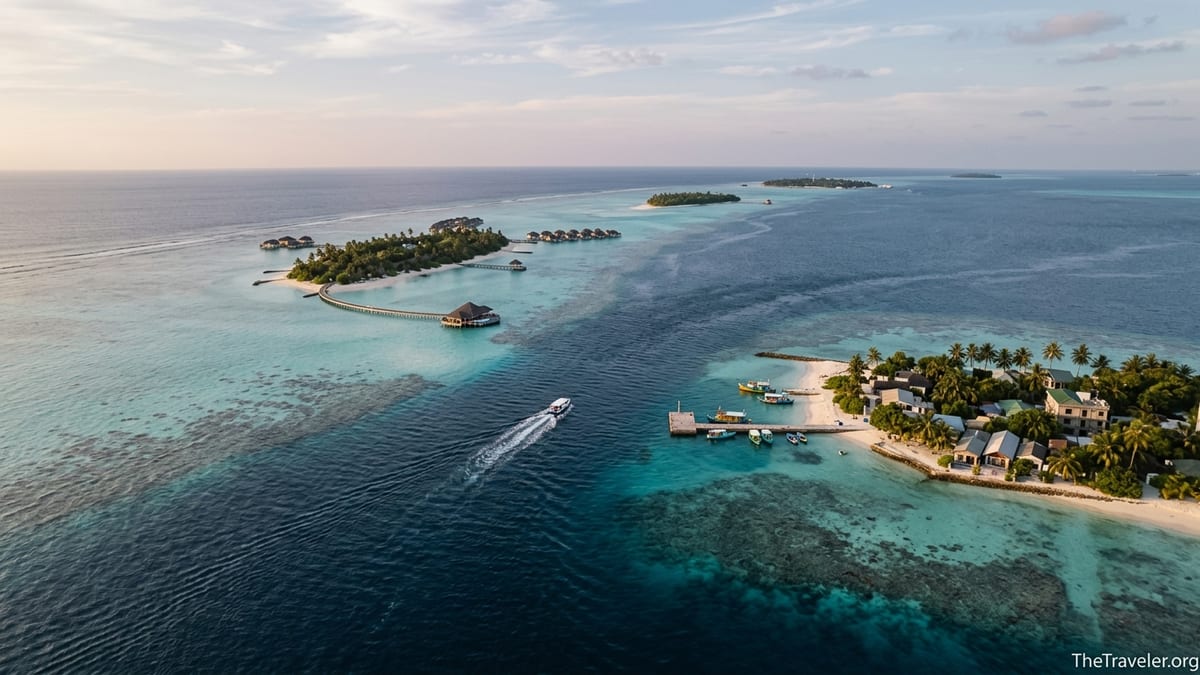
Geography, Atmosphere and First Impressions
Ari Atoll, often split into North Ari and South Ari in travel brochures, is one of the most developed and visited atolls in the Maldives. It sits west of the capital Male and is dotted with well-known private island resorts like Vilamendhoo, Lux South Ari Atoll and Constance Moofushi, alongside inhabited local islands such as Dhigurah and Maamigili. The vibe is polished and visitor-oriented: you will find serious dive centers, well-oiled excursion operations and a broad spectrum of price points, from simple guesthouses on Dhigurah to high-end all-inclusive resorts.
Vaavu Atoll, located to the south-east of Male, is smaller and more sparsely developed. Its best-known local islands for independent travelers are Fulidhoo and Keyodhoo, along with a scattering of resort islands such as Alimatha. Compared with Ari, Vaavu feels more remote and low-key, with fewer flights and fewer big-name hotel brands. Largely because of that, the atoll retains a rougher-around-the-edges, frontier-diving atmosphere that appeals strongly to experienced divers and budget travelers seeking quieter islands and intense shark action.
In practice, this means Ari often feels like a well-established tourism corridor where almost everything can be arranged quickly and in English, while Vaavu feels like a slightly wilder corner of the Maldives archipelago. Both are safe and welcoming, but the day-to-day atmosphere is quite different. If you picture beach bars, well-stocked dive shops and an easy mix of resort and local island options, Ari matches that image. If you picture small harbors, family-run guesthouses and boats heading out at dawn toward deep passes, Vaavu comes closer.
Weather and sea conditions are similar in both atolls because they sit in the same central belt of the country. The northeast monsoon from roughly January to April typically brings drier weather and calmer seas, while the southwest monsoon around May to October can mean more wind and occasional choppy crossings. For marine life, though, both atolls are genuinely year-round destinations, with different highlights in different seasons.
Marine Life Highlights: Whale Sharks, Mantas and Reefs
For many travelers, Ari Atoll wins immediately on one headline point: year-round whale shark encounters in its southern section. The South Ari Marine Protected Area, running along the outer reef near islands like Dhigurah and Maamigili, is one of the world’s best known places for reliably spotting juvenile whale sharks. Snorkel and dive boats from resorts such as Lux South Ari or from local-island guesthouses in Dhigurah routinely search this coastline, sometimes encountering multiple individuals in a single outing. While sightings are never guaranteed, statistics from local monitoring projects indicate that the area produces whale shark encounters in every month of the year.
Manta rays are another major Ari draw. Sites on the western side of the atoll attract manta cleaning and feeding aggregations during parts of the northeast monsoon. Resorts and dive centers build their weekly schedules around this pattern, combining manta dives at pinnacles like Maamigili Beyru or Kuda Rah Thila with more general reef dives and coral thila explorations. First-time visitors frequently manage to see both whale sharks and mantas on the same trip in South Ari, something few destinations can match.
Vaavu, by contrast, is not famous for whale sharks but for sharks in general. The atoll’s eastern boundary is cut by channels such as Miyaru Kandu and Fotteyo Kandu, which are widely regarded among dive professionals as some of the top shark dives in the Maldives. Here, strong incoming currents funnel clear ocean water rich in nutrients, drawing in grey reef sharks, whitetip reef sharks, schooling trevally and barracuda. Advanced divers often describe hanging on to the channel edge and watching dozens of sharks cruising in the blue. It is less about a single marquee species and more about the density of predators.
Reef quality across both atolls shows the scars of past coral bleaching events, but there are still very healthy patches. Ari’s inner thilas offer rich fish life, turtles and macro subjects, while Vaavu’s outer reefs and channels impress more with their scale and pelagic feel. If your bucket list centers on whale sharks and mantas, Ari has the clear advantage. If your dream is drifting along steep walls with multiple shark species in view, Vaavu is arguably stronger.
Diving: Sites, Conditions and Who Each Atoll Suits
Dive operators in Ari Atoll cater to a wide range of experience levels. Around islands such as Dhigurah, Moofushi or Vilamendhoo, you will find everything from gentle lagoon check dives to advanced channel drifts. Well-known sites like Maaya Thila, Kuda Rah Thila and Broken Rock combine interesting topography with resident reef sharks, turtles and huge schools of fusiliers. Many resorts run two- or three-dive daily programs plus occasional night dives and half-day trips to the South Ari whale shark zone. The infrastructure is robust: compressed-air and nitrox fills are widely available, courses up to Divemaster are common, and boats are typically spacious dhonis with shaded decks and fresh water showers.
For beginners or casual divers, Ari is particularly comfortable because it offers plenty of sheltered reefs and pinnacles where currents are manageable most of the time. You can complete an Open Water course at a local-island guesthouse on Dhigurah or Ukulhas, then progress to more challenging dives as your confidence grows. Prices vary, but as a general guide a two-tank boat dive package from a local guesthouse dive center might cost in the region of 120 to 150 US dollars, while big resorts sometimes charge more for the same number of dives, especially once taxes and service charges are added.
Vaavu’s dive scene is smaller but more concentrated around its famous passes. Channels like Miyaru Kandu, which literally means “Shark Channel” in Dhivehi, are known for strong currents and exhilarating drifts. Dive briefings here routinely emphasize negative entries, current hooks and careful buoyancy control near shark cleaning stations. While there are also sheltered reef dives and easier sites near Fulidhoo and Keyodhoo, most visitors come precisely for current-swept channels and shark encounters. It is an atoll that rewards divers with at least some experience and comfort in blue water.
This means Vaavu is not necessarily the best choice if you want to do a first-ever dive course and then hop straight into iconic sites. A more realistic pattern is for divers to gain initial experience in a calmer atoll like North Male or Ari, then book a few days or a liveaboard itinerary that swings through Vaavu for the headline dives. Day-trip prices from local-island guesthouses in Vaavu for two-tank channel dives are often comparable to or slightly lower than similar outings in Ari, but the real value lies in the intensity of the experience rather than in deep discounts.
Snorkeling and Shark Experiences for Non-Divers
Non-divers who are primarily interested in snorkeling have very different experiences in Ari and Vaavu. In Ari, South Ari’s outer reef has made its name with whale shark snorkeling. Guesthouses on Dhigurah commonly advertise half-day whale shark trips that combine cruising along Maamigili’s outer reef, dropping into the water when a shark is spotted, and sometimes adding a stop at a manta cleaning station if conditions are right. Prices for such excursions vary by operator, but a ballpark figure might be 60 to 100 US dollars per person, usually including snorkeling gear and soft drinks.
In addition to marquee excursions, many resorts in Ari and some local islands offer accessible house-reef snorkeling directly from the beach or via a short boat ride. On islands like Dhigurah, the shallow lagoon transitions into a sloping reef where snorkelers can see reef fish, the occasional turtle and small reef sharks in just a few meters of water. For families or nervous swimmers, this combination of easy-access house reefs plus the option of booking a bigger-ticket whale shark outing makes Ari a forgiving destination.
Vaavu, in contrast, has built a reputation among snorkelers for nurse shark experiences, particularly around Alimatha and certain sandbank spots used by local excursion boats. At Alimatha’s house reef, snorkelers can enter the water at dusk or after dark and watch dozens of large nurse sharks and stingrays gliding over the sandy bottom. Many tours from Fulidhoo and Keyodhoo offer “shark and sandbank” trips that include daytime snorkeling on a reef, a visit to a postcard-perfect sandbar, and a dusk or night session with nurse sharks. These trips often cost in the rough range of 60 to 90 US dollars per person, again depending on the operator and what is included.
It is important to note that shark-feeding practices have evolved and are subject to scrutiny. Some operators in Vaavu have shifted away from heavy provisioning toward more natural encounters, though habits vary. Travelers who are concerned about animal welfare should ask detailed questions about how close interactions are managed, whether bait is used and how many boats share a site at once. Ari’s whale shark and manta encounters are generally more free-roaming and non-provisioned, but even there, responsible operators try to limit crowding and avoid chasing animals aggressively.
Resorts, Local Islands and Overall Costs
Both Ari and Vaavu offer a mix of private resort islands and inhabited local islands with independent guesthouses, but the balance and price structure differ. Ari has a dense cluster of resort islands, many of which appear regularly in international package deals. Properties such as Vilamendhoo Island Resort, Lux South Ari Atoll, Mirihi Island Resort and Constance Moofushi are well known among divers and honeymooners. Entry-level rooms at these resorts can sometimes be found in the lower hundreds of US dollars per night in shoulder seasons, rising significantly for water villas in peak holiday periods. When you add meals, seaplane transfers in some cases, and 16 percent GST plus service charges, total nightly costs climb quickly.
Local islands in Ari, including Dhigurah, Ukulhas and Thoddoo, have developed a substantial guesthouse scene aimed at divers, underwater photographers and budget-conscious couples. A simple but comfortable double room with breakfast on Dhigurah might start around 70 to 120 US dollars per night, depending on season and level of finish, with add-ons for diving, excursions and full-board options. Because these islands sit within the same atoll as high-end resorts and the South Ari Marine Protected Area, they allow travelers to access world-class marine life at lower accommodation prices, albeit without the privacy and luxury trimmings of private-island stays.
Vaavu’s resort choice is narrower. Alimatha is one of the more established private islands, positioned strongly around its diving and nurse shark house-reef experience rather than overwater luxury branding. Nightly rates can sometimes be lower than marquee properties in Ari, making it attractive to divers who want a resort setting but do not need extensive fine-dining options. However, travelers seeking multiple resort choices within the same atoll will find Ari more flexible.
On the local-island side, Vaavu is particularly attractive for budget travelers. Islands like Fulidhoo and Keyodhoo host small, often family-run guesthouses where entry-level rooms with breakfast may start from roughly 60 to 100 US dollars per night. Many of these properties operate their own dive and excursion centers or work with nearby operators, enabling affordable shark-channel dives and sandbank excursions without resort markups. Meals in local cafes or guesthouse restaurants tend to be moderately priced, and overall daily spend can be significantly lower than in resort-heavy Ari if you stick to local-style dining and shared boat trips.
Transportation, Logistics and Time on the Water
Reaching Ari Atoll from Male is straightforward but can involve different modes depending on the specific island. Some resorts in North Ari and parts of South Ari use shared scheduled speedboats from the capital’s harbor, with prices that can hover around 60 to 100 US dollars per person one-way, depending on distance and operator. Others rely on seaplane transfers, which are considerably more expensive but give you an aerial view of the atolls and cut travel time. For local islands like Dhigurah, scheduled speedboats typically take around 1.5 to 2 hours from Male, with timetables that align with arriving international flights on most days of the week.
Within Ari, distances can be significant, especially between northern and southern sections, so day trips between islands are not always practical. Many travelers pick a base near the activities that matter most to them. For example, if your top priority is snorkeling with whale sharks, staying on or near Dhigurah, Maamigili or a resort in South Ari reduces boat time compared with staying in North Ari and relying on long full-day excursions.
Vaavu, being closer to Male than South Ari in straight-line distance, is usually reached entirely by speedboat. Scheduled boats to Fulidhoo and Keyodhoo typically take about 1 to 1.5 hours depending on sea conditions and the number of stops. Prices are broadly comparable to similar-distance speedboats serving other atolls. Once there, most of the marquee dive sites and nurse shark spots are within manageable boat distance from the main islands, meaning you spend more of each excursion in the water and less time commuting than you might when crossing a large atoll like Ari from end to end.
For travelers with limited time, Vaavu’s compact geography can be an advantage. A three-night stay on Fulidhoo, for instance, could realistically include multiple channel dives, a sandbank picnic and a nurse shark night snorkel, all without excessively early starts. Ari demands a bit more planning: a similar three-night window in South Ari can still deliver a whale shark trip, a manta-focused dive and some house-reef snorkeling, but you will want to avoid splitting your stay across widely separated islands if time is short.
Which Atoll Works Better for an Activity-Focused Trip?
When the priority is maximizing experiences rather than simply relaxing in a villa, the choice between Ari and Vaavu depends largely on the type of activities you value. Ari is the more versatile, all-rounder atoll. It offers world-famous whale shark and manta encounters, a broad spread of dive sites suitable for different experience levels, polished resort operations and a healthy local-island scene for budget travelers. Families, mixed-experience dive groups and first-time visitors to the Maldives often find Ari ideal because it balances adventure with comfort and choice.
Vaavu is more specialized and, for the right traveler, more intense. It shines for experienced divers who want serious channel action with high chances of seeing multiple shark species on every dive, and for adventure-minded snorkelers interested in nurse shark night encounters and empty sandbanks. The atmosphere on its local islands is quieter and more intimate, with fewer distractions beyond the ocean and village life. If your dream trip is built around early-morning boat departures, current-swept drifts and evenings swapping dive stories in a simple guesthouse courtyard, Vaavu is a compelling pick.
In cost terms, both atolls can be done on a reasonable budget if you opt for local islands and shared excursions, but Vaavu’s more limited resort presence and strong guesthouse culture makes it slightly easier to keep daily spending predictable. Ari’s wide spread of resort options means prices can swing from modest to very high depending on how and when you book. That said, local islands in South Ari remain one of the most cost-effective ways anywhere in the Maldives to access whale sharks and mantas.
For many travelers with a strong focus on marine life, a smart strategy is to combine both atolls in a single trip: a few nights on a local island in Vaavu for shark channels and nurse shark snorkeling, followed by four or five nights in South Ari for whale sharks and mantas. If your schedule or budget limits you to one, the practical rule of thumb is simple. Choose Ari Atoll if you want the broadest variety of activities, including whale sharks, mantas, family-friendly snorkeling and a range of comfort levels. Choose Vaavu Atoll if your priority is dramatic shark dives and a quieter, more low-key island atmosphere.
The Takeaway
Ari Atoll and Vaavu Atoll both deliver outstanding central-Maldives experiences, but they do so in distinct ways. Ari is the more established, varied option, rich in marine megafauna and backed by a deep bench of resorts and guesthouses. Vaavu is more about concentrated drama in the water and a simpler rhythm of island life on land.
If you imagine your ideal Maldives day as waking to a generous breakfast buffet, heading out to look for whale sharks or mantas, then returning to a resort with multiple restaurants and a spa, Ari is likely the better match. If, instead, you picture walking a sandy street on a tiny island, loading dive gear onto a small boat before sunrise and drifting through a channel framed by sharks, Vaavu may well feel like your personal paradise.
Whichever atoll you choose, the key is to match your base to your main activities: South Ari for whale sharks, manta sites and flexible diving; central Vaavu for channel dives, nurse shark snorkeling and quieter local-island stays. With that alignment in place, both Ari and Vaavu can anchor an activity-focused Maldives trip that goes far beyond the postcard images and into the heart of the archipelago’s underwater world.
FAQ
Q1. Which atoll is better for first-time divers, Ari or Vaavu?
Ari Atoll is generally better for first-time divers because it offers more sheltered reef and thila sites, a larger number of dive centers used to training beginners, and easier access to varied conditions. Vaavu has some easier dives too, but its most famous channels often involve strong currents that are more comfortable for divers with some experience.
Q2. If I want to see whale sharks, should I choose Ari or Vaavu?
For whale sharks, Ari Atoll is the clear choice. The South Ari Marine Protected Area near islands like Dhigurah and Maamigili is one of the most reliable places in the Maldives for year-round encounters, with many local guesthouses and resorts organizing regular whale shark snorkeling and diving trips.
Q3. Is Vaavu Atoll really that much better for shark action than Ari?
Vaavu Atoll is particularly strong for shark action because of its deep channels such as Miyaru Kandu and Fotteyo Kandu, where currents concentrate grey reef sharks, whitetip reef sharks and schooling pelagic fish. Ari also has sharks, but Vaavu’s key dives are more consistently shark-heavy and feel more intense.
Q4. Which atoll is more affordable for budget travelers?
Both atolls can be done on a budget using local-island guesthouses, but Vaavu often works out slightly cheaper day to day. Islands like Fulidhoo and Keyodhoo have modestly priced rooms, simple local cafes and competitively priced dive and snorkeling trips, while Ari’s wider resort scene can push up overall costs if you opt for higher-end stays.
Q5. Do I need a seaplane to reach Ari Atoll, and what about Vaavu?
Some resorts in Ari use seaplane transfers, which are convenient but expensive. Many local islands and a number of resorts in North and South Ari are reachable by scheduled speedboat from Male. Vaavu is typically accessed entirely by speedboat, with transfers to islands like Fulidhoo and Keyodhoo taking around one to one and a half hours in normal conditions.
Q6. Which atoll has better house-reef snorkeling directly from the beach?
Good house-reef snorkeling exists in both atolls, but Ari has more choices because of its higher number of resort and local islands with fringing reefs. Islands like Dhigurah offer easy lagoon-to-reef access for casual snorkelers. In Vaavu, some guesthouses and resorts also have solid house reefs, but many of the standout experiences involve boat trips to channels and sandbanks.
Q7. Is it possible to combine Ari and Vaavu in one trip?
Yes, combining both atolls is very feasible if you have at least a week. A common approach is to start with three or four nights on a local island in Vaavu for shark channels and nurse shark snorkeling, then move on to South Ari for another four or five nights focused on whale sharks, mantas and a mix of reef dives or snorkel sessions.
Q8. Which atoll is better for families with children?
Ari Atoll is usually better for families because of its broader choice of family-friendly resorts, kids’ clubs, shallow lagoons and gently sloping house reefs. Many properties in Ari are set up for multigenerational trips, offering flexible meal plans and easy snorkeling, whereas Vaavu’s focus on strong-current channel diving makes it more of a niche choice.
Q9. How far in advance should I book activities in Ari and Vaavu?
For high season months, it is sensible to book key activities such as whale shark trips, nurse shark excursions and multi-day dive packages at least a few weeks in advance, especially if you are visiting over major holidays. Outside peak periods, many guesthouses and resorts can arrange most outings with a day or two of notice, but specific dives that require minimum numbers are easier to confirm if you plan ahead.
Q10. If I only have four nights in the Maldives, which atoll should I choose for activities?
With just four nights, most travelers will get more out of focusing on one atoll. If you want a mix of diving, snorkeling and resort-style comfort, base yourself in South Ari near the whale shark zone. If you are an experienced diver mainly interested in shark channels and simple island life, a focused four-night stay on a Vaavu local island like Fulidhoo can be extremely rewarding.