


The central Maldives are a dream for snorkelers who want more than a pretty lagoon. This is where you can step off the beach straight into coral gardens, follow turtles along the reef edge, join boat trips to manta ray cleaning stations, and drift beside whale sharks in a protected marine park. This guide compares the main central atolls for house reefs, easy shore access and big-animal excursions, with concrete island and resort examples to help you plan a snorkel-focused trip rather than a generic beach holiday.
How the Central Atolls Compare for Snorkeling
When travelers talk about the "central Maldives" for snorkeling they usually mean the cluster of atolls within a short domestic flight or speedboat ride from Malé: North and South Ari, Vaavu, South Malé and the more low-key Faafu and Meemu. These atolls sit along the outer reef line of the archipelago, where currents bring nutrient-rich water that supports manta rays, whale sharks and healthy reefs. The area is compact enough that you can combine local islands and resorts yet varied enough that each atoll has a distinct snorkeling profile.
North and South Ari atolls are the clear standouts for overall marine life. They mix excellent house reefs on both resort and local islands with easy access to manta ray cleaning stations and the South Ari Marine Protected Area, where whale sharks are encountered throughout the year. Islands such as Thoddoo, Ukulhas, Mahibadhoo, Dhigurah, Omadhoo and resort islands like Vilamendhoo or Mirihi regularly appear on snorkel shortlists because you can simply walk off the beach and reach the drop-off in a few fin kicks.
Vaavu and South Malé atolls offer a different feel. Their highlights tend to be boat trips to channel and outer-reef sites rather than classic wraparound house reefs. Local islands such as Fulidhoo in Vaavu, or Guraidhoo in South Malé, are strong options if you want budget-friendly guesthouses with access to lively turtle and reef-fish sites, plus the chance of nurse sharks and rays on specific excursions. House reefs here are often patchier than in Ari but currents can bring impressive fish life, especially for confident snorkelers.
Faafu and Meemu sit slightly farther south and receive fewer visitors, which can mean quieter reefs and simpler infrastructure. Atoll-edge resorts such as Medhufushi in Meemu or Filitheyo in Faafu are usually chosen by repeat visitors who care more about fish-filled channels and uncrowded coral gardens than nightlife or a huge activity menu. For serious snorkelers who do not mind a little more travel and limited dining choice, these atolls can feel like a slower, more old-school Maldives with rewarding reefs right off the beach.
Best Atolls and Islands for Strong House Reefs
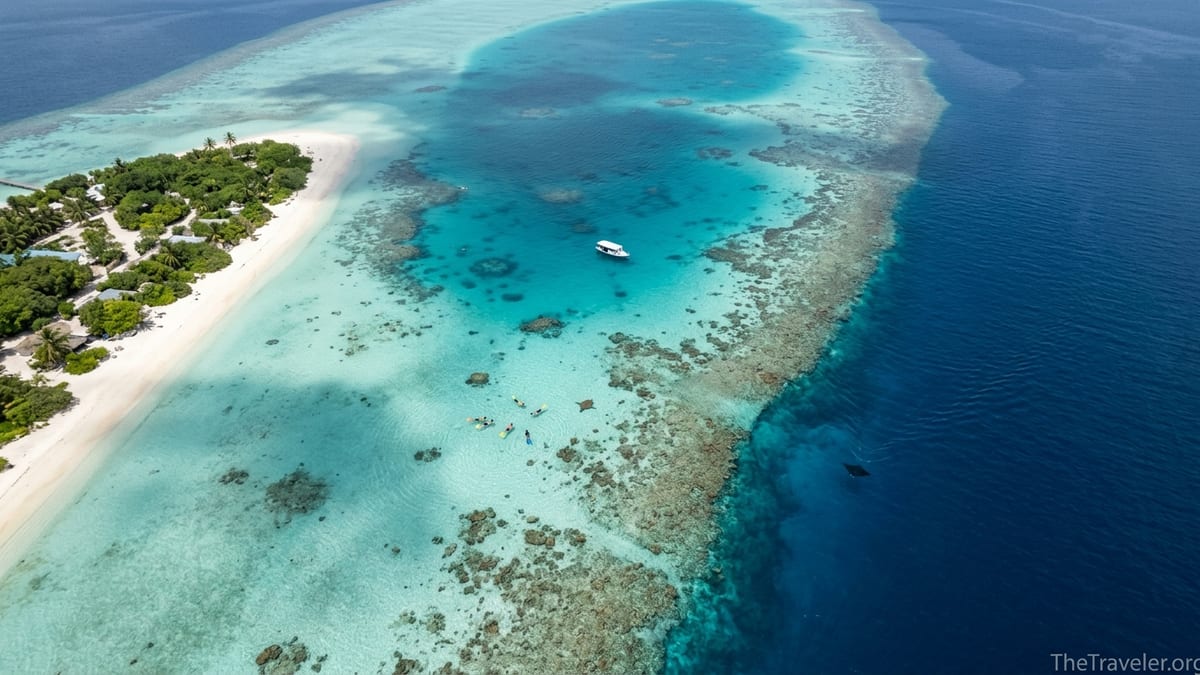
If your priority is to wake up, walk across a strip of sand and slide into a proper reef, Ari Atoll is hard to beat. On North Ari’s Thoddoo, for instance, you can enter from the main bikini beaches and be over the reef edge in a matter of meters, with visibility that often reaches 20 to 30 meters in the dry season. Guesthouses there routinely highlight the house reef as their main selling point, noting how guests can see turtles most days without booking a boat trip. Similar conditions exist on Ukulhas, where the long west-facing beach has several clearly marked snorkel channels leading to a continuous reef ridge.
On South Ari, islands like Dhigurah and Omadhoo pair swimmable house reefs with proximity to the whale shark zone. Dhigurah’s long sandspit allows several different entry points along the southern reef, where reef fish, rays and the occasional turtle are common. Many guesthouses and small dive centers provide complimentary reef maps at check-in and can point out spots where currents are usually mild at certain tides. Omadhoo, smaller and quieter, offers a house reef that drops away quite steeply on its ocean side, which appeals to snorkelers wanting a busier fish scene without long boat rides.
Among resorts, long-established snorkel favorites in the central belt include Vilamendhoo and Mirihi in South Ari, which are both encircled by house reefs reachable from multiple ladders and beach entries. Guests regularly report seeing reef sharks, turtles and schools of fusiliers within a few fin strokes of their villa. Smaller islands such as Drift Theluveliga in South Ari or Angaga also trade on their compact size and close reef; you can often swim around the entire island perimeter in under an hour, watching the topography change from shallow coral gardens to steeper drop-offs.
Outside Ari, a handful of central atoll islands are notable for house reefs that punch above their fame. In South Malé, the local island of Guraidhoo offers shore access to a reef that supports turtles and reef fish, with guesthouses advertising guided house-reef snorkels for beginners who want pointers on currents and entry points. In Meemu, Medhufushi Island Resort is often praised by return visitors for its easily accessed reef channels that begin close to the water villas and host rays and reef sharks. These alternatives suit travelers who want solid daily snorkeling but are less concerned about mantas or whale sharks.
Turtle Hotspots and Easy Shore Snorkeling for Beginners
Almost every Maldivian reef hosts green or hawksbill turtles, but a few central atoll islands have become known informally as turtle hotspots, especially for easy sightings right off the beach. Thoddoo is one of the clearest examples. Its western and eastern bikini beaches lead to shallow reef flats where turtles graze on seagrass and algae; guesthouses often mention that first-time snorkelers see their first turtle within minutes of entering the water. Local guides have nicknames for individual turtles and can point out cleaning stations where they come to rest.
Ukulhas, also in North Ari, is another excellent option for beginners focused on turtles. The long, gently shelving beach means you can adjust depth simply by moving a few meters in or out, and the main reef edge usually sits in comfortable snorkeling depths of around 5 to 10 meters. Many family-oriented guesthouses here supply complimentary masks, snorkels and fins, and some even organize short, low-cost turtle-focused snorkel sessions right from the shore so that first-timers can learn basic techniques before joining longer boat excursions.
For those staying closer to Malé, Guraidhoo in South Malé is one of the more accessible local islands with regular turtle sightings. The island’s house reef is accessed from sandy coves where local kids learn to swim, and guesthouses frequently advertise dedicated turtle snorkel trips that are only a short boat ride away for those who want even higher chances. The relatively sheltered inner channels in this atoll can be suitable for nervous swimmers on calm days, though it is still important to pay attention to currents and always go with a buddy or guide.
Beginners who want to combine gentle conditions with turtles and good beaches might also consider Omadhoo and Mahibadhoo in South Ari. These local islands generally have a softer atmosphere than busier resort islands, modest guesthouse strips rather than nightlife, and plenty of shaded spots for resting between snorkel sessions. House reefs here typically start a few minutes’ shallow wading from the sand, which is helpful for guests who are still perfecting their finning and buoyancy skills.
Where and When to Snorkel with Manta Rays
Manta rays visit several central atoll cleaning stations and feeding areas, many of which are within snorkeling depth. Around Ari Atoll, well-known manta sites include Moofushi region in South Ari and cleaning stations near Rangali, as well as smaller sites around North Ari’s outer reefs. These sites are usually reached by half-day or full-day boat trips run by resorts and guesthouses, with snorkelers entering from the dhoni once guides have located mantas at the surface or hovering over cleaning bommies.
Seasonality matters. In the central Maldives, manta activity on the western sides of atolls tends to peak from roughly May to October, when the dominant monsoon flows from the southwest and pushes plankton-rich water against the outer reefs. During these months, trips from islands such as Dhigurah, Mahibadhoo and Thoddoo often combine manta and whale shark searching on the same outing, especially when conditions line up in South Ari Marine Protected Area. Outside the peak, encounters are still possible but less predictable, so it can be worth planning at least a four to five night stay in a manta-focused area to increase chances.
In practical terms, a traveler based at a guesthouse on Ukulhas, Thoddoo or Dhigurah can expect to pay a moderate surcharge for manta trips compared with standard reef snorkeling. Small-group tours in 2026 often fall in the region of an affordable half-day excursion per person, including equipment and soft drinks, with private charters costing more depending on boat size and fuel. Many operators will only confirm trips when a minimum number of participants is reached, so flexibility with days helps.
For first-time manta snorkelers, staying at a resort or island with its own in-house marine biology team can be valuable. Properties around Moofushi and Rangali, for example, typically brief guests on approach etiquette, encourage guests to keep a respectful distance and avoid blocking cleaning stations, and may share photo identification catalogs that show how researchers recognize individual mantas. Some local islands now partner with NGOs to offer similar talks at community centers, lending more context to what you see in the water.
South Ari Whale Sharks: How Trips Work
The most reliable place in the central Maldives to snorkel with whale sharks is the South Ari Marine Protected Area, a long stretch of outer reef near islands such as Dhigurah and Maamigili. Whale sharks here are thought to be present year-round, though actual sightings on any given day depend on currents, plankton levels and sheer luck. Boats from both local islands and resorts cruise along the reef edge watching for dorsal fins, shadowy shapes or clusters of other vessels that can indicate a shark in the area.
From Dhigurah, many guesthouses advertise whale shark trips several times a week, often pairing them with stops at sandbanks or manta sites during the right season. The journey from the island to the main search zone is typically short compared with coming from more distant islands, which is one reason Dhigurah is widely considered one of the best bases for snorkelers targeting whale sharks. Maamigili and nearby resort islands along the same reef line also run daily or near-daily trips in peak travel seasons.
A typical whale shark excursion runs for three to four hours. Boats patrol the reef, and when a shark is spotted, guests prepare on the edge of the boat while the guide judges the shark’s direction and speed. Snorkelers then slip into the water ahead of the shark’s path and let it approach, rather than chasing from behind. Even simple trips now usually include a safety briefing about not touching the animals, limiting flash photography and staying clear of the tail. Operators increasingly work with local conservation efforts to log sightings and avoid overcrowding individual sharks.
Costs vary depending on whether you are with a local island guesthouse or a high-end resort. As a broad guide, shared whale shark excursions from local islands might be priced similarly to a standard day tour in other tropical destinations, while private resort speedboat trips can run significantly higher, particularly if fuel prices are elevated. Whichever you choose, it is wise to budget for at least two attempts if whale sharks are a major reason for your trip, as no operator can guarantee sightings on specific days.
Conditions, Currents and Safety for Snorkelers
Central Maldives snorkeling conditions can be wonderfully calm, but it is essential to remember that many of the best reefs sit near channels and outer-reef slopes where currents are part of what makes the ecosystem so rich. On islands like Thoddoo and Ukulhas, the house reef edge can experience noticeable current, especially around tide changes and when the monsoon is strong. Experienced snorkelers sometimes enjoy these as mild drift snorkels, but beginners should stick to sheltered sides of the island and always enter with a buddy.
For less confident swimmers, choosing islands with broad, shallow lagoons and gently shelving beaches can make all the difference. Parts of Ukulhas and Omadhoo, for example, offer calm inner lagoons where you can practice mask clearing and finning in waist-deep water before progressing to the drop-off. Resorts that target families, such as those with large sandbanks and kid-friendly pools, often have staff used to assessing guests’ abilities and can suggest the safest entry points and times of day for short snorkels.
Boat trips to mantas and whale sharks typically involve open-ocean conditions and can feel choppy even when lagoons appear flat. If you are prone to seasickness, booking morning departures when winds are lighter and taking motion-sickness precautions helps. Lifejackets are usually available on board, and many operators now provide surface marker buoys and bright rash guards for guides so that guests can quickly locate them if separated by current or chop.
Whatever your skill level, a few simple habits improve safety in the central Maldives. Avoid snorkeling alone, especially at dawn, dusk or during strong currents. Check with your guesthouse or dive center about recommended sides of the island for the day’s wind and tide pattern. Consider carrying a small inflatable snorkel vest or surface marker, particularly if you like to explore along the reef edge rather than stay inside the lagoon. And remember that sun exposure can be intense; long-sleeved rash guards and reef-safe sunscreen protect both your skin and the coral.
Snorkel-Focused Accommodation: Local Islands vs Resorts
One of the biggest decisions for a snorkel-focused Maldives trip is whether to base yourself on a local island with guesthouses, a private resort island, or a mix of both. Local islands such as Thoddoo, Ukulhas, Dhigurah, Omadhoo, Mahibadhoo, Fulidhoo and Guraidhoo have become staples for independent travelers because they offer access to top-quality reefs at lower nightly rates than most resorts. Basic but comfortable guesthouse rooms on these islands can often be found in the budget to mid-range bracket per night for a double with breakfast, depending on season and amenities.
Local islands give you a more grounded experience of the Maldives. You stroll through sandy streets past schools and mosques, eat grilled fish and simple curries at small cafes and can book excursions directly with local boat owners or through your guesthouse. The trade-offs include dress codes outside designated bikini beaches, modest nightlife and occasional calls to prayer. If your priority is simply to snorkel, sleep, read and repeat, this slower rhythm can be ideal, and you can use savings on lodging to join more manta or whale shark trips.
Resort islands in the central atolls appeal to travelers who want curated convenience and are willing to pay for it. Many properties in South Ari and Ari’s outer reefs highlight their house reefs as a signature feature, with beach villas steps from snorkel ladders and on-site marine biology centers offering guided excursions. All-inclusive or full-board packages make costs predictable, though extras such as private snorkeling trips or underwater photography may be add-ons. For first-time visitors nervous about logistics, resorts simplify everything into one booking, from transfers to equipment rental.
An increasingly popular strategy for serious snorkelers is a split stay. You might spend four or five nights on a local island like Dhigurah or Thoddoo, using guesthouse-organized trips to target whale sharks or turtles, then move to a resort such as Vilamendhoo, Mirihi or another atoll-edge property for a few nights of easy house-reef access and a more indulgent finish. Domestic flights and speedboat connections in the central Maldives are frequent enough that such combinations are practical, especially if you plan around arrival and departure times from Malé.
The Takeaway
The central Maldives offer an unusually rich range of snorkeling options within a relatively compact area. If you want strong house reefs with daily turtles and a real chance at mantas and whale sharks, focusing on North and South Ari atolls is a sensible strategy. Islands like Thoddoo, Ukulhas, Dhigurah, Omadhoo and Mahibadhoo stand out because you can snorkel from the beach and still join world-class big-animal excursions without spending hours on boats.
Travelers who value quieter reefs and simpler surroundings might look toward Faafu and Meemu, while those wanting easy access from Malé with a mix of boat trips and village life can consider Vaavu and South Malé islands such as Fulidhoo and Guraidhoo. Across all these atolls, conditions are generally favorable for confident swimmers, but even beginners can have excellent experiences by choosing islands with gentle lagoons and booking guided trips tailored to their comfort level.
Ultimately, the right choice comes down to how you like to spend your days. If your dream trip is rolling out of bed and slipping into a reef filled with turtles and reef sharks, prioritize islands with proven house reefs. If the prospect of drifting alongside whale sharks or watching mantas hover over cleaning stations excites you most, base yourself within day-trip range of South Ari’s protected zone and key manta hotspots. With a little planning, a central Maldives itinerary can deliver all of these in a single journey.
FAQ
Q1. Which central atoll is best overall for snorkelers?
For most travelers, Ari Atoll is the strongest all-round choice, combining excellent house reefs, reliable turtle encounters and easy access to manta and whale shark excursions.
Q2. Where should I stay if whale sharks are my main goal?
Base yourself in South Ari near the South Ari Marine Protected Area, on islands such as Dhigurah or Maamigili, or at nearby resorts that run regular whale shark trips.
Q3. Are there central atolls better suited to beginners and children?
Yes, islands with broad, shallow lagoons and gently sloping beaches, such as Ukulhas, Omadhoo and some South Malé and Meemu resort islands, tend to be friendlier for nervous swimmers.
Q4. When is the best time to see manta rays in the central Maldives?
Manta activity on western atoll edges typically peaks between about May and October, when plankton-rich water is more common, though sightings are possible outside these months.
Q5. Can I rely only on house reefs or should I book boat trips too?
On islands with strong house reefs you can snorkel happily from shore most days, but booking at least one or two boat trips gives you access to mantas, whale sharks and special channel sites.
Q6. How much should I budget for snorkel excursions from local islands?
Shared half-day reef or turtle trips from local islands are usually moderately priced, with manta or whale shark excursions costing more; exact prices vary by season and fuel costs.
Q7. Are currents dangerous for snorkeling in these atolls?
Certain channels and reef edges can have strong currents, especially around tide changes, so it is important to ask local advice, stay within your limits and avoid snorkeling alone.
Q8. Is equipment rental easy on local islands?
Most snorkel-focused guesthouses and dive centers rent masks, snorkels, fins and life jackets, but bringing your own well-fitting mask is wise if you plan to snorkel daily.
Q9. Can I combine local islands and resorts in one trip?
Yes, many travelers split their time between a local island guesthouse and a resort in the same region, using speedboats or domestic flights to move between them.
Q10. Do I need to be a strong swimmer to enjoy Maldives snorkeling?
Being comfortable in the water helps, but beginners can still enjoy sheltered lagoons and guided trips using floatation aids, provided they follow safety advice and stay within their comfort zone.