


The Maldives is one of those rare destinations where the water is warm, the air is balmy and the beaches are beautiful all year. Yet the “best” time to visit depends very much on what you value most. Calm, blue-sky days at a private island pool do not always coincide with peak manta ray action, prime surf or the lowest overwater villa rates. Understanding how Maldives seasons shape weather, prices and marine life will help you pick the right month and the right atoll for your style of trip.
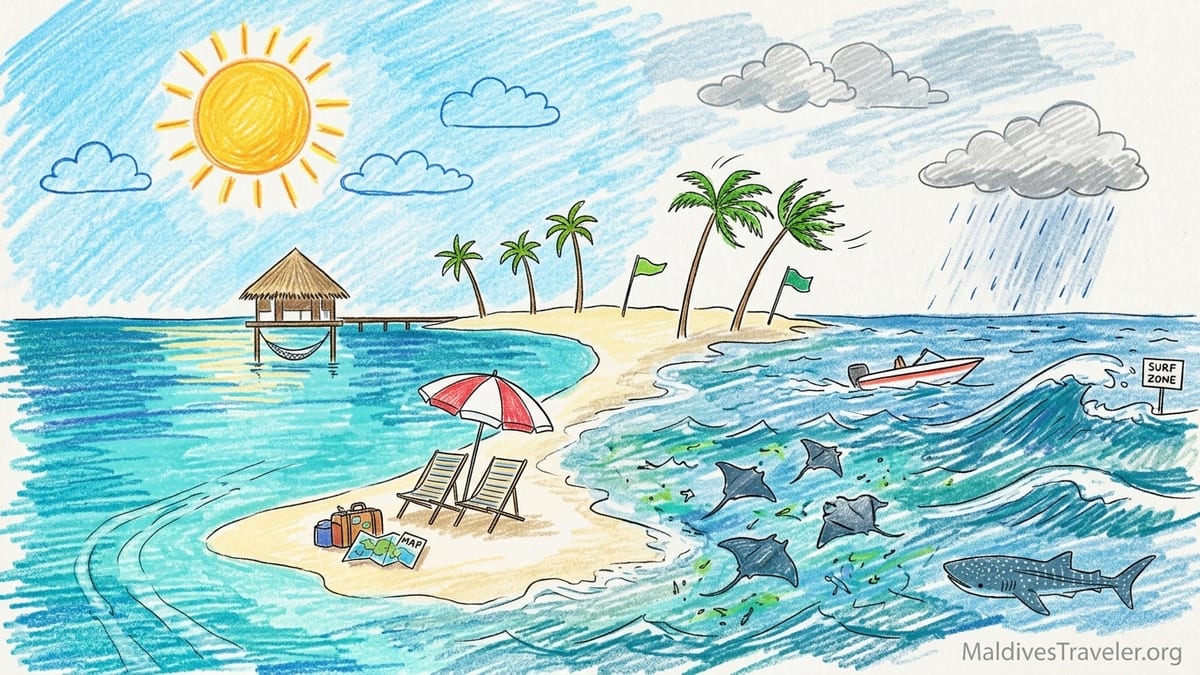
Maldives Seasons in Plain Language: What Actually Changes
The Maldives sits just north of the equator in the Indian Ocean and has a tropical monsoon climate. In practice, that means two main patterns: a drier northeast monsoon roughly from November to April, and a wetter southwest monsoon roughly from May to October. Air temperatures barely move, hovering around the high 20s Celsius (low 80s Fahrenheit) all year, so it is wind, rain and sea conditions that define the feel of each month.
During the dry season associated with the northeast monsoon, days around popular resort atolls such as North Malé, South Malé and Ari tend to be sunnier, with lighter winds and calmer seas. Short showers do happen, but week-long grey skies are unusual. These are the months when resort brochures are most accurate: mirror-flat lagoons, bright turquoise water and long, clear sunsets.
The southwest monsoon from about May through October brings more frequent rain and stronger winds in many atolls. Showers often arrive as intense downpours that pass in 30 to 60 minutes, followed by clear or partly cloudy skies. Seas can be choppier, especially on outer atolls and on longer speedboat or ferry rides. The upside is that this same monsoon is what fuels plankton blooms that attract manta rays and whale sharks in places like Baa Atoll and South Ari Atoll, and it also delivers the swell that makes the Maldives a serious surf destination.
Weather also shifts subtly from north to south. Northern atolls such as Haa Alif may feel the dry northeast influence a little more, while southern atolls such as Addu (Gan) can see more evenly spread rain. When resorts and tour operators talk about “best time to visit,” they are usually thinking about dry-season sunshine rather than wildlife or value, which is only one piece of the puzzle.
Prices by Season: When Overwater Villas Cost the Most
Resort pricing in the Maldives tracks demand, and demand tracks perceived good weather and global holiday calendars. Many high-end resorts in North Malé and Baa Atoll publish low, shoulder and high-season rate bands, often with a steep Christmas and New Year premium layered on top. For example, a mid-range pool villa might sell for one rate in late April, jump significantly for February, and then double again for the final two weeks of December.
In broad terms, peak price season runs from late December through early April. Christmas and New Year weeks are the most expensive, particularly from about 23 December to 7 January. Resorts like Soneva Jani, Gili Lankanfushi or One&Only Reethi Rah routinely require minimum stays over this period, sometimes five to seven nights, and may add compulsory gala dinner charges. It is common for those holiday nights to cost several times what the same villa does in, say, the first half of May.
Shoulder seasons typically fall in November, early December before Christmas, and again in late April, May and sometimes October. During these weeks, many resorts launch value-focused offers: stay-four-pay-three deals, complimentary half-board, free seaplane transfers or kids-stay-free promotions. A family looking at a two-bedroom beach villa in Baa Atoll might find November rates that are noticeably lower than January, yet still enjoy mostly dry weather and good underwater visibility.
Low season usually spans June through September. This is when rain and wind probabilities rise, particularly in central and northern atolls. However, it is also when you will see some of the boldest discounts. A small boutique resort in Raa or Laamu Atoll may combine a reduced nightly rate with free upgrades from breakfast to full board, making an otherwise aspirational property suddenly comparable in price to a more basic island in peak season.
Dry-Season Sunshine: Best Months for Classic Beach Weather
If you picture long, sunny days, calm lagoons and sunsets from your private infinity pool, your priorities align with the dry northeast monsoon rather than wildlife or surfing. In simple terms, January, February and March are the go-to months for dependable “postcard” conditions at many resort islands, especially in central atolls like North Malé, South Malé and Ari.
February is often singled out by Malé-based forecasters as one of the driest months, with relatively low rainfall and plenty of sunshine for most of the archipelago. On resort islands such as Kurumba Maldives near Malé or Vilamendhoo in South Ari, guest experiences in February frequently report glassy seas ideal for stand-up paddleboarding and sandbanks that stay exposed for hours under clear skies. Visibility for snorkeling on house reefs is usually very good, with less suspended plankton in the water than in monsoon months.
January can blend cooler breezes with that same dry feel, which suits those who find tropical humidity uncomfortable. Many European travelers escape winter to five-star resorts like Anantara Kihavah in Baa or Conrad Maldives Rangali in South Ari during this time, accepting higher rates in return for high odds of uninterrupted pool time and easy seaplane flights rarely diverted by storms.
November and April behave more like transition months. In a year with classic patterns, early November may still be somewhat showery as the southwest monsoon retreats, improving as the month goes on. April can be warm and often calm but may see the first signs of building humidity and evening thunderstorms as the southwest monsoon prepares to arrive. If you are willing to accept a little more weather risk for a better rate, late April and early November often offer a sweet spot between sunny days and shoulder-season pricing.
Southwest Monsoon: Rain, Wind and Why Divers Love It
The phrase “monsoon season” can sound intimidating, but in the Maldives it rarely means weeks of continuous rain. From roughly May to October, the southwest monsoon brings more frequent showers, occasional squalls and gustier winds, particularly in the afternoon and at night. Boat rides between atolls can be rougher and some sandbanks temporarily disappear under higher chop, but many guests still enjoy plenty of sunshine between showers.
What makes this season special is what happens under the surface. The southwest winds and currents drive blooms of plankton, which in turn attract filter-feeders like manta rays and whale sharks. Baa Atoll’s Hanifaru Bay, a UNESCO Biosphere Reserve, becomes one of the world’s most reliable aggregation sites for reef mantas during these months, with the heaviest activity typically from about July to October. Resorts such as Amilla Maldives and Anantara Kihavah run seasonal snorkeling excursions that aim to coincide with tide and moon cycles that concentrate plankton in the bay.
South Ari Atoll, home to the South Ari Marine Protected Area along islands like Dhigurah and Maamigili, is known for more year-round whale shark sightings, but encounters tend to be particularly frequent from around May into October when plankton is thicker. Guesthouses in Dhigurah and dive-focused resorts like LUX South Ari or Vilamendhoo often promote “whale shark season” packages during these months, accepting that surface conditions might be choppier while underwater encounters are richer.
The trade-off is comfort on the surface. If your priority is lounging on a perfectly calm overwater hammock every afternoon, monsoon months involve more compromise. If, instead, you are a diver or snorkeler willing to accept some rainy mornings for a high chance of sharing the water with mantas or a whale shark, the southwest monsoon can be the most rewarding time to come.
Marine Life by Atoll: Why Timing Is Different in Baa, Ari and Beyond
One of the most important nuances for planning a Maldives trip is that there is no single “manta season” or “whale shark season” across the whole country. Conditions vary by atoll, channel orientation and local reefs. The same month that is prime for mantas in Baa Atoll might be quieter for them in some parts of North Malé, and vice versa.
Baa Atoll is the star example of seasonal concentration. Hanifaru Bay’s funnel-shaped reef and local currents cause plankton to accumulate during the southwest monsoon. As a result, the best window for large manta gatherings inside the bay is usually from about late May or June through October, with peak months frequently falling between July and September. Outside that window, Baa’s reefs can still host mantas at cleaning stations, but the famous swirling feeding aggregations are much less likely.
South Ari Atoll behaves differently. The South Ari Marine Protected Area is known for frequent whale shark encounters in many months of the year, particularly along its outer reef near Dhigurah and Maamigili. Operators there often describe the whale sharks as “semi-resident.” However, local guides still see patterns: slightly higher encounter rates during the southwest monsoon when plankton is thicker, and calmer-surface conditions but sometimes clearer water and fewer plankton feeders in the heart of the dry season.
In central atolls like North Malé and South Malé, manta rays and reef sharks can be observed in both monsoon systems, but preferred sites can shift with currents. For example, a resort in North Malé might focus its manta excursions on one cleaning station during May to October and on another during December to March, even though it markets “year-round manta diving.” Southern atolls like Laamu and Addu have their own local patterns, sometimes with less crowding and slightly different seasonal peaks. Talking to your chosen resort or a trusted dive operator about what usually happens in their specific atoll during the month you are considering is more valuable than relying on a generic calendar.
Snorkeling Visibility, House Reefs and Night Life Underwater
For many visitors, the house reef is as important as the villa. Visibility and marine life along that reef change with the seasons. In the drier months from about January to April, water close to many resort islands can be exceptionally clear, with visibility often extending tens of metres on good days. Resorts built on strong house reefs, such as Kandolhu in North Ari or Mirihi in South Ari, are especially praised at this time of year for easy swims with reef sharks, turtles and schools of fusiliers in calm, clear conditions.
During the southwest monsoon, that clarity may reduce in some locations as plankton densities increase. For casual snorkelers, this can feel like a slight milkiness in the water rather than zero visibility. For wildlife enthusiasts, that same plankton is what brings in mantas and whale sharks, so a little haze can actually be a positive sign. In Baa Atoll, for example, snorkelers may trade crystalline house-reef visibility for the chance to float among dozens of mantas in Hanifaru Bay during a strong plankton event.
Night snorkeling and diving are also shaped by seasons. Warmer surface waters and plankton levels can influence bioluminescence displays around sandbanks and jetties. Some resorts in Vaavu or Raa Atoll occasionally advertise natural “glowing beaches” when conditions are right, often in the warmer months. While this phenomenon is never guaranteed, it tends to occur when the sea is rich in microscopic organisms, which is more likely during or shortly after monsoon peaks.
When booking, consider whether you care more about seeing as far as possible on the house reef or about increasing your odds of encounters with big filter-feeders. If your dream is watching clownfish and hard corals in brilliant clarity from your villa’s steps, focus on late December through April. If your dream is drifting next to a manta that blocks the sun, a slightly plankton-rich sea in July or August might be exactly what you want.
Surf Season: When Swell Turns Reefs into Playgrounds
The Maldives is not just about lagoons; it is also a world-class reef-break destination. The best surf generally coincides with the southwest monsoon, from about March or April through October, when Indian Ocean swells travel across open water and wrap into the atolls. Season length and wave character vary by region, but the broad pattern is consistent: bigger, more powerful surf in the middle of the year; smaller, softer waves in the heart of the dry season.
Central atolls like North Malé are the classic surf zone. Breaks such as Cokes, Chickens and Sultans are within boat reach of surf-focused resorts and guesthouses on islands like Thulusdhoo and Himmafushi. From June to August, experienced surfers can score long, hollow right- and left-handers on good swells, though wind can be more of a factor. May and September often balance decent swell with slightly lighter winds, which is why some surf charters and camps highlight those months as their favorite time.
Further south, atolls like Laamu and Addu can receive consistent swell and sometimes lighter winds even deeper into the monsoon, attracting surfers who prefer fewer crowds and are comfortable with less redundant flight connections. Many surf lodges and liveaboard boats price their trips with a clear surf focus: highest demand and prices in June, July and August; somewhat lower in shoulder months; and reduced rates in the smallest-swell period from roughly November to February when conditions are better suited to longboarders and beginners.
If surfing is central to your trip, it is worth building your dates around the most reliable swell months and selecting a resort or local island with proven access to quality breaks. If surfing is just an optional extra, then visiting in a shoulder month like May or September can give you a mix of surfable days and reasonable overall weather without straying into the most expensive high season for general tourists.
Shoulder-Season Deals: Balancing Weather, Wildlife and Value
Shoulder seasons in the Maldives are where savvy travelers often find their sweet spot. These are the brief windows when resorts are keen to fill rooms but the weather can still be very good. Typically, that includes early to mid-November, late April and much of May, as well as parts of October in some atolls.
In early November, many Baa and Ari Atoll resorts shift from their manta and surf messaging to a focus on sunshine, spa and family time. Rainfall risk decreases compared with the peak monsoon, yet prices have not fully climbed to their December and January highs. Families might find that a beachfront pool villa at a mid-tier resort in Raa or Dhaalu Atoll is within budget in early November, whereas the same villa in February would be out of reach.
Late April and May have a different flavor. Air and sea temperatures can feel warmer and more humid, and the first serious monsoon showers may appear. In return, many resorts across the country reduce rates and layer on extras. It is common to see offers such as free half-board, spa credits or complimentary airport transfers at luxury properties like Joali Maldives in Raa or COMO Maalifushi in Thaa during May. For divers and snorkelers, this period can bring the first mantas and whale sharks of the season in Baa and Ari Atolls, creating an appealing blend of emerging wildlife action and softer prices.
October is another month to watch. In some years, the southwest monsoon hangs on, keeping rainfall relatively high; in others, it transitions more smoothly into drier conditions. Resorts that cater heavily to European markets sometimes treat late October, including school holiday periods, as a mini high season for families. If you are flexible and can travel just before or after those school breaks, you may find attractive deals with tolerable weather risk.
The Takeaway
Choosing the best time to visit the Maldives is really about deciding what “best” means for you. If your ideal trip is all about flawless sunshine, glassy lagoons and easy boat rides, the heart of the dry season from January to March is your safest bet, with November, December and April acting as somewhat more affordable, slightly riskier alternatives.
If you care most about marine life, your calendar shifts. Manta enthusiasts aiming for Hanifaru Bay should look to the southwest monsoon months, especially from about July to September in Baa Atoll. Whale shark seekers have more flexibility in South Ari Atoll but may enjoy richer plankton conditions from May to October. Snorkelers focused on clear house-reef visibility might lean back toward late December through April, accepting fewer big filter-feeders in exchange.
Value-conscious travelers willing to weather a few showers will find that late April, May, parts of October and early November frequently deliver a rewarding balance of reasonable weather, interesting marine life and reduced resort rates. Surfers, meanwhile, build their trips around swell patterns rather than sunshine statistics, with June to August as the prime window for more powerful waves.
There is no single perfect month or atoll that suits every traveler. By weighing your priorities across three separate questions – best weather, best marine life and best price – and then matching those answers to specific atolls and resort styles, you can turn a generic “Maldives dream” into a trip that fits you, your budget and the ocean experiences you care about most.
FAQ
Q1. What is the best month overall to visit the Maldives?
There is no single best month, but many travelers find February and March offer an excellent mix of sunny weather, calm seas and good snorkeling visibility, albeit at high prices.
Q2. When is the cheapest time to stay in a Maldives resort?
Rates are usually lowest from June to September, during the wetter southwest monsoon, when many resorts in atolls like Raa, Laamu or Dhaalu offer substantial discounts and value packages.
Q3. When is the best time to see manta rays in Baa Atoll’s Hanifaru Bay?
The most reliable manta aggregations in Hanifaru Bay typically occur between about late May or June and October, with peak activity often from July to September during the southwest monsoon.
Q4. Is there a specific whale shark season in the Maldives?
In South Ari Atoll, whale sharks can be seen in many months of the year, but encounter rates often increase from roughly May to October when plankton is more abundant along the outer reef.
Q5. Are Christmas and New Year really that expensive in the Maldives?
Yes. From around 23 December to early January, many resorts impose peak-season rates, minimum stays and compulsory gala dinners, making this the costliest time to visit.
Q6. Will it rain every day if I visit during the southwest monsoon?
Not usually. From May to October, you can expect more frequent showers and some windy spells, but rain often comes in short, intense bursts with sunny or partly clear periods in between.
Q7. When is the best time for surfing the Maldives reef breaks?
The best surf generally runs from about March or April through October, with June to August providing the most consistent and powerful swells in areas like North Malé and central atolls.
Q8. Which months have the clearest water for snorkeling house reefs?
Visibility is often at its best from late December through April, particularly in central atolls such as North Malé and Ari, when seas are calmer and plankton levels are lower.
Q9. Is May a good compromise between price, weather and marine life?
For many travelers, yes. May often brings warmer, more humid conditions and some rain, but also better resort deals and the start of manta and whale shark activity in several atolls.
Q10. Do different atolls really have different “best” seasons?
They do. Baa Atoll peaks for mantas in the southwest monsoon, South Ari has semi-resident whale sharks, and surf-focused atolls time their seasons around swell rather than general sunshine, so atoll choice matters as much as month.