


The Maldives is no longer a handful of ultra-luxe hideaways and a few anonymous all-inclusives. Today you can choose from more than 170 resort islands, ranging from barefoot eco-retreats with raw, wild reefs to polished all-inclusive estates with ten restaurants and kids clubs that rival theme parks. This guide cuts through the noise and compares the best resort islands in the Maldives by what really matters: overall experience, value, luxury, beaches, food, house reefs, transfers, and whether you are traveling as a couple or with kids.
How to Compare Maldives Resort Islands in 2026
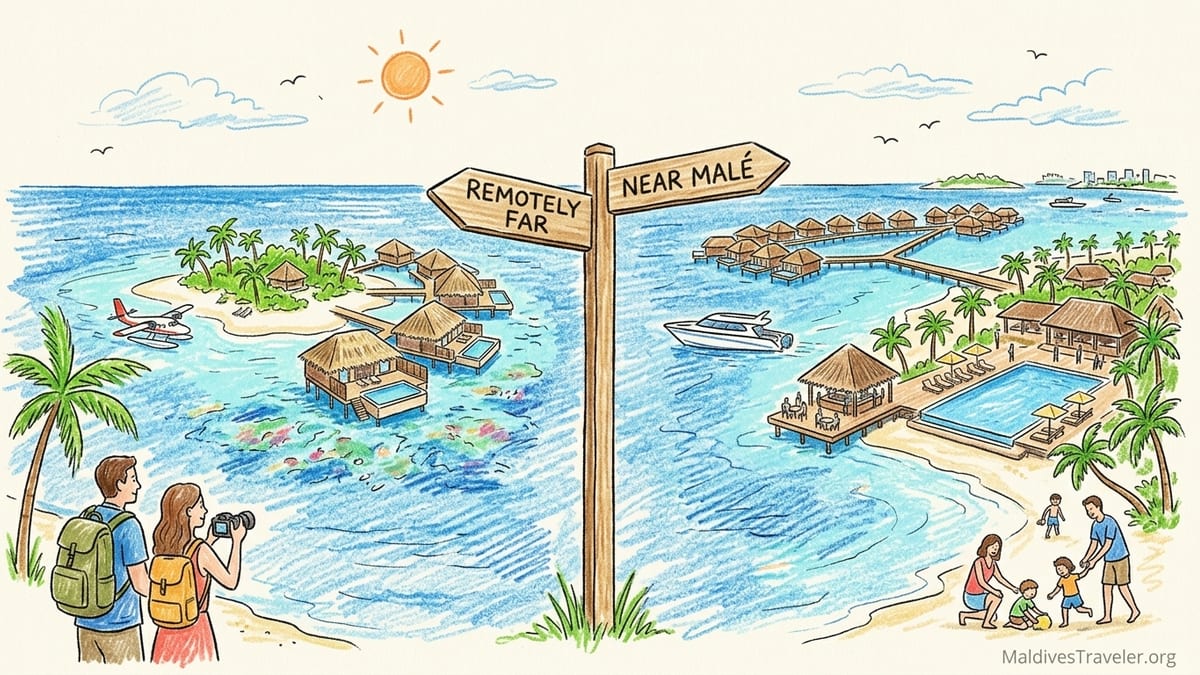
Picking a Maldives resort is less about chasing a single “best” island and more about matching trade-offs to your budget and style. A remote atoll with a pristine house reef and fewer villas often means a seaplane transfer, higher overall cost and less choice at mealtimes. A larger, livelier island with ten restaurants and activities every hour may soften the sense of castaway seclusion but works better for families and food-focused travelers.
When you compare islands, think in four layers. First is geography and transfer: near Malé with speedboat access or in a far-flung atoll that needs a seaplane. Second is the island itself: size, beach quality, lagoon depth and whether there is a healthy house reef close to shore. Third are villas and hardware: build quality, age of the rooms and whether each villa has a pool. Finally comes pricing: nightly rate, taxes and service charges, seaplane or speedboat cost and whether all-inclusive or half-board actually saves you money once you factor in drinks and activities.
Price comparisons should always include extras, because the Maldives stacks on roughly 27 percent in combined taxes and service, plus a per-person green tax. A seaplane to a high-end resort can easily add around 500 to 900 US dollars per adult for a return journey, while many speedboat-only resorts near Malé keep transfers closer to a few hundred dollars per couple. For a seven-night stay, these differences often matter as much as a slightly higher or lower nightly room rate.
It also pays to check whether your dates fall in peak season from about late December through March, shoulder months like April, July and August or the wetter low season in May, June, September and October. In shoulder and low seasons, even top-tier resorts quietly run promotions where an entry beach villa that might sit well above 2,000 US dollars per night over New Year’s can drop to closer to 1,000 to 1,400 dollars on selected dates, especially on longer stays.
Best Overall Resort Islands for Most Travelers
Some resorts consistently perform well across almost every category: strong beaches, good food, attractive villas, friendly service and a reef or lagoon that keeps both snorkelers and non-swimmers happy. These are the islands that work for couples on a first Maldives trip, honeymooners wanting romance and families who still want a bit of barefoot luxury without feeling excluded.
Recent comparison guides and traveler reviews regularly highlight Niyama Private Islands in Dhaalu Atoll as one of the best all-round choices. It spans two connected islands, one slightly quieter and one more family-focused, and offers a mix of beach and overwater villas, several restaurants including an underwater venue, an extensive kids club and a lagoon that suits both beginners and confident swimmers. Nightly prices are not low, often sitting in the mid to high four-figure range for pool villas in high season, but the breadth of experience packed onto the islands makes it feel good value for many guests.
In the premium all-inclusive space, Emerald Maldives Resort & Spa in Raa Atoll frequently appears on shortlists for best overall resort. It combines a large but natural-feeling island with broad white beaches, modern villas, several restaurants and bars and a reef that, while not as dramatic as the very best house-reef islands, is more than enough for casual snorkelers. The fact that many food and drink items are bundled into the rate reduces bill shock at check-out, especially for families ordering multiple ice creams, smoothies and snacks each day.
Closer to Malé, some of the stronger all-rounders include resorts like Kurumba Maldives and larger estates in North and South Malé Atolls that balance shorter transfers with broad facilities. These islands may not top every category, but they are often the kind of place a Maldives specialist or tour operator suggests when you want a reliable “one resort fits most people most of the time” choice, especially for a first or second trip.
Best Value Islands: Where Your Money Goes Furthest
Value in the Maldives is not only about finding the lowest nightly rate. It is about how much resort, reef and dining you get once you add transfers, taxes and your likely spend on drinks and activities. A cheaper island with little shade, a weak reef and average food can end up feeling more expensive than a mid-range resort that gets the fundamentals right.
Many of the best-value islands sit in the so-called “upper midscale” band. Sun Siyam Iru Fushi in Noonu Atoll, for example, regularly appears in value-focused recommendations. It is a large island with long sweeps of beach, one of the Maldives’ broader activity menus and a range of villa categories that allow you to start in a more affordable beach villa and trade up to a private pool or water villa if budget allows. Meal plans often include generous half-board or all-inclusive options that significantly reduce day-to-day spending on food.
Emerald Maldives, mentioned above as a best overall pick, is another value outlier at the premium end. Because it runs a strong all-inclusive concept on a fairly big island, guests who enjoy several courses at dinner, specialty coffees, cocktails or mocktails and daytime snacks often report that their final bill barely exceeds the room charge, beyond any excursions and spa treatments. For a family of four or a couple who enjoys carefree ordering, that can make the resort feel better value than cheaper islands with pay-as-you-go dining.
Among resorts near Malé, several all-inclusive islands in North and South Malé Atolls and nearby atolls have sharpened their pricing, especially in low and shoulder seasons. They typically price entry-level beach villas in the mid-hundreds to low-thousands in US dollars per night on selected dates, including meals, which is competitive once you remember that a simple resort burger can cost 30 dollars or more in the Maldives. A specialist agent can often flag which of these islands are running four-nights-pay-three or free-transfer promotions on your exact travel week.
Best of the Best: Ultra-Luxe Maldives Escapes
At the very top of the market are the resorts where privacy, brand prestige and bespoke service matter more than per-night cost. Here you find three-bedroom water reserves with slides, private butlers, dedicated wine vaults and serious sustainability or design credentials. Nightly rates in high season can climb into five figures, and transfers usually involve private lounges, premium seaplane options or even yacht transfers.
Resorts like Soneva Jani in Noonu Atoll, Cheval Blanc Randheli and Joali Maldives set the tone in this category. They combine spacious, design-forward villas with serious house-keeping and butler teams, curated dining experiences and a slow-luxury rhythm where days revolve around private sandbanks, personalised snorkeling routes and chef’s table dinners. Guests choose these islands because they want the Maldives at its most exclusive, and because they are comfortable paying substantial premiums for space, privacy and consistency.
Waldorf Astoria Maldives Ithaafushi, spread across three interlinked islands a yacht ride from Malé, has quickly become a flagship for branded luxury. With more than one hundred pool villas, eleven dining venues and serious spa facilities, it offers scale without fully sacrificing privacy. This kind of resort works well for highly discerning travelers who still enjoy having a choice of restaurants each evening and appreciate the familiarity of a global brand’s service standards, even in such a remote setting.
Four Seasons Resort Maldives at Landaa Giraavaru in Baa Atoll is another long-standing benchmark, pairing marine conservation programs and a strong house reef with classic luxury villas and polished service. Recent seaplane price lists show that premium shared seaplane transfers to this level of resort are priced accordingly, which means you need to factor several hundred dollars per person for transport into any budget. For many guests, the combination of reef access, fine dining and thoughtful service makes those transfer costs feel like part of the experience rather than an unwelcome add-on.
Best Beach Islands: Sand, Lagoon and Space
For many travelers the Maldives dream is still a long white sandbank wrapped in a turquoise lagoon. On some islands, beaches are naturally broad and soft year-round. On others they can be patchier, with sandbags or seawalls quietly installed to slow erosion. Island shape matters: long, narrow islands often deliver sweeping beaches and shifting sandbanks, while tiny circular islands can feel more hemmed in, especially at high tide.
In beach-first comparisons, islands in Baa, Raa and Noonu Atolls often score well because they have generous natural sandbanks and shallow lagoons. Finolhu in Baa Atoll, for example, is widely photographed for its long, curving sandbar dotted with daybeds and a barefoot beach club. It combines broad, photogenic beaches with a relaxed, grown-up vibe, which appeals to couples and groups of friends who want beach time punctuated by music and social dining rather than total silence.
Larger islands such as Iru Fushi and some of the Sun Siyam and Villa group properties offer long walking beaches where you can actually stroll for ten or fifteen minutes without looping back on yourself. That extra space makes a difference for families with energetic children and for joggers who like to run on sand at sunrise. It also increases the chance that your beach villa opens onto a genuinely private stretch of sand, rather than a small patch close to the neighbors.
If beaches matter more than reefs, you can afford to favor islands with wide lagoons and calmer, sandier seabeds, even if the house reef is farther out. This is particularly useful for non-swimmers and toddlers, who need shallow, sheltered water. Many family-focused resorts highlight “toddler-friendly lagoons” in their marketing, indicating that there are large areas where water remains below waist height for a good distance from shore.
Best Food Islands: Dining, All-Inclusive and Meal Plans
Food is one of the fastest ways a resort can either delight or disappoint guests. With everything imported, even simple ingredients cost more than at home, and poor menu planning or repetitive buffets quickly undermine the sense of indulgence. On the other hand, some Maldives resorts now position themselves as culinary destinations in their own right, with ten or more distinct venues and serious chefs.
High-end islands like Joali, Soneva Jani and Cheval Blanc are known for their creative tasting menus, plant-based options and deep cellars, often with dedicated restaurants perched above or below the water. On these islands it is possible to eat in a different venue almost every night on a week-long stay, and allergy or dietary requests are usually handled with ease. Guests who care about gastronomy often prioritize these resorts even if the base rate is significantly higher than simpler islands.
At more accessible price points, resorts such as Emerald Maldives, Niyama, and several of the larger family-focused islands in Dhaalu, Raa and Noonu Atolls have invested heavily in variety. You might find a beach grill, an Asian restaurant, an Italian trattoria-style venue, a poolside snack bar and a main buffet all on one island. Many run premium all-inclusive plans that include three meals a day at selected restaurants, soft drinks, house wine and cocktails, plus ice cream or snack windows. For a family of four where teenagers are constantly hungry, those inclusions can easily offset a higher nightly rate.
When comparing dining, pay close attention to how half-board, full-board and all-inclusive are structured. Some resorts include only buffet dining in packages and charge extra for any à la carte or specialty venues, while others allow a credit toward these restaurants. At luxury levels, all-inclusive plans sometimes exclude top-shelf drinks and fine dining menus, so you should budget something extra for special evenings. Reading recent reviews from guests who stayed on the same plan you are considering is one of the best ways to gauge whether the food offering matches expectations.
Best House-Reef Islands for Snorkeling and Diving
If snorkeling straight from your villa is the priority, house reef quality should sit at the top of your shortlist criteria. The best reef islands feature a narrow lagoon between the beach or water villas and the reef edge, so you can step in from shore and be over coral in a few kicks. They sit in atolls where ocean currents still support relatively healthy coral despite past bleaching events, and where marine life remains abundant.
Resorts frequently highlighted by reef-focused divers and snorkelers include Park Hyatt Maldives Hadahaa in Gaafu Alifu Atoll, Kandolhu Maldives in North Ari Atoll, and several smaller, more boutique islands that ring Baa, Ari and Gaafu. These islands tend to be compact, with a steeper drop-off close to shore and less dramatic sandbanks than big lagoon islands, but in exchange you get rich coral gardens, turtles, reef sharks and swirling schools of fish on your doorstep.
On premium house-reef resorts, water villas are often positioned so that you can climb down a private staircase and be on the reef within moments. Snorkel channels are clearly marked, and the best resorts limit boat traffic close to the reef to protect both guests and marine life. Many also run twice-daily guided snorkels, night snorkeling and citizen-science activities where you help log sightings of manta rays or turtles with the resident marine biologist.
Transfers to some of the most prized reef islands usually involve an extra domestic flight or a longer seaplane ride compared with near-Malé resorts. That adds cost and a little extra travel time, but serious snorkelers often consider it worthwhile. If you are traveling with less confident swimmers, check in advance whether there are calm, sandy entry points and how strong currents run at different times of year.
Best Islands Near Malé: Short Transfers, More Time on the Beach
Not every traveler wants to add a seaplane leg after a long-haul flight. For short trips of four to five nights, families with younger kids or nervous flyers, staying in North or South Malé Atoll and nearby atolls reachable by speedboat can make the Maldives feel much easier. You clear immigration, collect your bags and within 30 to 60 minutes you are checking in at your resort, without waiting for the next seaplane slot.
Kurumba Maldives, one of the country’s original private-island resorts, sits just a short speedboat ride from the airport and has evolved into a polished, surprisingly affordable all-rounder with good food, varied accommodation and easy logistics. Other near-Malé resorts position themselves as weekend escapes for regional travelers or as add-ons to Sri Lanka or Dubai itineraries, with strong spas, decent reefs for a first-time snorkel and atmospheric sunset bars.
The trade-off is that many near-Malé islands have more visible boat traffic, and from some beaches you may glimpse the lights of other resorts or even Malé itself on the horizon. For some guests that matters; for others it is a minor detail compared with the convenience and lower transfer cost. A shared speedboat transfer is typically much cheaper than a shared seaplane, and some packages bundle it into the room rate.
If you are keen on a strong house reef but still want to avoid seaplanes, ask an agent to highlight the best reef islands within speedboat range. A handful of resorts in North and South Malé Atolls offer surprisingly good snorkeling for how close they sit to the capital, and are frequently mentioned in online discussions among repeat Maldives travelers looking to balance reef quality with transfer simplicity.
Best Islands for Couples and Honeymoons
For couples and honeymooners, the ideal Maldives island usually means a high ratio of adults to children, private villas with outdoor space that feels sheltered, quiet beaches and thoughtful touches like turn-down surprises and romantic dining setups. Some resorts go further and position themselves almost entirely for adults, with late-night beach clubs, sophisticated bars and spa programs designed for two.
High-end couples’ favorites include Soneva Jani, Joali, Baros and more boutique properties in Ari and Baa Atolls, where villa density is low and staff are trained to anticipate privacy expectations. On these islands, restaurants often have more intimate seating, overwater spas build in couples’ hammam or bath rituals and excursions skew toward private picnics on sandbanks, sunset dhoni cruises and shared experiences like wine tastings.
At mid to upper-mid price points, islands such as Finolhu, Kagi and several of the newer lifestyle-focused resorts combine stylish design with social spaces like beach clubs and outposts serving wood-fired pizzas, fresh seafood and craft cocktails. They attract a mix of couples, adult groups and a few families, but the vibe is clearly more grown-up than at purpose-built family resorts filled with waterslides and splash parks. If you enjoy some buzz and music around the main pool but still want calm in your villa, these can be ideal.
When comparing couple-friendly islands, pay attention to the proportion of water villas versus beach villas, and whether any areas of the resort are adults-only. Some mixed-use resorts quietly maintain adults-only pools, overwater bars and sections of the beach, which can make them a smart compromise when one partner prefers a low-key environment and the other appreciates a larger resort’s facilities.
Best Islands for Families and Multi-Generational Trips
Traveling with children in the Maldives changes the equation. Your priorities may shift from a razor-sharp house reef and absolute privacy to shallow water, kids clubs, interconnecting villas and flexible dining. You also want an island where staff are used to the noise and energy that come with families and where there are enough activities that children are not bored on day three.
Soneva Fushi in Baa Atoll is frequently singled out as one of the best family resorts in the Maldives. Its kids club, known as The Den, is enormous and packed with activities from zip-lines to glass-blowing workshops. The island’s many restaurants and relaxed “no news, no shoes” vibe make it easy for families with mixed ages to settle into their own rhythms. Nightly rates are high, but for families who plan to spend a lot of time on-island rather than on paid excursions, the breadth of included activities and the quality of villas can make it worth the premium.
Niyama Private Islands is another strong family contender, with a dedicated children’s island, an age-segmented Explorers Kids Club and villas that work well for both parents and teens. In recent family-comparison tables, it often ranks highly for its mix of shallow lagoons, kids programming and teen-friendly hangouts, plus the ability for adults to slip away to the underwater club or more sophisticated bars while younger guests are occupied.
At more accessible price points, several resorts in the Sun Siyam, Villa and Atmosphere/Ozen portfolios deliberately pitch to families, with included kids club access, generous “kids stay and eat free” policies on certain dates and family villas that sleep four or more in comfort. Many of these islands sit in atolls with calmer water and broad beaches, making it easier to manage young children at the shoreline. A number of them also offer supervised activities like marine biology sessions, junior snorkeling lessons and simple cooking classes that keep kids engaged beyond the pool.
FAQ
Q1. How much should I budget per night for a good Maldives resort island?
For a strong four to five-star resort in 2026, many couples should expect to spend roughly 800 to 1,500 US dollars per night in shoulder season for an entry beach villa before taxes, service charges, transfers and extras. Ultra-luxury islands can easily run to several thousand dollars per night, especially over festive periods.
Q2. Are seaplane transfers worth the extra cost compared with speedboats?
Seaplanes add significant cost, often several hundred dollars per person for a return trip, but they open up more remote atolls with healthier reefs and quieter islands. If you are traveling for seven nights or more and value reef quality and seclusion, many travelers feel the extra expense is justified. For shorter trips, a speedboat-accessible resort near Malé may make more sense.
Q3. What is the best time of year to visit the Maldives for good weather and value?
The driest, sunniest months typically run from about late December through March, but this is also when prices peak. Shoulder periods such as April, July and August can offer a good compromise between lower rates and decent weather, while May, June, September and October are wetter but sometimes provide the most aggressive value offers.
Q4. Do I really need a water villa, or is a beach villa enough?
Water villas are iconic and perfect for couples focused on privacy and direct lagoon access, but well-sited beach villas often give you more interior space, shade and easier access for children at a lower rate. Many repeat visitors split their stay, starting in a beach villa and finishing with a few nights in an overwater villa to enjoy both experiences.
Q5. How important is a house reef if I am not a strong swimmer?
If you are a nervous swimmer, a gentle lagoon with shallow, clear water may be more important than a dramatic drop-off. That said, a good house reef still adds value because you can join guided snorkels from the beach or boat and see turtles and fish in minutes. Look for resorts that mention calm entry points and offer buoyancy aids and beginner-friendly snorkeling trips.
Q6. Are all-inclusive meal plans good value in the Maldives?
All-inclusive can be excellent value if you enjoy cocktails, coffee drinks, desserts and à la carte lunches, or if you are traveling with always-hungry teenagers. On the other hand, light eaters and couples who prefer simple breakfasts and one main meal a day may do better on half-board. Always check what each plan actually includes and read recent guest feedback before deciding.
Q7. Which atolls have the best snorkeling and diving?
Many experienced divers and snorkelers praise parts of Ari, Baa, Raa, Noonu and the southern Gaafu atolls for healthy marine life and strong house reefs around certain islands. Within each atoll, though, quality can vary wildly from resort to resort, so it is worth targeting specific islands known for their coral and fish life rather than relying on atoll name alone.
Q8. Is the Maldives suitable for young children and babies?
Yes, provided you choose the right island. Family-focused resorts offer shallow lagoons, shaded kids pools, baby equipment, early mealtimes and kids clubs that start from toddler age. For infants under two, a short speedboat transfer, calm beaches and a villa with plenty of indoor space can be more important than a top-tier house reef or nightlife.
Q9. How far in advance should I book a Maldives resort?
For travel in peak season from late December to March or during major holidays, booking six to twelve months in advance gives you the best chance of securing your preferred villa type at competitive rates. For shoulder and low seasons, you can often book three to six months out and still find good availability, though very small or popular boutique islands may fill earlier.
Q10. What is the key trade-off when choosing a Maldives resort island?
The main trade-off is usually between convenience, cost and natural quality. Resorts near Malé keep transfer times and prices down but may have busier surroundings and weaker reefs, while distant atolls demand pricier seaplanes yet reward you with quieter islands, stronger snorkeling and a deeper sense of escape. Deciding where you sit on that spectrum is the first step to choosing the right island.