


In the Maldives, “all inclusive” is no longer a simple, one size fits all label. In 2026, packages range from basic buffet plus house drinks through to ultra luxury concepts where seaplane transfers, Champagne, spa and even diving are included and you walk away without signing a single bill. Understanding the difference between standard, premium and genuinely near everything included plans is now just as important as choosing your island or villa category.
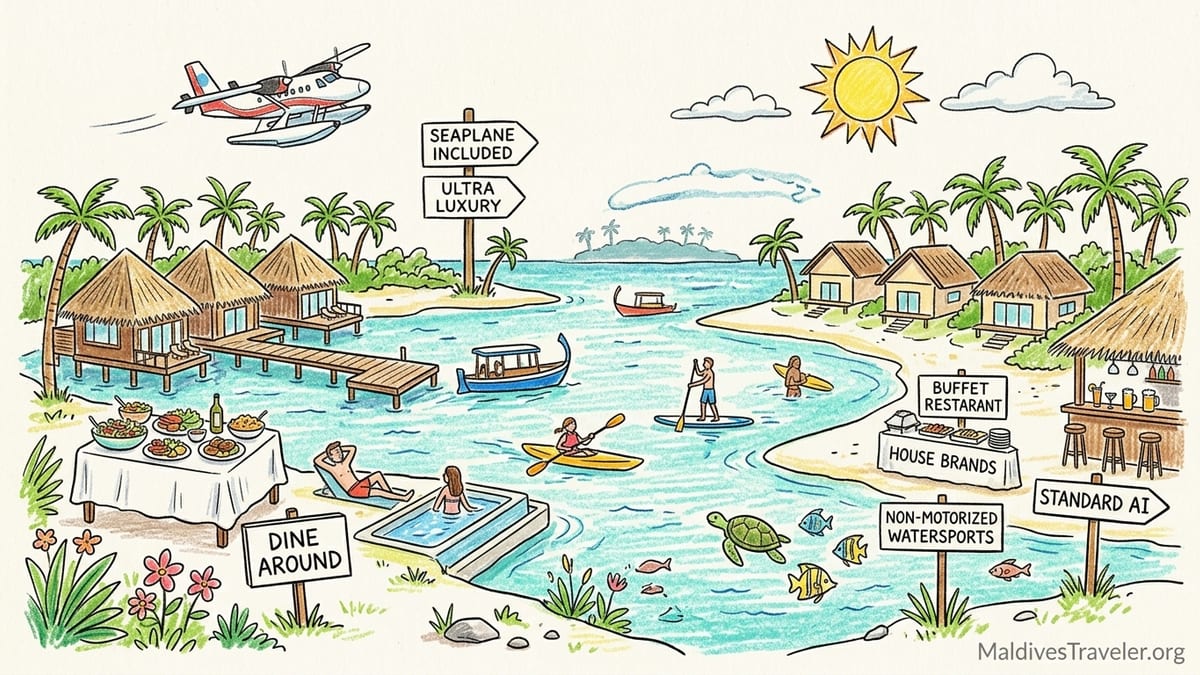
What “All Inclusive” Really Means in the Maldives in 2026
All inclusive in the Maldives has evolved into a layered market. At the entry level you have standard all inclusive plans that typically bundle three buffet meals, a limited list of house spirits, beer and wine, and a few non motorised watersports. At the top end, ultra luxury resorts such as Kudadoo Maldives Private Island position all inclusive as a “no bill” philosophy where almost every experience you could reasonably want is included in the nightly rate. In between sit premium and deluxe plans that can offer strong value if you understand what is and is not covered.
Most packages now explicitly bundle return transfers, which used to be a separate and sometimes shocking cost. On many 2026 rate sheets, you will see packages advertising “seaplane included” or “speedboat included” for stays of five nights or more, especially at mid range and premium properties. This reflects the reality that domestic flights, often in the region of several hundred dollars per person return, can make or break the value of an all inclusive deal, particularly for families or longer stays.
Another defining feature in 2026 is how plans handle the Maldives’ high taxes and service charges. Restaurant and bar prices typically carry a combined tax and service uplift of just under 30 percent once everything is added. For guests paying as they go, that means every cocktail, smoothie and à la carte dish costs meaningfully more than the menu headline. Comprehensive all inclusive plans at the right resort can shield you from this and make your final bill more predictable, but only if the inclusions fit how you actually like to holiday.
A practical way to approach planning is to ignore the label on the brochure and instead read the inclusions line by line. Look at which restaurants are in, what level of alcohol brands are covered, whether the minibar is refilled, and how generous the resort is with activities such as snorkel trips, sunset cruises, kayaks and stand up paddleboards. Two properties that both call themselves “premium all inclusive” can deliver very different on island realities.
Standard All Inclusive: Buffets, House Drinks and the Basics Covered
Standard all inclusive plans in the Maldives usually anchor the value segment, especially at three and four star islands. Resorts such as Adaaran Club Rannalhi in South Malé Atoll or Thulhagiri Island in North Malé commonly offer a single all inclusive plan built around the main buffet restaurant, one or two bars pouring mostly house brands, and selected non motorised watersports. At these properties the room rate might start in the mid hundreds per night for two guests, with a speedboat transfer bundled for stays across much of the year.
Dining under standard plans is largely buffet based. Breakfast, lunch and dinner are taken in the main restaurant on a set schedule, with a rotating theme night format. Many islands in this bracket either have no à la carte venues or restrict them to a surcharge. If there is an Italian or grill restaurant, all inclusive guests may receive a one time set menu or a discount, such as 20 or 30 percent off the food bill, rather than full coverage. For travellers who are happy to eat buffets and do not mind less variety, the savings compared with paying for individual meals can still be significant.
Alcohol under a standard plan is typically limited to house spirits, local or regional beer and basic wines by the glass. Premium gins, aged rums or Champagne are almost always excluded or chargeable by the bottle. It is common to see an all inclusive bar list where certain brands are highlighted as included and more recognisable labels are priced separately. Minibar service, if included at all, may only cover soft drinks and bottled water once a day. Snacks between meals might be limited to a scheduled teatime or a small sandwich menu at the main bar.
On the activity side, standard all inclusive usually covers the hire of snorkelling gear, kayaks and stand up paddleboards for set periods each day. Motorised watersports, from jet skis to parasailing, are virtually always extra. Excursions are normally treated as paid add ons, although some packages will include one sunset cruise or a basic snorkelling trip per stay. Spa treatments and diving are almost never part of the plan at this level, so if you expect to book several massages or daily scuba dives it is important to add those projected costs into your overall comparison.
Premium All Inclusive: Dine Around, Better Brands and More Inclusions
Premium all inclusive, sometimes called “all inclusive plus,” has become the Maldives sweet spot in 2026. Resorts like VARU by Atmosphere in North Malé, Kandima Maldives in Dhaalu Atoll and Sun Siyam Olhuveli in South Malé pitch themselves squarely at travellers who want more restaurant choice, higher quality drinks and a broader menu of included experiences. Nightly rates at these properties often sit higher than standard options but the perceived value is also greater, particularly for couples and families who will use the extras.
Dining is where premium plans really differentiate. VARU’s signature plan, for example, allows guests to dine around most of its five principal restaurants, including à la carte venues, on a rotating basis, rather than confining them to one buffet. Kandima’s premium concept similarly opens up multiple outlets from a central buffet to beach grills and cafes, and some packages include à la carte breakfasts or lunches at specific venues. At properties like Hudhuranfushi, a widely promoted 24 hour premium all inclusive plan gives access to several speciality restaurants alongside the main Banyan buffet, which helps repeat guests avoid menu fatigue on longer stays.
Beverage lists also improve at this tier. Premium all inclusive plans frequently specify that selected international brands are included, and many offer a longer cocktail list with named spirits rather than generic house pours. At Joy Island in North Malé and Jawakara in Lhaviyani, for instance, the premium all inclusive packages are marketed around extensive selections of branded spirits and wines, sometimes numbering dozens of labels. Champagne may still be chargeable, but sparkling wines, better quality gins and aged whiskies are much more likely to appear on the “included” side of the menu.
Minibars and snacks become more generous as well. Many premium resorts now restock minibars daily with beer, soft drinks, bottled water and a few snacks. Kandima and several Atmosphere and OBLU branded islands openly advertise daily minibar refills in their plan descriptions. Between meal snacks can include afternoon tea at a bar, ice cream counters or poolside menus that do not incur a bill for included items. When comparing two similar nightly rates, the convenience of simply opening the minibar without thinking about charges for every soft drink or chocolate bar can be a quiet but meaningful advantage.
Activities are also more inclusive. Several premium properties include at least one scheduled excursion such as a sunset cruise, dolphin watching or a local island visit per stay, along with unlimited use of non motorised watersports. Hudhuranfushi’s plan is an example where selected excursions are bundled, while Meedhupparu’s 24 hour premium concept explicitly includes a range of boat trips over a week. Some resorts add modest spa or diving perks; Holiday Inn Resort Kandooma in South Malé, for example, has marketed packages that include a set number of complimentary dives per day for certified divers or percentage discounts on spa treatments for all inclusive guests.
Luxury and “Near Everything Included”: When the Bill Almost Disappears
At the top of the spectrum are ultra luxury islands where all inclusive has been reimagined as a frictionless experience. Kudadoo Maldives Private Island in Lhaviyani Atoll is often cited as the most comprehensive example. Its all inclusive concept is built on the promise that virtually everything is included in the nightly rate, from seaplane transfers and unlimited spa treatments to diving, private excursions and high end Champagne. Guests select experiences rather than calculating costs, and it is rare to sign a bill except for extremely unusual requests such as imported cigars or rare vintage wines.
Other high end properties pursue a similar philosophy, even if they do not go quite as far. Emerald Maldives Resort & Spa and Emerald Faarufushi describe their plans as “deluxe” or “deluxe all inclusive,” covering unlimited à la carte dining across all restaurants, premium international drinks at several bars, daily restocked minibars and a rich menu of non motorised watersports. Atmosphere Kanifushi’s Platinum Plus concept is often held up as a benchmark too, combining dine around access to multiple restaurants with branded spirits, an extensive wine list and some included excursions and activities. At this tier, guests are encouraged to treat the resort more like an inclusive club than a traditional hotel.
Luxury all inclusive also tends to come with more thoughtful inclusions around wellness and discovery. Resorts such as Pullman Maamutaa in Gaafu Alifu include daily fitness activities, yoga classes and an array of land sports in their all inclusive offering. Some islands add set spa credits per stay or per day that can be used for massages and facials, while others, especially boutique upscale properties, include a welcome spa treatment or hydrotherapy session for all guests. While full dive packages are still uncommon beyond the likes of Kudadoo, some high end plans include one introductory dive or guided house reef exploration.
Price points for these near everything included stays are markedly higher, often starting around the mid to high hundreds per person per night and rising into four figures at the very top end. However, once you factor in what would otherwise be separate charges for premium dining, Champagne, spa, diving and private excursions, the overall value can be more attractive than it first appears, especially for travellers who will use those experiences. The key is honesty about your own holiday style. A couple happy with buffet dining and a sundowner cocktail may not need a Platinum or deluxe level plan, while those who want to make the most of fine dining, wine and wellness can find that the all inclusive premium makes budgeting simpler and more transparent.
Even within the luxury bracket there are nuances. Some islands, particularly those in well known international chains, may market short term offers where guests booked on half board receive a complimentary upgrade to all inclusive, with selected activities thrown in. These promotions can be compelling for specific dates but still require a close reading of exactly which elements are promotional and which remain chargeable, particularly when it comes to speciality restaurants and high end drinks.
À La Carte Restaurants, Alcohol Brands and the Fine Print
Across all tiers, the biggest area of confusion is often how à la carte restaurants are handled. Entry level all inclusive resorts with a single buffet rarely face this issue, but as soon as an island adds an Italian trattoria on the jetty or an overwater grill, the question becomes: is it actually included? At some mid range properties the answer is “yes, but limited.” You might receive one or two à la carte dinners per week of stay, with additional visits charged at standard menu prices. Others operate a set menu or credit system, where all inclusive guests can order from a specific list or apply a monetary credit toward dishes that are otherwise priced.
Premium and luxury properties more often advertise dine around privileges, yet even here the details matter. One resort may allow full dine around every night at all operational restaurants, while another includes only a selection of menus or requires supplements for certain signature dishes such as imported steaks or lobster. There are also islands where one or two showpiece venues, such as an underwater restaurant, are excluded from all inclusive entirely, operating on a separate fine dining model. Understanding whether your plan truly lets you eat where and when you like, or whether you are effectively tied to specific venues, can dramatically change how the package feels.
Alcohol brands are another area where brochures can be opaque. A plan might promise “premium international beverages” but in practice offer a mid range selection of spirits and wines with additional surcharges for recognisable top shelf labels. Some resorts publish a detailed all inclusive beverage list that guests can review in advance, while others provide only indicative language. If enjoying particular brands or styles of wine is important to you, it is worth asking your travel advisor to obtain a copy of the current drinks list, or at least to confirm whether sparkling wines, branded liqueurs and a range of cocktails are part of the plan or charged separately.
Minibar policies and snack availability rarely lead brochure copy, yet they influence how inclusive your stay feels day to day. A plan that restocks only water and soft drinks once daily offers a different level of convenience from one that includes beer, wine, chocolate and savoury snacks topped up each afternoon. Similarly, resorts that run a coffee shop or ice cream bar with items included in the plan give guests more freedom to graze, especially families with children. When comparing two islands with similar room rates and restaurant counts, these small details can be the elements that tip a decision.
Finally, always look for any time based limitations. Some all inclusive plans cover drinks only during certain hours, such as 10 am to midnight, with late night orders charged. Others confine inclusions to specific bars or impose rules about in villa dining. None of these are negative in themselves, but clarity upfront helps avoid surprises at checkout and ensures you align expectations with reality.
Excursions, Watersports, Spa and Diving Credits
Maldives resorts have increasingly sophisticated activity programs, and how those activities interact with all inclusive plans is another key differentiator. At the standard level, most islands focus inclusions on simple, low cost options: daily use of kayaks and stand up paddleboards, occasional group snorkelling trips along the house reef and perhaps one scheduled sunset cruise. Anything involving fuel, like jet skis, banana boats or private speedboat hires, is almost always extra. Likewise, guided excursions to sandbanks, manta points or whale shark sites are typically chargeable, sometimes priced per person and sometimes as a private charter.
Premium all inclusive resorts have started to fold more excursions into their packages. Some offer a menu of group outings where guests can choose one or two per week, such as dolphin cruises, sunset fishing or visits to local inhabited islands. Meedhupparu’s 24 hour premium concept, for example, sets out a range of excursions that guests can book without additional payment during a week long stay. At the same time, non motorised watersports are generally unlimited, and a few properties go further by including windsurf or catamaran lessons for beginners at set times.
Spa and diving remain mostly optional extras across the market, but there are more examples of resorts using credits to sweeten all inclusive packages. Some higher end islands bundle a fixed spa credit per adult per stay, perhaps the equivalent of a short massage, while others give a daily credit that can be applied to longer treatments. Dive centres may offer discounted rates or, more rarely, one complimentary introductory dive for new divers. Kudadoo stands out again as a notable exception, with a model that allows guests to book spa and dive experiences without counting or calculating, although that approach remains rare due to the operational costs involved.
Families should also look carefully at how kids clubs and teen activities intersect with all inclusive. Many resorts, especially larger ones like Kandima, include supervised kids club sessions, creative workshops and some sports as part of the plan, with only specialised experiences such as private babysitting or advanced watersports lessons carrying a fee. Knowing which elements are included can help parents schedule their days without constant reference to the room account, and in some cases can offset the premium you pay for a more comprehensive all inclusive concept.
Transfer Inclusions: Speedboat, Seaplane or Domestic Flight
Transfers are one of the most significant line items in a Maldives budget and a key lever used by resorts and tour operators in 2026 to shape value. Many packages now highlight “return transfers included” to signal that the cost of the speedboat, seaplane or domestic flight journey has been bundled into the overall price. On islands within easy reach of Malé, such as those in North and South Malé Atolls, this typically means a shared speedboat transfer of roughly 20 to 60 minutes each way. Resorts like VARU, Sun Siyam Olhuveli and several integrated lagoon developments commonly wrap this into the all inclusive package for stays of four nights or more.
Further flung atolls often rely on seaplane transfers direct from Malé, or a combination of domestic flight and speedboat. In 2026, several seaplane dependent resorts at both mid range and high end levels promote seasonal offers where the return seaplane is included if you stay a minimum number of nights. Examples include properties in Raa, Dhaalu and Lhaviyani Atolls where tour operators advertise “all inclusive plus seaplane” packages for stays of five or seven nights during shoulder or low seasons. These offers can save couples several hundred dollars and families considerably more, but tend to have specific travel windows and may not be available over peak festive dates.
Domestic flights, used by islands in southern atolls such as Gaafu or Addu, have also increasingly been folded into packaging, particularly in partnership with international tour operators. Resorts like Mercure Kooddoo, which uses a domestic flight and short buggy or boat ride, often appear in 2026 brochures with “all inclusive plus domestic transfers” wording. In practice this means the resort has negotiated an allocation of seats with local airlines and priced them into the all inclusive rate. For guests, the advantage is a clearer total trip cost, although flexibility with flight times can still depend on airline schedules and weather.
Regardless of the mechanism, it remains important to clarify whether your booking includes transfers for all members of your party, whether there are surcharges for infants or teenagers and what happens if you arrive on a late international flight that misses the last seaplane of the day. Some packages will require you to overnight in Malé or at an airport hotel at your own expense if connections do not align. Others, particularly ultra luxury islands, may arrange private seaplanes or speedboats at additional cost. Checking these details before confirming flights avoids unwelcome surprises on arrival.
How to Match a Plan to Your Budget and Travel Style
Selecting the right all inclusive level in the Maldives is ultimately an exercise in self assessment. Start by estimating how you genuinely eat, drink and play on holiday. If you are content with three buffet meals a day, a couple of beers or house cocktails by the pool and the occasional kayak session, a well priced standard all inclusive package on a convenient speedboat island may give you everything you need. On the other hand, if you imagine à la carte dinners several nights a week, bottles of wine with meals, daily coffees or smoothies and time in the spa, a premium or deluxe plan will likely work out better value even if the sticker price is higher.
Think next about how important flexibility is. Travellers who like to wake late and graze through the day will appreciate resorts that offer snacks, all day dining or dine around privileges more than those with rigid meal windows. Similarly, couples celebrating a honeymoon or anniversary may place a premium on signature restaurants, destination dining and in villa breakfasts. In these cases, plans that include multiple à la carte venues and perhaps some romantic extras will often feel more rewarding than basic buffet based packages, even if the per night rate edges into a higher bracket.
Families should weigh kids policies carefully. Children may be heavily discounted or stay free on all inclusive meal plans at certain ages, which can make a premium resort surprisingly competitive. Some islands include ice cream, juices and kids club sessions in the plan, which can reduce friction on the ground. If teenagers will make heavy use of soft drinks and snacks, a generous minibar policy or inclusive coffee and smoothie bar can remove a lot of low level spending from the final bill. Comparing two islands with similar base rates through this lens often reveals that one is meaningfully more family friendly than the other in practice.
Finally, consider the psychological benefit of a more inclusive model. For some travellers, especially those on a once in a lifetime trip, the appeal of paying almost everything upfront and relaxing into the experience is worth a premium. Islands like Kudadoo, Emerald or Atmosphere Kanifushi are designed around this feeling of ease. For others, especially repeat visitors who know they will skip certain extras, a leaner all inclusive or even a half board plan combined with selective spending on drinks and activities may be the smarter choice. The best value is rarely universal; it is the plan that most closely mirrors how you naturally like to spend your days in the Maldives.
FAQ
Q1. What is the main difference between standard and premium all inclusive in the Maldives?
Standard all inclusive usually means buffet meals, house brand drinks and a few basic activities, while premium plans add dine around options at à la carte restaurants, better quality alcohol, daily restocked minibars and more included excursions or experiences.
Q2. Are seaplane or speedboat transfers always included in all inclusive packages?
No, transfers are not automatically included. Many 2026 packages do bundle return speedboat or seaplane transfers, especially for longer stays, but others still charge them separately, so you should always confirm if your specific booking includes transfers for all guests.
Q3. Do Maldives all inclusive plans usually cover spa treatments or diving?
In most resorts spa treatments and diving are extra, even on premium plans, although some offer credits or discounts. Only a small number of ultra luxury properties include unlimited spa and diving as part of an all inclusive philosophy.
Q4. How well are à la carte restaurants covered by all inclusive plans?
Coverage varies widely. Some plans include full dine around access to most à la carte venues, others provide a set number of à la carte dinners per stay or a fixed credit, and a few include only the buffet restaurant with à la carte outlets charged separately.
Q5. What kind of alcohol can I expect on a typical Maldives all inclusive plan?
Standard plans focus on house spirits, beer and basic wines by the glass, while premium and deluxe plans usually add a broader selection of branded spirits, cocktails and wines; Champagne is often excluded or chargeable even at higher tiers.
Q6. Are snacks and minibar items really included, or will I be charged at checkout?
That depends on the resort. Many premium all inclusive islands now include daily restocked minibars with drinks and some snacks, as well as afternoon tea or snack menus, but others offer only limited items or charge for anything beyond water and soft drinks.
Q7. How many excursions are normally included in an all inclusive stay?
Standard plans may include no excursions or just one basic sunset cruise, whereas premium concepts often allow one or two group excursions per week; high end plans might offer a broader menu, but private or fuel heavy trips are still commonly extra.
Q8. Is an ultra luxury “everything included” resort worth the higher nightly rate?
It can be worthwhile if you plan to make frequent use of fine dining, premium drinks, spa and diving, and value not thinking about prices. For lighter spenders, a mid range premium plan may offer better overall value.
Q9. How should families evaluate all inclusive value in the Maldives?
Families should look at child pricing on meal plans, whether kids clubs and teen activities are included, how generous snack and ice cream policies are, and if soft drinks and juices are covered, as these items can add up quickly at checkout.
Q10. What is the best way to compare different Maldives all inclusive resorts?
The most effective approach is to ignore the label and compare line by line: which restaurants are included, what brands of alcohol are covered, how the minibar works, which activities and excursions are bundled, and whether transfers are part of the package.