


Once you decide on a private island resort in the Maldives, the next question is where. For many travelers the real decision is not one specific resort, but which atoll to base in. North Malé, Ari and Baa are the three most requested options, each with a distinct personality: North Malé for fast access by speedboat, Ari for serious diving and whale sharks, and Baa for remote luxury and manta encounters. Choosing the right one shapes everything from your transfer cost to what you see underwater and how relaxed your first and last travel days feel.
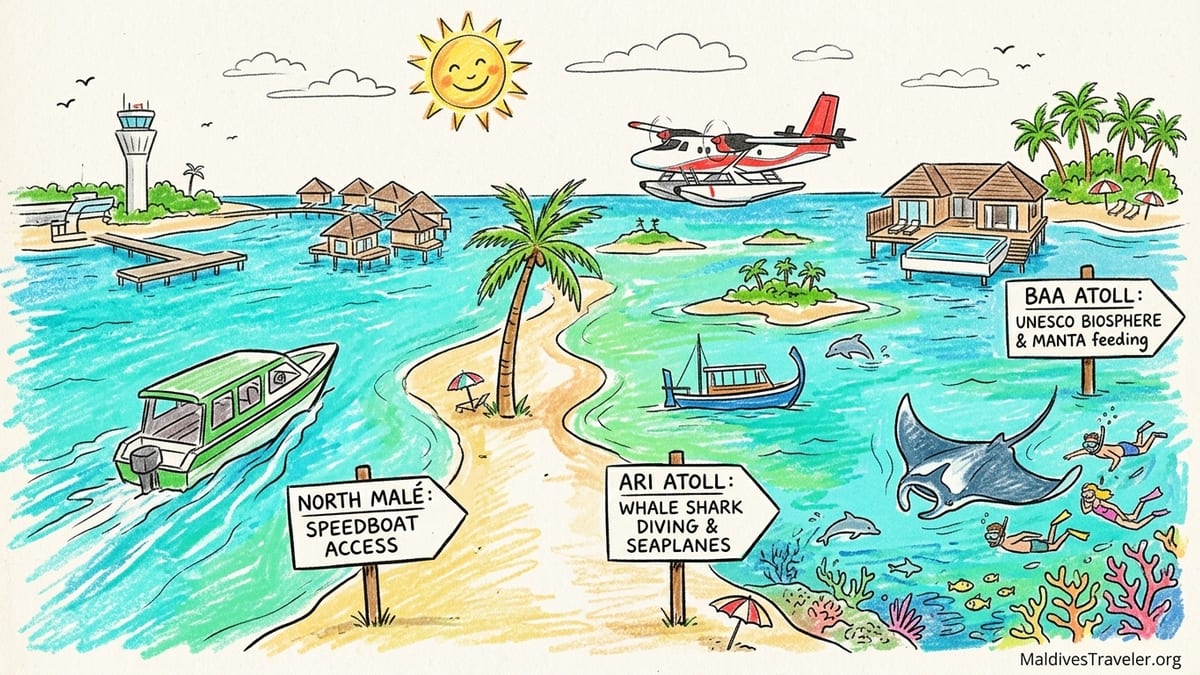
North Malé Atoll: Fast Access and Maximum Convenience
North Malé is the atoll you see first when you land at Velana International Airport. It wraps around Malé and the airport island, which means most resorts here are reached by shared speedboat in roughly 15 to 45 minutes after you clear customs. Many midrange properties such as Meeru Island Resort and Spa quote transfer times of about 50 to 55 minutes, while higher end islands like Huvafen Fushi sit closer at around 30 minutes by speedboat. For short trips of three to five nights, this fast, weather-flexible transfer can be the single biggest reason to choose North Malé over a seaplane-only atoll.
The boat transfer structure is simple: you walk out of arrivals, meet your resort representative at the airport exit and are guided to the pier. From there a covered speedboat takes you directly to your island. Because there is no dependence on daylight flying hours, late night and early morning arrivals are generally manageable, though some resorts will hold very late arrivals at an airport hotel if seas are rough. Many North Malé packages use more moderately priced shared boats compared with remote atolls where luxury brands often charge premium transfer rates that can add well over a thousand dollars to a couple’s bill.
North Malé has the highest resort density in the country, with everything from older three star islands geared to package holidays through to five star brands like One and Only Reethi Rah and newer design-led options. That density brings choice and often more competitive pricing, especially in the midrange. The trade off is that on some islands you may see neighboring resort lights in the distance or occasional boat traffic on the horizon, which can slightly dilute the castaway feeling compared with remote Baa or outer Ari.
Underwater, North Malé has good but not usually headline-grabbing snorkeling and diving. Many resorts have a house reef within swimming distance, but in places the corals close to shore show storm and bleaching damage. The diving highlights here tend to be channel dives with grey reef sharks, eagle rays and schooling fish, plus some reliable manta cleaning stations in season. If your priority is easy tropical snorkeling and the classic overwater villa photo rather than ticking off whale sharks, North Malé delivers that with maximum transfer convenience.
Ari Atoll: Whale Sharks, Diving and Broad Resort Choice
Ari Atoll runs roughly east to west a short seaplane hop from Malé and is widely considered the diving heartland of the Maldives. South Ari in particular has near year round whale shark sightings around reefs like Maamigili, which is why so many liveaboards and dive resorts focus here. Dedicated dive islands such as Vilamendhoo Island Resort, Constance Moofushi and Lux South Ari market daily whale shark excursions as a core part of their programs, and divers regularly report multiple shark and manta encounters during a week’s stay.
Reaching Ari usually involves a shared seaplane transfer during daylight hours, typically taking 25 to 40 minutes of flying plus waiting time at the seaplane terminal. The cost is significant. Many mid to upper tier resorts quote return seaplane rates in the region of several hundred dollars per adult, often in the 300 to 700 US dollars per person range depending on brand and season, with children discounted but still chargeable. Those prices change regularly and are usually excluded from online room rates, so it is essential to get a written transfer quote from your chosen resort before you commit.
The payoff is that Ari offers some of the best all round house reef snorkeling in the country combined with a wide range of resort styles. Small barefoot luxury islands like Mirihi are known for strong house reefs where you can step off the beach and snorkel among turtles, reef sharks and dense shoals of fish. Larger family friendly all inclusive options like Lily Beach or Centara Grand provide kids clubs, multiple restaurants and easy boat access to famous thila pinnacles for divers. Budget friendly local island stays also cluster here, so mixed itineraries combining a few nights in a resort with cheaper guesthouses are common.
For many active travelers Ari is the sweet spot. You accept the extra cost and logistics of a seaplane to gain daily access to serious pelagic life, a bigger choice of dive centers and varied price points. Plan to arrive into Malé before early afternoon, as seaplanes generally do not fly after daylight hours, and consider spending your final night back near the airport if you have an early morning international departure to avoid weather-related delays.
Baa Atoll: Remote Luxury and Manta-Focused Marine Travel
Baa Atoll lies northwest of Malé and is best known internationally as a UNESCO Biosphere Reserve. The atoll’s coral reefs support high biodiversity, and at its heart sits Hanifaru Bay, a small lagoon where manta rays and occasionally whale sharks gather in feeding aggregations when the plankton conditions are right. From roughly June to November, especially around certain moon phases, dozens of mantas can circle through the bay on a good day, making it one of the world’s iconic manta snorkeling sites.
Most resorts in Baa are seaplane access only, with flight times from Malé of around 30 to 40 minutes plus boat transfers onward to the island. The seaplane cost profile is similar to Ari or higher and heavily tied to resort positioning. High end brands like the Four Seasons, Soneva and Amilla tend to charge at the upper end of typical Maldivian seaplane prices. Because Baa is farther from Malé than North Malé and several islands are oriented toward privacy and low density, total package prices and incidentals are often higher than equivalent room categories in more populated atolls.
The resort style in Baa skews decisively toward upscale and ultra luxury. Villas are large, food programs emphasize sustainability and wellness, and many islands operate extensive marine biology centers. Guests often choose Baa specifically for a manta-focused stay, pairing daytime Hanifaru Bay trips with sunset sandbank picnics and private in-villa dining. Regulations inside Hanifaru Bay are strict to protect the animals: visitor numbers per session are capped, scuba diving is banned and stays in the bay are time limited, so your resort will usually offer short but intense guided snorkeling visits when conditions line up.
Baa’s beaches and lagoons tend to feel more untouched than those in busier atolls. Many islands are fringed by wide, soft sand and clear drop offs that create striking overwater villa views. However, like everywhere in the Maldives, specific house reef quality varies by island, so if snorkeling from the beach matters to you, prioritize resorts that explicitly highlight a strong house reef rather than assuming every Baa island is equal just because of the Biosphere Reserve label.
Transfers and Total Trip Cost: What Each Atoll Really Means
When choosing between North Malé, Ari and Baa, transfer type is one of the biggest financial and logistical variables. A shared speedboat to a North Malé resort can still be expensive, especially on luxury brands that use large yachts, but it is usually cheaper per person than a seaplane and does not depend on daylight flying hours. Some midrange North Malé properties roll speedboat transfers into their package prices, which simplifies budgeting. At the top end, even speedboat transfers can cost several hundred dollars per person round trip, so always check the specific quote.
Seaplane transfers to Ari and Baa introduce real money and some uncertainty. Prices are generally fixed per adult and per child regardless of whether the plane is full, and they are subject to fuel surcharges and tax. On a typical one week trip for two adults, a seaplane bill can easily add the equivalent of several nights in a midrange hotel elsewhere in Asia. For families of four or five this multiplies quickly. On the other hand, the seaplane flight itself is a memorable part of the trip, with low level views over the atoll chain that many guests consider a once in a lifetime experience.
Total trip cost also depends on what is available around your island. In North Malé, the higher island density and proximity to Malé mean more options for third party excursions, local island visits and even supermarket runs at the start or end of a stay if you are combining a resort with a local guesthouse. In Ari and Baa, activities are more likely to be channeled through your resort with resort pricing. This does not necessarily mean bad value, but it does mean you should pay close attention to what is included in your meal plan, what excursions cost and whether kids clubs or snorkel trips carry extra fees.
If you are balancing a strict budget, one realistic strategy is to focus on a North Malé resort that offers all inclusive or full board plans with included transfers in low or shoulder season. Another is to split your stay, with three or four nights in an affordable North Malé island to recover from jet lag and then a shorter, focused seaplane add on to Ari or Baa specifically for diving or mantas. This way you experience the signature wildlife without paying seaplane rates for your entire holiday.
Beaches, Reefs and Marine Life: What You Will Actually See
Beach quality is highly island specific across all three atolls, but patterns do exist. In North Malé, many resort islands were among the earliest developed in the Maldives, and lagoons around them tend to be calm and shallow, ideal for children and lounge-on-the-sand holidays. Some islands use low sea walls or sandbag structures in places to reduce erosion, which can slightly affect the natural look on certain stretches of beach. If the postcard view from your villa matters, ask the resort or an agent which villa categories sit on the best natural beaches.
Ari’s reef structure is more dramatic, with numerous thila pinnacles and channels that bring richer pelagic life. For beginner snorkelers, islands like Vilamendhoo or Kandolhu offer drop offs close to shore where you can snorkel above vertical walls alive with anthias, reef sharks and rays. Whale shark spotting trips in South Ari typically involve boat rides to known hotspots, then quick entries into the water when a shark is seen at the surface. These can be busy, especially in peak season, but they deliver a realistic chance to see the world’s largest fish without the cost of a specialist liveaboard.
In Baa, the star is seasonal manta action. Outside Hanifaru Bay, many resorts have their own manta cleaning stations that can be reached in a short dhoni ride, giving divers and snorkelers good odds of encounters without the crowds. The Biosphere Reserve status helps support better managed marine tourism, although you should still expect other boats when conditions are good. Coral health varies: some reefs show excellent recovery with lush tables and branching corals, while others bear scars from past bleaching. Overall, if manta behavior and a feeling of being immersed in a wider conservation story appeal to you, Baa stands out.
If marine life is a secondary interest and you mainly want clear, warm water and photogenic sandbanks, North Malé is more than enough. If you want one atoll where you can combine accessible house reef snorkeling with boat dives that regularly deliver sharks, rays and big schools, Ari is hard to beat. If your dream is to float in the middle of a slow swirling manta carousel beneath soft sunlight, you design the trip around Baa’s June to November manta window and accept that the timing slightly constrains your dates.
Resort Styles, Families and Honeymooners: Who Fits Where
All three atolls cater to both honeymooners and families, but they do so with different emphases. North Malé is the workhorse all rounder. Honeymooners benefit from easy arrival after long haul flights and a huge range of villa categories, from simple beach bungalows where you can walk barefoot to dinner to high end overwater suites with private pools. Families appreciate shorter transfers with small children, more frequent boat schedules if plans change and large islands with kids clubs and multiple restaurant choices.
Ari leans more strongly into active couples and divers, though there are several excellent family options. Many of the most reef focused islands are compact and quiet, better suited to couples who will spend their days diving and evenings at the bar than to toddlers in strollers. Resorts like Kuramathi or Lily Beach bridge this gap with separate quiet zones and family areas, letting honeymooners enjoy adult-oriented spaces while giving families pools, splash zones and kids clubs across the island.
Baa atoll resorts are heavily skewed toward luxury, privacy and wellness, which naturally attracts honeymooners and special occasion trips. Many villas here are large enough for families and several properties run creative kids programs centered on marine biology and sustainability. Still, the overall atmosphere is subdued and design forward. If you are a couple looking for a sense of seclusion, private butler service and a curated experience built around spa, fine dining and tailored excursions, Baa is the obvious candidate. Parents traveling with energetic younger children may find better value and more casual flexibility in North Malé or the larger islands of Ari.
For multigenerational groups, transfer logistics often decide the atoll. Grandparents or guests nervous about small planes usually feel more comfortable with a quick speedboat ride to North Malé. Confident travelers eager for adventure may push for Baa or Ari to access their signature marine encounters. When in doubt, weigh the marginal cost and stress of a seaplane against how passionately your group wants whale sharks or mantas specifically, rather than simply good all round tropical water.
Which Atoll Fits You: Clear Traveler Profiles
If you are planning a three to five night escape, arriving late into Malé or traveling with very young kids, North Malé almost always makes the most sense. You will be on your island quickly, your final day is more relaxed because you are not tied to seaplane schedules and your total transfer bill is likely lower. Choose this atoll if your priorities are easy logistics, classic lagoon views, decent snorkeling, a manageable budget and access to a wide mix of resorts without overthinking the details of every dive site.
If you are a certified diver, underwater photographer or anyone whose dream is to see whale sharks and mantas in a single trip, Ari should be your default starting point. Center your search on South Ari if whale sharks are non negotiable and pair a strong house reef resort with a dive center that runs regular pelagic trips. Budget carefully for the seaplane and plan a minimum of one week to allow for weather and to avoid feeling rushed. For couples who like a balance of activity and comfort, Ari’s mix of dive-focused islands and larger all inclusives is hard to match.
If you picture your Maldives trip as a once in a lifetime celebration, value remoteness and are willing to pay premium rates for both the transfer and the resort itself, Baa is where you look first. Time your visit for the manta season if possible, choose a resort with strong sustainability credentials and expect quieter evenings, sophisticated cuisine and attentive service. Baa suits honeymooners, anniversary trips and well traveled guests who have already seen simpler beach destinations and now want somewhere that combines marine spectacle with polished luxury.
The most powerful tool is to be honest about your non negotiables. If quick, simple travel days matter more than anything, do not let FOMO drag you to a seaplane-only atoll. If seeing a whale shark has been on your list for a decade, it makes sense to absorb the extra cost of Ari. If you want to be in the middle of a living conservation story while staying in some of the country’s most refined resorts, Baa’s Biosphere Reserve status tips the scales. There is no single best atoll, only the one whose strengths align with your particular trip.
FAQ
Q1. Is North Malé always cheaper than Ari or Baa once transfers are included?
Not always, but often. Shared speedboats in North Malé are usually less expensive than seaplanes, and some midrange resorts include transfers in packages. However, top tier North Malé properties can still charge premium rates for luxury yachts, so you should always compare the full package price including transfers for your specific dates.
Q2. How many nights do I need in Ari Atoll to have a realistic chance of seeing a whale shark?
A stay of five to seven nights in South Ari gives a reasonable chance, especially if you choose a resort that runs regular whale shark trips and you are willing to join multiple excursions. There are never guarantees with wildlife, but a full week allows you to work around weather and visibility changes.
Q3. When is the best time to visit Baa Atoll for manta rays at Hanifaru Bay?
The core manta season at Hanifaru Bay broadly runs from around June to November, with activity often strongest during the southwest monsoon when plankton blooms concentrate in the bay. Exact timing varies year to year, so it is worth asking your chosen resort how the season has been running in recent years.
Q4. Are seaplane transfers in the Maldives safe for nervous flyers?
Seaplanes in the Maldives are a routine part of local tourism and operate many flights every day in daylight hours. The planes fly low, so you always see the water and atolls below, which some nervous flyers find reassuring. If you strongly dislike small aircraft, choosing a speedboat-accessible North Malé resort can remove this stress entirely.
Q5. Which atoll is better for families with small children?
North Malé tends to be the most practical for families with young kids because of shorter, more flexible speedboat transfers and larger islands with kids clubs and multiple food options. Ari and Baa also have excellent family resorts, but seaplane logistics and higher overall costs can make them more demanding with toddlers and infants.
Q6. Do I need to be an experienced diver to enjoy Ari or Baa Atoll?
No. Both atolls offer excellent snorkeling from the beach or via short boat trips, and most resorts run beginner dives and discovery experiences. However, certified divers will get more value from the variety of deeper sites and channels, so if you are keen, consider completing your certification before you travel.
Q7. Can I combine two atolls in one trip, like North Malé and Ari?
Yes, but it adds complexity and cost because you must route back through Malé or use resort-arranged inter-island transfers. A common pattern is starting in a North Malé resort for one or two nights to recover from travel, then taking a seaplane onward to Ari or Baa for a longer main stay.
Q8. Are the beaches whiter or the water clearer in one atoll compared with the others?
All three atolls offer classic Maldivian white sand and clear turquoise water. Differences are more about specific islands and seasons than atolls. Factors like lagoon depth, sandbank shape and recent weather can change how an island looks week to week, so it is better to judge by recent photos of individual resorts rather than assuming one atoll is always more photogenic.
Q9. Which atoll is best if I care most about sustainability and conservation?
Baa stands out because of its UNESCO Biosphere Reserve status and focus on manta and whale shark conservation, but many Ari and North Malé resorts also run serious marine biology programs. Look for resorts that publish reef monitoring results, limit single use plastics and support local community projects, regardless of atoll.
Q10. How far in advance should I book if I want peak manta or whale shark season?
For popular weeks in manta season in Baa or during pleasant weather windows in South Ari, booking six to twelve months ahead is sensible, especially for small luxury resorts and overwater villas. Shoulder season or larger family resorts may have availability closer to departure, but specific villa types often sell out early for prime wildlife weeks.