


For travelers who want the Maldives without the price tag and logistics of seaplanes and far‑flung atolls, the local islands close to Malé are a powerful sweet spot. Within 20 to 60 minutes by shared speedboat, you can be unpacking in a guesthouse, swimming off a bikini beach and booking turtle or sandbank trips that rival many resorts. This guide compares seven of the most popular and accessible islands near the capital and explains when it makes sense to pay more to reach Ari or Baa Atoll for a next‑level marine‑life experience.
How to Think About Local Islands Near Malé
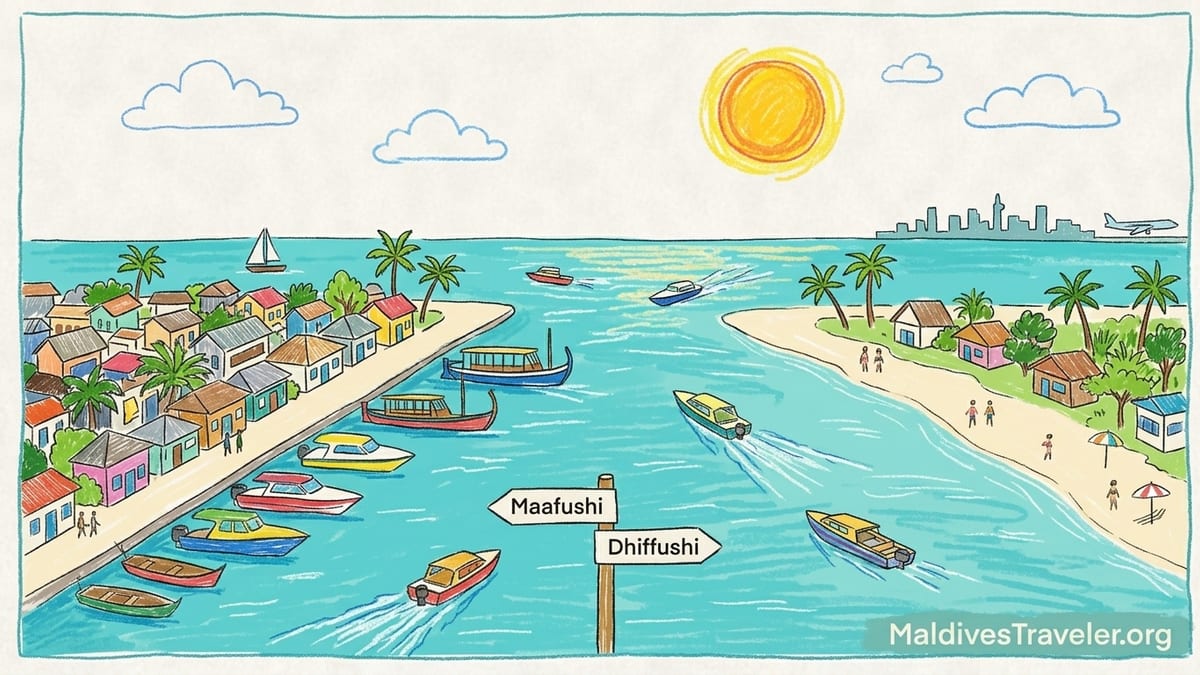
All seven islands in this guide sit in Kaafu Atoll, within speedboat range of Malé and Velana International Airport. For a typical visitor arriving on a morning or early afternoon flight, it is realistic to clear immigration, walk to the jetty and be on the beach at Maafushi, Thulusdhoo or Himmafushi the same afternoon. Shared speedboats are the workhorses here: most are 20 to 45 minute crossings that cost roughly 20 to 35 US dollars per person one way as of 2026, compared with 200 dollars or more for domestic flights or seaplanes to outer atolls.
For short stays of three to five nights, proximity and frequency often matter more than choosing the “perfect” island. In practical terms, you want an island with multiple daily boats from Malé, enough guesthouses that at least one will match your budget, a proper bikini beach and simple access to excursions. If you have six or more nights, or your priority is surfing a specific break, you can be choosier about atmosphere and specialist activities.
Across all these islands, remember that Maldivian customs apply. Alcohol is not served on local islands, outside of special offshore “floating bars.” Modest dress is expected in the village, while swimwear is fine on signed bikini beaches and during boat trips. Guesthouses typically arrange transfers for you, so you rarely need to track operators down yourself, but it pays to double‑check schedules a week before you fly because sea conditions and demand can shift departure times.
Maafushi: The Busy All‑Rounder
Maafushi is the best known and most developed local island in the Maldives, and that scale shows the moment you arrive at its small harbor. Speedboats from Malé typically take around 30 minutes, with multiple operators running several departures per day in each direction, often from early morning until late evening. In practice, that means many travelers can land at Velana, clear the airport ferry to Malé or meet a direct airport boat, and still be checking in to a Maafushi guesthouse by lunchtime.
The island has dozens of guesthouses and small hotels, such as Kaani Village and Spa or Arena Beach Hotel, ranging from basic rooms with simple breakfasts to sea‑view suites and rooftop pools. For a three‑night stay, couples often find plenty in the 60 to 120 dollar per night range outside peak festive dates, which keeps total trip cost down when you add transfers and excursions. Solo travelers and budget backpackers can also find simpler rooms or shared options at lower rates, though true dorm‑style hostels are limited.
Maafushi’s main strength is how easy it makes activities. Dozens of small agencies on the main street sell half‑day snorkel trips, sandbank picnics, dolphin cruises and full‑day resort visits. A typical half‑day dolphin and turtle trip might cost around 30 to 40 dollars, while day passes to nearby resort islands including lunch and transfers can start from roughly 100 to 150 dollars, depending on the property and season. The bikini beach on the western side has loungers, basic beach clubs and calm lagoon water, though it can feel crowded in high season.
The trade‑off is atmosphere. Maafushi is busy and built up by local‑island standards, with frequent speedboat wakes near the harbor and a main strip that feels more like a small resort town than a sleepy village. If you only have three nights in the Maldives and want everything in one place with minimal planning and the most flexible transfers, Maafushi is a strong choice. If you are sensitive to crowds or want a quieter, more traditional feel, one of the smaller islands might fit better.
Gulhi and Guraidhoo: Smaller South Malé Escapes
Gulhi sits between Malé and Maafushi and often flies under the radar compared with its larger neighbor. Shared speedboats that serve the Maafushi route sometimes stop at Gulhi, and crossing times from Malé are typically around 25 to 35 minutes. Prices are broadly similar to Maafushi, although some boats charge a few dollars less because Gulhi is closer. A slower public ferry also serves the route on select days for just a couple of dollars, but it can take about 80 to 90 minutes and runs on a limited schedule that does not work for every flight arrival.
On arrival, Gulhi feels immediately more intimate than Maafushi. The island is small and walkable, with a handful of guesthouses instead of dozens. Stays tend to be simple but friendly, and travelers often comment that it feels like a fishing village that just happens to have a bikini beach, rather than a mini resort strip. The beach itself is a highlight, with very clear water, soft white sand and a shallow lagoon that suits nervous swimmers and families with children.
Guraidhoo, a little farther south in Kaafu Atoll, usually takes around 35 to 45 minutes by shared speedboat from Malé, depending on whether the boat stops at other islands. It may have only one or two scheduled boats each day, plus slower public ferries, so you need to check times closely if your international flight lands in the afternoon. On the ground, Guraidhoo feels more lived‑in than touristy, with narrow streets, local cafes and a more conservative rhythm than Maafushi.
Both Gulhi and Guraidhoo are good options if you want lower density and more local character, while still keeping transfer costs modest. Excursions are easy to arrange through your guesthouse, but you will generally find fewer competing booths than in Maafushi, which slightly reduces last‑minute choice. For many travelers, that is a fair trade for quieter nights and less built‑up beachfront.
Thulusdhoo: Surf Vibes and Balanced Island Life
Thulusdhoo in North Malé Atoll has become the unofficial surf capital among Maldivian local islands, largely thanks to its proximity to breaks like Cokes and Chickens. Shared speedboats from Malé typically take around 30 to 35 minutes in good conditions, with several departures per day. Fares commonly fall in the 25 to 35 dollar one‑way range per person, which still keeps transfers under the cost of most domestic flights. A slower public ferry can take about an hour but is much cheaper, making it appealing for long stays or travelers on very tight budgets.
The island itself offers a mix of surf lodges, mid‑range guesthouses and a few more polished properties facing the bikini beach. A traveling surfer might stay at a dedicated surf guesthouse that includes boat trips to the breaks in a weekly package, while a couple on a short break might choose a seafront room with breakfast and then book surf or snorkel outings separately. Cafes and restaurants are more varied than on many small islands, with coffee shops, juice bars and places serving both local curries and Western dishes.
Beyond surfing, Thulusdhoo has a pleasant everyday rhythm, with locals commuting by bicycle, a school, mosques and a small harbor framed by turquoise water. Snorkeling on the house reef is better than on some sandbar‑style islands, and trips to sandbanks, turtles or manta cleaning stations are easy to arrange in season. Because the island trades on surf reputation, the visitor crowd skews slightly younger and more active than Maafushi, though there are also families and older couples, especially outside peak surf months.
Thulusdhoo works especially well for travelers who want a more rounded Maldivian experience in a compact timetable. You can land in Malé in the morning, take a midday speedboat, and be in the water at Cokes the same evening. For a five‑night stay, you could easily mix two surf days, one sandbank trip, one resort‑day visit and a final quiet beach day without ever needing a domestic flight.
Dhiffushi, Huraa and Himmafushi: Close, Quiet and Well Connected
Dhiffushi, on the eastern edge of Kaafu Atoll, is a popular choice for travelers who prioritize a pretty lagoon and village feel but still want realistic transfers. Scheduled shared speedboats from Malé or the airport usually take around 40 to 45 minutes and cost in the region of 25 dollars one way per person. A slower public ferry departs Malé most afternoons except Fridays and costs just over one US dollar, but takes close to three hours and makes several stops, so it suits longer trips more than quick getaways.
Despite its small size, Dhiffushi has a cluster of guesthouses facing a wide stretch of turquoise lagoon. Rooms often fall in a similar price band to Maafushi or Thulusdhoo, though you can sometimes find good value in shoulder seasons. Activities lean toward snorkeling, sandbank trips and relaxed lagoon swims rather than nightlife. Travelers frequently describe evening walks around Dhiffushi as one of the highlights, with pastel skies, kids playing football and the soft call to prayer echoing over the water.
Huraa is closer to Malé, typically about 25 to 35 minutes by private or shared speedboat. A daily public ferry connects Huraa and Malé in around 70 minutes at a very low fare, making it attractive to slower travelers and those who want to stretch budgets over a week or more. The island has a modest but growing number of guesthouses, and many combine well with quick boat hops to sandbanks or snorkeling sites used by nearby resorts. You can stand on Huraa’s jetty and often spot resort islands on the horizon, which means day visits may be easier to arrange here than from more remote local islands.
Himmafushi is one of the very closest local islands to Malé, roughly 15 to 25 minutes by speedboat depending on conditions and operator. That short crossing appeals to travelers landing late in the day or with early morning departures. Guesthouse staff or dive centers such as Himmafushi‑based operators often either run their own small boats or reserve seats on scheduled services, so the easiest strategy is to let your accommodation coordinate the transfer. On the island, life is still strongly centered around fishing and boatbuilding, with tourism woven in through a handful of guesthouses, dive shops and surf access to nearby breaks like Jailbreaks.
These three islands work best for visitors who value short crossings and a local atmosphere more than having a long strip of tourist‑oriented cafes. You are unlikely to find as many competing excursion desks or big beach crowds as in Maafushi, but you will also rely more on your guesthouse to arrange everything. In practice that can be an advantage for short trips, as staff are used to aligning boat times with international flights and can tell you exactly which morning departure you need to safely catch your plane home.
Speedboat Time, Frequency and Island Atmosphere Compared
When you look across all seven islands, you can think of them on two axes: transfer convenience and vibe. On transfer convenience, Maafushi, Thulusdhoo and Himmafushi sit at the top. They typically offer multiple shared speedboats per day in each direction, take about 20 to 35 minutes from Malé, and have enough visitor traffic that delays are relatively rare outside bad weather. Travelers on very short stays of two or three nights often gravitate to these because the risk of missing the last boat is lower and operators are used to handling airport connections.
Gulhi, Guraidhoo, Dhiffushi and Huraa still score well on transfer time, generally within 25 to 45 minutes by speedboat, but may offer fewer shared departures each day. Public ferries connect most of them at very low cost, but these services can take an hour or more and do not always line up neatly with morning long‑haul arrivals or late‑night departures. For example, a traveler landing in the late afternoon might find that the only realistic options for reaching Dhiffushi the same day are a specific shared speedboat run or a privately chartered boat, while someone headed to Thulusdhoo has more flexible evening choices.
On atmosphere, Maafushi is the most resort‑like and busy, followed by Thulusdhoo with its surf‑town feel. Dhiffushi and Gulhi tend to feel relaxed and beachy but less crowded, while Huraa, Himmafushi and Guraidhoo lean more toward everyday village life. To picture the difference, imagine your evening on each island. In Maafushi, you might walk a lit promenade with multiple souvenir shops and excursion desks. In Thulusdhoo, you might sit at a surf cafe watching the last waves peel. In Dhiffushi or Gulhi, you could stroll a quiet beach under bright stars with only a few guesthouse lights behind you.
Price differences between the islands are smaller than many first‑time travelers expect. Shared speedboat transfers usually cluster between about 20 and 35 dollars per person, per way, on all of them. Guesthouse rooms also overlap significantly, with budget‑friendly en‑suite doubles often starting somewhere around 50 to 70 dollars per night outside peak festive season and mid‑range seafront rooms running closer to 100 to 150 dollars. From a cost perspective, the major differences come not from which local island you pick near Malé, but from whether you stick to shared boats and local excursions or add higher‑priced resort day visits and private charters.
Excursions, Beaches and Surfing: Choosing by Activities
If you want a simple beach holiday with occasional snorkeling, almost any of these islands will deliver. Maafushi, Gulhi, Dhiffushi and Thulusdhoo stand out for having attractive bikini beaches with clear turquoise lagoons and soft sand within minutes of most guesthouses. Gulhi’s main beach is frequently singled out by travelers for feeling roomy and pristine despite the island’s small size, while Dhiffushi’s lagoon offers gentle, shallow water for long lazy swims. Thulusdhoo’s bikini beach is more compact but backed by cafes and guesthouses that make it easy to spend the entire day there between surf sessions.
For dedicated surfing, Thulusdhoo and Himmafushi are the primary choices. Thulusdhoo gives quick access by small boat to the Cokes and Chickens reef breaks, which attract intermediate and advanced surfers from around the world in peak season. Himmafushi is the gateway to Jailbreaks, a right‑hand reef break popular with experienced riders. Some surf‑focused guesthouses include surf transfers in their nightly rate or in week‑long packages, while others charge per session. If you do not surf yourself but like surf‑culture cafes, sunset pier gatherings and watching people ride reef waves, you might still enjoy the vibe of these islands.
Excursion menus are broadly similar on all seven islands, typically including half‑day snorkeling with turtles or reef sharks, visits to sandbanks, dolphin cruises and seasonal manta or whale shark trips. Maafushi has the most operators, which can create healthy competition on price. It is common to see chalkboards advertising half‑day snorkel safaris for around 30 to 40 dollars, or combined sandbank and dolphin trips for a similar figure, including snorkeling gear and soft drinks. On quieter islands like Huraa or Guraidhoo, you may have fewer daily group trips to choose from, but guesthouses can often pull together enough interested guests for a boat to run at least a few times a week.
One practical question is whether you plan to buy a paid day pass to a private resort. If so, basing yourself on a local island close to several resort islands, such as Maafushi, Huraa or Thulusdhoo, can cut both time and cost of the extra boat transfers. A couple staying four nights in a Maafushi guesthouse might, for example, book one 120 dollar resort day including buffet lunch and pool access, one 35 dollar dolphin and turtle trip, and then still have two full days to relax on Maafushi’s own beach. That kind of mix keeps the daily spend far under a full resort stay while still giving a taste of the overwater‑villa imagery that draws many people to the Maldives in the first place.
When to Pay Extra for Ari or Baa Atoll
While the Malé‑area local islands deliver a lot of value, there are real reasons some travelers choose to pay more to reach Ari or Baa Atolls. The most important is marine life predictability. Although you can sometimes see manta rays or even whale sharks on trips from islands near Malé, the encounter rates are generally higher and more reliable in known hotspots like South Ari Atoll for whale sharks or Hanifaru Bay in Baa Atoll for manta rays at certain times of year. If your main reason for coming to the Maldives is to swim with these animals, basing yourself closer to their feeding and cleaning grounds makes a difference.
The trade‑off is cost and complexity. Getting to many guesthouse islands in Ari or Baa usually involves either a domestic flight plus a speedboat or a longer speedboat transfer that may cost upwards of 60 to 100 dollars per person each way. Seaplane transfers to resorts in these atolls can easily exceed 250 to 400 dollars per person. For a couple planning a four‑night short trip, those transfer costs alone can match or surpass what they would otherwise spend on accommodation and activities by choosing a Malé‑area island like Thulusdhoo or Dhiffushi.
As a rough rule, paying extra to reach Ari or Baa is most justifiable if you meet one of three conditions. First, you have at least six or seven nights, which spreads the transfer cost over more days and gives you multiple chances to catch good conditions on the manta or whale shark sites. Second, your primary trip goal is diving or snorkeling with big pelagic species and you are willing to trade budget flexibility for that single experience. Third, you find a specific guesthouse or boutique resort package in Ari or Baa that bundles transfers, half‑board and several guided outings at a price you are comfortable with, making the total easier to justify.
For many first‑time visitors, a practical compromise is to make the Malé‑area islands your base on the first trip, using them to understand how transfers, excursions and local culture work, and then return in a future year for a longer, more focused marine‑life trip in Ari or Baa. That way, you keep your first experience simple and relatively low risk while still leaving room to chase Manta Alley or Hanifaru Bay once you know how you personally like to travel in the Maldives.
The Takeaway
For travelers who value low transfer costs, straightforward logistics and short stays, the local islands near Malé are hard to beat. Maafushi offers the most departures, biggest choice of guesthouses and thickest menu of excursions, making it a convenient “easy mode” for first‑timers and those who want minimal planning. Thulusdhoo balances good surf, local life and quick boats. Dhiffushi, Gulhi, Guraidhoo, Huraa and Himmafushi layer in quieter atmospheres and village charm while still keeping you comfortably within an hour of the airport by speedboat.
When you compare them on travel time, shared‑speedboat frequency, guesthouse options, beaches, surfing and excursions, the differences are mostly about feel rather than fundamental access. You pay roughly similar per‑person fares to reach each island from Malé, and across all of them you can find clean, friendly places to stay, swimmable lagoons and operators ready to take you to sandbanks, reefs and dolphins. The key choice is whether you prefer the busier, social energy of Maafushi and Thulusdhoo, or the slower, more traditional rhythms of Dhiffushi, Huraa, Himmafushi, Gulhi and Guraidhoo.
Paying significantly more to travel to Ari or Baa Atoll is best reserved for trips that are long enough or focused enough on marine life to make the extra expense feel worthwhile. If your priority is simply to land at Malé, step on a boat and be on a beautiful beach within the hour, the local islands highlighted here are likely to give you exactly what you are looking for, at a fraction of full‑resort or seaplane‑heavy itineraries.
FAQ
Q1. Which local island near Malé is best for a 3‑night first visit? Maafushi is usually the most practical because it has many daily shared speedboats, a wide range of guesthouses and lots of excursion options, which keeps logistics simple for a short stay.
Q2. How far in advance should I book shared speedboats from Malé? For high season from December to April, it is sensible to confirm seats at least a week ahead through your guesthouse, especially for late‑afternoon or evening arrivals, while in shoulder months a few days’ notice is often enough.
Q3. Are public ferries from Malé to local islands reliable for catching flights? Public ferries are generally reliable but slow and run on fixed daytime schedules, so they rarely line up well with international flight times; most travelers use them only when they have spare time before or after flights.
Q4. Is Thulusdhoo suitable for non‑surfers? Yes, Thulusdhoo works well even if you do not surf, thanks to its bikini beach, cafes, snorkeling and easy excursions; you can simply enjoy the surf‑town energy without getting on a board.
Q5. Which island is quietest but still easy to reach from Malé? Dhiffushi and Gulhi both offer a calm village feel and attractive beaches while still being reachable in under an hour by shared speedboat, making them good choices for a quieter stay.
Q6. Can I visit a private resort on a day trip from a local island? Yes, many guesthouses on Maafushi, Thulusdhoo, Huraa and other nearby islands can arrange paid day passes to nearby resorts that include transfers, lunch and use of selected facilities.
Q7. When is it worth paying extra to stay in Ari or Baa Atoll? It is most worthwhile if you have at least six or seven nights and your main goal is reliable encounters with manta rays or whale sharks, since these atolls have better seasonal odds for those animals.
Q8. Are there restaurants and cafes on these local islands or only guesthouse food? All of the islands in this guide have small local cafes and simple restaurants; Maafushi and Thulusdhoo have the widest choice, while quieter islands may have only a few options plus guesthouse meals.
Q9. Is alcohol available on local islands near Malé? Alcohol is not sold on inhabited local islands for cultural and legal reasons, although some areas have offshore “floating bars” or boats where tourists can drink, which your guesthouse can explain if you are interested.
Q10. How much spending money should I budget per day on a local island? Excluding accommodation, many travelers find that 25 to 60 US dollars per person per day covers meals, small extras and an occasional shared excursion, with higher daily budgets needed if you plan frequent paid trips or resort day visits.