


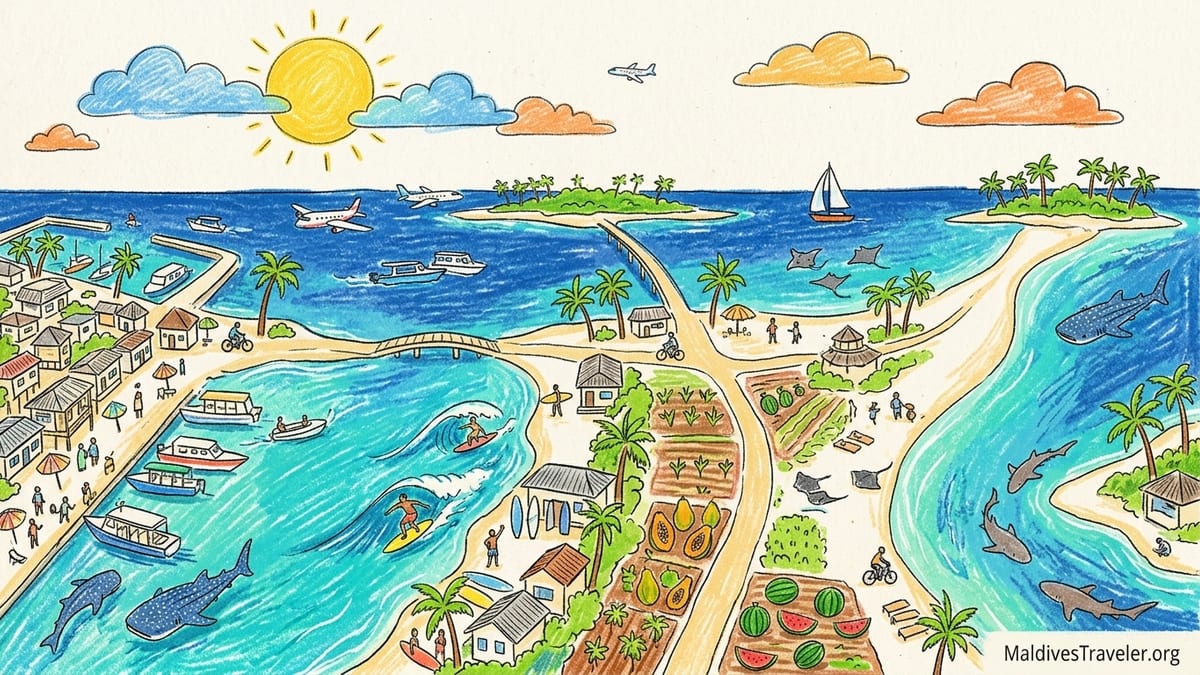
Choosing the best local island in the Maldives is no longer a simple question of finding “somewhere cheap near Malé.” In 2026, each of the leading local islands has carved out a clear personality: Maafushi for convenience and excursions, Thulusdhoo for surf, Dhigurah for whale sharks and beach, Ukulhas for a strong beach and reef balance, Rasdhoo for diving, Fulidhoo for quiet and nurse sharks, Thoddoo for big beaches and space, and Dharavandhoo for manta season in Baa Atoll. This guide compares them side by side so you can make a confident decision for your own trip.
How to Think About Local Islands in 2026
Local islands in the Maldives have matured fast over the last decade. What started as a handful of guesthouses on Maafushi has turned into a network of well developed islands, each specializing in a slightly different kind of trip. Instead of asking “Which island is best,” it is more useful to ask “Which island matches how I like to travel.” Surfers, new divers, honeymooners on a budget and families with small children will not necessarily thrive on the same sandbank.
Almost all of the islands in this guide share some basics. They are all reachable by scheduled speedboat or domestic flight plus boat. Every island now has a designated tourist “bikini beach” screened from the village, a scattering of cafes or restaurants and multiple guesthouses in the 60 to 200 US dollar per night range, depending on season and comfort level. Green Tax for guesthouses is set per person per night, which makes triple and quad rooms attractive for groups.
The real differences appear when you zoom in on transfers, marine life, atmosphere and how built up each island feels. Maafushi is busy and social, with more than 60 properties and excursion shops clustered around its harbor. Thulusdhoo is compact and surf focused, with places that can rinse boards and store gear. Thoddoo is spread out, with long sandy roads across its farms and a sense that you are walking through a tropical village, not a resort. Baa Atoll’s Dharavandhoo feels like a quiet base for serious manta trips rather than a general beach holiday.
In the sections below, you will find the core decision question each island answers best, then concrete details on transfers, guesthouse supply, restaurants, bikini beaches, marine life and typical prices that visitors have paid in recent seasons.
Maafushi: First Time Convenience and Excursion Choice
If you want the simplest possible first local island experience, Maafushi in South Malé Atoll is still the most convenient option. Regular shared speedboats leave directly from the airport island to Maafushi multiple times per day, and many guesthouses include transfer booking in their service. In practice, that means you can land in Malé in the late morning and be checking into a guesthouse like Arena Beach or Kaani Village & Spa by early afternoon, with no overnight stop in the capital required.
Maafushi’s guesthouse supply is the largest in the country, with dozens of properties ranging from simple budget rooms to resort style small hotels with pools and rooftop terraces. It is common to find basic doubles in the low season from around 50 to 70 US dollars plus tax and Green Tax, while sea view rooms in better known places can climb to around 150 to 200 dollars in peak months. The flip side of that choice is that Maafushi feels busy. Its streets are lined with dive shops, excursion counters, souvenir stalls and cafes catering to a constant flow of visitors.
One of Maafushi’s biggest advantages is how easy it is to join excursions. On any given morning in high season, speedboats leave for whale shark and manta day trips down to South Ari Atoll, sandbank picnics, turtle snorkeling on nearby reefs and evening dolphin cruises. Prices are competitive because so many operators run similar itineraries. A half day snorkeling trip with two reef stops and lunch might run in the region of 35 to 50 dollars per person, while full day whale shark excursions typically cost more, especially when fuel prices are high.
The island’s main bikini beach is set on the ocean side of the island, in front of a row of guesthouses that directly face the lagoon. The lagoon is shallow and calm which suits less confident swimmers and families. For many travelers, Maafushi is the right choice if they want a short stay with maximum activity and minimum planning. The trade off is crowding, relatively limited house reef snorkeling directly from shore and a nightlife scene that is social by Maldivian standards, but still alcohol free except on offshore “party boats” moored outside the island.
Thulusdhoo: Surf Focused Local Island Life
Thulusdhoo in North Malé Atoll has become the go to local island for surfers. It sits close to two of the region’s most talked about breaks, commonly known as Cokes and Chickens. Many guesthouses here specifically target surf travelers, advertising early breakfast, on site board storage and guided boat transfers out to the breaks. This gives the island a different rhythm to Maafushi. In the mornings, you see people walking the sandy streets barefoot with boards tucked under their arms rather than lining up for snorkeling trips.
Reaching Thulusdhoo is still straightforward from Malé. Scheduled speedboats connect the island and the capital several times a day, and journey time is usually under 40 minutes in good conditions. Some guesthouses can also help guests use the slower public ferry for a cheaper, if less flexible, option. Once on the island, everything is walkable, from the small harbor through the residential lanes to cafes such as simple beachfront spots serving grilled fish, burgers and fresh juices at prices that tend to be lower than similar offerings in big resorts.
Guesthouse supply on Thulusdhoo is robust but not overwhelming. You can find basic surfer focused places offering simple air conditioned rooms in the 60 to 90 dollar range, alongside more polished properties with modern interiors. The designated bikini beach gives non surfers a comfortable place to swim and relax, and there is decent snorkeling available by boat. That said, Thulusdhoo’s core strength is not its house reef or swimming beach but access to consistent waves that attract both intermediate and more advanced surfers between roughly April and October.
For non surfers considering Thulusdhoo, it is important to be honest about expectations. If you imagine a lazy beach holiday with the focus on a perfect snorkel just off your guesthouse, other islands like Ukulhas or Thoddoo might serve you better. If you like the idea of surfing in the morning, working remotely or relaxing in a cafe in the afternoon and joining an occasional snorkeling trip or sandbank visit, Thulusdhoo’s balance of local life and surf infrastructure is hard to beat.
Dhigurah: Whale Sharks and One Long Beach
Dhigurah in South Ari Atoll is a narrow, elongated island famous among travelers who care more about whale sharks than infinity pools. It sits inside one of the Maldives’ best known whale shark hot spots, where these animals are present year round rather than seasonally. Many guesthouses on Dhigurah operate their own boats or closely collaborate with excursion operators to run small group whale shark snorkeling trips, often capped at manageable numbers so guests are not dropped into a chaotic crowd.
Transfers to Dhigurah are more involved than hopping over to Maafushi. The most time efficient route is usually a short domestic flight from Malé to a nearby airport in South Ari Atoll followed by a speedboat transfer to the island. Some operators also offer direct speedboats from Malé when seas are favorable, but these take several hours and are more sensitive to weather. This additional complexity adds to cost. Expect combined domestic flight and boat transfers to represent a noticeable portion of your overall budget.
The reason many travelers accept that extra effort is Dhigurah’s environment. A broad, powdery beach runs along much of the island’s length, with a bikini beach area at the far end that feels wild and uncrowded compared with busier islands. People often describe walking through a tunnel of trees and emerging onto a wide sandbank like stretch that curves into the turquoise lagoon. The village itself is small and relaxed, with a handful of cafes and mini markets. There are fewer restaurants than on Maafushi, so many visitors choose guesthouses that include half board or at least a reliable in house restaurant serving set menu dinners.
In terms of prices, accommodation on Dhigurah tends to sit a little higher on average than on Maafushi because there are fewer beds and the location is tightly linked to whale shark tourism. A simple but comfortable room might start around 90 to 120 dollars in less busy periods, rising in popular months. Whale shark boat trips, depending on duration and inclusions, often cost in the region of 70 to 100 dollars per person. For many guests, combining a Dhigurah stay with a few nights on a cheaper, easier to reach island is a practical way to keep overall costs balanced while still securing that close up encounter with whale sharks.
Ukulhas and Rasdhoo: Reef Lovers and Divers
Ukulhas in North Ari Atoll has built a strong reputation among snorkelers and travelers who want a genuine balance between a good beach and an accessible house reef. The bikini beach here is wide but not overdeveloped, and the reef comes close to shore in some sections, which makes it easy to slip into deeper water with mask and fins without needing a boat. Guesthouses cluster a short walk from the beach, and the island’s relatively strict approach to cleanliness has helped keep the lagoon and shoreline in good condition.
Transfers to Ukulhas are fairly direct via scheduled speedboat from Malé, which makes it a popular choice for travelers who want a slightly quieter alternative to Maafushi without giving up transfer simplicity. Prices for rooms can be similar to mid range options on other islands, with some good value double rooms and family rooms that work well for longer stays. Dining options include both simple local cafes and guesthouse restaurants, often serving grilled reef fish, curries and international basics. Ukulhas is a strong all rounder: it rarely wins arguments about the single best beach or single best reef in the country, but its combination of both, plus ease of access, gives it broad appeal.
Rasdhoo, also in Ari Atoll but with a more dive centric personality, is a different proposition. The island sits close to famous dive sites including a well known hammerhead shark point that some local operators visit very early in the morning for deep dives. Even away from special encounters, the atoll’s channels and thilas provide rich diving with good chances of reef sharks, rays and schooling fish. Guesthouses on Rasdhoo frequently partner with one or two dive centers, so it is common to book a room and add a multi day dive package that includes two or three boat dives per day.
For non divers, Rasdhoo offers a pleasant local island environment and kayaking or snorkeling excursions to nearby sandbanks, but its reef from shore is often described as solid rather than exceptional. The transfer picture is similar to Ukulhas, with scheduled speedboats and sometimes combined routes that call at both islands. Daily budgets for divers here can be significantly higher than for non divers once multiple boat dives, gear rental and certification courses are factored in. However, compared with staying in a classic dive resort, Rasdhoo can still represent a major saving while delivering very similar underwater experiences.
Fulidhoo: Quiet Island and Nurse Shark Encounters
Fulidhoo in Vaavu Atoll is a smaller, quieter island that appeals to travelers who want a more low key stay but still care deeply about marine life. Vaavu’s channels are noted for shark and pelagic activity, and day trips from Fulidhoo often feature sites where numerous nurse sharks gather on the sandy bottom in clear, shallow water. These encounters have made the island a minor social media star, but on the ground the atmosphere remains slow and neighborly rather than highly commercial.
Reaching Fulidhoo from Malé normally involves a direct scheduled speedboat that takes around 1.5 hours depending on stops and conditions. Some guesthouses include assistance with booking and meeting the boat at the airport jetty, which removes guesswork for first time visitors. There is also a government ferry, though it runs less frequently and much more slowly. Given the limited number of beds on the island, it is wise to secure both room and transfers well in advance for peak season months.
Fulidhoo’s bikini beach may not be as long as Dhigurah’s or as broad as Thoddoo’s, but the lagoon is beautifully clear and often quiet. Guesthouses are generally small and personal, sometimes with fewer than ten rooms. Pricing for accommodation is often in the band of 70 to 120 dollars per night for a standard double, with simple but hearty set dinners available in guesthouse dining rooms or at modest island cafes. Evening life revolves more around strolls on the sand and chatting with fellow guests under coconut trees than any form of nightlife.
Excursion prices on Fulidhoo reflect the relatively small scale of operations. A half day snorkeling trip that includes the signature nurse shark site, a reef stop and a sandbank picnic might cost in the medium price range compared with similar trips out of Maafushi, but group sizes tend to be smaller. This island makes particular sense if you want to combine a few days of social, excursion heavy time on Maafushi with a quieter, more introspective few nights focused on nature and simple island routines.
Thoddoo: Big Beaches and a Spacious Feel
Thoddoo, in Alif Alif Atoll, stands out among local islands for its unusual sense of space. The island is roughly two kilometers long and significantly covered in agricultural land, with papaya and watermelon farms stretching between the village center and the coast. Visitors walk or cycle along wide sand tracks shaded by palm and fruit trees to reach the bikini beach areas, which sit on opposite sides of the island and feel far removed from the village once you arrive.
The main bikini beach is broad, with a wide strip of white sand leading into a clear lagoon that remains swimmable at many tide levels. There is also good snorkeling on reefs accessed by short boat rides, and some guesthouses advertise that the house reef is only a short sail away. Because Thoddoo’s accommodation and restaurants are set back from the beach inside the village, the shoreline retains a more natural, unbuilt character than on heavily developed islands.
Transfers from Malé to Thoddoo are typically handled by scheduled speedboats that run most days, taking around 1.5 to 2 hours depending on route and sea conditions. Several guesthouses also explain public ferry options for budget travelers. Once there, you will find a healthy mix of guesthouses, from simple rooms in family run houses to more design focused boutique stays. Pricing spans a wide range, but good quality doubles are available that remain competitive with, and sometimes slightly cheaper than, similarly comfortable rooms on smaller islands.
Thoddoo is a strong choice if you want long, uncrowded beach sessions, enjoy cycling or walking and appreciate the island’s mixed economy. Seeing crates of watermelons being loaded for transport or watching farmers work their plots helps highlight that Thoddoo is first a community and second a tourism product. For some visitors this grounding in everyday life is exactly what they look for in a local island stay.
Dharavandhoo: Gateway to Baa Atoll and Manta Season
Dharavandhoo in Baa Atoll is a different category of local island because it has its own domestic airport and sits near Hanifaru Bay, one of the Maldives’ most famous manta ray aggregation sites. Between roughly June and October, when conditions align, plankton rich water draws large numbers of reef manta rays into the bay. Local regulations restrict access to protect the animals, so visitors join organized trips that follow set rules on group sizes, time in the water and behavior.
Reaching Dharavandhoo from Malé is relatively straightforward by domestic flight. The short hop usually takes around 20 minutes, and from there it is a few minutes by van or boat to most guesthouses. This link makes the island attractive not only for local island stays but also for resort guests who pair Dharavandhoo with a few nights on a private island. Within the village, the feel is quiet and residential, with sandy lanes, a small harbor and a handful of cafes and shops serving both locals and visitors.
Guesthouse capacity on Dharavandhoo is smaller than on the most famous local islands, but there is now a cluster of properties geared toward manta focused tourism. Some package stays that include accommodation, meals and a set number of snorkeling or diving trips to Hanifaru Bay and other Baa Atoll sites. Manta season demand pushes prices up, so it is normal to pay more here in those months than you would for a broadly similar room on another island at a different time of year.
Outside species specific trips, Dharavandhoo offers decent beaches and house reef access, but its primary value for most visitors remains its location within a UNESCO biosphere reserve at close range to manta and sometimes whale shark activity. When combined with a stay on a more generalist island such as Ukulhas or Maafushi, it can turn a standard beach break into something much closer to a targeted marine wildlife expedition.
Transfers, Prices and Practical Comparisons
When comparing these islands, many travelers start with transfers because they affect both cost and trip comfort. Maafushi, Thulusdhoo, Ukulhas, Rasdhoo, Fulidhoo and Thoddoo are all reachable by scheduled shared speedboat directly from the Malé area, with typical journey times ranging from about 30 to 45 minutes for the closest islands up to roughly 1.5 to 2 hours for those further out. Dhigurah and Dharavandhoo usually require domestic flights plus short boat rides, although occasional long range speedboats serve Dhigurah when sea conditions and demand allow.
In broad terms, shared speedboat transfers to the closer atolls are often priced on a per person basis that can represent good value for solo travelers and couples compared with chartering a private boat. Domestic flights for Dhigurah and Dharavandhoo add an aviation component to your costs and are usually sold one way or return through your accommodation or a local agent. Whichever island you choose, it is wise to confirm the exact arrival and departure times of your transports before booking your international flights, and to allow margin on either side for weather and schedule changes.
Daily costs for rooms, food and excursions vary between islands but share a few patterns. The largest and most commercialized islands such as Maafushi can offer very low headline rates for simple rooms, particularly when competition is high, and often the widest choice of standalone restaurants where a simple meal might cost significantly less than in a private resort. More remote or specialized islands like Dhigurah and Dharavandhoo often see higher room rates in peak wildlife seasons, and meals are more likely to be taken in house because there are fewer independent restaurants. Islands with a strong long stay market like Thoddoo and Ukulhas often develop mid priced cafes and bakeries where costs are reasonable enough for guests to stay several weeks.
For beach and marine life, the trade offs are clear. Maafushi is unbeatable for sheer variety of excursions but its house snorkeling is more modest. Ukulhas and Thoddoo balance beach and reef day to day, and suit people who do not want to be on a boat every morning. Dhigurah and Fulidhoo skew toward signature species, whale sharks and nurse sharks respectively. Thulusdhoo and Rasdhoo are more specialized again, one toward surf and the other toward diving. Dharavandhoo is the choice when manta rays in Baa Atoll are the non negotiable focus of your trip.
The Takeaway
If you are planning your first local island trip to the Maldives and feel overwhelmed by choice, start by clarifying your non negotiables. If convenience and easy access to many different day trips trump everything else, Maafushi is still the most practical hub. If you have spent years dreaming about catching Maldivian reef breaks, Thulusdhoo should be your default. For travelers who want to drift along one very long beach and take measured shots at year round whale shark encounters, Dhigurah is worth the extra transfer complexity.
Those who care about snorkeling from shore as much as they do about lying on soft sand will likely gravitate toward Ukulhas or Thoddoo, while certified divers wanting to keep budgets reasonable without sacrificing underwater quality will find Rasdhoo compelling. For a smaller and quieter feel with signature nurse shark experiences, Fulidhoo makes a lot of sense. If manta season in Baa Atoll is your focal point, Dharavandhoo’s combination of local island character and international airport connections is hard to beat.
No single island is objectively best. What matters is picking the one whose strengths match the way you like to travel. Budget a little extra time and money for transfers, be realistic about how many early mornings and boat outings you actually want and remember that on local islands you are a guest in living communities. Treat the islands and their people with respect and the reward will be a Maldives experience that feels far richer and more grounded than a quick resort stopover.
FAQ
Q1. Which local island is best for a first time budget trip to the Maldives
Maafushi usually works best for first timers because transfers are frequent and simple, there are many guesthouses at different price points and it is very easy to book excursions and meals once you arrive.
Q2. If I want to see whale sharks, should I stay on Maafushi or Dhigurah
Dhigurah is the stronger choice because it sits within the main South Ari whale shark area and many guesthouses run focused trips from there. Maafushi operators can reach the same region on long day trips, but you will spend more time on the boat and have less flexibility on timing.
Q3. Which island has the best surfing for intermediate surfers
Thulusdhoo is the main local island surf base, with access to well known breaks and guesthouses set up for surfers. It is suitable for many intermediate surfers who are comfortable in reef breaks and variable conditions.
Q4. Is Thoddoo or Ukulhas better for a relaxed beach holiday with some snorkeling
Thoddoo has wider, more spacious beaches and a slightly more spread out feel, while Ukulhas balances a good bikini beach with very accessible reef snorkeling. If beach walks matter more, choose Thoddoo. If you want easy reef access, Ukulhas may be better.
Q5. I am a new diver. Should I choose Rasdhoo or Dharavandhoo
Rasdhoo is often the more practical starting point because it has several dive centers used to teaching and guiding a wide range of levels, and transfers are straightforward. Dharavandhoo is excellent in manta season but is more specialized and often a bit pricier.
Q6. Which island is quietest if I want to avoid crowds
Fulidhoo and Dharavandhoo typically feel quieter than Maafushi or Thulusdhoo. They have fewer guesthouses, a slower pace and more limited nightlife, which suits travelers looking for rest and nature rather than activity packed days.
Q7. Are bikini beaches really private on local islands
Bikini beaches are not private in a resort sense, but they are designated areas screened from the village where tourists can wear standard swimwear. On most of these islands, the walks to the bikini beaches pass through local streets where you should dress more modestly.
Q8. How far in advance should I book guesthouses and transfers
For high season months from roughly December to March, it is wise to book at least several weeks in advance, especially for smaller islands like Fulidhoo, Dhigurah, Thoddoo and Dharavandhoo. In low season, there is more flexibility, but confirming transfers early still helps avoid schedule surprises.
Q9. Can I visit more than one local island in a single trip
Yes, many travelers combine two or even three islands. A common pattern is to pair an easy access hub like Maafushi or Ukulhas with a more specialized island such as Dhigurah for whale sharks or Dharavandhoo for mantas, arranging inter island speedboat hops through guesthouses.
Q10. Are prices on local islands always cheaper than resorts
Local islands almost always cost less per night for accommodation than full service private resorts, especially at the mid and high ends. However, transfers, excursions and occasional domestic flights can add up, so it is worth comparing the full trip cost rather than just nightly room rates.