


For many travelers, the word “Maldives” conjures up a single image: a tiny palm-fringed sandbar floating in neon-blue water. In reality, the experience on Maldives local islands varies widely, especially when it comes to beaches. From long, walkable sandspits to compact coves shaded by palms, each island’s bikini beach, house reef, crowds and practicalities feel very different. This guide compares the real-world beach experience on Dhigurah, Ukulhas, Thoddoo, Fulhadhoo, Fulidhoo, Gulhi and the quieter corners of Maafushi and Thulusdhoo, so you can match the right island to your style.
How Local-Island Beaches Really Differ
All inhabited islands in the Maldives are Muslim, which means there is always a clear separation between local beaches and tourist “bikini beaches” where Western swimwear is allowed. The size, setting and feel of these designated zones varies dramatically. On some islands the bikini beach is a long, natural stretch with few people and almost no buildings in sight. On others it is a compact strip directly in front of guesthouses, lined with loungers and cafes. Understanding this difference is crucial if your idea of paradise is either quiet space and soft sand or a more social, convenient beach scene.
Sand quality and swimming conditions also change from atoll to atoll. In places like Thoddoo and Ukulhas, the lagoon is typically calm with powdery sand and a gentle entry, which suits first-time snorkelers and families. On long, ocean-facing beaches such as Dhigurah, you may have sections with a slight shore break or currents at the drop-off, especially on windier days, even though the sand is still wonderfully soft. Travelers who plan to spend hours in the water should factor in both the lagoon depth right off the beach and how far they must fin to reach worthwhile coral.
Equally important is the house reef and whether you can see fish life directly from shore. Some local islands offer easy, 5 to 10 minute swims from the bikini beach to decent coral heads and reef walls, where sightings of turtles and reef sharks are common on guided or independent snorkels. On other islands, the immediate lagoon is more sandy and sparse, and the standout snorkeling happens by boat at nearby reefs, marine protected areas or sandbanks. While a half-day snorkel trip might cost only around 30 to 50 US dollars per person shared, these costs can add up across a week-long stay.
Guesthouse locations matter because on many islands you will walk everywhere, often in the midday heat. On compact islands like Gulhi or Ukulhas, staying almost anywhere means you are just a few minutes from the bikini beach. On larger ones such as Dhigurah or Thoddoo, it can be a 10 to 20 minute walk or a short bicycle ride through sandy lanes and farmland to reach the best swimming spot. Some travelers love that sense of everyday island life. Others prefer to step out of their room directly onto the sand, even if it means sharing that space with more people.
Dhigurah: Long Beach, Sandbank and Whale Shark Alley
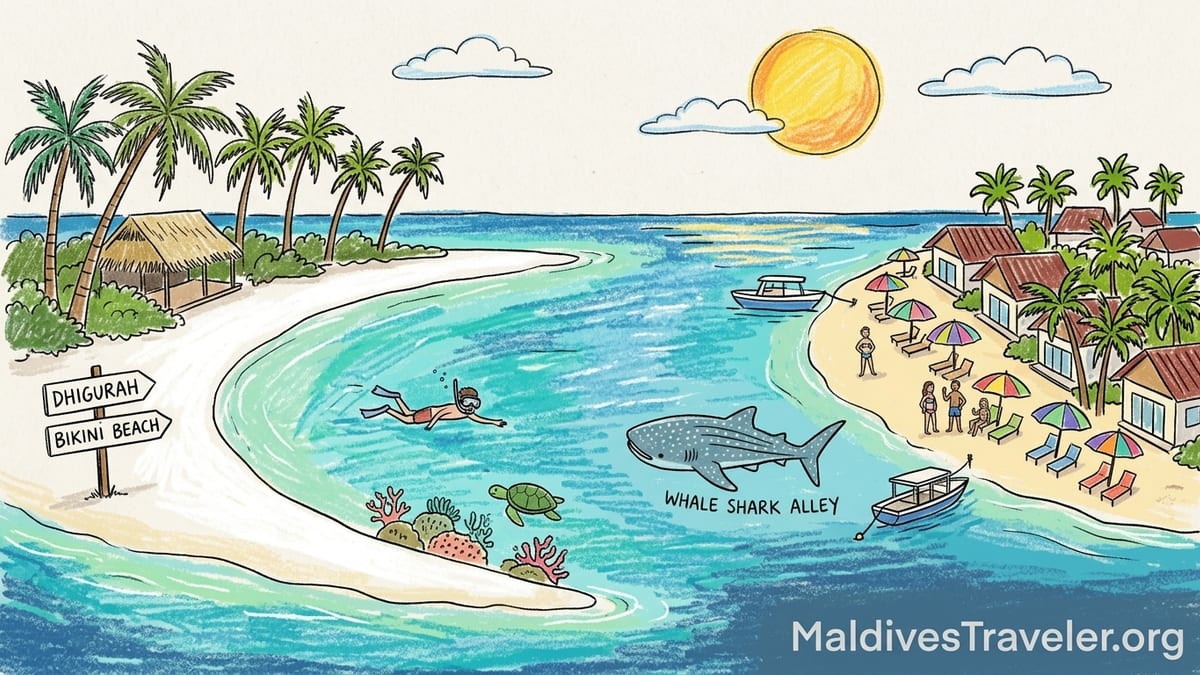
Dhigurah, in South Ari Atoll, is one of the standout local islands for travelers who want a long, natural-feeling beach rather than a compact cove. The bikini beach runs along much of the island’s outer shore and is backed by vegetation rather than dense buildings, so you can still find quiet corners even as guesthouse numbers grow. The sand is fine and pale, and at the island’s southern tip a sandspit and nearby sandbank appear at lower tide, providing that classic Maldivian postcard scene without needing to book a private-resort day pass.
The swimming experience on Dhigurah is generally excellent, with a wide, shallow lagoon grading into deeper water. However, the standout draw here is what lies beyond the lagoon. Dhigurah sits on the edge of South Ari’s famous whale shark and manta ray zone, and most visitors end up booking at least one boat trip to snorkel with these giants in the marine protected area. Shared excursions commonly cost in the region of 50 to 100 US dollars per person depending on the operator and whether lunch is included, and guesthouses can often arrange last-minute spots based on current sightings.
When it comes to house reef snorkeling directly from the bikini beach, Dhigurah offers decent but not necessarily world-class coral. You can see plenty of fish and occasionally turtles and small reef sharks by swimming out toward the drop-off, but coral gardens closer to shore show the wear seen across many parts of the Maldives. Stronger swimmers and freedivers make the most of the outer reef, while beginners often prefer to join a guided boat trip to nearby pinnacles and coral gardens where visibility and fish life are typically richer.
Guesthouses on Dhigurah are spread along the island’s main sandy streets, with many within a few minutes’ walk of the bikini beach. The atmosphere is relaxed and clearly geared towards independent travelers rather than package groups. You will find simple cafes serving local curries for under 10 US dollars, and small shops for basic snacks and sunscreen. If your priority is a long, semi-wild beach, access to whale shark trips, and enough reef life for enjoyable snorkels without expecting pristine coral, Dhigurah is an excellent choice.
Ukulhas and Thoddoo: Compact Comfort and House-Reef Snorkeling
Ukulhas, in North Ari Atoll, has built a reputation for being one of the cleanest and most organized local islands, and its bikini beach reflects that. The main tourist beach is a gently curving bay with clear, shallow water and fine white sand, backed by palms and a thin line of guesthouses and beach cafes. Shade is relatively easy to find under trees and man-made umbrellas, and many properties place loungers directly on the sand for guests. The trade-off is that the beach is not especially long by Maldivian standards, so at peak season you can definitely feel its popularity, though it rarely becomes crowded in a city-beach sense.
For swimmers and casual snorkelers, Ukulhas offers an easy entry and calm water most days, making it appealing for families or nervous swimmers. There are coral patches accessible from shore, though you may need to fin for 10 to 15 minutes to reach more interesting sections of reef. Many guesthouses sell or lend masks and fins, and typical half-day snorkel excursions to outer reefs and manta cleaning stations might cost around 35 to 60 US dollars per person. Because the island is compact, almost every guesthouse sits within a 3 to 7 minute walk of the beach, which is a major convenience in the midday sun.
Thoddoo, by contrast, is one of the country’s main farming islands, famous for watermelons and papayas. It is larger than Ukulhas in land area, so reaching the bikini beaches usually involves a 10 to 20 minute walk or a short bicycle ride through fields and palm groves. Thoddoo actually has two main bikini beaches, one facing sunrise and one facing sunset, and both are known for wide, soft sand and a gentle slope into the sea. The setting feels more natural and spacious than on many other local islands, with thick vegetation behind the beach and fewer buildings visible.
Snorkeling on Thoddoo is a key highlight. The house reef is easily reached from the bikini beaches, where coral heads and reef edges support turtles, schools of reef fish and occasional reef sharks. Many visitors report seeing green turtles on guided snorkel trips that leave directly from the shore, which might cost the equivalent of 30 to 50 US dollars for a half-day including equipment. For independent snorkelers, the reef remains accessible without needing daily boat trips, though stronger currents can be present further out, so beginners often stay within the more protected lagoon area.
Fulhadhoo and Fulidhoo: Quiet lagoons and Sharky Reefs
Fulhadhoo, in Baa Atoll, is often cited as one of the most beautiful local islands for sheer natural beach scenery. The bikini beach stretches along a long, narrow part of the island, with very few buildings in sight and an almost unbroken line of white sand merging into intense turquoise water. The sand is exceptionally soft, and the lagoon in front stays relatively shallow for a good distance, making swimming relaxed and safe for most abilities. Shade is available under mature palms and trees, and even at busier times the beach rarely feels crowded due to its length.
Snorkeling around Fulhadhoo is particularly rewarding for those willing to swim a little further out or join a boat trip. Off the main bikini beach, coral gardens and the outer reef support a variety of reef fish, turtles and rays, although coral health, as elsewhere in the Maldives, is mixed. Guesthouses regularly organize trips to nearby reefs and the wider Baa Atoll, including spots known for manta rays in season. Prices for half-day reef snorkel excursions typically fall in the 35 to 60 US dollar range per person, with private trips higher.
Fulidhoo, in Vaavu Atoll, has a noticeably different feel. The island is smaller and more densely settled, and its bikini beach, while pretty, is more compact than Fulhadhoo’s long stretch. The sand is soft and the lagoon shallow, ideal for floating and casual swimming. However, Fulidhoo has become especially known among divers and snorkelers for its easy access to channels where nurse sharks and reef sharks are commonly seen on organized trips. Local operators run boat excursions to shark points and channel reefs that can feel dramatically more “wild” than snorkeling in a calm lagoon.
From the bikini beach on Fulidhoo you can snorkel out toward deeper water and coral patches, but most visitors looking for the best fish life and shark encounters choose guided boat trips. Shared tours to shark points and nearby reefs typically cost somewhere between 40 and 80 US dollars depending on distance and inclusions. Guesthouses often bundle snorkeling, fishing and island-hopping into multi-activity packages that can offer better value over several days. Both Fulhadhoo and Fulidhoo suit travelers who prioritize marine life and quieter evenings over nightlife or café-hopping.
Gulhi, Maafushi and Thulusdhoo: Social Beaches and Quieter Corners
In South Male Atoll, Gulhi offers one of the most attractive bikini beaches close to the capital region. The island is small, so almost every guesthouse sits within a few minutes’ walk of the main tourist beach. The sand here is broad and bright, with a natural curve that creates a picture-perfect lagoon ideal for swimming. Palms and a few simple beach bars line the back of the beach, providing shade and drinks without the built-up feel of larger islands. Even at busier times, Gulhi tends to feel calmer than Maafushi while still having easy speedboat access from Male.
Maafushi, just a short speedboat ride away, is the most visited local island in the Maldives and has a very different vibe. The northern end of the island is dominated by a lengthy bikini beach where guesthouses, small hotels and day-trip operators line the waterfront. The sand is soft, and the lagoon is suitable for swimming, but this beach is also busy with loungers, floating platforms and selfie spots. For travelers who enjoy a bit of buzz, quick access to cafes, shisha lounges and watersports counters directly behind the sand is a plus.
However, Maafushi also has quieter sections if you know where to look. Staying in guesthouses slightly south of the main bikini beach, or walking to the less developed stretches between the tourist area and the local neighborhoods, gives access to more peaceful sand and sunset views with fewer people. The trade-off is that coral near the shore is limited, and the best snorkeling typically requires boat trips to nearby reefs, sandbanks and shipwrecks, which are heavily marketed on the main street. Shared excursions can start at around 25 to 35 US dollars for simple half-day trips, with shark and sandbank combinations costing more.
Thulusdhoo, in North Male Atoll, is known in surf circles for its reef breaks, but it also has a dedicated bikini beach area that feels much more low-key than Maafushi. The tourist beach here is medium-sized, backed by a mix of palms and small guesthouses, with clear water and a sandy bottom ideal for swimming when surf conditions are calm. Compared with Maafushi, Thulusdhoo’s beach tends to be less crowded and attracts a mix of surfers, long-stay digital workers and independent travelers. While there is some snorkeling from shore, serious reef enthusiasts usually book boat trips out to outer reefs, combining them with surf or dolphin-watching where possible.
Comparing Bikini Beaches: Size, Shade and Crowds
When comparing bikini beaches across these islands, Dhigurah and Fulhadhoo stand out for their sheer size and sense of space. Both offer long stretches where you can walk for 20 minutes or more without feeling hemmed in by buildings, which is rare on inhabited islands. Dhigurah’s sandbank at the southern tip adds an extra dimension for sunset strolls and photo opportunities. Fulhadhoo’s beach feels almost resort-like in its remoteness, with wide arcs of sand and very few structures in view. On both islands, natural shade from palms and greenery is available but sometimes set back from the waterline, so a light beach umbrella or willingness to move with the sun is useful.
Mid-sized, well-developed bikini beaches define Ukulhas, Thoddoo, Gulhi and Thulusdhoo. Ukulhas has a tidy, maintained feel with comfortable shade structures and guesthouses immediately behind the sand, which is ideal for travelers who like beach days with occasional coffee breaks. Thoddoo’s two main bikini beaches feel broader and more natural, backed by vegetation and reached via sandy tracks or bicycle paths through the island’s agricultural interior. Gulhi and Thulusdhoo offer a friendly compromise: broad enough beaches to avoid feeling cramped, yet compact enough that everything remains a short walk away.
The most compact and social beach scenes are found on Maafushi and parts of Fulidhoo. On Maafushi, the main bikini beach can fill up with day-trippers and guests from dozens of small hotels, especially from late morning to mid-afternoon. The atmosphere is energetic, with music from beach bars and plenty of water-sport activity. Fulidhoo’s bikini beach is smaller and quieter overall, but because the island is compact, it can still feel busy relative to its size at peak times. Those who value solitude should either travel in shoulder seasons, plan early-morning swims, or focus on islands with longer shorelines like Dhigurah, Fulhadhoo or Thoddoo.
Shade is another practical point often overlooked. Islands such as Ukulhas and Gulhi make a conscious effort to provide umbrellas, cabanas or tree-shaded seating right behind the bikini beach, which is useful for families and those sensitive to sun. On more natural-feeling islands like Dhigurah and Fulhadhoo, shade might mean retreating a little into the treeline or timing longer swims for early morning and late afternoon. Travelers who burn easily should not rely solely on natural shade and might consider packing a lightweight sun shelter or rash vest to extend their water time comfortably.
House Reefs, Snorkeling and When You Need a Boat
For independent snorkelers who want strong house reef access directly from shore, Thoddoo and Fulhadhoo often come out ahead. From the bikini beaches on Thoddoo, coral heads and reef edges can be reached within a short swim, and guided turtle snorkels frequently start right from the sand. Fulhadhoo also offers easy access to coral gardens off the main tourist beach, with clear water and good visibility. Both islands still benefit from boat trips to more distant reefs and channels, but it is entirely possible to fill several days with rewarding shore snorkels if you are a confident swimmer.
Dhigurah and Ukulhas provide a middle-ground experience. Dhigurah’s house reef offers plenty of fish life, but many visitors feel its true standout experiences involve boat trips to whale shark and manta sites further along the atoll. Ukulhas has accessible coral patches off its bikini beach, though the best snorkeling usually begins after a moderate fin out to deeper water. In both cases, you can certainly snorkel from the beach and see fish, but you will likely want to add one or two paid excursions for more dramatic underwater scenery and larger animals.
On Gulhi, Maafushi, Thulusdhoo and Fulidhoo, shore snorkeling near the bikini beach is often pleasant but not exceptional. Sandy bottoms and scattered coral heads dominate close in, making the water great for swimming and beginner practice but less exciting for repeat snorkel sessions over many days. Here, boat trips are almost essential if you want to see healthy coral structures, schooling fish and sharks. Operators on these islands usually offer a menu of half-day trips to reefs, sandbanks and shipwrecks, with shared outings commonly ranging from 25 to 60 US dollars per person depending on distance and inclusions such as lunch or drone photography.
If budget is a concern, factor in how often you are willing to pay for snorkel trips when choosing your island. A couple staying a week on a boat-dependent island and joining three or four excursions might easily add several hundred dollars to their total spend, even at local-island price levels. By contrast, basing yourself on an island with a strong house reef directly off the beach can reduce paid trip frequency. For some travelers, a mix works well, such as spending four nights on Thoddoo or Fulhadhoo for shore snorkeling and three nights on Maafushi or Gulhi for convenient access to multiple different reefs by boat.
Guesthouse Locations, Atmosphere and Practical Tips
On almost every island mentioned here, the most popular guesthouses sit within short walking distance of the bikini beach, but the density and atmosphere vary. Maafushi has the highest concentration of properties, with multi-storey budget hotels and guesthouses lining the main tourist strip. This creates a lively seafront but inevitably adds to beach crowds and background noise. By comparison, Dhigurah, Thulusdhoo and Fulidhoo have a more low-key feel, with two or three-storey guesthouses tucked into side streets and only a handful of buildings directly fronting the sand.
Thoddoo and Ukulhas fall somewhere in the middle. In Thoddoo, many guesthouses are set inland near the farming areas or village center, so visiting the beach becomes a daily outing by foot or bicycle rather than something literally on your doorstep. This can feel charming, especially at sunset when locals gather in the streets and children play in the sand lanes. On Ukulhas, the village and the tourist zone run close together along the shore, so you often step out of a guesthouse, cross a narrow sandy path and reach the beach in under two minutes. For travelers with mobility concerns or those visiting in the hottest part of the dry season, these small differences can materially affect comfort.
Across the board, food on local islands tends to be simple and affordable by Maldivian resort standards. Expect local rice and curry dishes starting from around 5 to 10 US dollars in small cafes, with Western-style dishes costing a little more. Islands with more tourism infrastructure such as Maafushi, Thulusdhoo and Ukulhas offer the greatest variety, including basic pizzerias, burger cafes and occasional bakeries. Very small or quieter islands like Fulhadhoo and Fulidhoo may have only a handful of eateries, and menus can repeat across the week, so travelers with specific dietary requirements should confirm options in advance and consider packing a few favorite snacks.
Alcohol is not served on inhabited islands due to national law, though some have moored “floating bars” offshore accessible by small shuttle boats, particularly near Maafushi and Thulusdhoo. If sunset cocktails are non-negotiable, you might combine local-island stays with a few nights at an all-inclusive resort, or check whether a legal bar boat is currently operating near your chosen island before assuming it will be available. Regardless of where you stay, dressing modestly away from the bikini beach, respecting prayer times, and asking before photographing locals will go a long way toward keeping interactions friendly and relaxed.
FAQ
Q1. Which local island has the best all-round beach for first-time visitors?
For a balanced mix of good bikini beach, easy swimming, nearby guesthouses and reasonable crowds, Ukulhas and Thoddoo are strong choices. Ukulhas is compact and convenient, while Thoddoo offers wider, more natural-feeling beaches with good house-reef snorkeling.
Q2. Where can I find the longest, most natural-feeling bikini beach?
Dhigurah and Fulhadhoo stand out for length and a wild, low-density feel. On both islands you can walk long stretches of sand with few buildings in view, and the atmosphere is peaceful even in high season.
Q3. Which islands are best if I want to snorkel mainly from the beach instead of paying for many boat trips?
Thoddoo and Fulhadhoo generally offer the best combination of accessible house reefs and rewarding marine life within swimming distance of the bikini beach. Dhigurah and Ukulhas also allow decent shore snorkeling, but you are more likely to want additional boat excursions there.
Q4. Where should I go for whale sharks, mantas or shark encounters?
Dhigurah is one of the top local bases for whale shark and manta trips in South Ari Atoll. For shark-focused snorkeling, especially nurse sharks and reef sharks, Fulidhoo and nearby Vaavu Atoll channels are well known through local operators.
Q5. Which island is better if I like a social atmosphere with cafes and activities?
Maafushi has the liveliest beach scene, with the longest list of guesthouses, cafes, day trips and water sports, though it is also the busiest. Thulusdhoo offers a more surf-oriented, laid-back version of that social feel, with a smaller but growing collection of cafés and guesthouses.
Q6. I am traveling with children. Which beaches are most suitable for families?
Ukulhas, Gulhi and Thoddoo are particularly family-friendly, thanks to calm lagoons, easy beach access from guesthouses and good availability of shade. Maafushi’s main bikini beach is also suitable for children, but the crowds and activity level are higher.
Q7. How much should I budget for snorkeling boat trips from local islands?
Shared half-day snorkeling trips from these islands commonly range from about 25 to 60 US dollars per person depending on distance, inclusions and the type of marine life targeted. Specialized shark or whale shark excursions can be more, especially if they include lunch and multiple sites.
Q8. Can I wear a bikini anywhere on the island, or only on certain beaches?
On Maldivian local islands, bikinis and swim shorts are only allowed on the designated tourist “bikini beaches” and sandbanks used for excursions. Away from these areas, visitors are expected to dress modestly with shoulders and thighs covered.
Q9. Is it better to stay right on the beach or a few streets back in the village?
Beachfront guesthouses offer the convenience of walking a few steps to the sand, but can be noisier and more expensive. Staying in the village, a 5 to 10 minute walk away, usually costs less and gives a more local feel, especially on larger islands like Thoddoo and Dhigurah.
Q10. How should I choose between these islands if I only have one week?
If you want quiet and nature-focused days, prioritize Dhigurah, Fulhadhoo or Thoddoo. If you prefer more dining options and easy access to varied excursions, consider splitting your time between a calmer island such as Gulhi or Ukulhas and a busier hub such as Maafushi or Thulusdhoo.