


Far in the north of the Maldives, Haa Dhaalu Atoll feels like a different country compared with the busy resort rings around Malé. Here, flights land on sleepy islands lined with coconut palms, village harbours fill with small fishing boats at sunset, and house reefs remain far less crowded than those in the central atolls. For first-time visitors willing to travel a little further, Haa Dhaalu offers a rare combination: authentic local island life, affordable guesthouses and a handful of secluded private resorts, all stitched together by short speedboat hops.
Getting Oriented in Haa Dhaalu: The Far-Northern Alternative
Haa Dhaalu is the southern administrative section of the historic Thiladhunmathi Atoll and also includes the separate Makunudhoo Atoll. On a map of the Maldives it sits in the far north, several hundred kilometres above Malé. That extra distance has kept development relatively low key compared with central atolls such as Kaafu or Alif Dhaalu, and the result is a quieter, more traditional atmosphere. Many islands still centre their days around fishing, school schedules and evening strolls along the harbour, with tourism woven in rather than dominating everything.
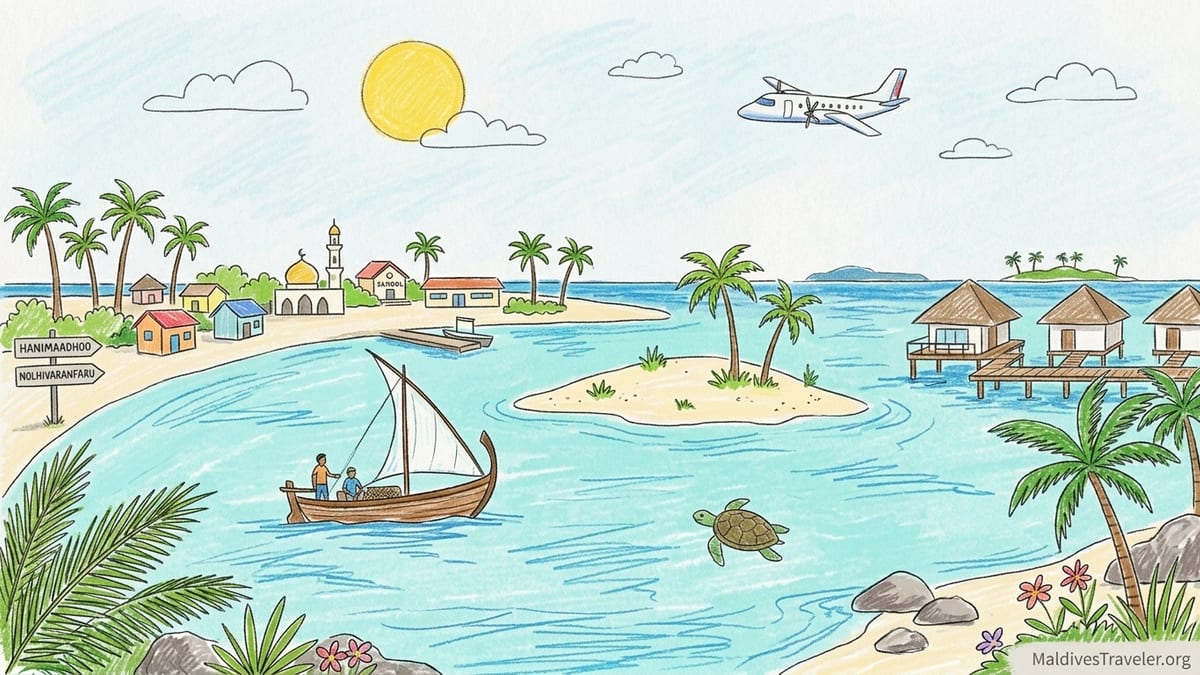
For travellers, this means you will not find a dense ring of headline-name resorts in Haa Dhaalu. Instead there are a handful of private-island properties, including Hondaafushi Island Resort inside the main atoll and ultra-luxury Soneva Secret in Makunudhoo Atoll, alongside a small but growing set of guesthouses on local islands such as Hanimaadhoo and Nolhivaranfaru. Rather than choosing a single resort and staying put for a week, visitors can base themselves on a local island for part of the trip and then transfer to a higher-end resort for a few nights of indulgence.
The geography also shapes the experience underwater. The lagoon that wraps around Haa Dhaalu is dotted with uninhabited sandbanks, narrow channels and pristine thilas, or coral pinnacles, that attract manta rays, reef sharks and schooling fish. Because relatively few boats work these waters, it is still possible to dive or snorkel with just a handful of other people around, especially if you travel outside peak holiday weeks.
Haa Dhaalu’s mood is quieter and more conservative than many southern atolls with big-name party resorts. Alcohol is served only on dedicated resort islands or liveaboards, there are no nightclubs, and evenings on local islands tend to revolve around café terraces, futsal courts and the slow rhythm of village life. For many first-time visitors this is precisely the attraction: a chance to see more of the real Maldives while still enjoying postcard beaches and clear lagoons.
Local Islands vs Private Resorts: How the Experiences Differ
Most newcomers to the Maldives picture the classic resort model: a single private island with overwater villas, a couple of restaurants, a spa and all-inclusive meal plans. Haa Dhaalu certainly offers that, particularly at Hondaafushi Island Resort and Soneva Secret, where you can expect curated menus, private pools and dedicated butler-style service. Stays here often run into several hundred dollars per night at Hondaafushi and considerably more at Soneva Secret, reflecting the privacy and high level of comfort.
Local islands such as Hanimaadhoo, Kulhudhuffushi and Nolhivaranfaru feel very different. These are inhabited communities with schools, mosques, grocery shops and municipal harbours. Guesthouses typically range from simple family-run properties with a handful of rooms to small boutique hotels with air conditioning, Wi‑Fi and on-site restaurants. A comfortable double room on a local island can often cost significantly less than a single night in an entry-level resort villa, even after adding transfers and meals, which makes Haa Dhaalu appealing to budget-conscious travellers who still want turquoise water and white sand.
Cultural norms also shift between the two. On local islands, visitors are asked to dress modestly when walking through the village and to use designated “bikini beaches” for sunbathing and swimwear. Alcohol is not available and nightlife is subdued, typically limited to coffee, sweets and fruit juice in local cafés. On resort islands the dress code is relaxed almost everywhere, wine lists run for pages, and evenings might feature live music or open-air cinema screenings. Many travellers now combine both experiences, spending four or five nights in a Hanimaadhoo guesthouse to explore the atoll and then finishing with a two or three night stay at a private resort.
Service style is another major difference. On a resort island almost everything is handled by the property: seaplane transfers, buffets, guided snorkelling, kids’ clubs and spa bookings. On a local island the experience is more ad hoc and personal. Your guesthouse owner might arrange a half-day snorkel trip in their cousin’s speedboat, organise a barbecue on a nearby sandbank, or introduce you to a local family for a home-cooked dinner. It can feel less polished but more human, and it is often the conversations over tea and roshi flatbread that visitors remember longest.
Key Islands: Hanimaadhoo, Kulhudhuffushi, Nolhivaranfaru and Beyond
Hanimaadhoo is the obvious starting point for most trips into Haa Dhaalu. The island hosts a domestic airport with regular flights from Malé, typically taking about 50 to 60 minutes. In practice many guesthouses arrange bundled transfers, so a first-time visitor might pay the domestic flight fare plus around 20 to 40 US dollars per person for the short onward speedboat to nearby islands if needed. Hanimaadhoo itself has several guesthouses, a long beach and convenient access to dive centres that explore the northern reefs.
Kulhudhuffushi, to the southwest, has grown into one of the main service hubs of the far north. It has its own domestic airport, hospital, shops and small-town bustle, making it feel more urban than most islands in the atoll. Travellers usually come here to connect between flights, to visit friends or to experience a more local, workaday Maldives. While beaches are less pristine than on quieter islands, cafés and small eateries serving hedhikaa snacks and grilled fish offer a good window into everyday life.
Nolhivaranfaru is much smaller and quieter, known among travellers who make it this far for its calm atmosphere and guesthouses that sit just a few steps from the lagoon. Properties like Ocean Voice Beach and similar small-scale stays typically offer simple rooms, home-style meals and packages that might include daily breakfast and a couple of guided snorkel or sandbank excursions. With fewer visitors, it is common to find yourself alone on long stretches of beach, especially early in the morning or at sunset.
Makunudhoo Atoll, officially part of Haa Dhaalu’s administrative area but lying separately to the west, is home to Soneva Secret on the private island of Dhipparufushi. Here the mood is entirely different: a handful of expansive villas, some suspended above the lagoon, each catered to by a dedicated “barefoot butler,” with menus designed by in-house chefs and experiences tailored to each guest. Reaching Makunudhoo generally involves a domestic flight from Malé or a northern airport to a seaplane point, then a seaplane transfer of about 70 to 80 minutes, which the resort coordinates.
Beaches, Snorkelling and Diving in a Quieter Atoll
One of the main reasons to choose Haa Dhaalu over more famous atolls is space. Even in peak dry season between roughly December and April, many beaches and house reefs here remain quiet. On Hanimaadhoo, long strips of white sand stretch along the eastern side of the island, with guesthouses typically arranging loungers and umbrellas within walking distance of the rooms. A short boat ride away, small sandbanks emerge at low tide, creating temporary islets where travellers can picnic and snorkel in shallow clear water.
Underwater, Haa Dhaalu is increasingly recognised among divers and snorkellers who prefer less crowded sites. Reefs such as Finey Thila are described by marine researchers as relatively undisturbed compared with heavily dived areas in the central Maldives, with healthy coral formations and abundant fish life. Dive centres on islands like Hanimaadhoo and nearby local islands usually run morning and afternoon boat dives, with prices often in the region of a few hundred dollars for a multi-dive package spread across several days, including equipment rental and guide fees.
Snorkelling is more accessible and requires less planning. Almost every inhabited island has a house reef just offshore, and local guesthouses commonly offer daily snorkel excursions to outer reefs or channel edges. A typical half-day trip might cost somewhere between 25 and 60 US dollars per person depending on the group size, boat type and whether snacks are included. Many operators combine snorkelling with dolphin watching, taking advantage of pods that regularly cruise along the atoll’s channels in the late afternoon.
Visibility tends to be best during the dry season, when calm seas and lower rainfall create ideal conditions for underwater photography. That said, the “green season” from roughly May to November can also deliver excellent encounters with manta rays and turtles, and prices at both guesthouses and resorts often drop slightly outside peak holidays. For first-time visitors with flexible dates, arriving in shoulder months such as late November or early May can be a smart compromise between good weather, quieter sites and more attractive room rates.
Marine Excursions, Culture and Everyday Life
Marine excursions are the core of almost every itinerary in Haa Dhaalu. Local dive centres and guesthouses typically offer a menu that includes reef snorkelling, drift dives in the channels, dolphin cruises, sunset fishing, sandbank picnics and, in some seasons, manta ray or shark-focused trips. Prices vary widely between operators, but as a rough guide a private half-day sandbank and snorkel trip for two people might run to around 100 to 150 US dollars including fuel, guide and basic refreshments, while shared group trips are often cheaper.
Night fishing trips using hand lines and simple bait remain popular with both visitors and locals. Guests usually keep part of the catch, which the guesthouse kitchen then grills or fries with chilli, lime and coconut. It is a simple but memorable way to connect with the local tradition of reef fishing that still supports many families in the atoll. Responsible operators avoid sensitive nursery areas and follow local regulations designed to protect key species such as certain grouper and sea cucumbers.
Beyond the water, cultural experiences on local islands give context to the scenery. In Hanimaadhoo and Kulhudhuffushi you might visit a mosque courtyard at dusk, watch children playing football on sandy pitches or drop into a café to try black tea with bite-size savoury snacks such as bajiya and gulha. Some guesthouses organise short village tours, where guides explain how rainwater harvesting tanks work, how boats are built and what life was like before domestic air links made travel easier.
On more resort-focused islands such as Dhipparufushi, culture is woven into the design and programming rather than encountered in the street. Soneva Secret, for example, might host Maldivian cooking classes, traditional boduberu drumming performances or stargazing sessions with guides pointing out constellations that have long helped local seafarers navigate. Combining time on both local and resort islands lets first-time visitors experience these different sides of Maldivian life without needing to crisscross the whole country.
Airports and Inter-Island Transport in the Far North
Reaching Haa Dhaalu is more involved than flying into a major resort atoll near Malé, but domestic connections have improved notably in recent years. The main gateways are Hanimaadhoo Airport, inside Haa Dhaalu itself, and Kulhudhuffushi Airport just to the southwest. Maldivian and other domestic carriers operate scheduled flights from Malé to these airports, generally taking under an hour. Flight frequencies fluctuate by season, but on many days there are multiple services in each direction, allowing same-day connections with international arrivals.
From the airport to your island, transfers are usually by speedboat. Guesthouses and resorts almost always arrange these for you, bundling the cost into a package or quoting a per-person rate. For example, a short hop from Hanimaadhoo to a nearby local island might cost around 20 to 40 US dollars per person on a shared speedboat, while longer private transfers across the atoll can be higher depending on distance and fuel prices. It is important to share your international flight details early so local operators can align boat schedules with your arrival and departure times.
Makunudhoo Atoll and Soneva Secret involve an extra step. Guests typically fly from Malé or a northern airport to a designated seaplane point, then transfer by seaplane directly to the resort. The property coordinates schedules and provides exact timings a day or two before arrival, as they depend on daylight hours and other passengers’ itineraries. Seaplane transfers are more expensive than domestic flights and speedboats, often several hundred dollars per person return, but they also give a striking aerial view of the northern atolls.
There are also public ferries linking some islands in the region, usually slower vessels that might take several hours for routes that a speedboat covers in under an hour. Timetables and reliability can vary, and they rarely line up neatly with international flight arrivals, so first-time visitors typically rely on domestic flights and pre-booked speedboats. Once you are based on a local island, short inter-island hops for day trips can sometimes be arranged informally with local boat owners at negotiated rates.
Planning Your First Haa Dhaalu Itinerary
For a first visit, many travellers structure a week-long trip around one or two islands within Haa Dhaalu plus, optionally, a resort stay. A common pattern is to fly into Hanimaadhoo, spend four or five nights at a local guesthouse there or on nearby Nolhivaranfaru, then add two or three nights at Hondaafushi Island Resort or another property reachable by speedboat. This allows you to experience both village life and the privacy of a resort without continually packing and unpacking bags.
A typical day on a local island might start with breakfast at your guesthouse, followed by a morning snorkel excursion to an outer reef. After lunch and a siesta, you might rent bicycles to explore the island’s interior, then finish with a sunset dolphin cruise or casual line-fishing trip. On resort days the rhythm often shifts towards indulgence: late breakfasts, time by the pool, spa treatments, perhaps a guided night snorkel or astronomy session.
Budgeting depends heavily on your mix of local and resort nights. As an indicative range, couples staying mostly in guesthouses might find that daily costs including accommodation, meals and one paid excursion can fall in the mid double-digits to low triple-digits in US dollars, while resort nights with meal plans and seaplane transfers push the daily average significantly higher. Booking domestic flights and accommodation several months ahead is wise during popular periods such as late December and early January, when both locals and international visitors are travelling more.
Travel insurance that covers domestic flight delays, medical treatment and water activities is strongly recommended, given the distance from Malé and the cost of private transport. It is also sensible to plan for some flexibility, especially in the green season when weather can affect boat and seaplane schedules. Building a buffer night in Malé at the start or end of your trip can reduce stress if connections shift at short notice.
The Takeaway
Haa Dhaalu Atoll is not the Maldives of glossy brochure clichés where you see only a single resort jetty and little else. It is a region of working islands, quiet harbours and reef-fringed sandbanks that still feel far from the busiest tourist circuits. For first-time visitors willing to fly a little further north, it offers the chance to mix days on local islands such as Hanimaadhoo, Kulhudhuffushi and Nolhivaranfaru with luxurious interludes at private retreats like Hondaafushi and Soneva Secret in Makunudhoo Atoll.
By understanding the differences between local islands and private resorts, planning your transfers through Hanimaadhoo or Kulhudhuffushi, and setting realistic expectations for costs and cultural norms, you can build an itinerary that feels both grounded and indulgent. You might spend one day sipping sweet tea with islanders in a harbourside café and the next diving a quiet thila with only a few other divers in the water. In a country where many travellers never leave their first resort, that combination alone makes Haa Dhaalu a compelling alternative.
FAQ
Q1. Is Haa Dhaalu Atoll suitable for first-time visitors to the Maldives?
Yes, provided you are comfortable with an extra domestic flight and speedboat transfer. The region is quieter than the central atolls, but that can be an advantage for those seeking a more authentic experience and less crowded reefs. Many guesthouses and resorts in Haa Dhaalu are used to hosting first-timers and can help arrange transfers and excursions.
Q2. How do I get to Haa Dhaalu from Malé?
Most travellers fly from Malé to Hanimaadhoo or Kulhudhuffushi on a domestic airline, a journey of roughly 50 to 60 minutes, then connect by speedboat to their final island. Your guesthouse or resort will usually book these services for you once you share your international flight details, and will provide updated timings a day or two before travel.
Q3. What is the difference between staying on a local island and a private resort in Haa Dhaalu?
Local islands such as Hanimaadhoo and Nolhivaranfaru are inhabited communities with modestly priced guesthouses, conservative dress codes and no alcohol. Private resorts like Hondaafushi and Soneva Secret occupy their own islands, offer more facilities and relaxed beachwear norms, and can serve alcohol. Many visitors split their stay between the two for variety.
Q4. Are the beaches and house reefs good for snorkelling and diving?
Yes. Haa Dhaalu has healthy reefs and relatively low visitor numbers compared with busier atolls. House reefs off islands like Hanimaadhoo provide easy snorkelling straight from the beach, while dedicated dive centres run boat trips to outer reefs and thilas that attract manta rays, reef sharks and schooling fish, particularly in the dry season.
Q5. When is the best time of year to visit Haa Dhaalu Atoll?
The dry season from roughly December to April usually brings calmer seas, more sunshine and clearer visibility for snorkelling and diving, which suits most first-time visitors. The wetter months from May to November can still be rewarding, often with fewer people and slightly lower prices, although you should be prepared for occasional storms and schedule changes.
Q6. How expensive are marine excursions and island-hopping tours?
Costs vary by operator and distance, but as a general guide, shared half-day snorkelling or sandbank trips might run from around 25 to 60 US dollars per person, while private charters or full-day outings are higher. Dive packages spread over several days typically cost a few hundred dollars including guide and equipment. Always confirm what is included before booking.
Q7. Can I combine Haa Dhaalu with other atolls on one trip?
Yes, but you need to factor in travel time and connection schedules. A common approach is to spend a few nights in or near Malé on arrival or departure and focus your main northern stay entirely within Haa Dhaalu and Makunudhoo. Adding a second distant atoll often requires backtracking through Malé, which can eat into precious holiday days.
Q8. What should I wear on local islands in Haa Dhaalu?
On local islands it is respectful to dress modestly: shoulders and knees covered when walking through the village, and swimwear limited to designated bikini beaches or boat trips. Lightweight T-shirts, loose trousers, long shorts and sundresses work well in the heat. On resort islands dress codes are more relaxed, though some restaurants may still request smart-casual attire in the evening.
Q9. Are there ATMs and card payment facilities in Haa Dhaalu?
Some larger islands such as Hanimaadhoo and Kulhudhuffushi may have ATMs, and many guesthouses and resorts can accept card payments, but connectivity is not guaranteed. It is wise to carry a mix of cash in US dollars and Maldivian rufiyaa for small purchases, tips and emergencies, especially when visiting smaller islands or arranging informal boat trips.
Q10. Is Haa Dhaalu Atoll a good choice for families or couples?
Yes. Families often appreciate the calm beaches, low-key atmosphere and easy access to snorkelling, while couples value the privacy, sunset cruises and the possibility of combining local-island stays with a few indulgent nights at a resort. The lack of nightlife and parties suits travellers who prioritise nature, rest and cultural encounters over late-night entertainment.