


Haa Dhaalu Atoll in the far north of the Maldives is steadily becoming a favorite for travelers who want real island life alongside big-lagoon beaches and serious diving. Instead of self-contained luxury resorts, the atoll’s main hubs Hanimaadhoo, Nolhivaranfaru and Kulhudhuffushi offer guesthouses that plug you directly into village life. With properties such as Tropical Lodge and Himeyn Beach Inn on Hanimaadhoo, Ocean Voice Beach Resort & Diving and Nolhi Escape on Nolhivaranfaru, plus a handful of smaller stays on Kulhudhuffushi, you can now base yourself in the north and still have bikini-beach time, house-reef snorkeling and organized excursions at rates that stay firmly in mid-range territory.
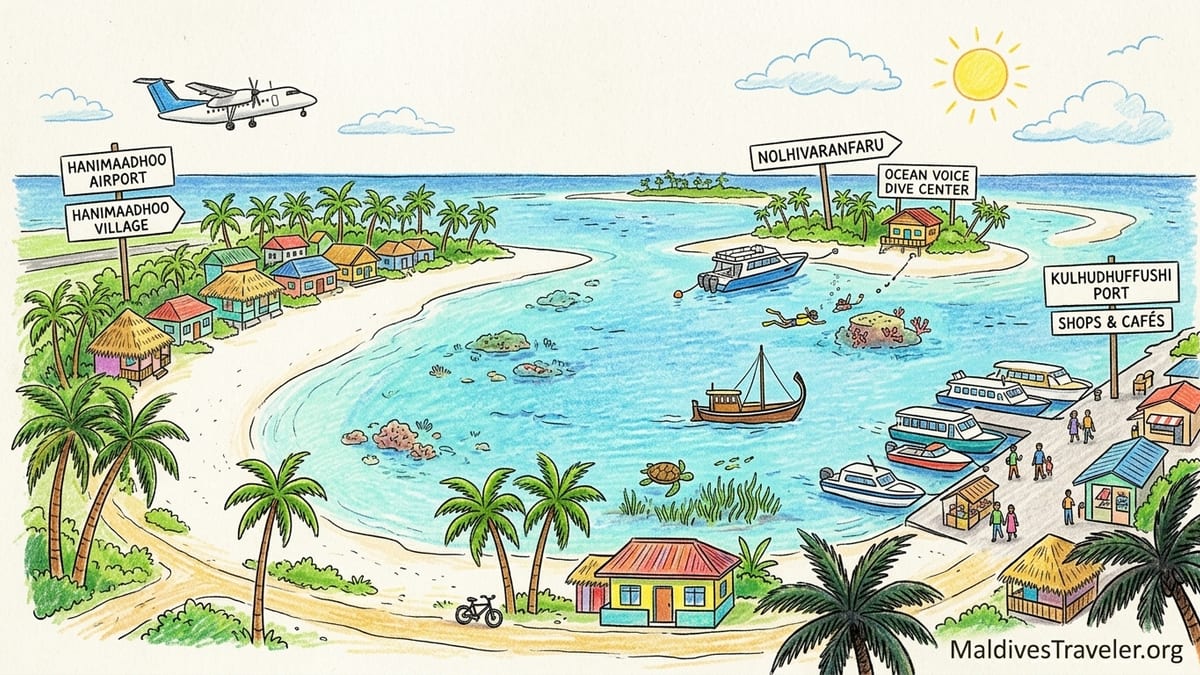
Why Base Yourself in Haa Dhaalu Atoll’s Local Islands
Haa Dhaalu sits in the far north of the Maldives, well away from the classic resort belt of North and South Malé Atolls. Hanimaadhoo and Kulhudhuffushi are regional hubs with domestic airports and regular flights from Malé, which means you can often be in your guesthouse less than an hour after landing in the capital. From there, speedboats link on to smaller Nolhivaranfaru. For independent travelers and long-stay guests, the combination of scheduled flights and simple inter-island transfers keeps logistics manageable compared with more remote parts of the country.
On local islands, tourism regulations differ from resort islands. Alcohol is not served, bikinis are limited to designated tourist beaches and life follows local customs and prayer times. In return, rates are significantly lower than in resort islands and your spend tends to stay in the community, whether you hire a guide, pay for a home-cooked fish curry or book a private snorkel trip with a village boat captain. A night at a solid, air conditioned guesthouse here can cost roughly what you might pay for lunch at a high-end resort.
Haa Dhaalu also delivers some of the best “empty horizon” experiences left in the country. Expect long sand spits, sea-grass meadows where turtles graze, and coral blocks scattered around shallow lagoons. Unlike resort islands with overwater villas and busy house reefs, these villages have modest built environments and wide public beaches. When you walk from your room, you are walking through someone’s home island, past schoolyards and corner shops, not manicured resort pathways.
Choosing between Hanimaadhoo, Nolhivaranfaru and Kulhudhuffushi mainly comes down to what you want your days to look like. Hanimaadhoo suits travelers who prioritize a long, quiet beach and relatively easy flight access. Nolhivaranfaru is ideal for divers and snorkelers wanting a guesthouse-plus-dive-center package at Ocean Voice Beach Resort & Diving or a homier base at Nolhi Escape. Kulhudhuffushi is the most urban, with the widest choice of cafes and services, and works well as a first or last night stop around domestic flights.
Hanimaadhoo: Beachfront Guesthouses and Easy Arrivals
Hanimaadhoo is one of the north’s best-known local-island destinations for foreigners, partly because it has its own domestic airport. That makes it an obvious first stop for travelers flying up from Malé, and a convenient base for two to four nights before moving on by speedboat to other islands in Haa Dhaalu. Most guesthouses cluster along the settled eastern side of the island within a few minutes’ walk of the sea.
Current inventory on Hanimaadhoo includes small beach-focused properties like Tropical Lodge and Himeyn Beach Inn. Guests typically stay in air conditioned double rooms with en-suite bathrooms, tiled or polished-concrete floors and simple modern furniture. You can expect amenities such as hot-water showers, decent quality mattresses, Wi-Fi strong enough for messaging and work calls, and daily housekeeping. Compared with older-generation guesthouses elsewhere in the Maldives, rooms here are broadly on par or slightly better, with more attention to cleanliness and updated fittings.
Hanimaadhoo has a designated bikini beach where foreign visitors can swim in regular swimwear away from the village shoreline. It sits on a broad spit of white sand facing the open ocean, usually signposted and separated by vegetation from the main public areas. Many guesthouses offer free bicycles or a scheduled drop-off by car or tuk-tuk, though the stroll is manageable on foot for most visitors. Snorkeling from the bikini beach tends to be over a sandy-bottom lagoon with scattered coral heads; for serious reef time, it is worth booking a boat trip out to nearby reefs and channels.
Mealwise, most Hanimaadhoo guesthouses quote rates on a bed-and-breakfast basis, with the option to add half-board dinners or order à la carte. Tropical Lodge typically serves a mix of local curries, grilled fish and Western dishes such as pasta or chicken and chips, while Himeyn Beach Inn leans into homestyle Maldivian food. Prices are usually mid-range by local-island standards: for example, a grilled reef fish platter with rice and salad might cost roughly what you would pay for a simple main course at a mid-range café in Malé. Hanimaadhoo’s small restaurants and tea shops fill in the gaps at lunch with short-eats, roshi wraps and fruit juices, giving you a chance to step away from guesthouse dining if you like.
Nolhivaranfaru: Dive-Centric Stays at Ocean Voice and Nolhi Escape
Nolhivaranfaru is smaller and more low-key than Hanimaadhoo but has become one of the most talked-about islands in Haa Dhaalu thanks to Ocean Voice Beach Resort & Diving, a beachfront guesthouse with its own PADI dive operation. The dive center sits right on the sand under palms a short walk from the rooms, making it easy to roll out of bed, grab coffee and be gearing up for a two-tank morning dive within minutes. For those who want to log several days of diving around the atoll’s channels and outer reefs, this kind of on-site setup rivals what you find at mid-market resort islands.
Ocean Voice pairs standard guesthouse rooms with an in-house dive school that runs daily boat dives and snorkeling excursions, plus PADI courses for beginners and continuing education for certified divers. Many guests choose package-style stays that bundle accommodation, breakfast, a set number of dives and sometimes airport transfers from Hanimaadhoo or Kulhudhuffushi. Shore snorkeling directly off the island is pleasant for a quick swim over patchy coral and seagrass, but the highlight is boat access to walls and pinnacles in the surrounding atoll where you can see reef sharks, stingrays and schooling fish in clear water.
Nolhi Escape provides a contrasting style on the same island. Set back slightly from the shore, it offers garden-view rooms around a small courtyard, with bikes available for exploring. Stays here feel more like a peaceful homestay than a dive camp, making them well suited to couples, families and long-stay guests. The guesthouse can arrange snorkeling tours, fishing trips and sandbank visits using local captains, and will typically coordinate with Ocean Voice or other operators if guests want to dive while still sleeping at Nolhi Escape. Rooms are finished in a contemporary minimalist style with air conditioning, comfortable bedding and private bathrooms, and guests often praise the quiet atmosphere and attentive hosts.
Nolhivaranfaru also has a designated bikini beach area where foreign visitors can sunbathe and swim in bikinis or swim shorts. Access is usually on foot or by bicycle along sandy village tracks. Compared with Hanimaadhoo, the bikini beach here feels more intimate: a shorter curve of sand backed by coconut palms and simple shelters. Many visitors split their day between morning dives, afternoons at the bikini beach and sunset walks through the village. Guesthouses usually offer simple Maldivian breakfasts of roshi, spicy tuna and sweet tea alongside continental options, while dinners can be arranged as set menus featuring grilled fish, rice and salads, or family-style Maldivian spreads on request.
Kulhudhuffushi: Urban Energy With Smaller Guesthouses
Kulhudhuffushi is the administrative capital of Haa Dhaalu Atoll, a busy island with government offices, shops, schools and its own airport. It feels more like a small Maldivian city than a sleepy village, making it a very different base from Nolhivaranfaru or Hanimaadhoo. For travelers, that translates into the widest choice of services in the region, from clinics and pharmacies to hardware stores, bakeries and clothing shops. If you are traveling with children or planning a long trip through the north, having that infrastructure nearby can be reassuring.
Guesthouses here are scattered through residential neighborhoods rather than lining a resort-style beach. Properties such as Carnival Guest House and Haajy Guesthouse lean into simple, functional accommodation: clean tiled rooms, air conditioning, private bathrooms, Wi-Fi and basic furnishings. State House and other small villas sometimes host government visitors and business travelers, giving the island a mixed-tourism feel rather than a pure holiday vibe. Compared with ultra-beachy Hanimaadhoo or Nolhivaranfaru, room views are more likely to be over streets or courtyards than the lagoon.
Kulhudhuffushi does have beaches and seaside promenades, but its focus has historically been on trade, transport and services rather than tourism. Local regulations still require modest clothing away from any designated bikini areas, so you should not plan on walking through town in beachwear. Some guesthouses arrange transfers to quieter stretches of shoreline, especially for sunset picnics or barbecue dinners, but this takes more organization than simply stepping out of your door and onto a tourist beach. As a result, Kulhudhuffushi makes the most sense as a transit point or cultural stop where you explore markets, cafés and neighborhoods, then head to a smaller island for your main beach time.
Where Kulhudhuffushi shines is in everyday Maldivian life. You can grab a short-eat breakfast from a busy café, watch evening futsal games under floodlights and shop for island-made snacks to take onward. Many guesthouses here include breakfast in the room rate, while lunch and dinner are taken in local cafés at modest prices. Expect menus featuring rice and curry, fried noodles, fish cutlets and fresh juices, often at lower prices than on more tourist-centric islands simply because these venues serve mainly locals rather than visitors.
Bikini Beaches, Snorkeling and Sea Access Compared
Across Haa Dhaalu’s local islands, the same national rules apply: bikinis, swim shorts and revealing swimwear are allowed only on designated “bikini beaches” or during organized excursions to uninhabited sandbanks and reefs. On Hanimaadhoo and Nolhivaranfaru those designated strips are clearly marked and well understood by locals, which makes it straightforward for guests to relax within the rules. Your guesthouse will point you toward the correct area and can usually arrange sun loungers or simple shade if they are not already in place.
Hanimaadhoo’s bikini beach is the most expansive, with a long sandbar feel and a bigger sense of space. It works well for travelers who like to combine long walks and gentle swims with light snorkeling around scattered coral heads. Snorkeling here is calm and beginner friendly but not as dramatic as in channel sites reached by boat. By contrast, Nolhivaranfaru’s bikini beach is smaller and cozier, which many couples and solo travelers appreciate. The nearby reef slopes and outer atoll sites accessed by boat from Ocean Voice Beach Resort & Diving are far more varied, so divers and confident snorkelers usually favor Nolhivaranfaru for underwater life.
Kulhudhuffushi offers sea access and local beaches but is not yet a classic bikini-beach destination in the way that other local islands have become. You can still swim and stroll along the water’s edge in modest clothing, and some guesthouses can arrange boat trips out to nearby reefs and uninhabited islands for full bikini-beach days. In practice, many visitors treat Kulhudhuffushi as an arrival or departure hub and dedicate their serious swimwear time to Hanimaadhoo or Nolhivaranfaru.
Snorkeling excursions from all three islands often follow a similar pattern: a half-day outing by small boat to two or three nearby reefs or sandbanks, usually including mask, snorkel and fins hire plus cold drinks. Prices are typically far lower than resort-run trips, especially when shared among a small group. If you are a strong swimmer, ask your host about house-reef access and currents, and always carry a T-shirt or rash vest to stay sun safe, as much of the best snorkeling happens in open, unshaded water.
Meals, Airport Pickup and Practical Arrangements
One of the advantages of staying in a guesthouse rather than a self-catering rental is that airport pickup and onward transfers are usually handled for you. On Hanimaadhoo and Kulhudhuffushi, where there are domestic airports, hosts often meet guests directly outside arrivals with a car or tuk-tuk and include the short transfer in the room rate or charge a modest fee. From there, onward speedboats or ferries to Nolhivaranfaru can be pre-booked, with the guesthouse building the ticket cost into a total package so you do not have to negotiate separately at the jetty.
Ocean Voice Beach Resort & Diving and Nolhi Escape on Nolhivaranfaru typically coordinate transfers from either Hanimaadhoo or Kulhudhuffushi based on flight times, ensuring guests do not face long waits between legs of the journey. This might involve a scheduled public speedboat, a chartered run shared among several arriving guests or, in some cases, a daytime local ferry. Because schedules in the north can change seasonally, it is worth confirming departure days and times with your host a few weeks before travel and again shortly before you fly.
Meal arrangements vary by island but follow predictable patterns. On Hanimaadhoo and Nolhivaranfaru, guesthouses like Tropical Lodge, Himeyn Beach Inn, Ocean Voice and Nolhi Escape all provide breakfast, usually included in the nightly rate. Half-board or full-board upgrades can often be added at booking or on arrival, which is convenient on smaller islands where there are few independent restaurants. In Kulhudhuffushi there is more of a café culture, so guesthouses commonly stick to breakfast and leave other meals to local eateries, though some will prepare dinners on request if notified in advance.
It is worth remembering that Haa Dhaalu is still a remote atoll by global standards. Supply boats can be delayed, particular ingredients may run out and menus tend to focus on what is locally available: tuna, jacks, reef fish, rice, noodles, coconuts and seasonal fruit. Vegetarian travelers should flag their requirements clearly. While most guesthouses can prepare vegetable curries, salads and egg dishes, the selection will not be as extensive as in large international hotels. Carrying a few snacks from Malé or your home country is sensible, especially if you are traveling with children.
Room Quality and Choosing the Right Island for You
Room quality on these three islands ranges from very simple to boutique-leaning, but most current guesthouses target the comfortable mid-range. Tropical Lodge and Himeyn Beach Inn on Hanimaadhoo typically offer bright, air conditioned doubles with en-suite bathrooms, hot water and decent soundproofing. Ocean Voice Beach Resort & Diving balances function and beach style, with tile floors, white or neutral walls and practical storage for dive gear. Nolhi Escape’s rooms feel more like a modern city mini-hotel transplanted into a village, with well-finished bathrooms, thoughtful lighting and a quiet courtyard setting.
In Kulhudhuffushi, Carnival Guest House and other small properties focus on practicality rather than design. You will find clean, air conditioned rooms with private bathrooms, but décor tends to be basic: think standard hotel furniture, plain bedding and functional lighting. For travelers who spend most of their time out in town or using the island as a transport hub, that trade-off makes sense, especially when balanced against lower room rates compared with beachfront islands.
When deciding where to stay, start with your priorities. If you want long beach walks and relatively easy domestic flights, Hanimaadhoo is the logical first choice. If diving and snorkeling are central to your trip, Nolhivaranfaru with its combination of Ocean Voice Beach Resort & Diving and Nolhi Escape offers the most direct access to a dedicated dive center and organized excursions. If you value café-hopping, shopping and local-city atmosphere, Kulhudhuffushi adds a different dimension to a northern itinerary, particularly for a night or two at the beginning or end of your stay.
Whichever island you choose, confirm key details with your guesthouse in writing before you travel. Ask about bikini-beach distance from the property, exact transfer prices and timings, what is included in meal plans, availability of snorkeling equipment or dive packages, and whether there are any construction works nearby. Because Haa Dhaalu is still less visited than central atolls, real-time communication with your host is the best way to ensure your expectations match on-the-ground reality.
The Takeaway
Haa Dhaalu Atoll offers a refreshing alternative to the classic resort holiday in the Maldives. On Hanimaadhoo, Nolhivaranfaru and Kulhudhuffushi, you trade swim-up bars and overwater villas for family-run guesthouses, quiet lagoon beaches and evenings spent wandering village streets. For many travelers, that trade brings a richer sense of place and far better value for money.
Hanimaadhoo works best as the easy-access beach base, with properties like Tropical Lodge and Himeyn Beach Inn putting you within a short walk or ride of the bikini beach and organizing boat trips to nearby reefs. Nolhivaranfaru is the clear choice for divers and keen snorkelers who want Ocean Voice Beach Resort & Diving’s on-site PADI operation or Nolhi Escape’s calm, garden setting with easy access to underwater sites. Kulhudhuffushi, in turn, anchors the region as an urban hub with practical guesthouses, plentiful cafés and local services for trips that stretch beyond a standard one-week holiday.
Whichever mix of islands you settle on, planning your stay around bikini-beach access, airport transfers, meal flexibility, dive-center arrangements and room style will help you build an itinerary that fits your travel style and budget. With realistic expectations and a willingness to adapt to local rhythms, a guesthouse circuit through Haa Dhaalu delivers exactly what many visitors now want from the Maldives: clear water, healthy reefs, genuine hospitality and a glimpse of everyday island life beyond the resort brochures.
FAQ
Q1. Can I wear a bikini anywhere on Hanimaadhoo, Nolhivaranfaru or Kulhudhuffushi?
On all three islands, bikinis and revealing swimwear are allowed only on designated bikini beaches or on excursions to sandbanks and uninhabited islands. In village streets and public areas you should dress modestly, covering shoulders and thighs.
Q2. How do I get from Malé to these Haa Dhaalu islands?
Most travelers fly by domestic aircraft from Malé to either Hanimaadhoo or Kulhudhuffushi, then continue by pre-arranged speedboat or ferry to their chosen island. Your guesthouse will usually organize the entire route and quote a total transfer cost.
Q3. Which island is best for diving in Haa Dhaalu Atoll?
Nolhivaranfaru is generally the strongest choice because Ocean Voice Beach Resort & Diving runs a full PADI dive operation on the island, with daily boat dives and courses. Guests at other Nolhivaranfaru stays such as Nolhi Escape can also arrange diving through this center.
Q4. Are meals included at guesthouses or should I budget extra for food?
Breakfast is usually included in the nightly rate at guesthouses on Hanimaadhoo and Nolhivaranfaru, and often in Kulhudhuffushi as well. Half-board and full-board upgrades are common on the smaller islands, while in Kulhudhuffushi many visitors prefer to eat midday and evening meals in local cafés at their own expense.
Q5. What level of comfort can I expect from guesthouse rooms?
You can expect air conditioning, private bathrooms with hot water, clean bedding and Wi-Fi at almost all the named guesthouses. Décor ranges from very simple in Kulhudhuffushi to modern and boutique-leaning at places like Nolhi Escape and some Hanimaadhoo properties.
Q6. Is snorkeling good from the shore or do I need to book boat trips?
There is enjoyable shore snorkeling off both Hanimaadhoo and Nolhivaranfaru, especially around scattered coral heads near the bikini beaches. For the best reefs, channels and fish life, it is worth booking organized boat trips or, for divers, joining regular dive boats.
Q7. Can guesthouses arrange airport pickup and inter-island transfers?
Yes. Tropical Lodge, Himeyn Beach Inn, Ocean Voice Beach Resort & Diving, Nolhi Escape and most Kulhudhuffushi guesthouses routinely arrange domestic-airport pickups and onward speedboat or ferry transfers, usually for a set fee that you confirm before travel.
Q8. Are these islands suitable for families with children?
They can be, provided you are comfortable with local-island norms such as modest dress and the absence of alcohol. Shallow lagoons, quiet streets and friendly communities make Hanimaadhoo and Nolhivaranfaru particularly appealing for families looking for a slower pace.
Q9. Will I find alcohol in guesthouses or restaurants on these islands?
No. Local islands in the Maldives are dry, and guesthouses are not permitted to serve alcohol. If having drinks by the pool or bar is essential to your trip, you may want to pair your local-island stay with a few nights at a resort island, where alcohol is available.
Q10. How far in advance should I book guesthouses in Haa Dhaalu Atoll?
Outside peak holiday periods, one to three months in advance is often enough, but for popular winter dates or if you have specific rooms or dive packages in mind, booking earlier is wise. Remote northern islands have limited room inventories, so last-minute options can be restricted.