


For a growing number of Maldives travelers, the resort decision starts and ends with one question: how good is the house reef from the beach. Raa Atoll has emerged as a quiet favorite for exactly this kind of guest, with several islands where you can step out of your villa, walk a few meters into clear water and be over living coral and fish without ever booking a daily snorkel boat. This guide focuses squarely on those Raa resorts, comparing real-world reef access, entry points, currents and marine life so you can pick the island that matches your snorkeling style and confidence level.
What “Best House Reef” Really Means in Raa Atoll
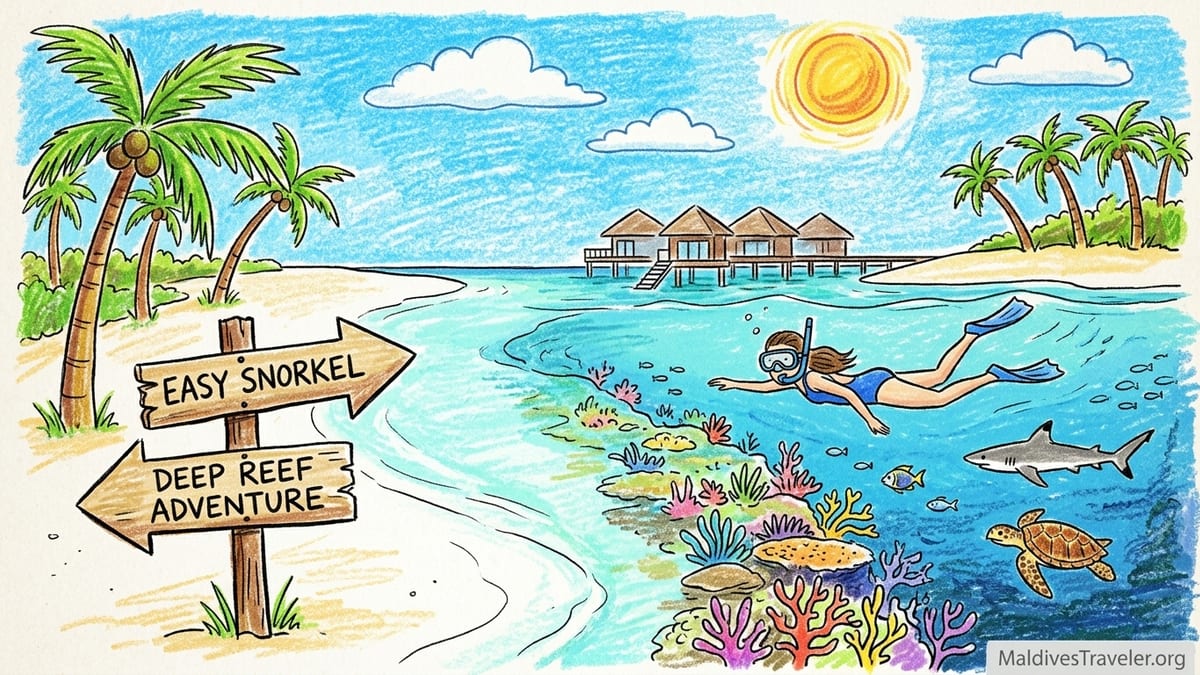
In Raa Atoll, many resorts claim to have a house reef, but not all deliver the same product for a guest who wants serious snorkeling without daily excursions. A true snorkeler’s house reef is about more than a ring of coral somewhere offshore. Distance from the beach to the reef edge, where the reef crest drops into deeper blue, matters as much as the coral itself. On some islands the coral garden starts within a 5 to 10 meter wade from shore, while on others you need to swim 80 to 100 meters before you see anything impressive. For travelers choosing a resort specifically for reef access, that extra swim can decide whether you snorkel twice a day or lose motivation after day two.
Raa Atoll has a mix of islands on the outer atoll edge with dramatic drop-offs, and more sheltered locations with wide lagoons and sandbanks. That geography shapes the snorkeling experience. A resort like Emerald Faarufushi, which independent reef specialists now rate among the strongest house reefs in the atoll, sits close to the atoll edge so its reef falls quickly into deeper water with larger fish and more current. By contrast, family-focused islands such as Adaaran Select Meedhupparu offer broad sandy shallows where beginners can float over coral patches with little wave action, then follow marked channels out to the reef crest when they feel confident.
Equally important is the distinction between good lagoon swimming and good reef snorkeling. Several Raa properties promote calm, turquoise lagoons that are perfect for paddling and paddleboarding, but where the lagoon floor is mostly sand and seagrass before the reef begins further out. That kind of setting looks beautiful in photographs yet can disappoint a snorkeler expecting coral just off the beach. The resorts highlighted here are those where independent snorkel reviewers, specialist hotel comparison sites and recent guests consistently describe real coral structure within an accessible swim from shore or villa steps.
Safety and practicality are also part of a genuine house reef experience. Look for islands that provide life jackets in villas, rent or include quality masks, snorkels and fins onsite, and mark safe entry points on their resort maps. Dhigali Maldives, for example, describes its beach villas as sitting just steps from the house reef, and its island information materials emphasize reef etiquette and restrictions on fishing around the coral. That kind of detail signals a resort that treats the reef as a central part of the stay, not just a marketing line in the brochure.
Emerald Faarufushi: High-Impact Reef a Short Swim From Shore
Emerald Faarufushi Resort & Spa has quickly built a reputation as one of the standout house reefs anywhere in Raa Atoll. Recent specialist listings and guest reviews collected in 2025 and 2026 consistently highlight “great snorkeling directly from the resort,” with coral described as thriving and fish life dense along much of the island’s perimeter. Travelers who have stayed here in the past year frequently mention seeing reef sharks, turtles and schooling fish on almost every outing, without needing to book paid excursions.
From a practical point of view, Emerald Faarufushi strikes a good balance between proximity and comfort. Reef comparison sites that score access by distance typically place Emerald Faarufushi in the category where coral structure starts within a short surface swim from the beach or water villa steps. While exact meter counts vary with tide and entry point, many guests report reaching the first substantial coral heads within roughly 20 to 40 meters of gentle finning, particularly near the jetties. That is close enough that reasonably confident swimmers can reach the reef without feeling exposed in open water, yet far enough that there is still a shallow buffer for casual lagoon floating.
The profile of the reef here suits intermediate and experienced snorkelers who are comfortable near a drop-off. On the ocean-facing side the reef crest rises into a shallow platform before falling into deeper blue, which is where eagle rays, barracuda and larger parrotfish tend to patrol. Currents vary by season, but guest reports usually describe a manageable flow suitable for drift-style snorkels where you enter from one marker, let the current carry you along the outer wall and exit at another. For safety, the resort and its dive center brief arrivals on the easiest entry points and typical current direction, and they can organize guided house reef orientation snorkels for those who want a supervised first session.
For planning your stay, it helps to note which room types give you the most convenient reef access. Emerald Faarufushi’s water villas naturally sit closest to the outer drop-off. Guests in these villas mention being able to climb down their private steps and swim only a few strokes before reaching coral, making multiple short sessions per day very feasible. Beach villas, particularly those on reef-facing shores, require a slightly longer surface swim but still give a clear, direct path to the reef edge. If your priority is minimizing distance to the best section of reef, it is worth asking your agent to request a water villa or a beach unit on the side of the island that faces the main house reef, not the calmest lagoon.
Adaaran Select Meedhupparu: Accessible Shallows for Nervous Beginners
Adaaran Select Meedhupparu is one of the older resorts in Raa Atoll, which means its reef has had time to mature, and the resort has had years to refine how guests access it. The official resort description calls it “one of the best house reefs in the Maldives,” and independent feedback still supports that claim in 2026. Recent reviews commonly mention rays, turtles and reef sharks seen within a short swim of the beach, and several reef specialist sites tag Meedhupparu as a strong option for guests who want easy, predictable snorkeling rather than dramatic but demanding conditions.
The island’s physical shape and lagoon layout are part of what make it suitable for nervous swimmers and families. On the southern side, near the dive school, the resort identifies a particularly beginner-friendly stretch of reef with gentle entry. The shallows here extend out in a gradual slope, with sand patches interspersed with coral heads. New snorkelers can start in waist-deep water over sand, get comfortable with breathing and finning, then move a few meters onto the coral garden without crossing any sudden drop-offs. For a first attempt at house reef snorkeling, that progressive gradient can be much less intimidating than stepping directly off a steep edge.
From a purely snorkel-focused perspective, Meedhupparu is appealing because of its combination of broad lagoon and close reef. The inner lagoon offers easy swimming and paddleboarding, while the reef crest is still within realistic reach for most guests. Some sections lie around 20 to 30 meters from shore at mid tide, while other stretches might require a bit more of a swim. The resort’s printed information materials emphasize reef etiquette, including a ban on fishing around the house reef and reminders not to touch coral or stand on bommies, which suggests an active effort to protect what is still a relatively healthy ecosystem.
For villa selection, beach units closer to the southern and western sides of the island usually provide the most convenient access to the gentler entry points. Guests staying in the separate Adaaran Prestige Water Villas, which are linked to the main island, comment that the reef below and beyond their decks is particularly lively, with some describing snorkeling from their balcony steps as “world class.” Meedhupparu provides life jackets in rooms and offers rental snorkel equipment through its dive center, though many experienced travelers still prefer to bring their own well-fitting masks from home for comfort and hygiene.
The Standard, Huruvalhi: Lagoon Calm With Direct Reef Access
The Standard, Huruvalhi Maldives, has become one of the best known Raa resorts among younger couples and groups who want a playful vibe combined with solid snorkeling. The property markets its “house reef snorkel” as one of the easiest ways to enjoy the ocean, and recent guests confirm that you can enter the water from the beach or water villa steps and reach living coral without a boat. Trip reports from 2025 and 2026 often describe the reef as average to good on the lagoon side, with healthier coral and more action along the outer wall, which is where the resort’s guided house reef snorkels tend to focus.
For swimmers who love calm, clear water but are just starting to explore real reef structure, The Standard offers a gentle introduction. The island sits in a broad, almost pool-like lagoon with sand-bottom shallows that are excellent for practice. Swim a little further from shore or villa, however, and you come to the reef crest and then a distinct drop into deeper water. Some snorkelers find the inner reef inside the lagoon a bit worn, with fewer branching corals, while the outer edge has better growth and fish life. That means you may spend your first sessions closer in, then graduate to the drop-off once you are comfortable and have a feel for the current.
One practical advantage here is the straightforward access from overwater villas. The resort’s fact sheet notes that its Ocean Overwater Villas sit just a few meters from the house reef. Independent villa guides go further, recommending specific villa ranges, such as numbers 1 to 16, for guests who prioritize immediate snorkeling. Travelers staying in these units report climbing down their ladder, swimming a very short distance and then drifting along the outside wall, spotting turtles, reef sharks and dense schools of small fish. That kind of instant access can be a game-changer if you want to snorkel at sunrise before breakfast or squeeze in a quick session at sunset.
The Standard’s vibe will not suit everyone. Compared with quieter, more traditional islands such as Meedhupparu, Huruvalhi has a livelier social scene, with music, pool parties and a spa that leans into fun design. For a snorkel-focused guest, the key is deciding whether you want that playful energy paired with a good, if not pristine, house reef or if you would prefer a more low-key island. In any case, the resort’s dive center runs house reef orientation snorkels and more advanced excursions for those who want variety beyond the in-house coral, so you can mix boat trips with spontaneous swims from your deck.
Reethi Faru, Dhigali and Other Notable Raa House Reef Resorts
Beyond Emerald Faarufushi, Meedhupparu and The Standard, Raa Atoll has several other islands that committed snorkelers should keep on their shortlist. Reethi Faru Resort, located on the southern side of the atoll, is one of the better documented examples because its detailed island map shows marked reef entry points, strong current zones and no-swimming areas around jetties. That kind of cartography is particularly valuable for first-time visitors, since you can plan your route before you even arrive. Guests who stayed at Reethi Faru in recent seasons often praise the easy entry from the eastern and northern beaches, where the reef nears the shore and currents tend to be manageable.
Dhigali Maldives is another Raa property where the house reef is a central part of the stay rather than an afterthought. Marketing materials for its beach villas explicitly mention direct beach access facing a flourishing house reef, and travel agents who specialize in reef-first itineraries frequently list Dhigali among Raa’s best snorkeling options. Anecdotal reports from 2025 and 2026 suggest that coral cover here remains good along large sections of the island, with plenty of small reef sharks in the shallows and turtles spotted near the drop-off. Currents can be stronger on the ocean-facing side, so the resort’s advice on where and when to enter is worth following closely.
Several other Raa islands appear consistently on recent “house reef” preference filters compiled by specialist hotel comparison platforms. These include Furaveri Island Resort, often highlighted for exceptionally easy access where guests can wade only a few meters from the sand before encountering coral, and newer properties such as Cora Cora Maldives and Kudafushi Resort & Spa, both of which combine broad beaches with segments of reef reasonably close to the shore. In practice, the best choice among these comes down to your comfort level with current and distance and whether you value a continuous reef ring or are happy focusing on one or two particularly strong sections.
When evaluating these alternative options, pay attention to the most recent guest photos and trip reports rather than relying solely on pre-2020 impressions. Coral conditions across the Maldives have fluctuated due to bleaching events, and some islands have seen noticeable recovery in the past several years while others lag behind. Independent reef rating tools that were updated in 2025 and 2026 often show meaningful differences even between neighboring properties in Raa Atoll, so choosing a resort that appears in those dedicated house reef rankings is a practical shortcut if snorkeling is the main reason you are flying to the Maldives.
How to Read Resort Maps and Match Islands to Your Skill Level
A resort map might not seem like the most exciting part of your holiday planning, but for a snorkeler it is one of the most useful documents you can study before booking. Look for maps that, like Reethi Faru’s island plan, clearly mark reef entry points, shallow and deep areas, and zones of strong current or boat traffic. If an official map labels only restaurants, bars and villa numbers but says nothing about where to enter the water, that can indicate that the house reef is not a core part of the experience, or that safe access is limited to a few less obvious spots.
For nervous beginners, the ideal map will show broad sections of shallow lagoon with several marked entries through the reef flat. Adaaran Select Meedhupparu and Furaveri Island Resort fit this profile. On such islands you can start in waist-deep water, float over sand and small coral heads, and gradually make your way toward the reef crest. If you tire or feel anxious, it is simple to stand on sand or swim a short distance back to the beach without contending with breaking waves or sudden depth changes. A resort that publishes warnings about strong currents only in a few corner areas can still be a good choice for your first house reef trip, provided you stay within the recommended zones.
Experienced snorkelers, on the other hand, often prefer islands where the reef edge is relatively close to the villas and drops steeply into deeper water. Emerald Faarufushi and parts of The Standard Huruvalhi fall into this category. Resort maps for these islands may highlight a narrower band of shallow water between the shoreline and the drop-off, and they may mark more areas with caution symbols due to current. To someone used to swimming in open water, that profile promises excitement: more pelagic fish, more varied topography and the chance to drift along the outer wall while watching reef sharks cruise below. The same configuration, however, can feel intimidating to a guest who is not comfortable in water beyond their depth.
Before booking, it can be helpful to ask the resort or your travel advisor for a high-resolution copy of the latest island map and to request specific comments on entry points near your preferred villa category. For example, if you are reserving an overwater villa at The Standard and want to prioritize snorkeling, you might ask to be placed in the villa range closest to the house reef and furthest from channels used by boats. At Emerald Faarufushi, you might request a beach villa on the side where independent snorkel reviewers mention the healthiest coral and easiest access. These small details can significantly improve how often you get in the water once you arrive.
Practical Snorkeling Considerations: Gear, Safety and Marine Life
Whichever Raa Atoll house reef resort you choose, a few practical considerations will help you get the most out of the coral right off your doorstep. First is equipment. Most resorts listed here rent or include masks, snorkels and fins through their dive centers, sometimes offering them as part of all-inclusive packages. However, fit and comfort can vary, and serious snorkelers often bring a personal mask and snorkel from home. A mask that does not leak and a snorkel you are used to breathing through will do more to extend your time over the reef than any premium resort amenity.
Life jackets are another quiet but crucial detail. In Raa Atoll, mid-range and higher-end properties such as Adaaran Select Meedhupparu, Emerald Faarufushi and The Standard Huruvalhi place life vests in guest villas as standard. Even confident swimmers may want to use one for longer lazily paced drifts along the drop-off or for sessions when currents are a bit stronger than expected. Wearing a vest also keeps your body higher in the water, reducing the risk of accidentally kicking coral with your fins in shallow areas. If you arrive and do not see a life jacket in your room, it is worth requesting one from housekeeping.
In terms of marine life, Raa Atoll’s better house reefs consistently deliver the kind of encounters many travelers picture when they book the Maldives. Recent guest accounts from Emerald Faarufushi, Meedhupparu and Dhigali mention frequent sightings of green and hawksbill turtles grazing along the reef, blacktip reef sharks patrolling the shallows, and stingrays or eagle rays gliding along the drop-off. Smaller highlights include clouds of chromis over branching coral, clownfish in anemones and occasional friendly batfish trailing snorkelers near jetties. These are not guaranteed, of course, but on a strong house reef you can reasonably expect to see several of these species during a week’s stay without setting foot on a dive boat.
Finally, reef etiquette and safety should frame every session. Resorts in Raa Atoll typically brief guests on not standing on or touching coral, not chasing turtles or sharks and keeping a respectful distance from rays. Many also remind guests that fishing on the house reef is prohibited and that feeding fish from the buffet scraps is damaging to the ecosystem. Respecting these guidelines, choosing your entry points based on staff advice and keeping an eye on the current and your distance from shore will help ensure that the reef remains vibrant for your next visit and for the guests who follow you.
The Takeaway
For travelers who choose a Maldives resort primarily for snorkeling, Raa Atoll now offers a cluster of islands where a genuine house reef is available straight from the beach or villa steps. Emerald Faarufushi stands out for serious snorkelers who want a high-impact reef and do not mind a relatively quick drop into deeper water. Adaaran Select Meedhupparu provides a more forgiving environment for beginners and families, with wide shallows and gradual access to thriving coral. The Standard Huruvalhi combines a lively social atmosphere with easy lagoon practice zones and stronger reef sections just beyond, particularly convenient for overwater villa guests.
Supplemented by options such as Reethi Faru, Dhigali and Furaveri, Raa Atoll’s house reef lineup allows you to match an island not only to your budget and preferred villa type but also to your exact snorkeling confidence and ambitions. By reading resort maps carefully, checking recent reef-focused reviews and asking precise questions about entry points, currents and gear before you book, you can avoid paying for daily boat trips and instead build your holiday around spontaneous, multiple short snorkels each day. For a traveler who measures value in time spent over living coral, that is what turns a good Raa resort stay into a truly exceptional Maldives experience.
FAQ
Q1. Which Raa Atoll resort has the strongest overall house reef right now?
Emerald Faarufushi is widely highlighted by recent specialist listings and guest reviews as offering one of the most consistently strong house reefs in Raa Atoll, with healthy coral, plenty of fish life and direct access from both beach and water villas.
Q2. I am a nervous swimmer. Which Raa Atoll island is best for easy, shallow snorkeling?
Adaaran Select Meedhupparu is a good choice for nervous swimmers and beginners thanks to its wide, gently sloping lagoon and clearly identified easy entry areas near the dive school, where you can start in waist-deep water and gradually move toward the reef crest.
Q3. Can I snorkel directly from overwater villa steps in Raa Atoll?
Yes. At resorts such as Emerald Faarufushi and The Standard, Huruvalhi Maldives, many overwater villas sit very close to the reef edge, so guests can climb down private ladders and reach coral within a short surface swim, sometimes in just a few strokes.
Q4. Do these Raa Atoll resorts include snorkeling equipment in the room rate?
Policies differ. Most properties provide life jackets in villas and rent masks, snorkels and fins through their dive centers, sometimes bundling them into all-inclusive plans. If using your own well-fitting mask is important, you should plan to bring it from home.
Q5. Are currents on Raa Atoll house reefs too strong for children?
Certain outer reef sections can have noticeable current, especially at Emerald Faarufushi and Dhigali, but many islands also have sheltered sides and marked entry points where flow is mild. Families typically choose beginner-friendly areas at resorts like Meedhupparu or Furaveri and follow staff advice on suitable times and locations.
Q6. Will I see sharks, turtles or rays without booking boat excursions?
On the stronger Raa house reefs, the answer is often yes. Recent visitors to Emerald Faarufushi, Meedhupparu and Dhigali frequently report encounters with reef sharks in the shallows, turtles grazing along the coral and rays near the drop-off, all within swimming distance of the beach or villas.
Q7. How far is the reef edge from the beach at these resorts?
Distances vary by island and entry point, but on the best Raa reefs it is typically a short swim. In many areas at Emerald Faarufushi, Furaveri or Reethi Faru, snorkelers report reaching substantial coral heads within roughly 20 to 40 meters of gentle finning from shore at mid tide.
Q8. Is a beautiful blue lagoon the same as having a good house reef?
No. A calm turquoise lagoon can be perfect for swimming and paddling yet have mostly sand and seagrass on the bottom. A good house reef requires accessible coral structure and a clear reef edge or drop-off that you can reach easily from the beach or your villa, as found on the better-rated Raa Atoll islands.
Q9. How can I tell from home if a Raa resort really prioritizes its reef?
Look for recent reef-focused reviews, resort materials that mention specific house reef entry points, and detailed island maps that mark currents and snorkeling zones. Listings that separate “house reef resorts” from generic rankings are another sign that a property is recognized for serious off-the-beach snorkeling.
Q10. Do I still need to book snorkel excursions if I stay on a strong Raa house reef?
If your main goal is daily coral time, a resort with a strong house reef can make paid excursions optional rather than essential. Many guests at Emerald Faarufushi, Meedhupparu and similar islands are satisfied with snorkeling directly from shore, but you can add occasional boat trips for variety or to visit specific manta or turtle hotspots if your budget allows.