


Haa Alif Atoll in the far north of the Maldives remains one of the country’s least commercialised regions, and that is exactly why travelers are starting to seek it out. Instead of big overwater resorts, you will find small guesthouses on quiet local islands, family-run kitchens, and broad natural beaches that you often share with only a handful of people. This guide focuses on the best guesthouse options on five key islands in Haa Alif Atoll – Kelaa, Vashafaru, Hoarafushi, Dhidhdhoo and Utheemu – with particular attention to Kelaa and Vashafaru, where the Ministry of Tourism records multiple operational properties and a growing choice for independent travelers.
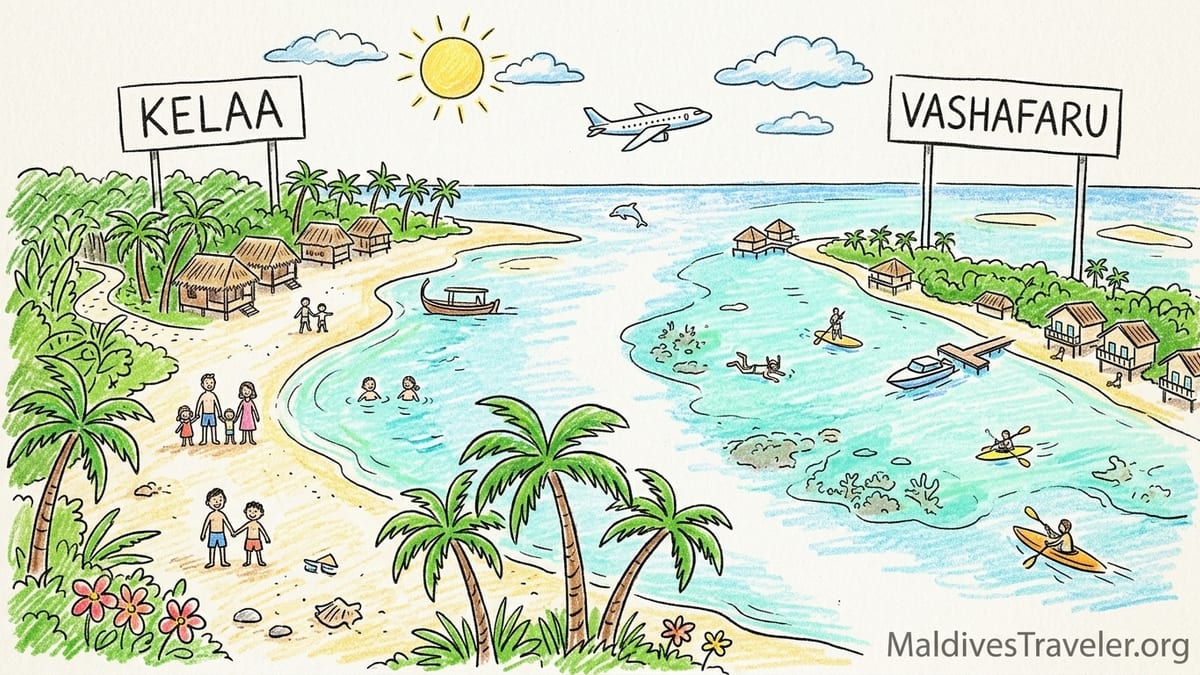
Why Choose Haa Alif Atoll for a Local Island Stay
Haa Alif is among the northernmost atolls of the Maldives and feels noticeably quieter than the busier central atolls. The islands of Kelaa, Vashafaru, Hoarafushi, Dhidhdhoo and Utheemu sit far from the main resort corridors, which keeps nightly rates relatively low and beaches far less crowded. Travelers who are happy to swap big resort pools for long natural beaches and village life will find outstanding value here, particularly in Kelaa and Vashafaru where guesthouse development has picked up in recent years.
Prices fluctuate with season, but it is common to see comfortable double rooms in Haa Alif guesthouses in the range of about 80 to 150 US dollars per night for bed and breakfast, with full-board packages often only 20 to 40 dollars more per person. For example, a deluxe room at Summer Home Kelaa is advertised around 110 dollars per night room only, while Holiday Home Kelaa lists standard doubles around a similar level and family villas higher. These price points are typically far below resort rates in the central atolls, yet activities like snorkeling, sandbank trips and fishing still take place on the same turquoise reefs.
Reaching Haa Alif usually involves a domestic flight from Velana International Airport in Male to Hanimaadhoo or Hoarafushi, followed by a speedboat transfer to your chosen island. Transfer costs can feel high compared with your room rate, so it is smart to compare package deals that wrap flights or speedboats together with accommodation and excursions. Several guesthouses highlighted below offer such packages on request, which can simplify the logistics for first-time visitors to the northern atolls.
Kelaa: Wide Beaches and Family-Friendly Guesthouses
Kelaa sits on the north-east edge of the country and has an appealing mix of broad beaches, leafy interior and a small but growing portfolio of guesthouses. The island is often described by repeat visitors as one of the more laid-back local islands in the Maldives, with deep shade from mature trees and a wide lagoon ideal for easy swimming. From Kelaa you can reach uninhabited sandbanks and snorkeling spots in short boat rides, but you also have a generous bikini beach zone on the island itself, so you are not obliged to go out on excursions every day.
Holiday Home Kelaa is one of the best known properties on the island and appears in recent Ministry of Tourism facility lists. The guesthouse markets a mix of deluxe double rooms, triple rooms with sea view, private villas and interconnected family rooms, with sample nightly rates published in the low to mid hundreds of US dollars depending on room type and season. A deluxe double often sits around 110 dollars per night, while larger villas and family rooms are priced higher. The property positions itself as a small resort-style retreat on a local island, with its own organized sandbank picnics, sunset fishing and water sports, which can be convenient for guests who prefer a one-stop operation rather than booking activities piecemeal.
Beach Home Kelaa and Summer Home Kelaa are also current options regularly cited by local tourism sources. Summer Home Kelaa, a nine-room guesthouse a short walk from the beach, publishes sample pricing from about 110 dollars per night for room only, 120 dollars for bed and breakfast, and around 140 dollars for full board per room for two people. This kind of clear step-up pricing makes it easy for couples and families to budget meals in advance. Beach Home Kelaa tends to attract travelers looking for a small, homely atmosphere and easy access to the island’s main bikini beach. Both properties can arrange airport transfers via domestic flight to Hanimaadhoo followed by speedboat, which typically adds a few hundred dollars per person return to the cost of a stay.
Most Kelaa guesthouses operate dining either in a simple on-site restaurant or via set menus cooked by local staff. Expect straightforward Maldivian and international dishes rather than elaborate fine dining. Guest reviews often mention that hosts will happily cook fresh reef fish from your own catch during a fishing trip and serve it grilled with rice and salads. Diving on Kelaa is arranged through partner dive centers in the atoll, so if you are a keen diver it is worth confirming in advance whether your preferred operator picks up from Kelaa on the dates you plan to visit.
Vashafaru: Lagoon Views and Activity-Rich Guesthouses
Vashafaru lies within the same atoll but has a different character, with a long slender island shape and broad turquoise lagoon. It has become one of Haa Alif’s most active local-island tourism hubs, with several guesthouses recorded by local authorities including Blue Coral Vashafaru and Vashafaru Inn among others. The island appeals especially to travelers who want easy access to structured excursions, water sports and diving, while still keeping a relaxed, community feel.
Blue Coral Vashafaru describes itself as a beautiful local guesthouse surrounded by one of the largest turquoise lagoons in the area. The property offers just a small cluster of air-conditioned rooms, including deluxe doubles, twins and a family room, generally sized around 20 square meters and configured for two to four guests. Room packages commonly include breakfast, with optional half-board or full-board upgrades. Blue Coral also highlights a rooftop open-air restaurant where guests eat with views over vegetation and the ocean, which can be a plus for those who enjoy catching the breeze rather than dining at ground level.
On the activity side, Blue Coral Vashafaru markets an extensive list of excursions that give the island strong appeal for longer stays. House reef and outer reef snorkeling trips, sandbank or deserted island picnics, sunset and night fishing, water sports such as jet ski and paddleboarding, dolphin cruises and island-hopping to nearby islands like Utheemu are all typical offerings. Having these options operated or coordinated directly by the guesthouse simplifies planning and can reduce overall costs compared with booking separate third-party providers. Divers can join trips arranged through Vashafaru dive outfits, which operate nearby and often offer packages combining accommodation, dives and transfers.
Vashafaru Inn, registered with the Ministry of Tourism, adds another layer of choice on the island. While it is a smaller operation than Blue Coral, it is frequently chosen by budget-conscious travelers and domestic visitors who prioritize a simple, clean stay and easy access to the island’s beaches. Meal arrangements are usually on a bed and breakfast basis, with the option of pre-booked dinners or eating at small local cafes on the island. Package pricing at both Blue Coral Vashafaru and Vashafaru Inn tends to be competitive when you factor in activities, so it is worth asking directly for sample full-board plus excursions quotes for stays of five nights or more.
Comparing Beaches, Meals and Family Comfort on Kelaa and Vashafaru
Both Kelaa and Vashafaru deliver strong beach experiences, but in slightly different ways. Kelaa’s charm lies in its wide, often tree-backed shoreline and a feeling of spaciousness on land. Guesthouses like Beach Home Kelaa and Summer Home Kelaa sit a short walk from a generously sized bikini beach, which suits families who want children to have room to play without feeling hemmed in. Vashafaru, by contrast, has an elongated island shape fringed by a large, shallow lagoon that is excellent for easy swimming and stand up paddling. Properties such as Blue Coral Vashafaru and Vashafaru Inn are not strictly overwater or directly on a private beach, but they are close enough that walking to the bikini beach usually takes only a few minutes.
In terms of meals, Kelaa’s slightly larger guesthouse inventory translates into more options for on-site or nearby dining. Holiday Home Kelaa runs its own restaurant-style operation with buffet or set menus, and Summer Home Kelaa advertises simple full-board pricing that removes the need to search for restaurants every day. Prices for set dinners often sit somewhere in the range of 10 to 20 dollars per person for typical Maldivian and international dishes. On Vashafaru, Blue Coral’s rooftop restaurant and home-style cooking receive consistent mentions in guest feedback, while Vashafaru Inn tends to use a combination of its own kitchen and local eateries. In both islands, vegetarians can usually be catered for with prior notice, but vegans and travelers with multiple dietary restrictions should communicate needs well before arrival.
Families will likely appreciate the dedicated family rooms and interconnected layouts at Holiday Home Kelaa, which specifically markets family villas at higher but still comparatively moderate nightly rates. Summer Home Kelaa also accepts families in its larger deluxe rooms, though floor space is more compact than villa-style units. In Vashafaru, Blue Coral’s family room and the ability to configure extra beds make it practical for parents traveling with one or two children. Vashafaru Inn tends to appeal more to couples or small groups of friends, but can often set up triple rooms on request. In all cases, it is wise to ask for room photos and clear details on bed configurations when booking for families, since room naming conventions are not fully standardized across the atoll.
Hoarafushi, Dhidhdhoo and Utheemu: Smaller but Worthwhile Options
While Kelaa and Vashafaru lead in terms of the number of operational guesthouses, other islands in Haa Alif Atoll offer niche but worthwhile stays. Hoarafushi is an important transport node because it hosts an airport that serves the northern atolls. This makes it a practical base for a night on arrival or before departure, especially if your domestic flight arrives late or leaves early. Guesthouses on Hoarafushi are generally simple, targeting both business travelers linked to the airport and independent tourists in transit. Beaches are accessible but feel less secluded than on Kelaa or Vashafaru, so most travelers view Hoarafushi primarily as a logistical stop rather than a long-stay destination.
Dhidhdhoo, as the administrative capital of Haa Alif Atoll, has a more urban Maldivian feel, with local government offices, shops and transport services clustered together. A handful of guesthouses cater to business visitors and domestic travelers, with rooms that are clean and functional rather than resort-like. The island’s location means it is relatively easy to organize speedboat transfers in different directions, which can occasionally make Dhidhdhoo a useful base for travelers who want to move between multiple islands in the region and prefer not to commit to one place for an entire trip.
Utheemu has a completely different draw. It is historically significant as the birthplace of Sultan Mohamed Thakurufaanu, and visitors often come to see Utheemu Ganduvaru, a preserved wooden palace that offers a glimpse into traditional Maldivian architecture and history. Accommodation on Utheemu itself is limited and tends to be modest guesthouses or homestay-style properties, which may suit travelers who prioritize cultural immersion over extensive resort-style services. Some Vashafaru guesthouses, including Blue Coral, offer island-hopping excursions to Utheemu, allowing you to visit as a day trip even if you choose to base yourself on another island for accommodation.
Across Hoarafushi, Dhidhdhoo and Utheemu, meal arrangements are straightforward: expect local cafes, small hotel restaurants and simple Maldivian curries and snacks. Divers and serious snorkelers staying on these islands should confirm in advance how dive operators will pick up and what minimum numbers are needed for trips to run, since demand can be more sporadic than on the larger local-island tourism hubs further south.
Airport Transfers, Diving and Excursions Across the Atoll
Most travelers reach Haa Alif via domestic flight from Male to either Hanimaadhoo or Hoarafushi. From there, guesthouses typically arrange speedboat or local ferry transfers to Kelaa, Vashafaru, Dhidhdhoo or Utheemu. For example, Blue Coral Vashafaru notes a journey time of around 40 minutes by domestic flight plus about 20 minutes by speedboat to reach the island. Exact schedules and prices change regularly, so it is crucial to treat any quoted figures as indicative and confirm current transfer options in writing with your guesthouse a few weeks before arrival.
Diving in Haa Alif is still relatively under the radar compared with heavy-traffic atolls, which is part of its appeal. Dedicated dive centers operate in or near several of the islands, offering boat trips to reefs known for manta rays in season, green turtles and healthy coral formations in places. On Kelaa and Vashafaru, guesthouses usually book you onto partner dive boats rather than running fully fledged dive centers on-site, so credentialed divers should check whether equipment rental, nitrox and multi-day dive packages are available from the chosen operator. Non-divers can still explore the underwater world through regular snorkeling trips, which are easily arranged through properties like Holiday Home Kelaa and Blue Coral Vashafaru.
Excursions are a major reason to stay in guesthouses rather than in town-only hotels. Sandbank picnics, where you spend a half or full day on a narrow ribbon of white sand surrounded by shallow water, are among the most requested experiences and can often be combined with snorkeling on nearby reefs. Costs are typically charged per boat rather than per person, which means small groups and families can achieve better value. Fishing trips, both traditional hand-line at sunset and larger-scale big game outings, are also common and can be tailored for beginners or more experienced anglers. Always ask which excursions are realistic at the time of year you plan to travel, since sea conditions and wildlife patterns vary with the monsoon seasons.
How Packages and Pricing Typically Work
Guesthouses in Haa Alif Atoll frequently bundle accommodation, meals, transfers and excursions into flexible packages that are not always obvious on general booking platforms. It is common, for example, for a property like Summer Home Kelaa to advertise basic room-only or bed and breakfast rates publicly, while offering full-board plus two or three excursions at a negotiated rate if you contact them directly. Similarly, Blue Coral Vashafaru or Holiday Home Kelaa may provide quote-based offers that include domestic flights from Male, speedboat transfers and a set number of activities, especially for stays of at least five or six nights.
When comparing packages, pay close attention to what is and is not included. Some guesthouses include all taxes and service charges in their advertised rates, while others add these at the end, which can increase the final bill by more than ten percent. Check whether bottled drinking water, snorkeling gear and basic activities like a first sandbank trip are complimentary or extra. Families should also confirm child policies, as some properties allow children under a certain age to stay or eat at reduced rates when sharing existing bedding, while others charge for extra beds and meals as separate line items.
Because the Ministry of Tourism continues to approve new small guesthouses in Kelaa, Vashafaru and other islands, availability can change from season to season. The specific properties named here, such as Beach Home Kelaa, Holiday Home Kelaa, Summer Home Kelaa, Blue Coral Vashafaru and Vashafaru Inn, are all recorded in recent official or local tourism sources, but it is still sensible to reconfirm current operating status directly before committing to non-refundable flights or packages. Local tour operators that specialize in the northern atolls can also help knit together multi-island itineraries if you wish to combine two or three islands in one trip.
The Takeaway
For travelers who want to experience the Maldives beyond the classic resort image, Haa Alif Atoll offers a compelling alternative. Kelaa and Vashafaru stand out with multiple operational guesthouses, strong bikini beaches and a good spread of excursions, while Hoarafushi, Dhidhdhoo and Utheemu provide more targeted options tied to transport, administration and culture. Taken together, these islands give you a snapshot of everyday Maldivian life while still delivering the clear reefs and white-sand beaches that draw people to the country in the first place.
Choosing between them comes down to your priorities. If you are traveling with family and want wide beaches, interconnected rooms and all meals handled in-house, Kelaa and its guesthouses like Holiday Home Kelaa, Beach Home Kelaa and Summer Home Kelaa may be the best fit. If you are focused on snorkeling, sandbanks and an active excursion program, a stay in Vashafaru at Blue Coral Vashafaru or Vashafaru Inn has strong appeal. Meanwhile, brief stops in Hoarafushi or Dhidhdhoo can help smooth the logistics of domestic flights and speedboats, and a night or day trip to Utheemu adds valuable historical context to your time in the north.
Whichever island you choose, the key is to keep expectations aligned with the local-island model. Guesthouses in Haa Alif Atoll are small-scale, friendly and firmly embedded in their communities. Service is usually more personal than polished, and facilities are simpler than resort standards, but the payoff is a far more affordable and culturally grounded Maldivian stay. Travelers willing to embrace that trade-off often find that the memories they carry home from Haa Alif are defined as much by conversations with hosts and the rhythm of island life as by the postcard-perfect lagoons.
FAQ
Q1. How do I get to Kelaa or Vashafaru from Male?
Most travelers fly by domestic airline from Velana International Airport in Male to either Hanimaadhoo or Hoarafushi, then continue by speedboat arranged through their guesthouse. The total journey usually takes between one and a half and three hours, depending on connections and sea conditions.
Q2. Are the guesthouses in Haa Alif Atoll directly on the beach?
Some properties, such as parts of Holiday Home Kelaa, sit very close to the shoreline, while others like Summer Home Kelaa, Beach Home Kelaa, Blue Coral Vashafaru and Vashafaru Inn are a short walk from the designated bikini beach. Walking time is typically only a few minutes on these small islands.
Q3. What meal plans are usually available at guesthouses in Kelaa and Vashafaru?
Most guesthouses offer room only, bed and breakfast, half-board and full-board options. For example, Summer Home Kelaa publishes separate prices for room only, bed and breakfast and full board, while Blue Coral Vashafaru commonly includes breakfast with the option to add lunch and dinner as a package or pay as you go.
Q4. Can I arrange diving directly through these guesthouses?
In many cases yes, but usually via partner dive centers rather than on-site facilities. Properties in Kelaa and Vashafaru typically help book dive trips with nearby operators, arrange boat pick-ups and coordinate equipment rental. It is best to confirm availability, prices and certification requirements before your trip.
Q5. Are Haa Alif guesthouses suitable for families with young children?
Yes. Holiday Home Kelaa, for instance, offers family rooms and interconnected villas, and Blue Coral Vashafaru has family-friendly room configurations. Shallow lagoons and relatively quiet beaches are well suited to supervised children, though parents should be aware that there are no lifeguards on duty.
Q6. What should I wear on local islands like Kelaa and Vashafaru?
Because these are inhabited islands with local communities, modest clothing is expected in villages and public areas. Swimwear is appropriate only on designated bikini beaches or during excursions. Light, loose clothing that covers shoulders and knees when away from the beach is a practical guideline for both men and women.
Q7. How expensive are excursions such as sandbank trips and fishing?
Prices vary by distance and duration, but a half-day shared sandbank and snorkeling trip might cost in the low tens of dollars per person, while private boat charters or big game fishing can be significantly higher. Many guesthouses will quote reduced per-person rates for families or groups who share a boat.
Q8. Is Wi-Fi reliable at these guesthouses?
Most properties in Kelaa, Vashafaru and the other islands provide complimentary Wi-Fi, though speeds can be variable and not always suitable for heavy streaming or remote work. Travelers who require consistent connectivity often purchase a local SIM card with a data package as backup.
Q9. Can I pay by credit card, or should I bring cash?
Several guesthouses accept major credit cards, but systems can be temporarily offline and small cafes or local shops are often cash only. Carrying a reasonable amount of US dollars and Maldivian rufiyaa for tips, snacks and small purchases is advisable, while confirming in advance how your chosen guesthouse prefers to handle payment.
Q10. How far in advance should I book guesthouses in Haa Alif Atoll?
Outside peak holiday periods you can sometimes find rooms at short notice, but for the dry northeast monsoon months, which are typically the busiest, it is safer to book several months ahead. This gives you more choice among properties like Beach Home Kelaa, Holiday Home Kelaa, Summer Home Kelaa, Blue Coral Vashafaru and Vashafaru Inn and allows time to coordinate flights and transfers.