


Haa Alif Atoll sits at the remote northern tip of the Maldives, a scatter of emerald islets that still feel far from the country’s busier resort hubs. Two stand-out properties dominate the conversation for travelers who want to go all-inclusive here: JA Manafaru and Hideaway Beach Resort & Spa. Both are luxurious, both offer serious value when you bundle meals, drinks and experiences, and both have sharpened their 2026 offers to compete directly with one another. Choosing between them now comes down less to room rate and far more to how you like to dine, drink, snorkel, spa and travel with (or without) kids.
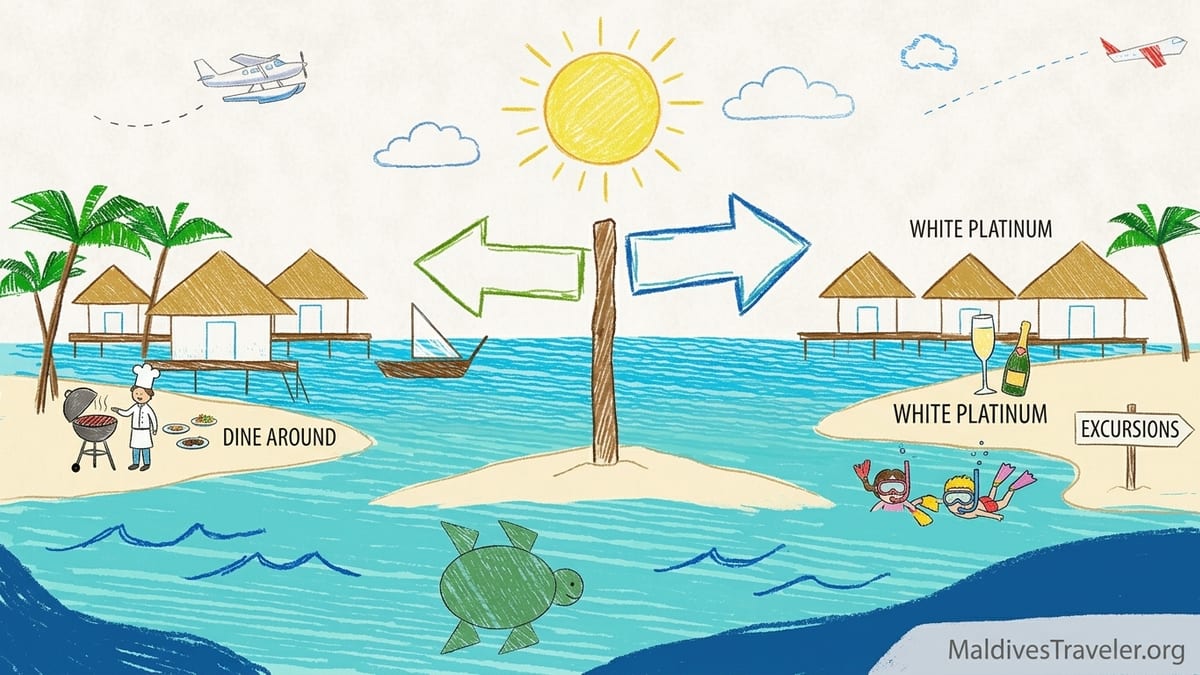
Haa Alif All-Inclusive in 2026: Two Heavyweights, One Remote Atoll
Haa Alif is one of the Maldives’ most secluded atolls, reached via a long domestic hop or seaplane flight from Malé. That remoteness is exactly what makes all-inclusive plans so attractive here. Once you touch down on your island, you do not want to spend the week signing chits for every mocktail or dolphin cruise. In 2026, both JA Manafaru on Manafaru Island and Hideaway Beach Resort & Spa on Dhonakulhi Island are leaning into this reality, offering robust all-inclusive plans specifically tailored to long-stay couples and families.
JA Manafaru positions its all-inclusive as a “Dine Around” style experience, packaged into various offers sold through the resort and international partners. Recent 2026 promotions include complimentary seaplane or domestic transfers for seven-night stays and free meal plan upgrades from breakfast up to a full dine-around all-inclusive, along with “kids stay, eat and play free” for up to two children per villa during certain seasons. These details can shift with the travel period, but the direction of travel is clear: the resort is rewarding longer stays with deeper inclusions rather than simply discounting the base room.
Hideaway Beach Resort & Spa, by contrast, has built its reputation around the White Platinum Plan, a very comprehensive all-inclusive program that includes three daily meals, premium beverages, daily replenished minibar and even a couple of excursions per stay. For 2026, it is widely sold as the natural choice for guests who want to arrive, sign once and stop thinking about extras. The resort frequently layers on domestic or seaplane transfer offers for seven-night bookings, with some packages advertising complimentary or discounted return flights for two guests when booked within specific windows.
For travelers comparing the two, the key is to move beyond “is it all-inclusive?” and look closely at what a week of real-life holidaying actually looks like under each plan: how often you can dine à la carte, what you can order at the bar, how much snorkelling and spa time is bundled in, and how generous the kids and transfer perks really are.
À-la-carte Dining and Culinary Freedom
Food quality and flexibility are where all-inclusive plans can truly make or break a Maldives stay. JA Manafaru leans on its “dine around” concept, which typically allows guests on the top all-inclusive plan to use several of the island’s restaurants without paying supplements for standard menu items. In practice, that means you might have a buffet breakfast at the main restaurant, à-la-carte lunch at the beach grill with a starter, main and dessert, and then rotate between an Asian-fusion venue, a Mediterranean option or a more intimate fine-dining setting for dinner, depending on availability and any surcharges for high-cost dishes.
Older fact sheets for JA Manafaru’s all-inclusive describe a 3-course à-la-carte structure for lunch and dinner, with one starter, one main, a side and one dessert per person, alongside access to a wide range of drinks during venue opening hours. While individual restaurant line-ups and specific inclusions can change season by season, the overall feel has remained: guests enjoy a restaurant-style experience more often than a buffet conveyor belt. For example, a couple could spend an evening at the Asian restaurant sharing tuna tataki and gyoza as starters, before each orders a curry or noodle dish and finishes with sorbet or coconut panna cotta, all within the plan.
Hideaway Beach’s White Platinum Plan also revolves around restaurant dining rather than just buffets, but structures it slightly differently. Guests typically receive buffet breakfast, then a three-course lunch and dinner in selected venues. Some restaurants are fully included, such as the main buffet restaurant and poolside outlets, while others, like the signature Asian restaurant, may be available with either a supplement or a discount on food for those on the plan. In practice, this still gives a “dine around” feeling, though the degree of inclusion by venue can be more nuanced than JA’s relatively straightforward all-restaurant approach in its premium offers.
For travelers who prize culinary variety above all else, JA Manafaru’s current 2026 marketing emphasizes gourmet dining and “endless culinary delights” as a core strength, and it tends to be highlighted by specialist Maldives agents as a good fit for food-focused guests. Hideaway, meanwhile, is a natural match for holidaymakers who are comfortable alternating between a generous buffet, a beachside grill and a couple of specialty nights, but who value the overall simplicity of knowing almost every sit-down meal is covered under one branded plan.
Premium Drinks, Minibars and What “Unlimited” Really Means
In the Maldives, premium drinks can quietly double your budget if they are not clearly defined inside your plan. Both JA Manafaru and Hideaway Beach now compete strongly in this area, but they take slightly different tacks. JA Manafaru’s most detailed all-inclusive descriptions highlight a “wide selection” of alcoholic and non-alcoholic beverages, including international branded beers, spirits, a curated list of old-world and new-world wines, juices, soft drinks, premium coffees and teas, house cocktails and mocktails. Certain exclusions are clearly spelled out, such as very high-end cellared wines and champagnes, in-villa dining alcohol and energy drinks.
For many guests, this means that ordering a Negroni at the sunset bar, a glass of house Sauvignon Blanc with dinner and a cappuccino afterwards are all included, but special bottles and top-shelf labels come with a supplement. In real-world terms, a couple could comfortably have four or five drinks each spread across the day without seeing any bar bill, provided they stick to the house lists. This tends to suit travelers who enjoy a steady flow of cocktails and wine but are not fixated on specific prestige brands.
Hideaway Beach is particularly aggressive about showcasing premium brands inside its all-inclusive. Reviews and recent plan descriptions for the White Platinum Plan mention unlimited premium alcoholic beverages, including champagne by a reputable French house, plus a broad selection of wines, branded spirits and a long non-alcoholic list. That means guests can often order sparkling wine for breakfast mimosas, a good quality gin and tonic in the afternoon and a serious rum nightcap, all within the same plan. For travelers who care deeply about labels or enjoy celebratory bubbles, Hideaway’s approach can feel more overtly luxurious.
Minibar policy is another quiet differentiator. At Hideaway, the minibar is usually replenished daily with beer, wine, soft drinks, water and a selection of snacks as part of the White Platinum Plan. That translates to real freedom for those who like a cold beer on the villa deck after snorkelling or a soda and crisps while the kids nap. JA Manafaru has historically included soft drinks, water and sometimes beers in the minibar on all-inclusive, but the exact line-up is occasionally tighter, with premium items and wines more likely to incur a charge. For guests who spend hours on their villa deck or by their private pool, Hideaway’s more generous minibar can add significant perceived value over a week-long stay.
Snorkeling, Excursions and House-Reef Access
Haa Alif Atoll is known for its clear water, resident turtles and, in the right season, dolphins and manta encounters. Both resorts sell this marine world heavily in their 2026 marketing, and both incorporate it into their all-inclusive positioning, though once again the details differ. JA Manafaru typically includes the use of snorkelling equipment for the duration of the stay on all-inclusive packages, removing the need to rent gear daily. Some offers also bundle in a one-time experience per stay, such as a sunset dolphin cruise or a teppanyaki dinner, giving guests a sense of added value without embedding a full excursion program into the daily rate.
In practical terms, a family staying seven nights on an all-inclusive JA deal might spend most days snorkelling directly from the beach or jetty using the complimentary equipment, then book a single boat excursion to visit a nearby uninhabited island or go in search of dolphins. These trips are usually bookable at a preferential rate, with the plan mainly focused on food and beverage rather than activities. The resort’s USP is the quality and relative emptiness of nearby reefs rather than the volume of free boat trips.
Hideaway Beach’s White Platinum Plan goes further in formal excursion inclusions. Typical descriptions include two complimentary excursions per person per stay, commonly a guided house-reef snorkelling trip and a sunset dolphin cruise, subject to weather. For a couple or family of four, that can add up to eight experiences without additional cost, especially valuable when rack rates for shared excursions in the Maldives often reach several hundred US dollars for a family outing. On top of that, snorkeling equipment is generally included for the duration of the stay, encouraging guests to explore the lagoon and reef independently.
House reef quality is strong at both islands, but slightly different in character. JA Manafaru is praised by specialist agents for having several nearby unspoilt reefs and easy access to uninhabited islets, ideal for private-feeling half-day trips. Hideaway, on the other hand, is frequently described as having a more immediate drop-off and a large lagoon, making it attractive for confident swimmers who want to alternate between “lazy lagoon” days and slightly more dramatic reef edges. If underwater time is the heart of your holiday, Hideaway’s bundled excursions can tip the scales in its favor, especially for first-time snorkellers who appreciate guided trips.
Spa Time, Wellness and Adult Escapism
Neither resort operates as a medical or intensive wellness retreat, but both have well-regarded spas and increasingly weave well-being into their value propositions. At JA Manafaru, the Calm Spa Sanctuary offers a menu of massages, facials and body treatments, along with complimentary group wellness sessions such as yoga, which are often included for guests regardless of board basis and spotlighted in current offers. A typical 2026 promotion might promise access to daily group yoga or stretching sessions plus use of hammam and relaxation areas, while individual spa treatments remain chargeable.
In practice, that means a couple on an all-inclusive plan could join sunrise yoga three or four mornings per week without touching their wallet, but would still pay out of pocket for a 60-minute Balinese massage or couples’ ritual. This model suits guests who prioritize food and beverage value while considering spa time an indulgence they are happy to pay extra for. The resort’s all-inclusive energy stays focused on dining and drinks rather than trying to bundle in a fully-fledged spa program.
Hideaway Beach runs a large spa, often marketed as a key feature of its “sanctuary” positioning, but does not typically include full treatments inside the White Platinum Plan. Instead, it tends to sprinkle value through occasional credits, promotional discounts or complimentary short experiences during certain campaigns, such as a 15-minute head massage or hydrotherapy session. Over the course of a week, you might be enticed into one or two full-fee signature treatments, but the plan itself remains mostly about food, drinks and excursions.
Where Hideaway can feel more adult-escapist is in the combination of a rich premium drinks package, a more secluded villa layout and a quiet, gardened island feel. Couples who want to linger with champagne at sunset, float between private pools and the main infinity pool and spend on a few high-end spa rituals may find the overall atmosphere aligns slightly more with a romantic, adults-first vision, even though children are very much welcome.
Kids’ Clubs, Family Value and Long-Stay Promotions
For families, 2026 is a very good year to look at Haa Alif, because both resorts are clearly chasing the “luxury family” segment with generous children’s policies. JA Manafaru has an established kids’ club for ages roughly three to twelve, teen activities and a raft of family-friendly offers. Recent 2026 early sale campaigns marketed through tour operators highlight “kids stay, eat and play free” for up to two children per villa, free meal-plan upgrades for the whole family and complimentary or discounted transfers when staying at least seven nights in selected periods.
Concretely, that can mean a family of four booking a week in a Beach Pool Villa on all-inclusive where the adult rate covers the villa and plan, while two children under around twelve share for minimal or zero additional cost on the same meal plan. Daily kids’ club sessions, beach games, movie nights and simple watersports like kayaking or paddleboarding are usually available either complimentary or at reduced cost. For a US family traveling in the summer holidays, this can eliminate a substantial chunk of on-island spending that would otherwise accrue from children’s meals and activity fees.
Hideaway Beach is responding with its own family-focused campaigns. Marketing language for 2026 emphasizes that children under twelve can stay and dine free in some offers, and special family packages promote extras such as a complimentary family beach dinner, outdoor cinema under the stars, a private snorkeling session and even a couple of hours of babysitting included. Combined with the already strong baseline of the White Platinum Plan, this can make Hideaway particularly attractive for multi-generational groups or families who want structured, memorable experiences built into the week.
The kids’ club offering at Hideaway is also well-developed, though the resort’s overall feel remains slightly more grown-up than JA Manafaru’s “natural island luxury for all ages” positioning. If you picture younger children spending long stretches in the kids’ club while parents dive into the spa, champagne and extended dinners, Hideaway’s model works beautifully. If you instead imagine more relaxed, barefoot family time rotating between villa pool, beach and casual dining, JA Manafaru’s family packages and generally softer aesthetic may resonate more strongly.
Transfers, Seaplanes vs Domestic Flights and Hidden Travel Time
Getting to Haa Alif requires more planning than reaching the central atolls, and in 2026 transfer promotions have become a major lever in the competition between these two resorts. Both properties can be reached either by direct seaplane from Malé or by a domestic flight to a northern regional airport followed by a speedboat. Actual routing depends on arrival time, weather and season, but typical total journey times are around 75 minutes by seaplane or roughly 50 to 60 minutes by domestic flight plus boat.
JA Manafaru’s 2026 early-sale and summer deals prominently feature transfer incentives. One widely marketed campaign offers complimentary roundtrip seaplane or domestic transfers for stays of seven nights or more outside peak festive dates, along with 20 percent room discounts and free meal-plan upgrades. In high season, the same offer may shift to a 50 percent discount on transfers rather than full waiver, but still represents a substantial saving. In concrete numbers, seaplane transfers for a family of four can easily top several thousand US dollars at rack rates, so this can make the difference between Haa Alif and a closer atoll.
Hideaway Beach also advertises complimentary return shared seaplane or domestic transfers for two guests for stays of at least seven nights during certain windows extending into late 2026. In many packages, additional guests beyond the first two pay a reduced rate. Because Hideaway tends to sell its White Platinum Plan as a bundled price with transfers via tour operators and online agencies, the value is often baked into the overall package rather than spelled out line by line, but the effect is similar: long stays see a large part of the transfer cost absorbed.
When deciding between the two, prospective guests should pay close attention to how their likely arrival times from international flights align with seaplane schedules. Families arriving late in the afternoon may be routed onto domestic flights and boats regardless of promotional seaplane language, simply because seaplanes do not operate after dark. In those cases, it is worth asking the resort or your agent whether domestic transfers are also covered under the current promotion, and whether an overnight in Malé might help you take full advantage of a complimentary seaplane the following morning.
The Takeaway
JA Manafaru and Hideaway Beach Resort & Spa now sit at the top of the Haa Alif all-inclusive landscape, with 2026 offers that are less about ticking the “AI” box and more about shaping how you will actually live on the island for a week or more. Both deliver high-calibre villas, serious food and beautiful reefs, so the real choice lies in the nuance of their all-inclusive structures.
If you are a food-focused couple or family who values flexible à-la-carte dining, kids’ perks and strong transfer promotions, JA Manafaru’s dine-around all-inclusive and generous 2026 family policies make it a compelling option. The resort’s promotions stack up particularly well for seven-night stays with children under twelve, where free meal upgrades, complimentary or discounted transfers and kids-stay-free structures can deliver true value without sacrificing quality.
If you instead dream of an even more hands-off stay with branded champagne and premium spirits, daily replenished minibar and a couple of included excursions baked into the rate, Hideaway’s White Platinum Plan is hard to beat. Add in its current offers around free transfers for two guests on longer stays and family packages with complimentary dinners and snorkeling, and it becomes a standout choice for couples and multi-generational groups who want to relax into an ultra-inclusive bubble.
Whichever island you choose, the most important step is to request the latest all-inclusive fact sheet or plan summary for your exact travel dates. Small variations in what counts as included, how à-la-carte restaurants are handled and whether transfers are complimentary can shift hundreds or even thousands of dollars over a week, especially for families. In Haa Alif in 2026, the good news is that both JA Manafaru and Hideaway are consciously competing to make that decision a matter of style and personal preference rather than simply a question of value for money.
FAQ
Q1. Which resort has the more generous all-inclusive plan overall, JA Manafaru or Hideaway Beach?
Hideaway Beach’s White Platinum Plan is generally more overtly inclusive on premium drinks, daily replenished minibar and bundled excursions, while JA Manafaru’s dine-around all-inclusive tends to shine in culinary variety and family-focused value. The “better” plan depends on whether you prioritise drinks and excursions or restaurant choice and kids’ perks.
Q2. Do both resorts include à-la-carte dining in their all-inclusive packages?
Yes, both offer à-la-carte options within their all-inclusive structures. JA Manafaru typically positions its top plan as full dine-around with three-course à-la-carte lunches and dinners in several venues, while Hideaway combines buffet meals with three-course à-la-carte options in selected restaurants, sometimes with supplements or discounts in its most premium venues.
Q3. How do the premium drinks compare between JA Manafaru and Hideaway Beach?
JA Manafaru includes a broad selection of branded spirits, wines, beers and cocktails, with very top-tier labels and cellared wines usually excluded. Hideaway’s White Platinum Plan is often described as more generous for premium brands and champagne, appealing to guests who care about specific labels or enjoy sparkling wine throughout the day.
Q4. Are seaplane or domestic transfers included in 2026 all-inclusive offers?
Both resorts are running 2026 promotions where seven-night stays can unlock complimentary or heavily discounted roundtrip seaplane or domestic transfers during specified travel windows. In some periods JA Manafaru offers free transfers for the whole family, while Hideaway commonly includes return transfers for two guests with reduced rates for others. Always check the fine print for your exact dates.
Q5. Which resort is better for families with younger children?
JA Manafaru is often the stronger overall value for families thanks to “kids stay, eat and play free” offers, free meal-plan upgrades and a very family-friendly vibe, plus a well-equipped kids’ club. Hideaway also welcomes children and has its own kids’ facilities and family packages, but its ambience skews slightly more toward couples and multi-generational groups seeking a quieter, spa-and-champagne focus.
Q6. Do the all-inclusive plans cover snorkeling and excursions?
Both include snorkeling equipment for the duration of the stay. Hideaway Beach typically goes further by bundling in at least two excursions per person per stay on the White Platinum Plan, such as a guided house-reef snorkel and a sunset dolphin cruise. JA Manafaru usually offers one signature experience per stay in many deals, with additional excursions available at extra cost.
Q7. Are spa treatments included in the all-inclusive packages?
No, full spa treatments are generally not included at either resort. JA Manafaru often provides complimentary group wellness sessions like yoga, while Hideaway may offer credits, discounts or short complimentary experiences during promotions. Massages, facials and most longer rituals remain chargeable at both properties.
Q8. How do the minibars differ between the two resorts on all-inclusive?
Hideaway’s White Platinum Plan usually includes a daily replenished minibar with beer, wine, soft drinks, water and snacks, which can significantly enhance the in-villa experience. JA Manafaru tends to include soft drinks and water, and sometimes beers, but with a tighter selection and more premium items charged separately. Policies can vary slightly by offer and season.
Q9. Is it worth going all-inclusive at these Haa Alif resorts versus half board?
Because of the islands’ remoteness and high à-la-carte pricing, many repeat guests strongly recommend all-inclusive at both JA Manafaru and Hideaway. Once you factor in three daily meals, drinks, snacks and a couple of excursions or extras, the incremental cost over half board is often outweighed by the comfort of not monitoring every order, especially for families and longer stays.
Q10. How should I decide between JA Manafaru and Hideaway Beach for a 2026 trip?
Think about your priorities: choose JA Manafaru if you value diverse à-la-carte dining, strong family promotions and generous transfer deals; pick Hideaway if you want an ultra-inclusive feel with premium drinks, a fuller excursion bundle and a slightly more adult-leaning atmosphere. Then, ask your agent or the resort for the latest all-inclusive fact sheet tied to your exact travel dates before you book.