


I thought I knew the Maldives before I flew to Shaviyani Atoll. I had already done the easy, central atolls that sit a short speedboat ride from Malé, with busy lagoons and a constant buzz of seaplanes in the sky. Shaviyani, far enough north that access becomes a genuine part of the itinerary rather than a footnote, turned those expectations on their head. It was quieter, emptier, and more dependent on the weather and transfer schedules than anywhere I had stayed in the country. That remoteness shaped everything, from how often I got into the water to how I ate, slept and watched the sky.
Getting There: When the Transfer Becomes Part of the Holiday
My Shaviyani trip began like every Maldives journey, in the slightly chaotic arrivals hall at Velana International Airport in Malé. What made it different showed up as soon as I checked in with the resort representative for JW Marriott Maldives Resort & Spa. A small placard reminded guests that the island sits about 192 kilometers north of Malé and is reached by a resort arranged seaplane transfer, with the current published rate around 665 US dollars per adult for a round trip, less for children. The cost was a blunt reminder that in Shaviyani, getting there is a serious line item, not an incidental shuttle.
After a short bus ride to the seaplane terminal, I waited in the resort lounge with a handful of other guests. Unlike in the central atolls, where departures can feel like a conveyor belt of planes, the board here had fewer flights and longer gaps between them. We waited just under two hours for enough passengers heading north to justify the flight. It felt more like catching a regional flight than a quick hop to a nearby island.
The seaplane flight itself took roughly 50 minutes. Once we left the busier ring of atolls around Malé, the view changed noticeably. Instead of a chain of resort islands spaced every few minutes of flying, there were long stretches with nothing but sandbanks, reef shallows and the occasional local island ringed with fishing boats. Compared with the flight I once took to a Baa Atoll resort, where I counted more than a dozen visible resorts on the route, the run up to Shaviyani passed over far fewer developed islands and very few other aircraft.
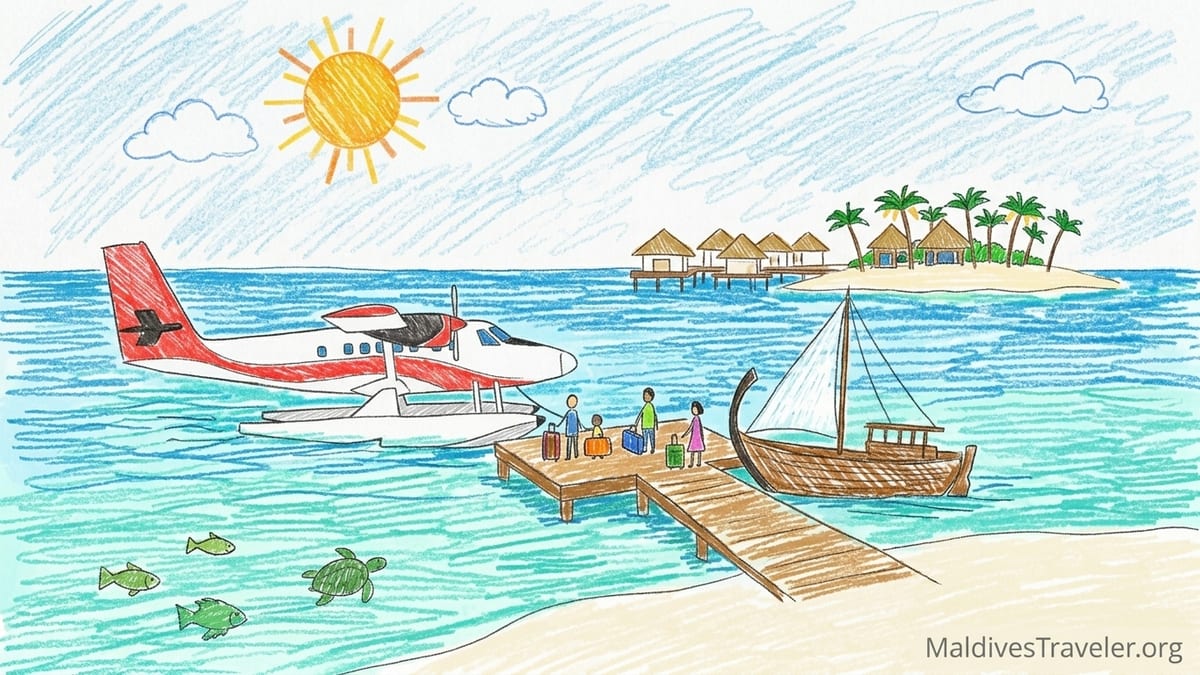
Landing near JW Marriott’s island, Vagaru, felt almost old fashioned. The seaplane set down in an open lagoon, then taxied to an offshore platform where a dhoni met us for the short ride to the welcome jetty. There was no background drone of other boats, no neighbouring resort jetty a few hundred meters away. Just the crew, the wind, and one small island on the horizon. From the moment I stepped onto the boat, it was clear that this transfer shaped the island’s rhythm. Late arriving flights into Malé risk missing the day’s last seaplane north, and the staff spoke openly about how heavy rain, low visibility or rough seas can ripple through the schedule. In Shaviyani the transfer is part of the adventure, and sometimes part of the stress.
First Impressions of Vagaru: Space, Sky and Silence
My expectations of the Maldives had been shaped by stays in Kaafu and Baa Atolls, where neighbouring islands glow on the horizon and speedboats shuttle past every hour. Shaviyani was different from the first walk along Vagaru’s beach. Standing on the main arrival jetty and looking out to sea, I could not see another resort. A faint line of a local island sat low on the horizon to the east, but nothing close enough to break the feeling of being alone on the ocean.
The island itself is bigger than many classic postcard Maldivian islets, wrapped in a broad ring of vegetation that hides villas behind palms and sea grapes. Instead of a narrow sand spit circled in a few minutes, Vagaru invites longer walks. On my first morning I circled most of the island and met only two other guests on the sand. The silence took getting used to. In central atolls, sound travels across the water: music from beach bars, the high whine of speedboat engines, the intermittent roar of seaplanes taking off. In Shaviyani the background track was mostly natural. Wind in the palms, distant breakers on the outer reef, and at night the odd thud of a coconut landing somewhere in the undergrowth.
That quiet extended to the sky. During my four night stay I counted only a handful of seaplanes passing overhead each day, often at a distance. At other Maldivian resorts I have watched almost hourly takeoffs and landings, especially around noon as transfers peak. Here the air traffic simply did not exist at that scale. It sounds like a small detail, but it changed the mood. The island felt less like a busy transit node and more like a remote outpost at the edge of the chain.
The Lagoon and House Reef: More Wild, Less Instagram
I went to Shaviyani with screenshots of electric blue lagoons and dramatic house reefs in mind. The reality around Vagaru was more nuanced and, in some ways, more honest. On the sunset side, long overwater villa jetties extend into a broad, shallow lagoon. At high tide it is waist to chest deep with soft sand underfoot, easy for floating and uncomplicated snorkeling. At low tide, however, much of that water retreats and patches of coral heads sit just beneath the surface. From my villa deck I could clearly see the patterns of new coral growth mixed with older, storm broken sections.
The house reef drop off is not right under the villas. From the beach it took a five to ten minute snorkel across the lagoon to reach the main wall, guided by fixed buoys and a clearly marked channel. Compared with a previous stay in Lhaviyani Atoll, where I could fin out five meters from the stairs and fall straight over the edge into deep blue, Shaviyani’s reef felt less immediate but more like a journey. The upside was that far fewer people made that swim. A couple of times I had long stretches of the wall entirely to myself, with only a few distant villa silhouettes behind me.
Underwater, the difference in traffic was obvious. Fish life felt dense and unbothered. I saw large schools of fusiliers and batfish cruising the drop off, several turtles and a couple of reef sharks on each outing. Coral recovery was mixed, as it is across the country after bleaching events, but there were promising patches of branching coral and healthy plate formations in the slightly deeper sections. A guide told me the resort’s remote position means fewer day trip divers from other islands and less accidental damage from heavy boat traffic. Whether or not that is the only reason, I did feel that the reef here belonged more to the creatures than to the guests.
The surprise was visibility. I had assumed that being far north automatically meant crystal water all week. In reality, seasonal weather still rules. On one afternoon, a passing squall kicked up enough sand that visibility dropped noticeably, and the staff moved some snorkel excursions to the leeward side of the island. Shaviyani might be remote, but it still lives under the same monsoon systems as the rest of the Maldives, and your time in the water remains at the mercy of wind and tide.
Life on the Beach: Fewer Boats, More Horizon
One of the most striking differences from central atolls was what I did not see from the beach. On my first full day I spent nearly six hours in total along the shoreline, spread between morning and late afternoon. During that time only a handful of boats passed within visible distance. Most were small local dhonis heading between inhabited islands, their wooden hulls low in the water. I saw no parade of resort supply barges or day trip speedboats cutting across the view every few minutes.
This scarcity of traffic changed how I used the beach. With fewer wakes rolling in from passing boats, the water on the lagoon side stayed calmer for longer. I became more comfortable leaving my towel on the sand and floating far out over the shallows, knowing that I would not suddenly find myself sharing the area with jet skis or banana boats from a neighbouring property. In more developed atolls I have sometimes felt hemmed in by activity zones and boat lanes. In Shaviyani the usable swimming area felt almost limitless.
The trade off is that you also see fewer lights at night. Walking the beach after dinner, the horizon was almost unbroken darkness. There were none of the distant glows from other resorts that I have grown used to elsewhere. I found it beautiful but slightly disorienting, as if the rest of the world had been switched off. On one perfectly clear evening I lay on a sun lounger on the south side of the island and watched the Milky Way stretch overhead with barely any competing light. It was one of those rare travel moments that feel out of time, and it simply does not exist in atolls ringed with resorts.
Weather played a bigger psychological role here too. During a cloudy morning I caught myself worrying about “wasting” time because there were no alternative distractions nearby. In Kaafu, on a grey day, I have hopped onto a public ferry to a local island or taken a speedboat excursion to a sandbank within half an hour. In Shaviyani, cloud and rain simply mean leaning into the remoteness and accepting that there is nowhere else convenient to go until the skies clear.
Meals, Routines and the Reality of Isolation
Being this far north means that almost everything you eat or drink has either flown with you on the seaplane or arrived earlier on a separate supply boat. I expected imports, of course, but I did not appreciate how directly that would shape my daily routine. On my first evening I asked half casually if it might be possible to pop over to a nearby local island one afternoon for a café visit or a basic meal off resort. The staff response was polite but firm. There was no scheduled boat that guests could just join at short notice, and arranging a private transfer would essentially mean chartering a boat with crew. The quoted cost immediately reset my expectations. On Vagaru you dine on the island, or you do not dine at all.
Buffet and a la carte options reflected that isolation. Fresh fish and tropical fruit were abundant, but imported items had a visible premium. A simple cappuccino and small dessert in the afternoon came close to high end city hotel pricing, and a modest glass of wine at dinner reminded me that every bottle had traveled by air and sea before reaching my table. I had seen room rates and transfer prices before arrival, but there is something about watching a seaplane offload boxes of vegetables and crates of water alongside passengers that drives home what remote hospitality costs in reality.
The flip side is that the resort kitchen leans into predictability. Because there is no easy alternative restaurant in the next lagoon, menus are broad and carefully planned. I rarely saw popular dishes sell out for the day. The team knew exactly what was coming in on the next supply run and how many guests were on half board, full board or all inclusive packages. There was a comforting rhythm to it. Breakfast, long late morning swims, a simple lunch, some work or reading in the villa, then a slow dinner. The island’s isolation gently pulled me into a slower pattern that would have been harder to achieve in a busier atoll with more off island temptations.
One very practical surprise was how isolation affected wardrobe and packing. In more connected atolls I have under packed and then bought a spare T shirt or reef safe sunscreen from a local island shop. In Shaviyani, the only real shopping was the resort boutique, which carried quality products at prices that reflected the logistics of stocking them. When I ran low on sunscreen on day three, I paid more than I would have in Malé for a smaller bottle. It was a minor sting, but a good reminder that in remote atolls it is worth double checking essentials before flying north.
Boat Trips and Time in the Water: Expectations vs Reality
Before arriving I had ambitious plans for how much time I would spend in the water. I imagined long daily snorkel sessions on the house reef, a dolphin cruise, at least one dedicated manta or turtle trip, and some casual lagoon swimming around the villa. Shaviyani’s reality nudged those plans into something more modest. Over four full days I logged about two to three hours of water time on the best weather days, and closer to one hour on the windier ones. The simple reason was logistics.
Excursions here have fewer participants to draw from, and they run to the conditions. The dolphin cruise, for example, was offered only on two evenings during my stay. One was cancelled at short notice due to a change in wind and swell direction, and another ran with a small group of four guests. We did eventually find a pod of spinner dolphins in the open water between atolls, but the ride there and back took longer than similar trips I have taken in more central atolls. With fewer other resorts nearby, there were no radio calls from sister properties announcing a fresh sighting five minutes away. Our boat covered real distance over blue water, and that required both fuel and time.
House reef snorkeling was similarly shaped by timing. The safest and most rewarding window sat around mid tide with manageable currents. On a couple of afternoons that ideal period coincided with passing showers and lower visibility, so guided group snorkels were pushed to the following day. I still went in unguided, but I trimmed sessions down to match the changing conditions and the simple knowledge that there were fewer safety nets nearby if anything went wrong. Knowing that the next resort was not just around the corner makes you slightly more conservative with distances and solo exploration.
On the positive side, the water time I did get felt precious. One standout morning started before breakfast, with glassy calm seas and low angled sun. I finned slowly along the reef wall and saw a pair of eagle rays glide past in the blue. At another resort I might have shared that moment with half a dozen other snorkelers. In Shaviyani, I could not see another person for most of the swim. That solitude is what made the extra journey north feel justified, even if my logbook hours were lower than I had predicted when sitting at my desk months earlier.
If I went back, I would build my itinerary to allow at least one or two extra nights compared with a stay in a more connected atoll, simply to give myself more weather and schedule buffer. In Shaviyani the limiting factor on time in the water is not boredom. It is light, tide, wind and the infrequency of organized trips.
What Surprised Me Most About Shaviyani
The biggest surprise was psychological rather than logistical. I thought I wanted “remote” in the abstract, but it felt different once I was living it for several days. There is a subtle mental comfort in seeing another island’s lights across the channel or knowing that a public ferry or scheduled speedboat exists if you really want to change scenery. In Shaviyani, once the seaplane has left the lagoon, that sense of optionality shrinks. You are on the island until the next flight arrives, and that finality changes how you experience every cloudy afternoon and every cancelled excursion.
Another surprise was how much more aware I became of the resort’s inner workings. With fewer transfers and deliveries breaking the day, each resupply boat and each seaplane landing felt like an event. Staff spoke about upcoming domestic flights and weather forecasts over breakfast, and guests traded information in a way I have rarely seen in busier atolls. That shared awareness created a kind of quiet camaraderie among people who had all chosen to travel that extra distance north.
On a practical level, I was caught out by how heavily my arrival and departure hinged on international flight times. Because seaplanes to remote atolls usually operate only in daylight, a late night international arrival into Malé would have meant an overnight near the airport and an extra day of transit. I had timed my inbound flight carefully, landing late morning to catch an afternoon seaplane. Even then, a short weather delay had us landing on Vagaru just before sunset. I left with a new respect for how fragile multi segment itineraries to remote atolls can be, and I would be slower to book tight connections in the future.
Finally, I was surprised by how little marketing language prepared me for the reality of “untouched” and “remote.” Brochures praised the privacy and seclusion, which are very real, but they rarely mentioned the trade offs. Less flexible transfers, higher dependence on the resort’s schedule, and a slightly more serious relationship with the ocean around you. None of those are negatives if you walk into them with open eyes. In some ways, they are exactly what make Shaviyani special. But you do feel them, every day.
The Takeaway
Looking back, Shaviyani Atoll delivered a version of the Maldives that felt both more demanding and more rewarding than my earlier trips. The extra distance from Malé, the reliance on a single seaplane connection, and the absence of neighbouring resorts turned the island into a complete micro world. There were fewer impulse options and more commitment in every choice. When I decided to snorkel, it became the focus of the morning, not something squeezed between a coffee run and an easy ferry ride to another island.
What made the journey north worth it was the combination of empty horizons, quieter reefs and a deeper sense of being somewhere genuinely out on the edge of the archipelago. I spent less time in the water than I had optimistically planned, but the moments I did have there were sharper in memory. The dolphin cruise that took longer because there was no neighbouring resort boat to follow. The star filled sky without a halo of lights on the horizon. The odd comfort of knowing that everyone on the island had invested the same extra effort and cost to be there.
If I were to do it again, I would give myself more days, pack more deliberately, and build greater flexibility into my international flights. I would also be clearer with myself about priorities. Shaviyani is not the place to chase a busy checklist of excursions or to hop between multiple islands in quick succession. It is where you go when you are ready to let the transfer, the weather and the reef set the pace. For some travelers that will sound limiting. For others, it will sound like exactly the Maldives experience they have been looking for all along.
FAQ
Q1. How long does it really take to reach Shaviyani Atoll from Malé?
The resort arranged seaplane flight to islands like Vagaru typically takes around 45 to 55 minutes, but you should budget extra time for check in, waiting at the seaplane terminal and possible weather related delays.
Q2. Why are transfers to Shaviyani more expensive than to some other atolls?
The distance of roughly 190 kilometers from Malé means seaplanes burn more fuel and operate on less frequent routes, so resorts price transfers accordingly and usually bundle handling and lounge services into the cost.
Q3. Can I get to a Shaviyani resort by speedboat instead of seaplane?
Direct speedboat transfers from Malé are not generally offered due to the long distance and open ocean conditions, so access is usually by seaplane or a domestic flight combined with a short speedboat ride from a northern airport.
Q4. Are there many other resorts and boats visible from the beach in Shaviyani?
No, and that is one of the main differences. From my stretch of beach I rarely saw other resorts on the horizon and boat traffic was limited mostly to local dhonis and the occasional excursion boat.
Q5. How is the house reef snorkeling compared with central atolls?
Reefs around Shaviyani feel quieter and a bit wilder, with healthy fish life and some coral recovery, but the drop off is often a short swim from shore rather than directly under the villas.
Q6. How much time did you actually spend in the water each day?
On my best weather days I managed two to three hours between lagoon swims and reef snorkeling, while windier or cloudier days dropped that closer to one focused session.
Q7. Is it easy to visit local islands or eat off resort while staying in Shaviyani?
Not really. With no regular public ferries running conveniently for resort guests, visiting a local island usually requires a privately arranged boat, which carries a noticeable extra cost.
Q8. What happens if my international flight arrives late into Malé?
If you land after seaplanes stop operating for the day you will almost certainly need to overnight near the airport and continue to Shaviyani the next morning, which adds both time and expense.
Q9. Is Shaviyani Atoll suitable for a first time Maldives visitor?
It can be, but the remoteness and transfer costs often make it a better fit for travelers who have already seen the easier to reach atolls and now value extra space and quiet more than quick access.
Q10. What would you do differently if you returned to Shaviyani?
I would add at least one or two extra nights to allow for weather and transfer changes, pack more carefully to avoid relying on the resort boutique, and plan fewer but longer water based activities instead of trying to do everything.