


I arrived at JW Marriott Maldives Resort & Spa on Vagaru Island with years of glossy Instagram images in my head and a healthy dose of skepticism. The resort’s official descriptions promise spacious villas with private pools, fine dining and excellent snorkeling, all wrapped into a 5-star experience in Shaviyani Atoll. During my recent overnight stay, I found a property that often lives up to that promise, but also reveals some nuances, costs and practical realities that the photographs and marketing gloss over. This is what my time on Vagaru genuinely felt like, from seaplane to checkout.
Getting to Vagaru and First Impressions
My journey started at Velana International Airport in Malé, where JW Marriott staff met me just outside customs and escorted me to the seaplane lounge used for Shaviyani Atoll transfers. The resort is on Vagaru Island, about 192 kilometers from Malé by air, so the connection is by seaplane rather than speedboat. The official rate at the time of my stay was listed at around 665 US dollars per adult for a shared round-trip seaplane transfer, which immediately set the tone for how quickly costs add up in the Maldives. For two adults, that is roughly 1,330 US dollars before you have even set foot on the island.
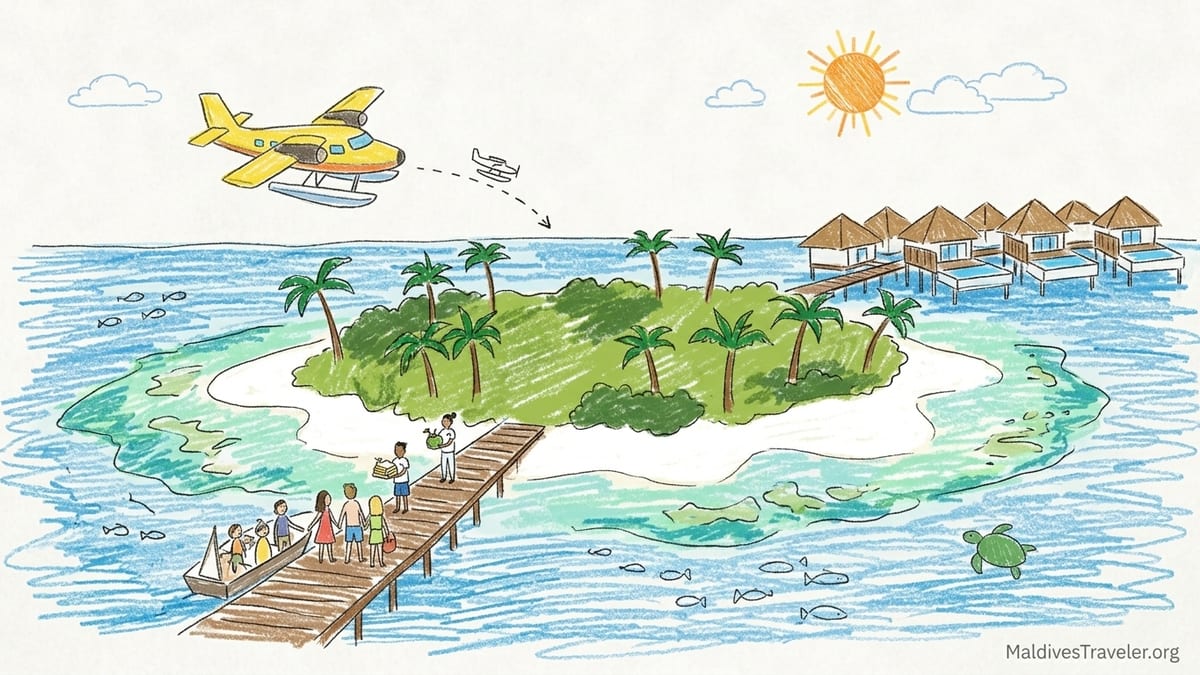
The seaplane itself took around 50 minutes in the air, with a brief stop at another resort on the way. It was loud, hot before takeoff and a little cramped, which is par for the course with seaplanes in the Maldives. What made it smoother was that JW Marriott staff handled the logistics quite seamlessly, from check-in to routing luggage straight to my villa. As we descended over Shaviyani Atoll, Vagaru appeared as a neat oval of greenery framed by white sand and shallow turquoise reef, and at this point the images I had seen online began to feel very real.
On arrival, staff greeted our small group on the jetty with chilled towels, coconut water and a short welcome ceremony. Importantly, the welcome was warm without being overly scripted. I was introduced to my butler, who immediately switched to a more practical tone and walked me through the layout of the island, dining options and activities. The check-in process happened directly in my villa, which meant no time standing at a front desk after the long day of travel.
First impressions from the buggy ride were of lush vegetation and how spread out everything felt. Villas are set back slightly from the main paths, and there is real effort to preserve greenery between them. Even before seeing my room, I had the sense that privacy was taken seriously here, which turned out to be one of the standout aspects of the stay.
My Exact Villa: Duplex Overwater Pool Villa
For this stay I was in a Duplex Overwater Pool Villa, one of the resort’s higher categories that sit above the lagoon with two levels of living space and a private pool. The villa category is officially listed at around 274 square meters, and that felt believable once I walked in. The entry opens into a high-ceilinged bedroom facing straight toward the water, with floor-to-ceiling glass and direct views of the infinity pool and lagoon. It was immediately clear that this was not a rebranded standard overwater bungalow but a genuinely spacious villa designed for couples or small families who want room to spread out.
The bed was a large king with a medium-firm mattress, noticeably more supportive than many resort beds I have tried in the region. Pillows were plentiful and came in different densities; I did not need to request any special pillow menu because the standard setup already worked well. From the bed, I could look straight across the pool to the reef line, which sounds romantic but also raised the question of privacy. In practice, because of the distance between villas and the positioning of the decks, I rarely saw my neighbors, and no one could easily peek into the bedroom unless they were standing at the very edge of their own terrace.
Upstairs, the duplex level was a lounge space with a sofa that can be converted to a bed, another bathroom and a balcony. That upper deck became my favorite place to sit around sunset. It felt more private than the pool deck because it was slightly set back from the water, and the elevation added a layer of separation from guests walking along the overwater jetties. This is one of those elements you cannot fully appreciate from photos: the vertical separation in the duplex layout genuinely improves how comfortable you feel moving around in swimwear or loungewear without being on display.
The private pool itself ran the width of the villa’s deck and was long enough for short laps. Water temperature leaned on the warm side given the Maldivian sun, though one corner stayed slightly cooler in the mornings. The edge closest to the lagoon blended visually into the sea, and there was a short ladder down to the ocean. During high tide I could step straight into waist-deep water, while at low tide the water receded enough to expose patches of coral. The wood around the deck showed minor signs of wear, but the resort had clearly been working through refurbishment, and nothing felt splintered or unsafe during my stay.
Bathroom, Maintenance and What Photos Gloss Over
The bathroom in the Duplex Overwater Pool Villa occupies almost as much footprint as the bedroom, and it is one of the most photogenic spaces on the property. Freestanding bathtub, double vanities, a large walk-in rain shower and separate toilet area all face toward partial sea views. The tub sits near sliding doors that can open completely, so you can soak with the sound of the lagoon below. What the glamorous photos do not fully convey is humidity. With the bathroom’s size and partially open design, moisture builds quickly, and even with good ventilation I found towels and swimsuits took longer to dry than expected.
Water pressure in the shower was excellent and hot water was reliable, even at off-peak times. Toiletries were branded and replenished generously, and housekeeping restocked bottled water in the bathroom as well as the bedroom. Lighting was nicely layered, with softer warm lights around the mirror and brighter task lighting available when needed. One practical detail that caught me off-guard was the slightly slippery nature of the polished floor tiles when wet. In photographs they look sleek and minimal. In reality, you need to use the provided bathmats and move carefully after a shower.
In terms of maintenance, I deliberately looked for the less Instagrammable details: corners of the deck, paintwork near the ceiling, hinges on the sliding doors. There were a few hairline cracks and small patches where salt air had taken its toll on metal fittings, which is inevitable in an overwater structure. However, these were cosmetic rather than structural issues. The sliding doors to the deck and balcony ran smoothly, mosquito screens were intact, and air conditioning worked quietly without rattles or sudden temperature swings. The resort appears to be investing steadily in upkeep, and nothing about the villa felt neglected.
One thing photographs rarely show is how sound travels. The overwater villas are remarkably quiet inside. I could hear the gentle thud of waves against the stilts at night and some wind, but I was not aware of my neighbors at all. From the deck, you might hear the occasional buggy crossing the main jetty in the distance or a seaplane passing overhead, but it never reached the level of disturbance. The real noise factor, when it arrived, came from nature rather than other guests, particularly during a brief overnight storm that brought heavy rain against the roof and deck. If you are a very light sleeper, pack earplugs more for weather than for people.
Dining: Restaurants I Actually Tried and How Much It Cost
The resort has several dining venues, but during my stay I focused on the main all-day restaurant, the overwater Thai restaurant and the wine bar. I was on a breakfast-inclusive rate, so all other meals and drinks were charged separately. This is where costs can surprise travelers who focus only on the nightly rate or points redemption. For context, a simple lunch of a club sandwich with fries and a non-alcoholic drink landed around 45 to 60 US dollars after tax and service. A more elaborate dinner with a starter, main course and a glass of wine could easily climb into the 120 to 150 US dollar range per person, depending on choices.
Breakfast at the main restaurant was a highlight and felt worthy of the resort’s positioning. The buffet offered a wide selection of fresh fruits, pastries, local Maldivian dishes and made-to-order egg options. There was also a live station for noodle soup and an impressive array of juices and smoothies. What distinguished it from a generic luxury buffet was how quickly staff learned my preferences. By the second morning, coffee arrived the way I liked it without needing to ask, and one server remembered that I preferred tropical fruit over pastries and offered to bring a plate directly to the table.
I had dinner one night at the overwater Thai restaurant. The setting at twilight, with soft lighting over the lagoon and a light breeze, matched the images used in marketing, but the real-world experience included a few realities those photos do not capture. Wind can pick up over the water, which made the open-air seating area slightly cooler and sometimes required servers to guard plates from napkins trying to escape. The food itself was refined, leaning toward resort-friendly spice levels rather than intense, street-style heat. A green curry with local fish and jasmine rice, plus a starter and dessert, came to a little over 100 US dollars before drinks. It felt expensive but in line with remote island pricing and the quality of ingredients.
The wine bar, set partly underground, was almost a secret corner of the resort. I joined a small wine tasting session hosted by the sommelier, which was more educational than sales-driven. Wines are predictably marked up compared with city hotels, but the list is broad and includes some mid-range bottles that are not completely eye-watering. If you care about costs, consider bringing duty-free wine within the Maldives’ legal allowances and using it for quiet evenings in your villa, then treating resort venues as a splurge rather than your only option.
Service, Kids Facilities and Spa
Service at JW Marriott Maldives leaned toward polished and quietly attentive rather than theatrical. My assigned butler communicated via WhatsApp and responded quickly to every request, from adjusting buggy pickup times to arranging snorkel equipment delivery. When I asked detailed questions about house reef access and tide times, I got considered answers rather than generic assurances. Turn-down service appeared while I was out for dinner, with small touches like a weather card for the next day and reminders of prebooked activities. Staff I encountered across restaurants and the spa consistently greeted me by name after the first introduction, which contributed to the feeling of being looked after without being hovered over.
The resort markets itself strongly to families, and that was obvious from the kids’ club area known for its large pirate ship structure. While I did not travel with children this time, I visited the club during daytime hours. The space is large by Maldivian standards, with indoor activity rooms and substantial outdoor play areas. Staff were actively engaging children in crafts rather than passively supervising, and the outdoor pirate ship was being climbed on, not just posed beside. Families I spoke with appreciated that the club offered scheduled activities across the day, which gave adults some guilt-free time to enjoy the quieter areas of the island.
Children under a certain age were eligible to stay and eat free from kids menus during my visit, which can significantly offset the high costs of food for families. Exact age policies can change, so it is important to confirm them before booking, but it is clear the resort tries to make multi-generational stays more financially feasible than some competitors. Walking around the island, I noticed that despite the strong family focus, adults-only corners existed, especially around the overwater bar and spa area, so couples without children did not feel overwhelmed by noise.
The spa sits off a separate path and offers overwater treatment rooms with glass panels in the floor. I booked a mid-afternoon massage for just under 200 US dollars for 60 minutes, including tax and service. The therapist took time to ask about pressure preferences and any travel-related aches, and the treatment itself felt genuinely therapeutic rather than a series of light strokes. The room’s design, with doors slightly open to allow in sea breeze and the sound of water below, enhanced the sense of place, but again, photographs do not show the practicalities. You will hear occasional thuds from waves and perhaps a passing buggy in the distance, so it is not absolute silence, but it still felt like a respectful, calm environment.
Snorkeling, Beach Access and The Reality of the Reef
One of my main reasons for choosing an overwater villa was direct access to snorkeling. From my Duplex Overwater Pool Villa, I could step down the ladder into clear water and swim out toward the drop-off of the house reef. Fish life was reasonably abundant, with reef fish, parrotfish and occasional rays. Coral health, like much of the Maldives, showed signs of past bleaching, with a mix of live patches and more damaged sections. Visibility varied with tides and weather. On a calm morning, I had perhaps 20 meters of clear visibility. In the afternoon after some wind, it dropped noticeably and currents picked up.
The resort also offers guided snorkel excursions to outer reef points, which came at an extra cost. I joined one, which cost in the low three figures per person, and found the coral more vibrant further out from the island. If snorkeling is central to your trip, budgeting for at least one or two paid excursions is sensible, rather than relying entirely on house reef access. Photographs of guests surrounded by dense coral gardens on marketing materials are more representative of these excursion sites than the lagoon right beneath the villas.
Beach access from the overwater villa required a short buggy ride or walk to one of the main beaches, which line the island’s perimeter. The sand was as soft and pale as the photos suggest, and there were many corners where I could sit almost alone, especially in the late morning when most guests were on excursions or in their villas. The water near some sections of beach had a gentle slope, making it better for casual swimming or families with children, while other stretches were closer to deeper drop-offs. Staff members were honest about which areas suited weaker swimmers and which offered slightly better snorkeling directly from shore.
Something that pictures almost never reveal is the effect of weather. During my overnight stay, a late afternoon storm rolled in, turning the previously glassy lagoon into a choppier expanse. The overwater walkways became wet, and wind picked up around the decks. None of this was unsafe, but it changed the mood dramatically. While daytime photos convey eternal sunshine, the practical reality is that you should pack for intense sun and sudden rain, and plan at least some flexibility in activities in case boat trips or snorkeling need to be rescheduled.
What I Actually Paid and Where Costs Creep In
Discussing costs openly is important for a place like JW Marriott Maldives, because the gap between headline rates and real spend can be large. For my overnight stay, the base villa rate was covered using Marriott points, so the primary hard expenses came from transfers, food and extras. The seaplane transfer, at approximately 665 US dollars per adult for a round-trip shared flight, immediately added well over 1,000 US dollars for a couple. On top of that, the resort charges the standard Maldivian service charge and tax on most expenses, which pushes up every bill beyond menu prices.
For one lunch, one dinner, a couple of drinks, the spa treatment and the snorkel excursion, my spend for that single full day on the island crept into the mid-hundreds of US dollars. If I extrapolate that to a typical three or four night stay, it quickly becomes plausible for a couple to spend a few thousand dollars purely on incidentals, even when redeeming points for the room. There are ways to manage this. Sticking mainly to the inclusive breakfast, sharing larger main courses at dinner, choosing mocktails or soft drinks over cocktails and wine, and limiting paid excursions can bring down the overall bill. However, it remains an expensive destination once you tally everything up.
Something else the marketing imagery does not show is the smaller line items. A premium coffee drink and a few handcrafted chocolates ordered to the villa as a treat ended up on the bill at a level that made me double-take, purely because of service and tax stacking on top. None of these charges were hidden; bills were transparent and itemized. But travelers who have only experienced city luxury hotels may be surprised at how much remote logistics, import duties and seaplane operations are baked into everyday prices.
On the flip side, certain inclusions soften the blow. My booking category included complimentary non-motorized water sports such as stand-up paddleboarding and kayaking, access to the gym and wellness classes like yoga, and of course fully included breakfast. For families, children staying and eating within certain parameters at reduced or no extra cost can reshape the economics of a stay. It is crucial, however, to confirm these inclusions at the time of booking and mentally add realistic food and activity costs when comparing JW Marriott to other Maldivian options.
The Takeaway
My overnight stay at JW Marriott Maldives on Vagaru Island left me with a nuanced impression that blends genuine admiration with practical caveats. The Duplex Overwater Pool Villa delivered on almost every front that mattered: privacy, space, thoughtful layout and a sense of calm isolation that many people travel to the Maldives to find. The bed was comfortable, the pool was genuinely private from neighboring decks, and maintenance appeared robust enough that I did not feel like I was in a fading property resting on its brand name.
Service was quietly excellent rather than performative. Staff took real care to remember preferences and communicated efficiently through the butler system, something that made the logistics of such a short stay workable. The kids facilities and family-focused policies stood out as a strength. Even without traveling with children, I could see how the pirate ship playground, structured kids club activities and more generous kids’ dining policies would make this resort a particularly strong candidate for multi-generational trips.
The main trade-offs relate to cost and expectations of the house reef. While snorkeling directly from the villa was pleasant, the truly striking coral scenes required paying for guided excursions further out. Dining, drinks, transfers and activities, once combined with taxes and service, create a final bill that matches or exceeds the cash prices of some other top-end Maldivian properties. Travelers who arrive aware of these realities will likely appreciate the experience more than those who fixate solely on nightly rates or points cost.
Ultimately, JW Marriott Maldives is not a hidden bargain, but it does offer a coherent package of space, privacy, family friendliness and warm service that justifies its position in the market for many guests. For me, the memories of watching the lagoon change color from the upper deck of my duplex villa and of quietly gliding over the reef at first light make the journey and expense feel worthwhile. If you approach Vagaru with open eyes about cost and a clear idea of what you value most, it can deliver an experience that lives up to, and occasionally surpasses, those impossibly blue photographs.
FAQ
Q1. What exact villa category did you stay in at JW Marriott Maldives?
Duplex Overwater Pool Villa, an overwater duplex category with a private infinity pool, upper-level lounge and direct lagoon access from the deck.
Q2. How private was your Duplex Overwater Pool Villa in reality?
The villa felt genuinely private; neighboring decks were set at angles and distances that meant I rarely saw other guests, and inside the villa I never felt overlooked.
Q3. Is the seaplane transfer to Vagaru Island really worth the high cost?
The shared round-trip seaplane transfer was expensive but necessary, and it provided smooth access to a remote atoll that would be impractical to reach by speedboat alone.
Q4. How good was the snorkeling directly from your villa?
Snorkeling from the villa ladder was enjoyable with plenty of reef fish, but the most vibrant coral and variety of marine life appeared on paid outer reef excursions.
Q5. What was breakfast actually like at the resort?
Breakfast was an extensive buffet with eggs to order, local dishes, fresh fruit, pastries and a strong juice selection, backed by attentive service that quickly learned my preferences.
Q6. Did you find the resort suitable for couples without children?
Yes, there were quiet adults-oriented areas and the overwater villas in particular felt serene, even though the resort also caters strongly to families.
Q7. How expensive are meals and drinks once you are on the island?
Main courses at dinner, plus a drink, commonly ended up around or above 100 US dollars per person, and casual lunches with a drink often reached 50 US dollars or more.
Q8. Was the spa experience memorable enough to justify the price?
My overwater massage, at just under 200 US dollars for 60 minutes, felt skilful and restorative, helped by the sea views and sound of water under the treatment room.
Q9. How child-friendly is JW Marriott Maldives in practice?
The pirate-ship kids club, structured daily activities and more generous kids’ dining policies made the resort feel strongly geared toward families without overwhelming adult spaces.
Q10. Would you return to JW Marriott Maldives given the overall cost?
I would consider returning for a longer stay, now that I understand transfer, dining and activity costs, and would budget excursions for better snorkeling alongside plenty of quiet villa time.